REVIEW · NEW DELHI
6-Day Private Tour of Delhi, Agra, Jaipur, and Pushkar from Delhi
Book on Viator →Operated by Limra Holiday · Bookable on Viator
Four cities, one tight plan. This 6-day private tour strings together the big sights and the spiritual detours, from Delhi’s monumental Mughal-era buildings to Pushkar’s evening lake rituals. I like that it runs on a private setup with an English-speaking approved guide for Delhi, Agra, and Jaipur, so you’re not guessing what you’re looking at.
Two things also make this feel like good value for the price: all entrance/monument tickets are listed as included, and your days are built around “best timing” moments like a Taj Mahal sunset viewing spot and a sunrise visit. One watch-out: the itinerary packs a lot in, and since lunch and dinner aren’t included, you’ll want to plan for extra time and money on meals.
Below is how the tour flows, what each stop is really good for, and who this style of trip fits best.
In This Review
- Key highlights to pay attention to
- Price and What You Really Get for $570
- Delhi on Day 1: India Gate to Bahá’í Architecture in One Day
- Old Delhi Details: Jama Masjid and Chandni Chowk That Actually Help You Navigate
- Qutub Minar and Humayun’s Tomb: Where Delhi Starts Looking Like UNESCO
- Day 2 to Agra: Fast Road Time on Yamuna Expressway and a Cleaner Arrival
- Taj Mahal Sunset Viewpoint: Seeing It Calm, Not Crowded
- Day 3: Sunrise Taj Mahal and Agra Fort for the Full Mughal Picture
- Jaipur Arrival and the Pink City Switch-Off
- Jaipur with Hawa Mahal, City Palace, and Jantar Mantar’s Science
- Day 5 Pushkar: Varaha Temple, Sikh Heritage, and the Lake That Holds Stories
- Brahma Temple and Evening Fire Ceremony: The Moment You Plan Around
- Day 6 Back to Delhi: A Smooth Exit Around 9 AM
- How to Make This Tour Feel Like a Vacation (Not a Sprint)
- Should You Book This 6-Day Private Tour?
- FAQ
- Is this a private tour?
- What’s included in the price?
- Are lunch and dinner included?
- What cities does the tour cover?
- Do I need to buy monument tickets?
- Is pickup offered in Delhi?
- Is it flexible to cancel if plans change?
- Does the tour include a guide?
Key highlights to pay attention to
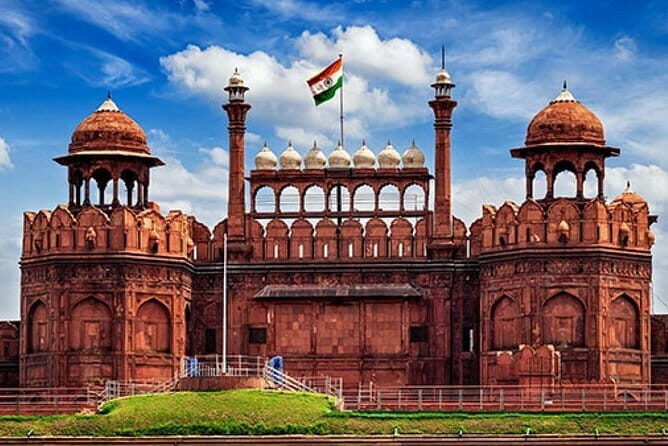
- Sunrise Taj Mahal visit plus a second Agra day with fort and Fatehpur Sikri
- Low-crowd Taj sunset viewing point across the river
- Delhi monument mix from India Gate and Parliament House to Qutub Minar and Humayun’s Tomb
- Jaipur design details like Hawa Mahal’s women’s-chambers layout and Jal Mahal on Man Sagar Lake
- Pushkar’s Brahma Temple and evening fire ritual at Brahma Ghat, with time around the lake ghats
- Private AC car with hotel pickup/drop in New Delhi, plus 5 nights accommodation with breakfast
Price and What You Really Get for $570
At $570 per person for about 6 days, the number makes more sense once you look at what’s covered. You’re paying for a luxury AC car, hotel stays for 5 nights (single or double occupancy) with bed and breakfast, and entry fees for the monuments. On top of that, fuel and state taxes are included, and you get an English-speaking approved guide for Delhi, Agra, and Jaipur.
That combo matters. Without it, you’d be juggling a guide, buying tickets one by one, and trying to coordinate transport across four cities. With this setup, the heavy lifting is handled, which is exactly what you want when you’re trying to see a lot but still keep your day from turning into a logistics project.
The trade-off is that you’re on a set route with set stops, and meals are your responsibility. Lunch and dinner aren’t included, so you’ll want cash/card ready and a flexible mindset for quick breaks between sights.
You can also read our reviews of more private tours in New Delhi


Delhi on Day 1: India Gate to Bahá’í Architecture in One Day
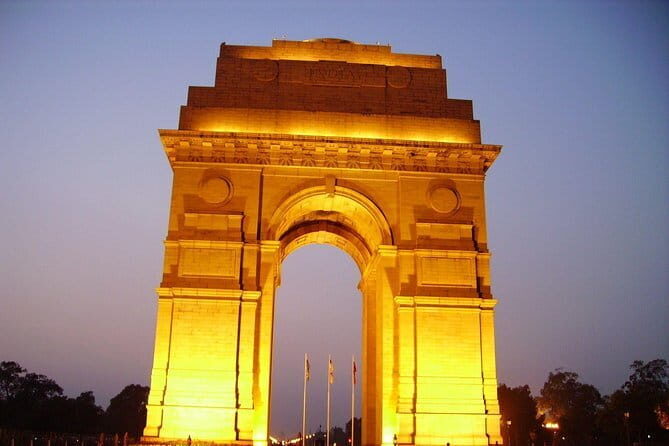
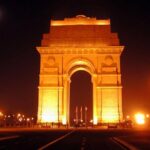
Delhi Day 1 is a greatest-hits tour that moves from memorials to major houses of worship to UNESCO-level sites. It starts with India Gate, built by Edwin Lutyens and dedicated to the memory of 90,000 Indian soldiers who died in World War I. It’s short but meaningful, and it sets the tone: this city remembers, then builds.
From there, you’ll hit Raj Ghat, the memorial dedicated to Mahatma Gandhi. It’s also tied to older Delhi geography, so it’s not just a statue moment. You’re seeing how modern India marks major people in places that already mattered historically.
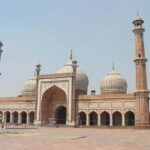
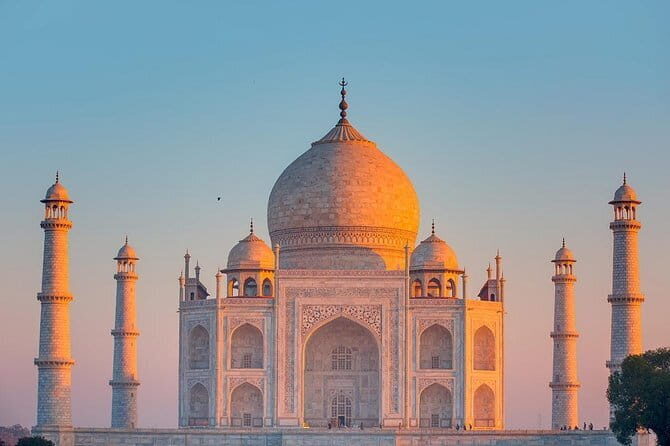
Next comes Parliament House (Sansad Bhavan), then Jama Masjid, one of the largest mosques in India, built by Shah Jahan between 1650 and 1656. After that, you switch gears into Old Delhi shopping energy at Chandni Chowk, one of the oldest and busiest markets, with the Red Fort at the eastern end of the main stretch.
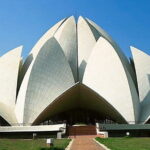
The last stretch feels like a contrasting art and faith tour: Swaminarayan Akshardham (near the Noida border), the Lotus Temple with its flower-like shape, then a transition to Qutub Minar and Humayun’s Tomb. If your brain likes variety, you’ll enjoy this day.
What to consider: this is a lot of stop-and-go. Even with free entry tickets listed, you’ll still spend time walking inside complexes and moving between locations.
Old Delhi Details: Jama Masjid and Chandni Chowk That Actually Help You Navigate
Two stops here are more useful than they look on a map. Jama Masjid is huge, and it’s one of those places where being there helps you understand scale in a way photos don’t. You’re built for a slower look—courtyards, sight lines, and the sense of how the Mughal-era design still shapes today’s city.
Then Chandni Chowk gives you the street-level “how people live and trade” view. You’ll be walking through one of Delhi’s oldest markets, near the Old Delhi Railway Station. The hint you get from the tour route is that the market has structure: it’s not random wandering. The Red Fort being at the eastern end is a helpful orientation point if you want to later explore at your own pace.
Practical tip: wear shoes you can stand in for a while. Even when time on paper looks short, temple and market spaces often require extra slow steps for photos and crowd flow.
Qutub Minar and Humayun’s Tomb: Where Delhi Starts Looking Like UNESCO
If you like architecture, this pairing is the payoff zone. Qutub Minar is a UNESCO World Heritage site and part of the Qutb complex, set at the location of Delhi’s oldest fortified city (Lal Kot). Even for people who usually skip history lessons, the sheer vertical focus makes it easy to appreciate what the builders were doing.
Then Humayun’s Tomb gives you the Mughal taste you want before you go to Agra. The tomb was commissioned in 1569–70 and designed by Mirak Mirza Ghiyas. Again, the point isn’t memorizing names. It’s seeing how Mughal-era design develops, so Agra’s monuments later feel less like isolated icons.
This is one reason I like tours that don’t treat monuments as separate islands. When Delhi’s major Mughal landmarks come before Agra, your eyes start connecting details.
Day 2 to Agra: Fast Road Time on Yamuna Expressway and a Cleaner Arrival
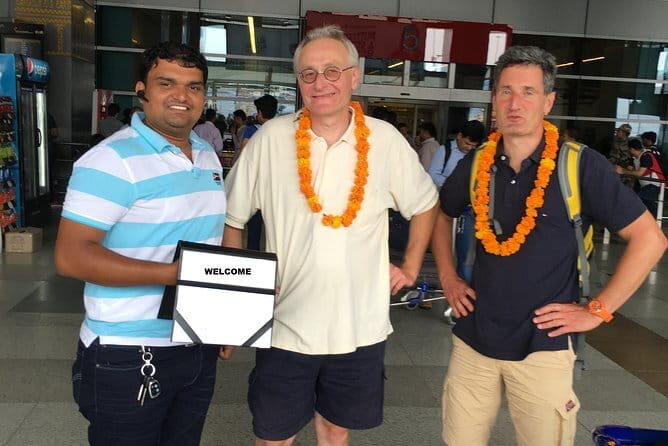
Day 2 shifts gears with a drive to Agra after breakfast. You’ll take the Yamuna Expressway, and the drive time listed is about 4 hours, which is one of the calmer ways to get out of Delhi traffic without losing half your day.
Once you arrive, you check in at the hotel. That matters because it avoids the common mistake of rushing straight into sights and then burning your evening on fatigue. You get at least some reset time before the Agra sightseeing block.
A few more New Delhi tours and experiences worth a look


Taj Mahal Sunset Viewpoint: Seeing It Calm, Not Crowded
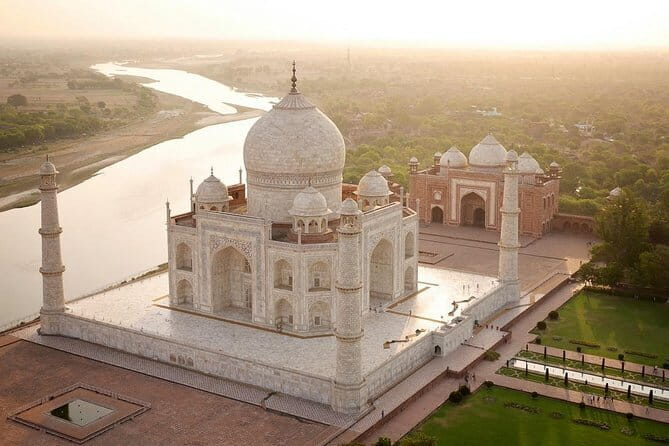
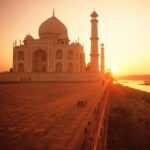
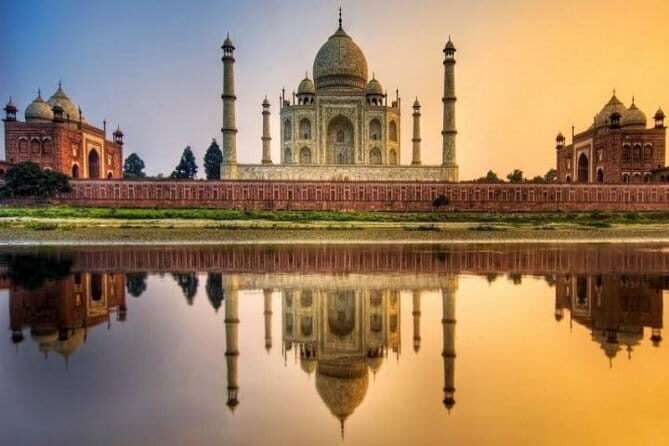
On the Agra afternoon, you’ll head to a Taj Mahal Sunset View Point described as one of the best spots for viewing the Taj Mahal across the river, away from the crowd. This is a smart move because it treats the Taj like a moment, not just an object.
Sunset light does two things. It changes the color of the marble, and it softens the sharp contrast that can make “big monuments” feel flat. If you’re the type who likes to understand how a place changes with time of day, this stop is worth it.
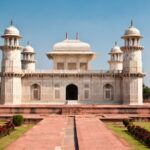
Then you’ll visit Itmad-ud-Daula, a tomb that’s known for being an architectural inspiration often linked to the Taj Mahal. Even if you only have a short time there, this kind of stop helps you see the Taj as a peak, not a random one-off.
Day 3: Sunrise Taj Mahal and Agra Fort for the Full Mughal Picture
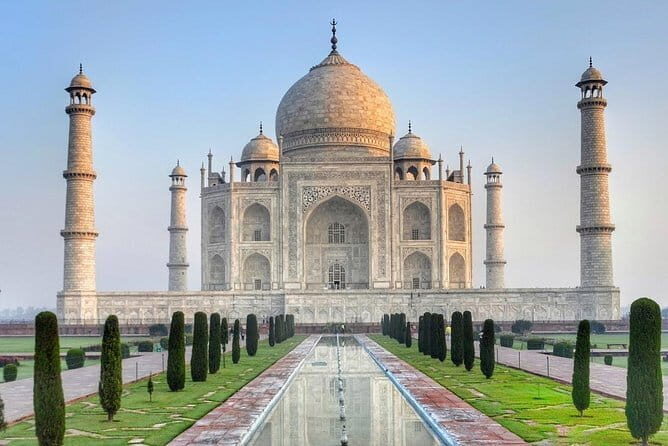
Day 3 is where the itinerary earns its reputation: a sunrise visit to the Taj Mahal. The tour describes the Taj Mahal as built by Shah Jahan in memory of Mumtaz Mahal, who died in 1631. Seeing it at sunrise is often less about the romantic story and more about practical experience: earlier light and calmer conditions help you actually look.
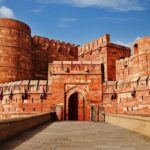
After the Taj, you move to Agra Fort, a historic fort that served as the main residence of Mughal emperors until 1638, when the capital shifted to Delhi. This is a great contrast stop. The Taj is perfection-as-a-monument. Agra Fort feels like power and everyday governance—thick walls, big spaces, and a sense of where rulers lived.
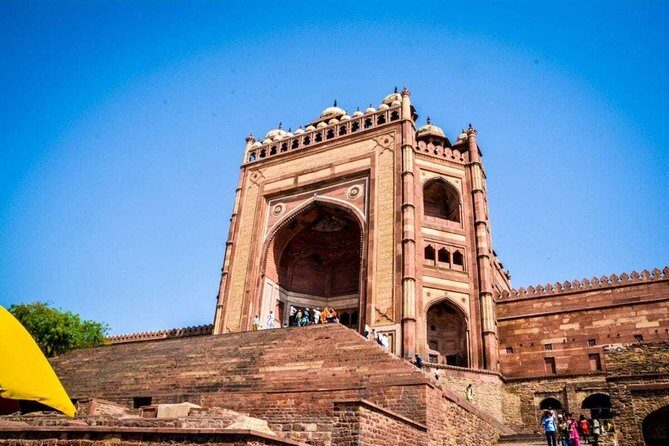
Then comes Fatehpur Sikri, about 40 km from Agra. The tour frames it as a beautiful depiction of Mughal architecture. This is the kind of stop you’ll appreciate most if you enjoy large-scale planning and city layouts. It’s also a nice way to add variety after two classic Agra landmarks.
What to keep in mind: you’ll be shifting again after Fatehpur Sikri.
Jaipur Arrival and the Pink City Switch-Off
After the Agra area, the tour continues by drive to Jaipur, the Pink City. You check in to your hotel on arrival. That hotel break is important because Jaipur sightseeing tends to involve more walking and more visual surfaces to take in.
Jaipur days feel different from Delhi and Agra. They’re more about style, color, and city design cues—how buildings frame views and how different spaces connect.
Jaipur with Hawa Mahal, City Palace, and Jantar Mantar’s Science
Jaipur’s Day 4 hits several icons quickly, but each one has a distinct angle.
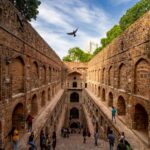
You start with Panna Meena ka Kund, described as a step well believed to be around 1000 years old. It’s tied to Hindu ceremonies, with the water used for them. Even if step wells don’t sound like your thing, this stop can be surprisingly useful because it shows how people solved daily needs with architecture.
Next is Jal Mahal, a palace in the middle of Man Sagar Lake. It’s described as originally constructed in 1699, later renovated. It’s a “look at it, then keep walking” kind of place: you’re meant to notice how the structure sits within the water setting.
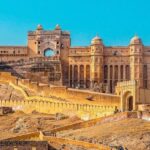
Then Hawa Mahal (Palace of Wind), built of red and pink sandstone. The detail I’d focus on is that it’s on the edge of the City Palace and extends toward the women’s chambers (the Zenana). That explanation helps you see it as more than a pretty façade.
After that, City Palace of Jaipur gives you the royal residence and former administrative headquarters of Jaipur’s rulers. It’s the scale-and-power stop that connects the architecture to how the city was run.
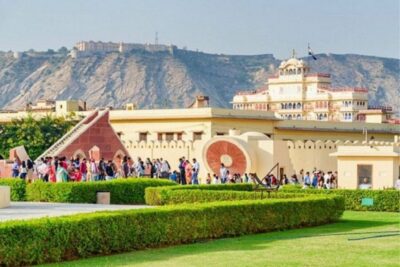
Finally, Jantar Mantar, a collection of astronomical instruments built by Rajput king Sawai Jai Singh, completed in 1734. The tour description points to instruments and scale, including a note that it features the world’s largest… but it doesn’t finish the detail. Either way, the takeaway is clear: Jaipur isn’t only visual art. It’s also science built into public space.
Day 5 Pushkar: Varaha Temple, Sikh Heritage, and the Lake That Holds Stories
Day 5 shifts from big-city monuments into Pushkar’s sacred atmosphere. You start at the Varaha Temple, dedicated to Lord Vishnu and described as one of the ancient Swayambhu Kshetra of Vishnu. The tour notes it was built in the 12th century by King Anaji Chouh… (as written). This is the kind of stop that gives you depth early, before the day turns into evening rituals.
Next is Gurudwara Sahib, where you can learn about Sikh history and beliefs and why Pushkar is sacred for the Sikh religion too. That inclusion makes Pushkar feel like a shared spiritual space, not only one-faith worship.
Then you reach Pushkar Lake and Brahma Ghat (Sunset Point / Raj Ghat), with the tour framing a sunset viewing moment. The lake ghats are where Pushkar’s identity becomes obvious: you’re watching people gather around water, prayers, and everyday devotion.
Brahma Temple and Evening Fire Ceremony: The Moment You Plan Around
This day’s main event is the evening. You’ll be led through Brahma Ghat for evening rituals, described as mesmerising evening Aarti and a fire ceremony. Then you visit the Brahma Temple, described as the only temple in the universe dedicated to Lord Brahma. The tour notes the temple structure dates to the 14th century, partly renovated later, and that the temple is made of black and white marble stones.
If you care about atmosphere, this is your high point. A monument is one thing. A ritual is living culture. The tour places this experience in a time window when you can feel the day shift into evening light and sound.
The itinerary also includes a stop near Varaha Ghat for the old Rangji temple, described as about 200 years old and dedicated to Lord Vishnu. You’ll also head into Pushkar Main Market through narrow lanes for photography, including Halwai Gali, famous for malpuas, and Gandhi Ghat.
Consideration: since this is centered on evening ceremonies, you’ll want to be ready for warmer temperatures and slower foot traffic. If you hate waiting, plan for patience.
Day 6 Back to Delhi: A Smooth Exit Around 9 AM
On Day 6, you check out in the morning and your driver comes to your hotel around 09:00 AM. Then you drive back to Delhi, and the tour ends there with sweet memories of Delhi, Agra, Jaipur, and Pushkar.
It’s a “wrap the story up” day, and it’s timed so you don’t lose the entire morning to packing.
How to Make This Tour Feel Like a Vacation (Not a Sprint)
This is a private tour, so you won’t be stuck with a giant group schedule. But it’s still a multi-city itinerary with full sight blocks. That’s the biggest thing to plan mentally for: you’re trading deep slow time for broader coverage.
A few practical ways to help it work for you:
- Bring a light day bag for water and essentials. You’ll be moving through markets and temple complexes.
- Keep one flexible meal plan in your head for each day, since lunch and dinner aren’t included. You’ll spend less time thinking and more time enjoying.
- Charge your phone early. You’ll have sunset and evening moments in Pushkar that are hard to replicate later.
- Dress for long walks. The stops include courtyards, lanes, and steps.
The route also has a smart rhythm: Delhi sets the scene, Agra delivers the major Mughal icons, Jaipur adds architecture and science, and Pushkar closes with spiritual rituals. That arc is why the tour feels coherent even when it’s busy.
Should You Book This 6-Day Private Tour?
I’d book this if you want the highlights of Delhi, Agra, Jaipur, and Pushkar without building the logistics yourself. The fact that entrance tickets are included and you get an English-speaking approved guide for the big sight days makes it feel more complete than a simple car-and-driver service.
Skip it or think twice if you’re the type who needs lots of downtime. The days are packed, and since meals aren’t included, you’ll likely spend extra moments deciding where to eat. Also, Pushkar’s evening rituals are a big focus, so if you don’t enjoy late ceremony-style pacing, it may feel like too much.
One more reason to trust it: the tour is rated 5 with 3 reviews, with feedback emphasizing knowledgeable guidance, safe and fun sightseeing, and a structured plan by city.
If your goal is to see the classics plus a real ritual experience in the same trip, this one fits.
FAQ
Is this a private tour?
Yes. It’s a private tour/activity, and only your group will participate.
What’s included in the price?
Included are a luxury AC car, pickup and drop back to your hotel/airport in New Delhi, 5 nights accommodation with bed and breakfast, taxes, all entrance/monument ticket fees, an English-speaking approved guide for Delhi, Agra, and Jaipur, and fuel and state taxes.
Are lunch and dinner included?
No. Lunch and dinner at restaurants or hotels are not included.
What cities does the tour cover?
It covers New Delhi, Agra, Jaipur, and Pushkar.
Do I need to buy monument tickets?
No. All entrance and monument ticket fees are included.
Is pickup offered in Delhi?
Yes. Pickup is offered, including pickup and drop back to your hotel or airport in New Delhi.
Is it flexible to cancel if plans change?
You can cancel for a full refund up to 24 hours in advance of the experience start time. If you cancel less than 24 hours before, the amount you paid will not be refunded.
Does the tour include a guide?
Yes. The tour lists an English-speaking approved guide for Delhi, Agra, and Jaipur.