REVIEW · NEW DELHI
5-Days Private Golden Triangle Tour from Delhi
Book on Viator →Operated by Ghum India Ghum · Bookable on Viator
Five days, three cities, zero planning headaches. This private Golden Triangle route is built for first-timers who want the big hits—Taj Mahal, Qutub Minar, and the forts—without wrestling with tickets, timing, and transport. I also like the air-conditioned car with chauffeur, plus the built-in city guiding that helps you connect the dots as you move from Delhi to Agra to Jaipur.
The main thing to factor is that entrance fees to monuments aren’t included, so you’ll want to budget for tickets (and check ticket prices at the counters before you assume anything).
In This Review
- Quick highlights from this private tour
- Golden Triangle, simplified: what this tour really gives you
- A small but important consideration
- Day 1 in Delhi: land, get settled, then let the city be yours
- Day 2: Old Delhi + New Delhi in one guided day, then a smooth run to Agra
- Old Delhi highlights you can’t afford to miss
- New Delhi landmarks: big monuments, clear context
- Evening logistics: drive to Agra and sleep well
- Day 3: Sunrise Taj Mahal and the move from Agra to Jaipur
- Sunrise Taj Mahal: the timing is the whole point
- Agra Fort: Mughal architecture beyond the main show
- Drive to Jaipur, with Fatehpur Sikri as an optional detour
- Day 4: Amber Fort, City Palace, and Jantar Mantar—royal Jaipur made practical
- Morning: Amber Fort and Jal Mahal
- Pass by Hawa Mahal, then shift to indoor grandeur
- Why Jantar Mantar is worth making time for
- Evening: leave some room for Jaipur at your speed
- Day 5: one last Delhi-area transfer and the trip wrap-up
- Price and logistics: what $485 covers—and what doesn’t
- What’s not included
- Is it good value?
- Practical tips that make this tour feel smoother
- Who this Golden Triangle tour suits best
- Should you book this 5-day private Golden Triangle tour from Delhi?
- FAQ
- What’s included in the 5-day private Golden Triangle tour?
- Are monument entrance fees included?
- What kind of transport will I use?
- Do you provide hotel pickup and drop-off?
- Will I have a guide during sightseeing?
- What are the major stops during the trip?
- Where does the trip start and what time?
- Are there any child-related rules?
Quick highlights from this private tour
- Private guiding for key days in Delhi, Agra, and Jaipur (local English guides; other languages on request)
- Air-conditioned transfers with a chauffeur, sized for your group (sedan up to 3, SUV/3-row for 3+, van for 6+)
- Sunrise Taj Mahal timing, so you experience it before the busiest crush
- Agra Fort plus a Fatehpur Sikri detour possibility on the road to Jaipur
- All accommodation and daily breakfasts included (plus dinner), with double/twin sharing rooms
Golden Triangle, simplified: what this tour really gives you
Golden Triangle can feel like a math problem: Delhi, Agra, Jaipur—and you have to make the numbers work. This tour’s pitch is simple: reduce the chaos. You get pickup, transfers, and a guide-led sightseeing plan so you can spend your energy looking at monuments instead of figuring out buses, schedules, and where to sleep.
The biggest win is that it’s private. That means no “stand here and hope the group waits” situation. It’s just your party moving at a pace set by the guide and your time on the ground. It also helps you ask questions as you go—why something is placed where it is, what you’re seeing in that moment, and what to watch for beyond the obvious photo spots.
I also like that it’s designed for limited time. Five days sounds short because it is short. But the route is efficient. You’re hitting UNESCO World Heritage stars where they make sense: Delhi for the mix of old and new power, Agra for Mughal grandeur, Jaipur for the forts and royal architecture.
You can also read our reviews of more private tours in New Delhi


A small but important consideration
Entrance tickets are not included. The tour covers the guiding and transport; the monuments’ entry costs are on you. That isn’t a deal-breaker, but it changes the real budget. Bring cash or a card you can use at counters, and plan a little flexibility on days with multiple stops.
Day 1 in Delhi: land, get settled, then let the city be yours
Day 1 is a soft landing. You’re picked up from the airport or hotel and driven to your booked pre-booked hotel in an air-conditioned car. After that, the day is yours.
This is smart. Delhi is loud, big, and busy. The first day gives you time to recover from travel, eat something you actually feel like eating, and do light exploration if you want it—without committing to a full schedule right away.
You’re also starting with the right mindset: you’re not trying to “finish” Delhi. You’re just getting oriented so the next day’s sights land better.
Day 2: Old Delhi + New Delhi in one guided day, then a smooth run to Agra
Day 2 is the classic Delhi combo: Old Delhi heritage and New Delhi landmarks, with a guide to connect the visuals.
Old Delhi highlights you can’t afford to miss
You’ll go to Raj Ghat, a memorial tied to Mahatma Gandhi’s cremation. After that, the route includes key sights in the Red Fort area (you pass by the Red Fort), plus a stop at Jama Masjid. If you opt to wander around, you can also look toward Chandni Chowk and the spice markets.
Why this matters: these stops don’t just look good on a postcard. They show you how Delhi has layered its eras—spiritual, political, and commercial—right on top of each other. A guide is useful here because the street-level experience can feel chaotic unless someone points out what’s important.





New Delhi landmarks: big monuments, clear context
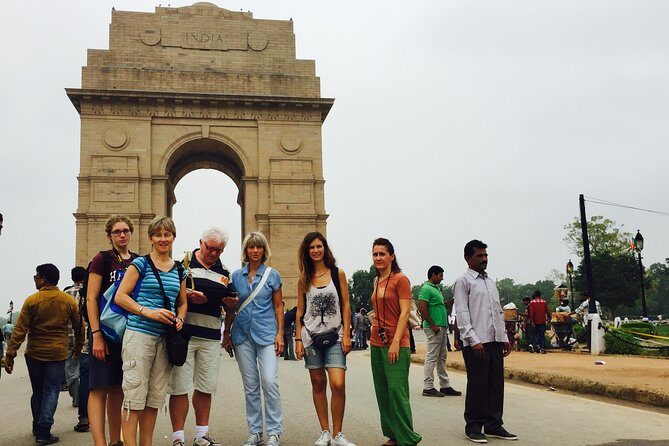
Later you’ll head toward New Delhi sights such as Qutub Minar (described here as the tallest stone tower in India), India Gate, Rashtrapati Bhavan, and the Lotus Temple.
This is a good mix of “massive scale” and “designed elegance.” The Lotus Temple is especially helpful because it’s distinctive; you can’t mistake it once you see it. And with a guide, you’ll understand what makes these sites different rather than just collecting photos.
Evening logistics: drive to Agra and sleep well
After sightseeing, you drive to Agra (about 205 km / 4 hours) and check into your hotel for the night. The value here is that the tiring parts—driving and hotel handoff—are handled for you, so you’re not trying to coordinate rides late in the day.
Day 3: Sunrise Taj Mahal and the move from Agra to Jaipur
If Day 2 is about seeing, Day 3 is about feeling the trip’s payoff.
Sunrise Taj Mahal: the timing is the whole point
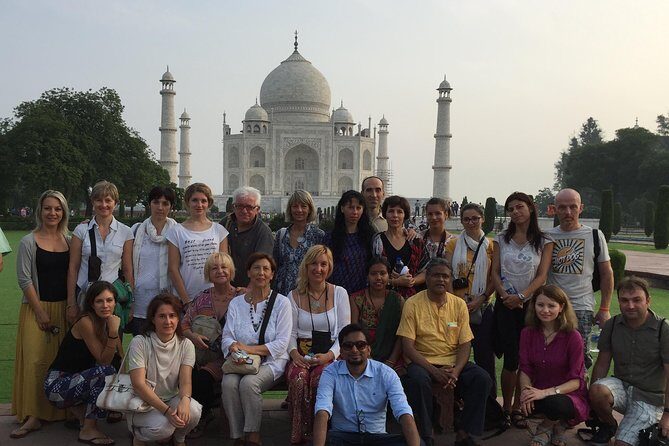
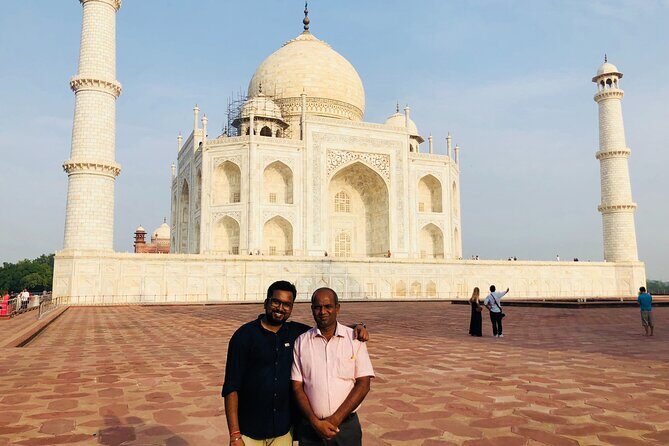
You start with the Taj Mahal at sunrise. That timing is the difference between Taj Mahal as a crowd magnet and Taj Mahal as a monument you can actually experience. The Taj Mahal is white marble, tied to Shah Jahan, and built in 1653. It’s also a UNESCO World Heritage Site.
The guide context is helpful because Taj Mahal isn’t just pretty. You’ll likely notice the details that don’t show up in rushed visits—symmetry, craftsmanship, and the way the building changes with the light.
After returning to the hotel, you enjoy breakfast and then move on.
Agra Fort: Mughal architecture beyond the main show
Next you check out and visit Agra Fort. This fort is described here as dating back to 1080 AD, and it’s a striking Mughal Empire example. It’s also the kind of sight where a guide can help you appreciate what you’re walking through, not just that you’re walking.
Drive to Jaipur, with Fatehpur Sikri as an optional detour
Then you drive from Agra to Jaipur (about a 5-hour journey). En route, you may visit Fatehpur Sikri, described as a deserted red sandstone city built by Emperor Akbar.
That stop is one of those “you’ll be glad you did” add-ons if you like historical places that feel quiet and different from the busy cities around them. If you’re not in a mood for extra ruins time, you might prefer conserving energy for Jaipur’s forts later. Either way, the road transfer itself is included and handled by chauffeur, which keeps the day from turning into a puzzle.
You reach Jaipur by late evening and check into your hotel.
Day 4: Amber Fort, City Palace, and Jantar Mantar—royal Jaipur made practical
Jaipur is the day where the Golden Triangle shifts from palaces and mausoleums to forts, design, and city planning.
Morning: Amber Fort and Jal Mahal
After breakfast, you go to Amber Fort (built in the 16th century) and Jal Mahal. Amber Fort is the big one, and it’s also the one where your time matters. Forts take longer than you think because there’s elevation, stairs, courtyards, and viewpoints.
Jal Mahal gives you a different mood: water and reflection rather than pure stone dominance. It’s a nice change of pace during a day that’s already packed with major stops.
Pass by Hawa Mahal, then shift to indoor grandeur
You’ll drive past Hawa Mahal, a Palace of Winds. Even when you only see it from the road, it registers because of the look—so many windows and a very specific silhouette.
In the afternoon, you’ll visit the City Palace and museum, then do a walk to the adjacent Jantar Mantar, an astronomical observatory.
Why Jantar Mantar is worth making time for
Jantar Mantar doesn’t just feel like another attraction. It helps you understand how people measured the sky long before modern tech. A guide makes this more than a quick walk-and-snap because you’ll get the meaning behind the structures.
Evening: leave some room for Jaipur at your speed
The evening is at your leisure, and that matters. Jaipur evenings can be perfect for your own food stop, a relaxed stroll, or just downtime after a full day of moving.
Day 5: one last Delhi-area transfer and the trip wrap-up
On the final morning, after breakfast, you check out and get transferred back to the Jaipur/Delhi airport for your onward journey.
That’s it—no extra sightseeing scramble. It’s a clean finish, which I appreciate when you’ve already spent several days threading between major monuments.
Price and logistics: what $485 covers—and what doesn’t
At $485 per person, you’re paying for a fairly “all-in” structure: 4 nights accommodation, daily breakfasts, one included dinner, and transportation in an air-conditioned car with chauffeur. You also get bottled water and soft drinks, plus local English-speaking guides for the Delhi, Agra, and Jaipur guiding portions.
You’re also getting helpful extras like a pickup/drop-off setup, group discounts, and a mobile ticket.
What’s not included
The big missing piece is entrance fees to monuments, along with camera fees (if any). The itinerary says entrance tickets are free in the schedule details, but the included/excluded section clarifies that monument entrance fees are not included. So treat your budget like this:
- Transport + guiding + lodging = covered
- Monument tickets = your responsibility
Is it good value?
I’d call it good value if you want convenience more than you want to micromanage your trip. If you enjoy planning and you’re comfortable booking hotels, guides, and transport on your own, you could possibly build a cheaper itinerary. But if you’re trying to save time, reduce stress, and keep your first India trip running smoothly, the package approach makes sense.
Also, the private nature reduces hidden costs: you’re not paying for separate rides or trying to stitch together multiple tickets while negotiating time.
Practical tips that make this tour feel smoother
Here are the small things that can save you hassle:
- Bring some cash for monument tickets. Entrance fees aren’t included, and the tour specifically advises you to check ticket prices at the counters.
- Don’t get talked into extra help at monuments. The tour recommends not engaging locals at monuments, which is useful advice in high-traffic spots.
- If you want photos with a cameraman, know the rough cost. The info here says about Rs 30–40 for photographs, if you choose to hire one.
- Expect a packed but efficient rhythm. Five days through three cities means you’ll spend lots of the day moving between sites. That’s normal for this route, so plan for comfy clothes and water.
- Language expectations: you’ll have local English-speaking guides for the Delhi, Agra, and Jaipur days. If you need another language, it’s available on prior request.
Who this Golden Triangle tour suits best
This is a strong match if:
- You’re short on time and want the main landmarks without the planning headache
- You prefer a private setup and want to ask questions in real time
- You like having transfers handled so you can focus on the sights
- You’re a first-timer who benefits from someone guiding you through old/new city layers
It may not be ideal if:
- You want lots of free-form exploration with minimal structure
- You hate early starts (sunrise Taj Mahal is the payoff, but it’s early)
- You want all costs fully bundled (entrance fees aren’t included)
Should you book this 5-day private Golden Triangle tour from Delhi?
I’d book it if your priority is a low-stress introduction to India’s biggest iconic sites. The mix of private guiding, air-conditioned chauffeur transfers, and included hotels with breakfast makes the trip easier to manage than assembling it yourself—especially on a tight schedule.
Skip booking only if you’re the kind of traveler who enjoys planning every detail and already has a handle on monument ticketing and transport logistics. In that case, you might prefer a more DIY style.
If you want, tell me your travel month and your group size, and I’ll help you estimate where entrance fees and sunrise timing will hit your schedule most.
FAQ
What’s included in the 5-day private Golden Triangle tour?
The tour includes 4 nights accommodation in select hotels, daily breakfast, dinner (as per itinerary), sightseeing as per the itinerary, air-conditioned surface transportation with chauffeur, bottled water and soft drinks, and local English-speaking guides for the Delhi, Agra, and Jaipur portions. Hotel pickup and drop-off and all taxes and handling charges are also included.
Are monument entrance fees included?
No. Entrance fees to monuments are listed as not included, and the tour recommends checking ticket price before leaving the ticket counters.
What kind of transport will I use?
You’ll travel in an air-conditioned car with a chauffeur. A sedan holds up to 3 passengers. For more than 3 passengers, an SUV or a 3-row car is used, and for more than 6 passengers, a van is used.
Do you provide hotel pickup and drop-off?
Yes. The tour includes hotel pickup and drop-off, and the representative meets you for pickup from the airport or hotel on Day 1.
Will I have a guide during sightseeing?
Yes. The tour includes local English-speaking guides for 1 day in Delhi, Agra, and Jaipur. Other language guides can be arranged on prior request.
What are the major stops during the trip?
You’ll cover key sights in Delhi, Agra, and Jaipur, including Raj Ghat and Jama Masjid in Delhi, Qutub Minar, India Gate, and Lotus Temple, sunrise Taj Mahal and Agra Fort in Agra, and Amber Fort, Jal Mahal, City Palace and Jantar Mantar in Jaipur.
Where does the trip start and what time?
Pickup is arranged from your airport or hotel on Day 1. The start time is listed as 12:00 am, but your actual pickup happens via the tour representative.
Are there any child-related rules?
Children aged 0–4 years are complimentary. Children 5 years and above are charged for an extra bed. The child rate applies only when sharing with 2 paying adults.