REVIEW · NEW DELHI
5-Days Luxury Golden Triangle Tour to Agra and Jaipur From Delhi
Book on Viator →Operated by Golden India Tour · Bookable on Viator
Five days, three cities, zero guesswork. I like how this Golden Triangle route stitches together Mughal Delhi, an Agra stop, and a sunrise Taj Mahal visit with a professional local guide and a private air-conditioned vehicle to keep the stress low.
My second favorite part is the pacing: sunrise Taj Mahal, then Fatehpur Sikri, and a full Jaipur day built around viewpoints, palaces, and Jantar Mantar. One consideration is crowd pressure, especially around the Taj, so plan on bringing water and comfortable walking shoes.
In This Review
- Key highlights to know before you go
- The Golden Triangle in 5 days: what you gain (and what you trade)
- Day 1 Delhi: from Mughal scale to Old Delhi quiet
- Delhi’s modern landmarks, then Jama Masjid
- Chandni Chowk by cycle rickshaw: the fun part costs extra
- Day 2 Agra: the drive, Agra Fort, and Mehtab Bagh photos
- Day 3 Sunrise Taj Mahal and Fatehpur Sikri: a full, meaningful day
- Day 4 Jaipur: Hawa Mahal, City Palace, Jantar Mantar, and forts with views
- Day 5: a relaxed morning, then back to Delhi or your next stop
- Price and value: what $8.70 per person really means
- Who this tour fits best
- Notes on guides and drivers: the trip quality is often in the details
- Should you book this 5-day Golden Triangle tour?
- FAQ
- What does the 5-day Golden Triangle tour include?
- Are pickup and transfers included?
- How are the Taj Mahal and other key sites handled?
- What about meals like lunch and dinner?
- Will I have a private guide and vehicle, or is it a group tour?
- How long are the drives between cities?
- What is the cancellation policy?
Key highlights to know before you go
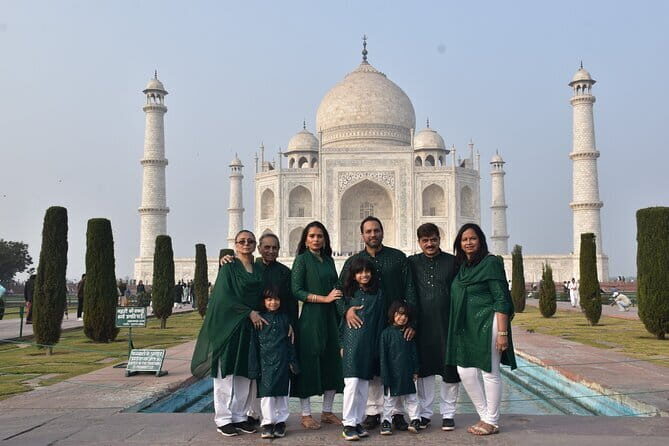
- Sunrise Taj Mahal visit: early start for better light and a calmer feel than later in the day
- Private local guides: helpful context at every major stop, not just directions
- Agra evening at Mehtab Bagh: a photo-focused garden stop aimed at the Taj view
- Jaipur packed with variety: Hawa Mahal (photo stop), City Palace, Jantar Mantar, plus forts
- Delhi Old City energy: Jama Masjid time, then a cycle rickshaw ride option through Chandni Chowk
- Good “in-between” structure: hotel check-in and transfers built into the flow so you’re not guessing
The Golden Triangle in 5 days: what you gain (and what you trade)
This kind of luxury Golden Triangle tour is built for people who want the big icons without spending the whole trip on logistics. You get a tight route: Delhi → Agra → Jaipur → back to Delhi, with private guiding and car service for the jumps between cities.
The trade-off is simple: it’s packed. You’ll cover a lot of ground each day, and you’ll be making choices fast once you’re inside the sites. If you’re the type who likes long museum hours and zero time pressure, you might find this schedule intense. If you want “see the highlights with real guidance,” it’s a strong match.
A few more New Delhi tours and experiences worth a look



Day 1 Delhi: from Mughal scale to Old Delhi quiet
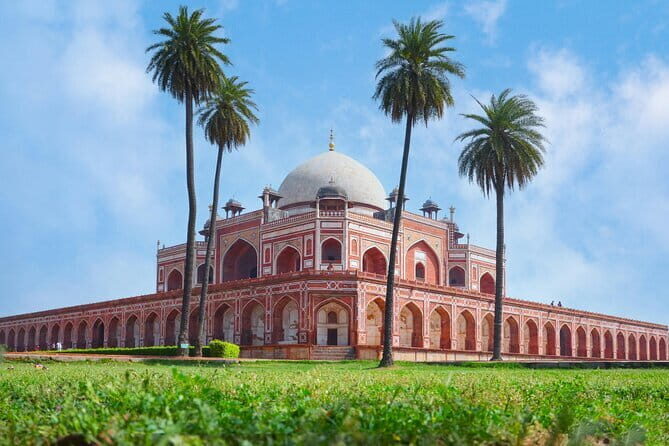
Delhi on Day 1 has a smart arc. You start with grand Mughal monuments, then move toward the city’s older core, finishing near the Yamuna river.
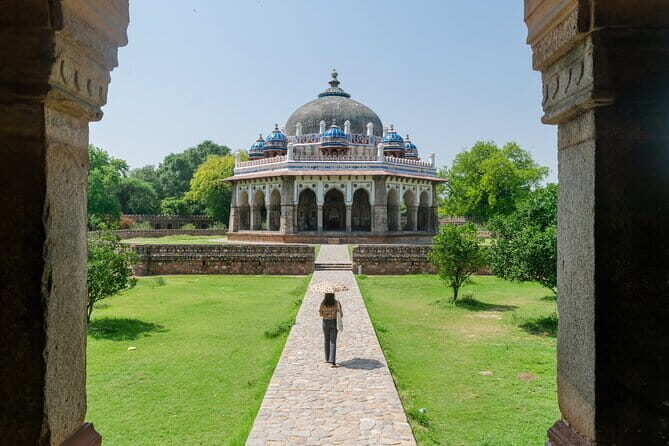
Humayun’s Tomb (about 2 hours) is a great opener because it sets the tone for what you’ll see later in Agra. It’s a major Mughal burial site built in 1570 by Empress Bega Begum, using Persian architectural influence. This first stop makes the rest of the trip easier to read, since you start noticing repeated design ideas.
Next comes Qutub Minar (about 1 hour), a UNESCO World Heritage Site and one of Delhi’s most iconic towers. It’s Indo-Islamic architecture at a huge scale, and it’s the kind of place where a guide helps you connect dates, style, and meaning without turning it into a lecture.
Then you get a left turn from history into calm with the Lotus Temple (about 45 minutes). It’s a Baháʼí House of Worship designed by Iranian architect Fariborz Sahba and opened to the public in December 1986. Even if you’re not religious, it’s a relaxing break from the day’s stone-and-story mode.
Delhi’s modern landmarks, then Jama Masjid
After the Mughal and worship stops, the tour shifts to British-era and post-independence monuments.
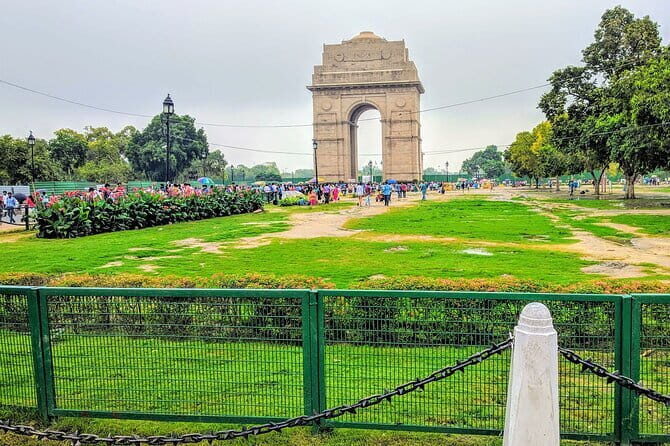
India Gate is a quick stop (about 30 minutes). It’s a 42-metre memorial arch designed by Lutyens and dedicated to Indian Army soldiers who died in World War I and related campaigns. It’s short, but it gives you a snapshot of how modern Delhi remembers its past.
Parliament House and Rashtrapati Bhavan add another layer. Parliament House is where power transitioned in 1947, and it remains in use today. Rashtrapati Bhavan, once the home of the British Viceroy, is the President’s residence. These aren’t “linger” stops, but they’re worth it if you like seeing how a capital evolves.
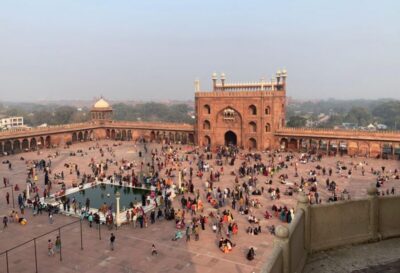
Then you move into Old Delhi with Jama Masjid (about 2 hours). This is one of the best contrasts of the whole tour: a massive mosque that sits above the surrounding noise. If you’re sensitive to crowds, this is also where having a guide matters, since you’ll get practical direction on how to move and when to pause for photos.
Chandni Chowk by cycle rickshaw: the fun part costs extra
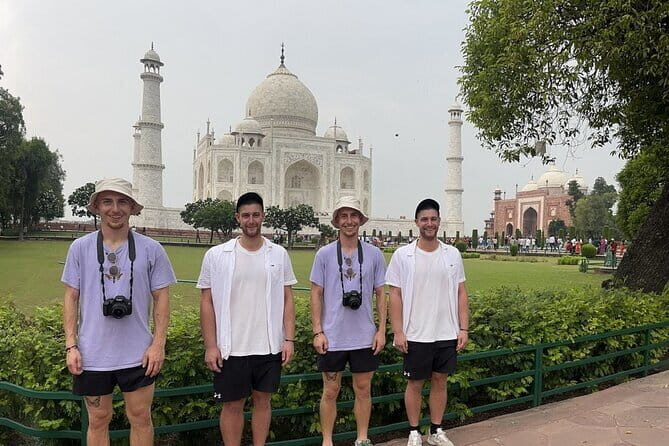
Chandni Chowk (about 45 minutes) is where Day 1 turns lively. The highlight here is a cycle rickshaw ride through the busy streets, but it’s listed as at your own expense. That’s a small add-on, but it’s also one of the easiest ways to feel the neighborhood without trying to navigate on your own.
You’ll also visit Raj Ghat (about 30 minutes), the simple black marble platform marking where Mahatma Gandhi was cremated in 1948. It’s quiet and well kept, and it’s a good way to end a day that starts big and then grows busier.
Day 2 Agra: the drive, Agra Fort, and Mehtab Bagh photos
Day 2 is built around one key move: getting to Agra and then focusing on the best surrounding viewpoints.
After breakfast, you take a drive of about 3 hours via expressway. On arrival, the guide meets you at the hotel and helps with check-in. That hotel handoff is more important than it sounds. In India, smooth check-in can be the difference between a good day starting on time and a day that slips.
In the afternoon, you visit Agra Fort (about 1 hour). This UNESCO World Heritage Site sits on the Yamuna River and served as the main residence of Mughal emperors. What I like about pairing Agra Fort with the Taj coming next is that you start understanding the Taj as part of a larger power story, not just a single photo moment.
Then there’s Mehtab Bagh (about 45 minutes), in the evening. It’s described as the garden of moonlit nights and is believed to have been designed by Shah Jahan to view the Taj away from the heaviest crowd. Even if the exact story matters less to you, the practical value is big: it gives you another perspective on the Taj later in the day, when lighting and angles change.





Day 3 Sunrise Taj Mahal and Fatehpur Sikri: a full, meaningful day
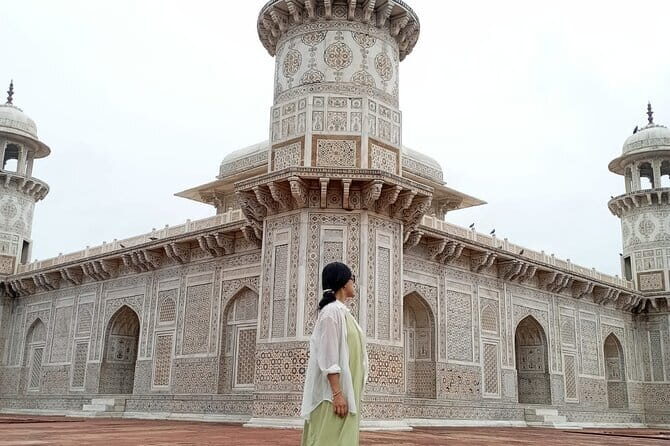
This is the day most people plan around, and the itinerary is clear about why: Taj Mahal at sunrise.
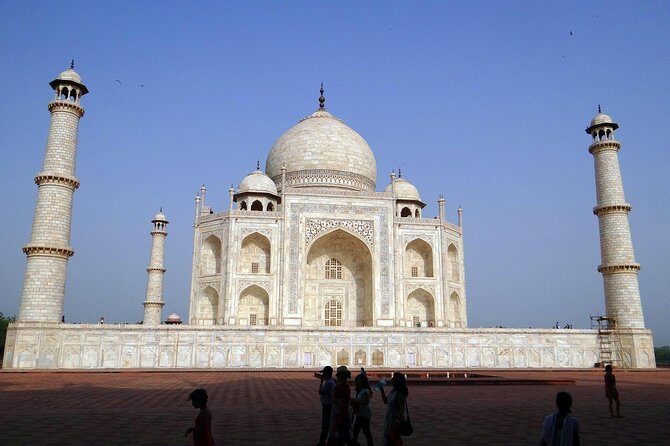
Taj Mahal (about 2 hours, UNESCO World Heritage Site) is visited at sunrise, and that timing is a gift. You’ll face fewer crowds than typical daytime hours, and the light tends to cooperate. It’s also the kind of visit where a good guide helps you notice details you’d miss if you were just chasing the perfect picture.
After Taj, you head to Fatehpur Sikri (about 1 hour, UNESCO World Heritage Site). Akbar built it, and it was the Mughal Empire’s capital for more than 10 years. It houses the Jama Masjid, described as one of the largest mosques in the world, and the site is packed with Mughal-era symbolism. The quick duration means you won’t “master” it, but it does give you a strong taste of why this place mattered.
Then you drive to Jaipur (check-in on arrival). This day is long, but it keeps things logical: Taj first, then a second UNESCO site right after, and only then the move to Rajasthan.
Day 4 Jaipur: Hawa Mahal, City Palace, Jantar Mantar, and forts with views
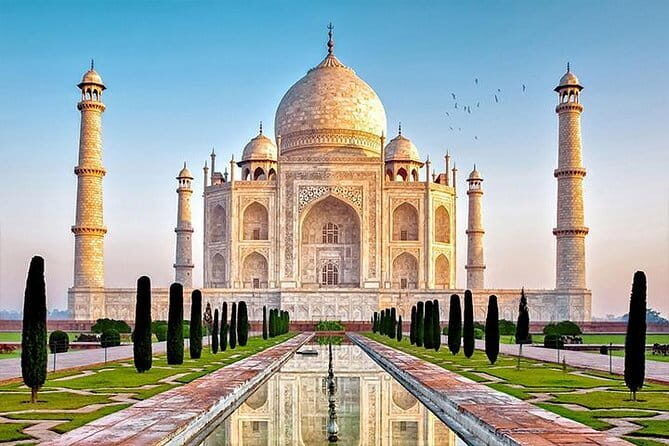
Jaipur on Day 4 is where the tour feels most like Rajasthan. You’re not just seeing buildings; you’re getting the city’s geography through viewpoints and hill forts.
You start with Hawa Mahal (photo stop, about 30 minutes). The Palace of Wind is Jaipur’s pink landmark, rising five stories. It was built by Maharaja Sawai Pratap Singh, and it’s famous for its delicate facade. Even as a photo stop, it’s helpful because it puts Jaipur’s architectural style on the map fast.
City Palace (about 1 hour) comes next. It’s the residence of the royal family, a complex of courtyards, gardens, and buildings from different eras. Some parts date to the early 20th century, which helps you understand Jaipur as something active and evolving, not only “old and frozen.”
Then you hit Jantar Mantar (about 1 hour, UNESCO World Heritage Site). This is the observatory: a collection of curved geometric structures designed to track the movement of stars and planets. If your brain likes patterns and measurements, this is one of the most satisfying stops on the entire trip because it turns “sightseeing” into problem-solving.
After that, the tour leans into big views. Nahargarh Fort (about 1 hour) sits on the Aravalli Hills, and you get both scenery and a sense of regal history. Jaigarh Fort (about 45 minutes) is perched on the Cheel ka Teela hill and is known as the Fort of Victory. It’s also the one that’s noted for housing the world’s largest cannon.
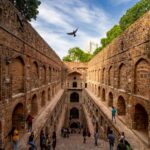
You finish Day 4 with two calmer, different-feeling stops: Birla Mandir Temple (about 30 minutes) and Panna Meena ka Kund (about 30 minutes). Birla Mandir is a modern marble temple dedicated to Lord Vishnu and Goddess Laxmi, set against Moti Dungri Hill. Panna Meena ka Kund is a stepwell with symmetrical geometry and terraces, used as water storage and a community space since the 16th century. Together they show Jaipur isn’t just forts and palaces; it’s also daily life infrastructure and modern religious architecture.
Day 5: a relaxed morning, then back to Delhi or your next stop

Day 5 keeps the ending practical. You relax in the morning, then drive back to Delhi/Gurugram/Noida for about 5 hours, either to the airport, your hotel, or another desired location.
That buffer matters because it gives you space to wrap up souvenirs, recharge, and not feel like you’re rushing out the door at the exact moment you finally get your bearings. If you’re connecting to another trip, this structure makes that handoff smoother.
Price and value: what $8.70 per person really means
The headline price is $8.70 per person, which is unusually low for a 5-day route that includes private guiding and a private air-conditioned vehicle. Even without knowing everything about the hotel tier, the value angle here is the logistics: you’re paying for time saved and confusion avoided.
What’s clearly included: private vehicle for sightseeing and transfers, professional private local guides for the sights, bottled water, and breakfasts (4). If you choose the option that includes hotels, you also get 4 nights of hotel accommodation on twin sharing plus daily breakfast.
One thing you should verify before you commit: meal inclusions look slightly inconsistent in the provided details. Lunch is listed under Included, but lunches are also listed under Not Included, and dinners aren’t included. I’d message the operator and confirm exactly which meals are covered so you don’t get surprised on the ground.
Who this tour fits best
This tour is a good match if you want:
- Major icons without planning transport between cities yourself
- A guide who can add context as you move through famous sites
- A compact schedule that still covers more than one UNESCO stop
It’s less ideal if you want lots of free time, quiet pacing, or long museum sessions. It also suits best for people comfortable with early starts, since sunrise Taj Mahal is part of the plan.
Notes on guides and drivers: the trip quality is often in the details
The strongest praise in the supplied feedback centers on how smooth the trip felt and how friendly and professional the guides and driver were. Names that show up include Mr. Ejaz as a guide, and drivers Brij and support from Ali. That lines up with what matters on a Golden Triangle: when timing, navigation, and explanations are handled well, the whole route clicks.
Should you book this 5-day Golden Triangle tour?
If your goal is Delhi, Agra, and Jaipur in 5 days with private guiding and car service, this is an easy “yes, consider it” option. The sunrise Taj timing, the mix of Mughal, science, forts, and Old Delhi, and the way the schedule builds in transfers make it strong value.
Book it if you’re okay with crowds around the Taj and you can do a busy day or two. Skip or adjust expectations if you want a slower travel pace or you hate early mornings. If you do book, send a quick message to confirm the exact meal plan (especially lunch coverage), then pack comfortable shoes and water, and you’ll be set.
FAQ
What does the 5-day Golden Triangle tour include?
It includes a private air-conditioned vehicle for sightseeing and transfers, professional private local tour guides, bottled water, and breakfast (4). If you book the option that includes hotels, it also includes 4 nights of hotel accommodation on twin sharing and daily breakfast.
Are pickup and transfers included?
Yes. Pickup is offered, and the itinerary includes transfers by private vehicle between Delhi, Agra, Jaipur, and back to Delhi/Gurugram/Noida.
How are the Taj Mahal and other key sites handled?
The Taj Mahal visit is scheduled at sunrise. Major sights listed with admission tickets include places like Humayun’s Tomb, Qutub Minar, Lotus Temple, Parliament House, Jama Masjid, Agra Fort, Mehtab Bagh, and the Jaipur UNESCO and major sites. Some stops are listed as admission free.
What about meals like lunch and dinner?
Breakfast is included (4). Lunch is listed under Included in the details, but lunches are also listed under Not Included, and dinners are listed as not included. I recommend confirming the exact lunch plan with the operator when you book.
Will I have a private guide and vehicle, or is it a group tour?
This is described as a private tour/activity where only your group participates, and it includes private local guides and a private vehicle. Group discounts are also mentioned.
How long are the drives between cities?
Day 2 includes an about 3-hour drive to Agra. Day 5 includes an about 5-hour drive back to Delhi/Gurugram/Noida.
What is the cancellation policy?
Free cancellation is available. You can cancel up to 24 hours in advance for a full refund, but cancellations within 24 hours of the start time are not refunded.