REVIEW · NEW DELHI
5 Days Golden Triangle Tour From Delhi
Book on Viator →Operated by TAJ TRIP INDIA · Bookable on Viator
Five days, three cities, one clear plan. This Golden Triangle tour is interesting because you get a tight route through Delhi, Agra, and Jaipur without the mental overhead of planning each connection, and you also have pickup and private transport to keep things moving. I especially liked the way the schedule balances big-ticket monuments (like the sunrise Taj Mahal) with quieter stops that add texture, plus the guides I saw referenced in feedback—such as Arif Khan (Delhi), Zaid (Agra), and Vikram Singh (Jaipur)—are described as professional and strong in English. The main drawback to consider: the pace is full, and many monument entries are listed as not included, so your final spending will depend on what you choose to pay on-site.
If you want India in a concentrated dose, this kind of itinerary makes sense. You’ll clock a few long drives, but the trade-off is that you’re not stuck figuring out transport and timing between cities.
Here’s how it feels in practice: you’ll start early when it matters, see the iconic sights that most people come for, and still have enough room to wander at the sites you care about. Just keep your expectations aligned with a 5-day overview, not a slow travel retreat.
In This Review
- Key highlights at a glance
- How the Golden Triangle route works in 5 days
- Day 1 in Delhi: Qutub Minar, Jama Masjid calm, and Lutyens landmarks
- Qutub Minar (Qutub complex)
- Jama Masjid in Old Delhi
- Lotus Temple + Raj Ghat
- Rashtrapati Bhavan, Parliament House, and India Gate (views from the outside)
- A practical note about Day 1 timing
- Day 2 drive to Agra: Yamuna Expressway, Itmad-ud-Daula, and Mehtab Bagh sunset
- The drive via Yamuna Expressway
- Itmad-ud-Daula (Baby Taj)
- Mehtab Bagh: seeing the Taj from the other side
- Overnight in Agra
- Day 3 sunrise Taj Mahal plus Agra Fort, City Palace, and Chand Baori
- Taj Mahal at sunrise
- Jantar Mantar, plus a nearby Hawa Mahal stop
- Lunch + City Palace and museum
- Agra Fort
- Chand Baori step well in Abhaneri
- Continue to Jaipur + hotel check-in
- Day 4 in Jaipur: Amer/Amber Palace, City Palace, Jal Mahal photos, and Jantar Mantar + Hawa Mahal
- Amber Palace (Amer Fort)
- City Palace complex
- Jal Mahal for a photo stop
- Jantar Mantar (UNESCO)
- Hawa Mahal (Palace of Winds)
- Day 5: Jaipur to Delhi drop-off after breakfast
- Price and logistics: what you pay for (and what you might add)
- Your guide experience (and why names matter)
- Who this Golden Triangle tour is best for
- Should you book this 5-day Golden Triangle Tour?
- FAQ
- What destinations are included in this 5-day Golden Triangle tour?
- How long is the tour, and how many nights are included?
- Is pickup included?
- Does the tour include breakfast?
- Is the Taj Mahal visit included, and when is it scheduled?
- Are monument tickets included in the price?
- What is the cancellation rule?
Key highlights at a glance
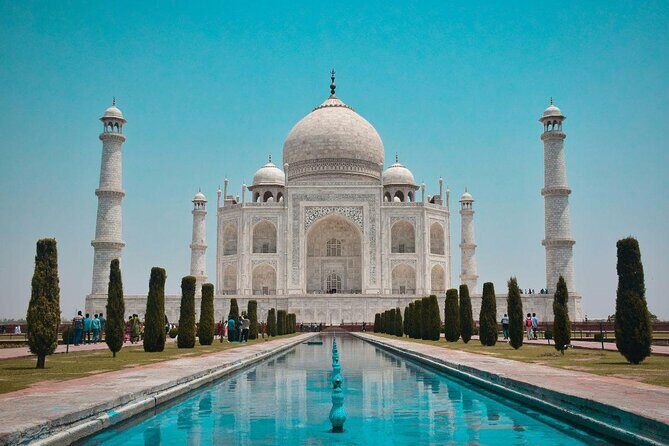
- Sunrise Taj Mahal timing for the best shot at fewer crowds and nicer light
- Hotel-to-hotel private transportation so you’re not piecing together your own day
- Delhi’s Old + New blend: Qutub Minar, Jama Masjid, India Gate, and more
- Agra sunset viewpoint at Mehtab Bagh for a different Taj Mahal angle
- Jaipur’s signature stops: Amber, City Palace, Jal Mahal photos, Hawa Mahal
- Professional guidance you can often match to a strong-English guide (names like Arif Khan, Zaid, Vikram Singh)
How the Golden Triangle route works in 5 days
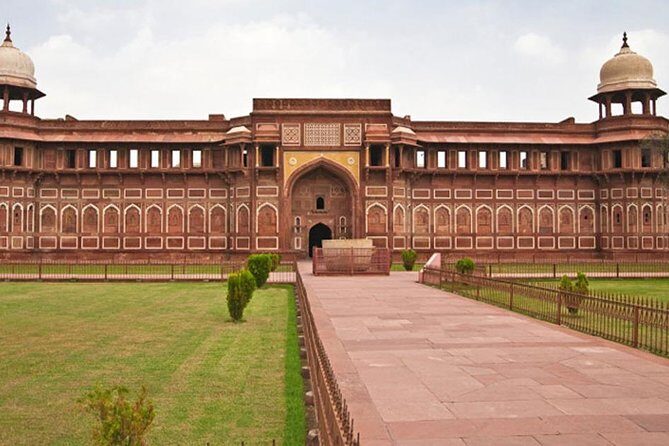
The basic structure is simple: Delhi first, then Agra, then Jaipur, with a return to Delhi on Day 5. You’re staying 4 nights total, and each morning you’re set up to see something memorable before the day gets too hot or busy.
Because this is built as a group/private experience (your group only), you’re not sharing the day with random strangers. That matters for time—your guide can adjust flow a bit, and the driver can keep the day on track.
The tour is also built around practical sightseeing blocks. In Delhi, you’ll cover both Old Delhi and the landmark zone from British-era city planning. In Agra, you’ll do the highlights around the Taj and the forts. In Jaipur, you’ll hit the fort complex area first, then move through the palaces and observatory-style architecture.
Two things to mentally plan for:
- You’ll have long drive days (Delhi → Agra, then Agra → Jaipur, plus Jaipur → Delhi).
- Many monuments require tickets you may pay separately, depending on your selected option.
A few more New Delhi tours and experiences worth a look



Day 1 in Delhi: Qutub Minar, Jama Masjid calm, and Lutyens landmarks
Delhi day is a real mix, and that’s the value. You’ll begin with hotel/airport pickup, then ease into major landmarks rather than starting with a vague city walk.
Qutub Minar (Qutub complex)
Qutub Minar is the star here: a tall, tapering minaret that’s part of the UNESCO Qutub complex. Even if you’ve seen photos, seeing it in person hits different because of the scale and the layered construction details across the complex. Plan on spending about an hour including time to move through the area.
Ticket note: the tour lists admission as not included for this stop, so budget for it if you’re paying on-site.
Jama Masjid in Old Delhi
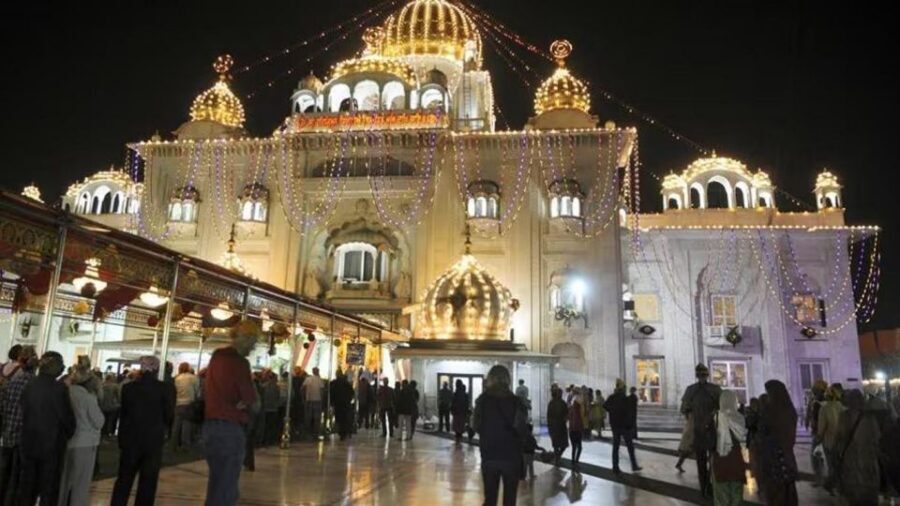
Next comes Old Delhi’s big rhythm shift: Jama Masjid. It’s a massive mosque that can hold tens of thousands of worshippers, and it’s built on an elevation that gives you a sense of the surrounding chaos below. It’s also a good moment to slow down because you’ll be inside a calmer, more structured space than the street scenes around it.
Again, ticket note: listed as not included. Still, the main “worth it” part is the architecture and the wide view from the mosque’s grounds.
Lotus Temple + Raj Ghat
Then you swing to two quieter, reflective stops. The Lotus Temple is a Bahá’í House of Worship known for its flower-like shape and the fact it’s open to all. It’s modern in vibe, and that contrast with Old Delhi is part of why this day works.
After that, Raj Ghat gives you a pause by the Yamuna River. It’s a well-kept park with a simple black-marble platform marking where Mahatma Gandhi was cremated in 1948. You’re not here for entertainment; you’re here to feel the solemnity.





Rashtrapati Bhavan, Parliament House, and India Gate (views from the outside)
The late-day landmarks are more about seeing the city’s grand layout. Rashtrapati Bhavan (the President’s House) is the formal residence with an enormous footprint of rooms and corridors. Parliament House keeps the story of India’s 1947 shift from British rule to independence alive—architecturally and symbolically.
Finally, India Gate is the memorial arch designed by Lutyens, honoring soldiers from multiple early 20th-century campaigns. You’ll only spend short blocks here, but it helps you understand how Delhi “reads” on a map: wide ceremonial avenues, monuments placed like punctuation marks.
A practical note about Day 1 timing
Day 1 stacks many stops with short durations. That’s great if you want coverage, but it means you’ll want to be organized: wear comfortable shoes, keep water handy, and be ready to move when your guide signals it’s time.
Day 2 drive to Agra: Yamuna Expressway, Itmad-ud-Daula, and Mehtab Bagh sunset
Day 2 is all about the transition from Delhi to Agra—and then landing in the Taj Mahal orbit.
The drive via Yamuna Expressway
You’ll head out about 3 hours to Agra. The route passes countryside, which helps the day feel less like pure transit and more like you’re trading one landscape for another. Arrival means check-in at your pre-booked hotel, and then you start site visits.
Itmad-ud-Daula (Baby Taj)
After settling, you’ll visit Itmad-ud-Daula, a Mughal mausoleum in Agra. It’s often called the Baby Taj because it shares stylistic DNA with the Taj Mahal, but you’re not overwhelmed by the mega-scale of the main monument. The focus here is the “jewel box” feeling—intricate decorative work that rewards slow looking.
Ticket note: listed as not included.
Mehtab Bagh: seeing the Taj from the other side
The best part of the day’s pacing is the sunset angle at Mehtab Bagh, a Taj Mahal view point across the river from the main grounds. The big advantage: you’re away from the main crowds, and the light tends to be gentler.
This is where you’ll likely take the kind of photos you can’t get from inside the usual flow—framing the Taj with river and garden context.
Ticket note: listed as not included.
Overnight in Agra
Overnight stays matter because it reduces the pressure of trying to do everything in a single day. You get a more relaxed start for Taj Mahal morning, which is the real “big moment.”
Day 3 sunrise Taj Mahal plus Agra Fort, City Palace, and Chand Baori

This is the day that most people talk about for a reason: sunrise at the Taj Mahal. The itinerary also squeezes in other standout monuments, plus a route through Abhaneri’s step wells on the way to Jaipur.
Taj Mahal at sunrise
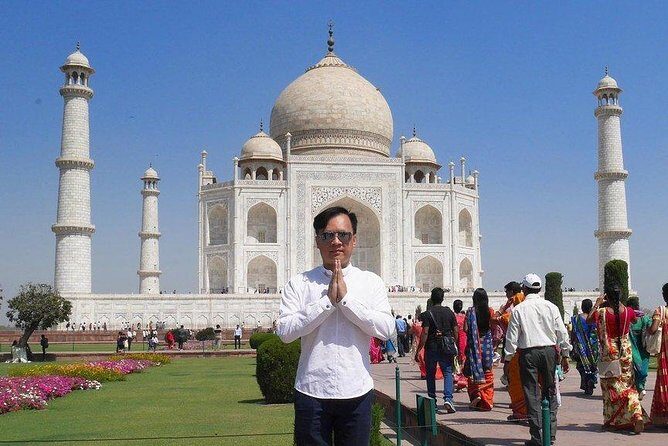
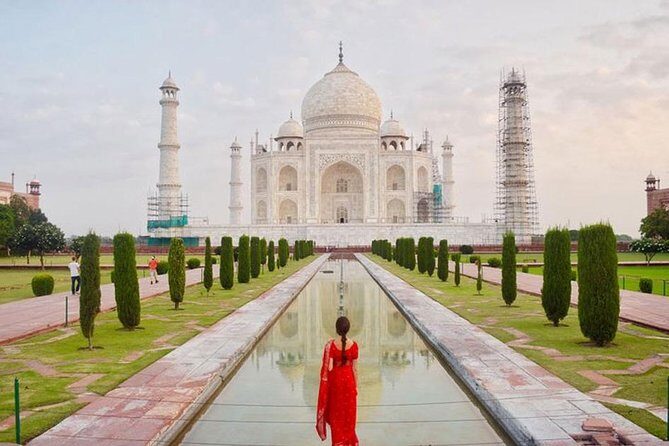
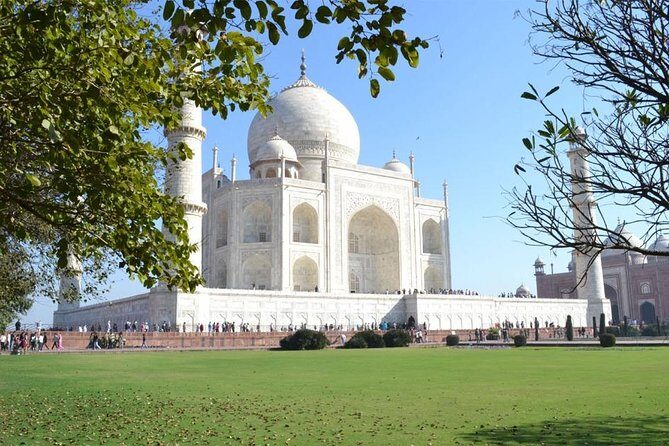
You’ll visit Taj Mahal at sunrise, a UNESCO World Heritage Site widely regarded as one of the world’s most beautiful buildings. It was built by Shah Jahan as a memorial for Mumtaz Mahal, and the emotional story behind it is part of what makes the visit feel bigger than architecture.
Sunrise timing can be worth it because you’ll start with softer light and better conditions than you’d often get later in the day.
Ticket note: listed as included nowhere in the day plan, so plan on tickets being extra unless your chosen package option covers them.
Jantar Mantar, plus a nearby Hawa Mahal stop
After Taj Mahal, you’ll return to your hotel for breakfast and then check out. Then you’ll visit Jantar Mantar (the observatory). This is a nice contrast because instead of Mughal grandeur, you’re looking at instruments designed for astronomical observation.
The plan also includes a stop called Hawa Mahal nearby. Even if you’ve heard the more famous Palace of Winds from Jaipur, here it’s presented as a nearby ornate stop tied to the sightseeing flow in Agra.
Lunch + City Palace and museum
You’ll have time for lunch at a restaurant between sightseeing blocks. Then you’ll head to City Palace and its museum, where you’ll see a mix described as Mughal and Hindu architectural fusion, along with items like paintings, Rajasthani armor, and costumes.
This portion is one of the best “break from outdoors” options in the day. If your feet are tired, the museum time can reset you.
Agra Fort
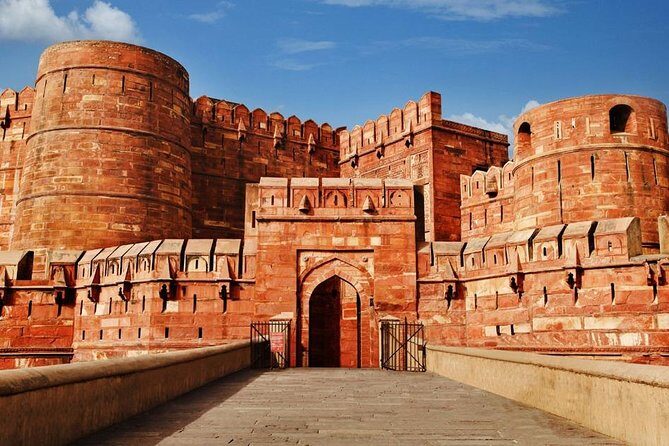
Next up is Agra Fort, another UNESCO World Heritage site. It was a main Mughal residence, and the fort’s palaces, balconies, and gardens are designed to show power and comfort at the same time. You’ll spend under an hour here, so it’s more of a focused tour than a slow exploration.
Chand Baori step well in Abhaneri
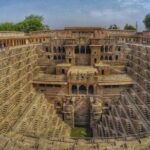
Then comes a detour that can be the surprise win: Chand Baori, a famous step well in Abhaneri. The big idea is that these step wells weren’t just for beauty—they were water management solutions for rain harvesting. Chand Baori is among the deepest and largest, with delicate carvings that make the descent and geometry feel almost like art.
It’s also a quick way to get a “Rajasthan feel” before you reach Jaipur.
Ticket note: listed as not included.
Continue to Jaipur + hotel check-in
After Abhaneri, you continue driving to Jaipur, check in, and rest. Day 4 will be more strenuous, so this is a smart reset.
Day 4 in Jaipur: Amer/Amber Palace, City Palace, Jal Mahal photos, and Jantar Mantar + Hawa Mahal
Jaipur day is structured around the city’s most recognizable monuments—starting with the fort area and ending with iconic views.
Amber Palace (Amer Fort)
Amer Fort/Amber Palace sits up on a hill and is a principal tourist attraction. You’ll spend around 2 hours here. The main value is how the fort works as a stage: you see grand palace spaces plus commanding views of the landscape below.
Ticket note: listed as not included.
City Palace complex
Then you move to City Palace, the seat of the Maharajas of Jaipur under the Kachwaha Rajput clan. The itinerary notes that the complex includes Chandra Mahal and Mubarak Mahal, plus other buildings that reflect the ruling era.
This is a good place to slow down and think about how power was displayed through architecture and design.
Ticket note: listed as not included.
Jal Mahal for a photo stop
Jal Mahal is a palace sitting on Man Sagar Lake. The itinerary frames it as a photo opportunity, and that’s exactly how to treat it. You’re not lingering for a long tour; you’re getting the signature image and the scenic lake setting.
Ticket note: listed as not included.
Jantar Mantar (UNESCO)
Back into observatory-style architecture with Jantar Mantar, built in 1734 and UNESCO-listed. The tour description highlights that it’s a collection of nineteen instruments used for astronomical observations with the naked eye.
Even if you’re not a science person, you can still enjoy the logic of the design: it’s history you can look at.
Ticket note: listed as not included.
Hawa Mahal (Palace of Winds)
The day closes with Hawa Mahal, the red and pink sandstone “Palace of Winds.” The five-storey pyramidal façade and honeycomb-like window design is the point. You’ll get about half an hour here, plus time for lunch at a local restaurant after full day sightseeing.
Ticket note: listed as not included.
Day 5: Jaipur to Delhi drop-off after breakfast
Day 5 is a clean finish: breakfast, check-out, then drive back to Delhi. The journey is about 5 hours, and you’ll be dropped at Delhi Airport or your location.
This day is mostly about comfort and timing. If you plan to fly the same day, you’ll want to build in extra buffer for traffic and any unexpected delays, since the plan is a 5-hour drive but real-world roads can vary.
Price and logistics: what you pay for (and what you might add)
The tour price is listed at $249.00 per person for roughly 5 days, with 4 nights accommodation, a government-approved guide, private transportation, and breakfast for 4 days.
That’s not a huge number if you compare it to the cost of:
- separate trains/private hires between cities,
- paying guides for multiple days,
- and handling the logistics yourself.
What’s likely to add to your total: monument entry fees. The itinerary repeatedly lists tickets as not included. At the same time, the package info says monument fees can be included if an option is chosen. So your real out-of-pocket cost depends on what you select when booking.
My practical advice: budget separately for entrance tickets to the big sites (Taj Mahal, forts, and the UNESCO-listed stops). Also plan for small personal expenses—water, snacks, tips, and anything you buy for the road.
One more value point: private transport plus pickup. That saves time and reduces stress, especially in Delhi and during the cross-city transfers.
Your guide experience (and why names matter)
The quality of this tour often comes down to the people doing the talking.
In feedback, I saw praise connected to specific guides—Arif Khan in Delhi, Zaid in Agra, and Vikram Singh in Jaipur—with mention of professional attitude, passion, and very good English. That combination is more important than it sounds. You don’t just want someone who can recite dates; you want someone who can explain what you’re seeing and why it matters.
On the planning side, the operator’s responsiveness also shows up in feedback. One example: Abid Khan Shan, described as the company owner, being helpful and reachable on WhatsApp when putting trips together.
If you care about understanding the monuments rather than just collecting photos, this kind of guide matching is a real advantage.
Who this Golden Triangle tour is best for
This 5-day plan fits best if you:
- want a first-time India route that covers the highlights quickly,
- like having a guide do the explanation so you don’t spend your day reading maps,
- value private transportation and hotel-to-hotel flow,
- can handle early starts (sunrise Taj Mahal is the big one).
It might be less ideal if you:
- hate busy schedules and constant moving,
- want long, unhurried museum time every day,
- prefer to control each stop’s timing without a set structure,
- are sensitive to extra costs once you arrive (since many entries are listed as not included).
Should you book this 5-day Golden Triangle Tour?
I’d book it if your priority is a well-timed, high-coverage Golden Triangle with minimal logistics stress. The sunrise Taj Mahal plus the sunset view from Mehtab Bagh is a strong pairing, and Delhi + Agra + Jaipur in 5 days works well if you want to see a lot without getting lost in planning.
I’d think twice only if you hate early mornings, dislike tight schedules, or need every monument fee included in the upfront price. If you book, do yourself a favor: ask what entrance fees are covered under your option, and bring extra cash/card just in case.
If you want a clear, structured taste of Northern India that still includes genuinely memorable viewpoints, this tour is a solid choice.
FAQ
What destinations are included in this 5-day Golden Triangle tour?
The tour covers New Delhi, Agra, and Jaipur.
How long is the tour, and how many nights are included?
It’s approximately 5 days with 4 nights of accommodation.
Is pickup included?
Yes, pickup is offered from your hotel, airport, or another desired location in Delhi.
Does the tour include breakfast?
Yes, breakfast is included for 4 days.
Is the Taj Mahal visit included, and when is it scheduled?
Yes, you’ll visit Taj Mahal at sunrise on Day 3.
Are monument tickets included in the price?
Many monument stops list admission tickets as not included. The package notes monument fees can be included if you select that option.
What is the cancellation rule?
You can cancel for a full refund if you cancel up to 24 hours in advance of the experience start time. If you cancel less than 24 hours before, the amount paid is not refunded.