REVIEW · NEW DELHI
5 Days Delhi Agra Jaipur Golden Triangle Tour with Private car and Driver
Book on Viator →Operated by Indo Routes · Bookable on Viator
A private car makes the Golden Triangle feel easy. I like the straightforward hit list of Delhi, Agra, and Jaipur, plus the hands-on guidance from an English-speaking driver. I also like that you’re set up for comfort all day with an AC car, bottled water, and support from the operator. One catch: entrance fees to monuments and museums are not included, so you’ll want to budget a little extra on top of the tour price.
This route moves fast, but it’s built around stops that actually matter: Mughal-era icons in Delhi and Agra, and Jaipur’s forts and palaces made of pink sandstone. You’re not wandering alone either, because hotel/airport pickup and drop-off are part of the deal, and the car includes Wi‑Fi for downtime between sights.
In This Review
- Key highlights in plain terms
- Golden Triangle in 5 days: why private transport is the smart move
- Price and logistics: what you pay $539.95 for (and what you shouldn’t forget)
- Day 1 Delhi: Red Fort, Qutub Minar, India Gate, Humayun’s Tomb, and Akshardham
- Red Fort: Mughal power in fortress form
- Qutub Minar: a victory tower with serious height
- India Gate: a war memorial moment of stillness
- Humayun’s Tomb: the garden-tomb that points toward Taj Mahal
- Swaminarayan Akshardham: a temple campus with modern presentation
- Day 2 Agra: Taj Mahal plus the Mughal sites that make it feel complete
- Transit to Agra: check-in, lunch, then sightseeing
- Taj Mahal: the symbol of love, and the tomb you’ll want to see properly
- Agra Fort: the political home base
- Tomb of Itimad-ud-Daulah: the so-called Baby Taj
- Day 3 the road to Jaipur: Fatehpur Sikri makes the drive worth it
- Fatehpur Sikri: a Mughal city tied to a Sufi saint
- Day 4 Jaipur: Amber Fort, City Palace, Hawa Mahal, Jal Mahal, Jaigarh, and Albert Hall
- Amber Fort: ramparts, gates, and Maota Lake views
- City Palace: courtyards, pavilions, and the museum option
- Hawa Mahal: the Palace of Wind in five pink layers
- Jal Mahal: a photogenic pause on Man Sagar Lake
- Jaigarh Fort: artillery history and the Jaivana cannon
- Albert Hall Museum: a 19th-century building with a specific story
- Day 5: leaving Delhi on a schedule that doesn’t wreck the trip
- What the private car experience adds day to day
- A practical reality check: ticketing and time budgeting
- Who should book this private Golden Triangle plan?
- Final call: should you book?
- FAQ
- FAQ
- What is included in the 5-day private tour?
- Are entrance fees to monuments included?
- What’s the tour price per person?
- Does the tour include pickup from my hotel or the airport?
- Do I get mobile tickets?
- What vehicle do we use for the private group?
- Is the tour actually private?
- What happens if the weather is bad?
- What if I need to cancel?
Key highlights in plain terms
- Private AC car and professional driver across Delhi, Agra, and Jaipur
- UNESCO-packed itinerary with major monuments in all three cities
- In-car comforts: Wi‑Fi, mineral water, and seasonal fruits/cookies
- Taj Mahal plus Mughal-era “support cast” like Agra Fort and Itimad-ud-Daulah
- Fatehpur Sikri on the way to Jaipur so you don’t waste driving time
- Good lodging gets called out: one past guest name-dropped Shiv Vilas as a standout stay
Golden Triangle in 5 days: why private transport is the smart move

This tour is the classic Golden Triangle route, but what makes it work in a short window is the private car. You’re not juggling trains, taxis, or trying to translate every step of the way. Instead, your driver handles the driving rhythm while you focus on the sights.
That’s a real advantage in India, where traffic can change hour to hour. With a private setup, you get flexibility if you need a bathroom break, a quick photo stop, or an extra few minutes to finish a visit without feeling like you’re “missing the train.”
You also get a cleaner-feeling experience day to day: an air-conditioned, clean and sanitized vehicle, plus mineral water bottles during your travel period. It’s small, but it matters after long days under the sun.
You can also read our reviews of more private tours in New Delhi



Price and logistics: what you pay $539.95 for (and what you shouldn’t forget)
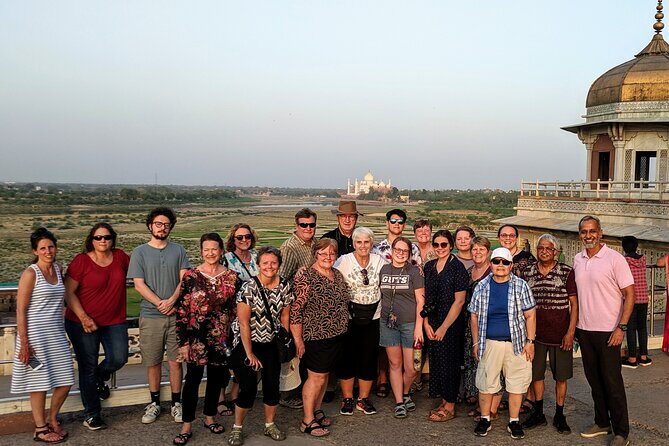
At $539.95 per person, you’re mainly paying for the 5-day private circuit: car, driver, and (if you choose the hotel option) 4 nights of accommodation with daily breakfast. You also get hotel or airport pickup and drop-off, GST, driver allowance, and professional support from the operator.
The parts not included are pretty clear: entrance fees to monuments and museums, and gratuities. That one detail can change your total budget more than people expect, especially on days with multiple ticketed stops.
Also note the “private” wording. It’s private in the sense that only your group participates, but vehicle size depends on group size: sedan for 1–2 people, Innova for 3–4, and a van type for larger groups. So you’re getting what you need for your headcount, not an undersized car.
Day 1 Delhi: Red Fort, Qutub Minar, India Gate, Humayun’s Tomb, and Akshardham
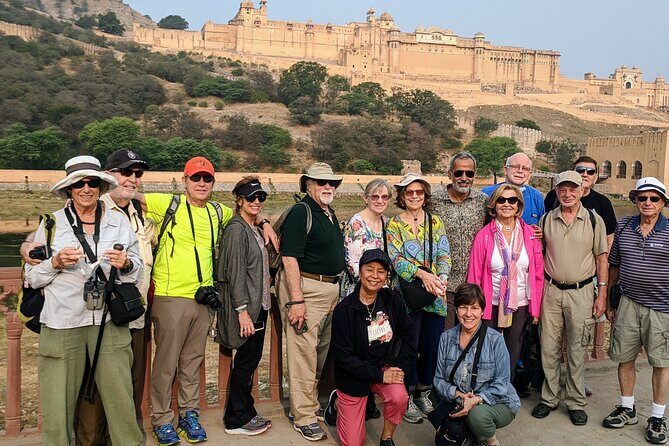
Day 1 is packed, but it’s a smart first day because Delhi’s story shows up fast. You start with Mughal power and then shift into older Delhi layers—minaret architecture, British-era memorials, and garden-tomb design—before ending at a modern temple campus.
Red Fort: Mughal power in fortress form
The Red Fort is a major anchor: Shah Jahan commissioned it in 1638 when shifting the capital from Agra to Delhi. You’ll see the peak of Mughal architecture under his reign, with a blend of Persianate palace style and Indian traditions.
Plan for time here. You’re looking at about 2 hours, and even if you don’t stay for every inner area, the scale and details make it worth slowing down.
Qutub Minar: a victory tower with serious height
Next is Qutub Minar in the Qutub complex, a UNESCO site. It’s 72.5 meters tall, started in 1192 by Qutb Ud-Din-Aibak, and expanded by successors including Iltutmish and later Firoz Shah Tuglak.
The main thing I like about this stop is how it gives you a different kind of architecture than the fort. It’s vertical, historical, and easy to orient yourself in quickly, even if you’re jet-lagged.
A few more New Delhi tours and experiences worth a look



India Gate: a war memorial moment of stillness
Then you hit India Gate, a sandstone arch built as a war memorial for troops of British India who died in wars between 1914 and 1919 during World War I. It’s free and usually quick—about 30 minutes.
It’s a useful pause after forts and towers, and it helps your brain reset before the next big historical site.
Humayun’s Tomb: the garden-tomb that points toward Taj Mahal
Humayun’s Tomb (built in 1570) is famous for being the first garden-tomb on the Indian subcontinent. It inspired later architectural developments that ultimately led to the Taj Mahal.
This stop is about connection—one style evolving into another across centuries. You can feel that “prototype” thinking when you compare it mentally to what you’ll see in Agra later.
Swaminarayan Akshardham: a temple campus with modern presentation
To close the day, you go to Swaminarayan Akshardham, a Hindu spiritual-cultural campus near Noida. It’s described as showing traditional and modern Hindu culture and architecture.
This is often the kind of place where your evening pace slows down naturally. It’s also a change of atmosphere from the older stone monuments of the morning.
Day 2 Agra: Taj Mahal plus the Mughal sites that make it feel complete
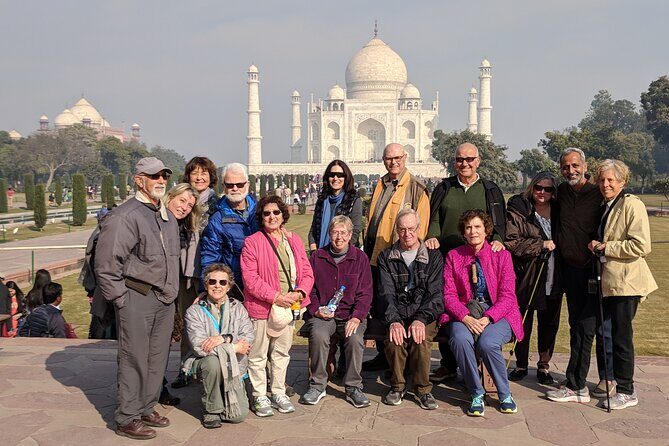
If Delhi gives you the frame, Agra fills in the close-ups. Day 2 has the big-name moment—Taj Mahal—plus other Mughal-era sites that help you understand what the empire’s landscape looked like.
Transit to Agra: check-in, lunch, then sightseeing
After early breakfast, you check out of your Delhi hotel and go to Agra. Once you arrive, you check in, have lunch, then start the sightseeing.
This pacing helps. Instead of landing and rushing straight into a marathon, you get a real base before you start walking.
Taj Mahal: the symbol of love, and the tomb you’ll want to see properly
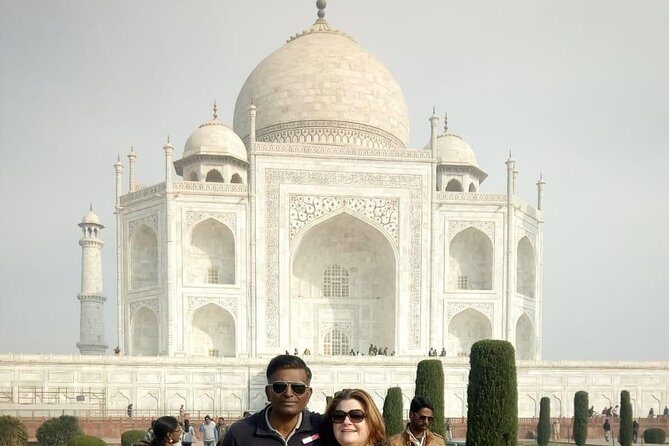
Taj Mahal is an ivory-white marble mausoleum on the Yamuna’s right bank. It was commissioned in 1632 by Shah Jahan to house Mumtaz Mahal, and it also houses Shah Jahan’s tomb.
For me, the best part of doing Taj Mahal with a full plan is that you aren’t only chasing the postcard view. You can spend about 2 hours here and actually take in the setting and symmetry, not just sprint through.
Also, tickets are not included in the tour price, so build time for the ticket moment itself. It’s still worth it, even if it adds a bit of friction.
Agra Fort: the political home base
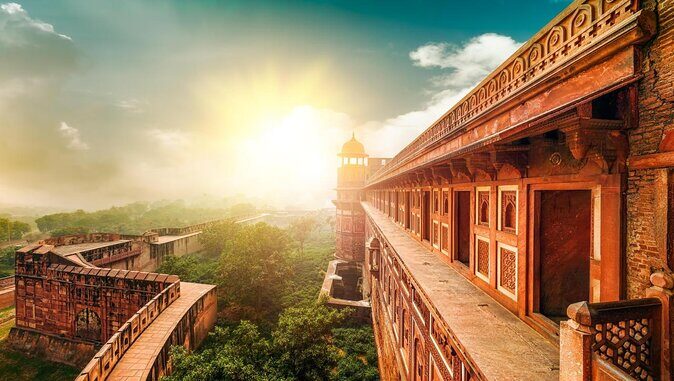
Agra Fort is a UNESCO site and was the main residence of Mughal emperors until 1638, when the capital shifted to Delhi. It’s about 2.5 km northwest of the Taj Mahal.
This is a good pairing with Taj Mahal because it shifts you from romance to power. Taj Mahal is personal. Agra Fort is administrative.
Tomb of Itimad-ud-Daulah: the so-called Baby Taj
Then you go to Itimad-ud-Daulah, often called the Baby Taj. It’s a Mughal mausoleum in Agra and frequently described as a draft of the Taj Mahal.
Don’t treat it like a smaller copy. It rewards a slower look. When you compare it with what you saw earlier, you understand how design ideas get refined.
Day 3 the road to Jaipur: Fatehpur Sikri makes the drive worth it
Day 3 is built around a key stop en route. After breakfast, you check out and head to Jaipur, visiting Fatehpur Sikri on the way.
The itinerary also gives you a quieter evening: you check into your Jaipur hotel, relax, and stay overnight. That’s a smart way to recover before full-on Jaipur sights.
Fatehpur Sikri: a Mughal city tied to a Sufi saint
Fatehpur Sikri is about 37 km from Agra. It was built by Emperor Jalal-ud-din Mohammad Akbar in honor of the Sufi saint Sheikh Salim Chisti.
You’ll see a city with red sandstone presence, and what’s especially interesting is how it reflects Akbar’s tolerant approach. The architecture shows a blend of Islamic and Hindu elements in style and design.
This stop is also a time-saver for your brain: it gives meaning to the drive. Instead of watching scenery and waiting for the next city, you get a distinct historical site before you arrive in Jaipur.
Day 4 Jaipur: Amber Fort, City Palace, Hawa Mahal, Jal Mahal, Jaigarh, and Albert Hall
Day 4 is where Jaipur stops stop being “sights” and start feeling like a story about rulers, defense, and everyday court life. You’ll hit fort walls, palace courtyards, signature pink architecture, and viewpoints that make photos feel easy.
Amber Fort: ramparts, gates, and Maota Lake views
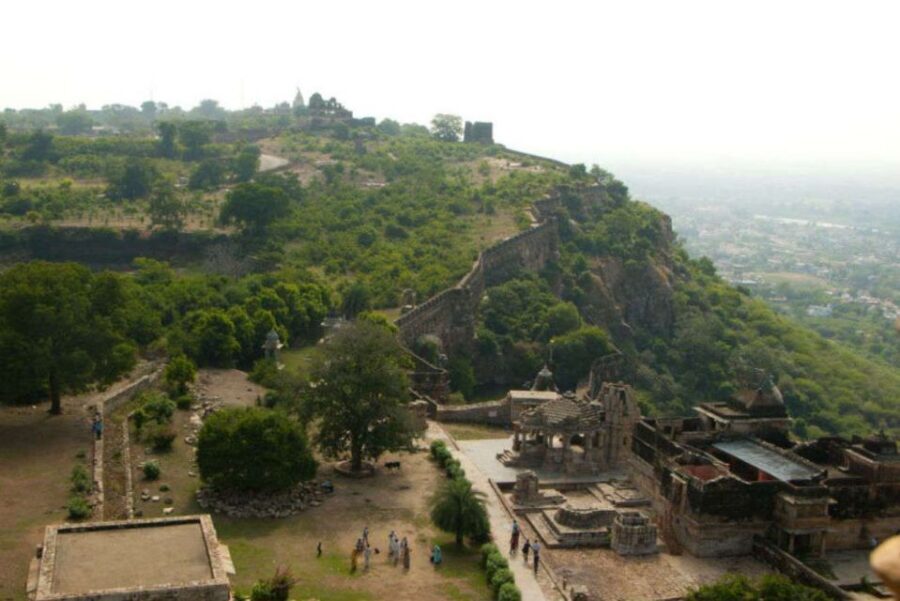
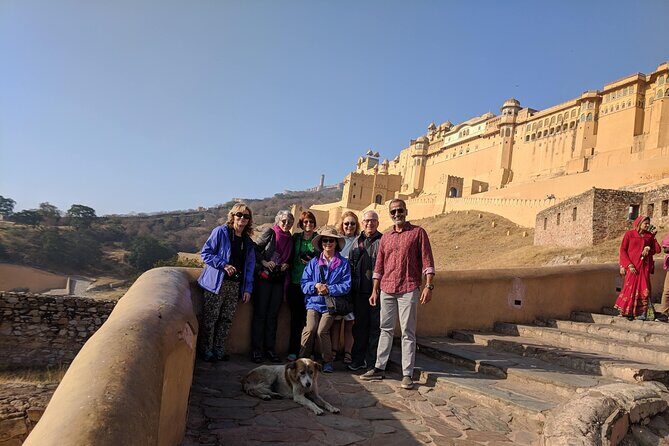
Amer Fort (Amber Fort) is known for Hindu design elements, with large ramparts, gates, and cobbled paths. It overlooks Maota Lake, which was once the major water source for the Amer Palace.
Even if you only see the main areas, the fort works because it gives you height and perspective. You get a feeling for how the kingdom controlled the terrain.
City Palace: courtyards, pavilions, and the museum option
Next is the City Palace complex. It includes courtyards, buildings, pavilions, gardens, and temples. Key featured areas include Chandra Mahal, Mubarak Mahal, the Shri Govind Dev Temple, and the City Palace Museum.
This is a “take your time” type of stop. You can wander by interest. If you like objects and indoor displays, the museum component will likely help.
Hawa Mahal: the Palace of Wind in five pink layers
Hawa Mahal is the iconic one—pink sandstone, built in 1799 by Maharaja Sawai Pratap Singh. It has five storeys with small latticed windows called jharokhas, blending Hindu and Islamic architecture.
This stop is shorter (about 30 minutes), which works because you want to see it from the outside and then move on while your energy is still strong.
Jal Mahal: a photogenic pause on Man Sagar Lake
Jal Mahal is a five-storey building on Man Sagar Lake. When the lake is full, four storeys are underwater and only the top floor is visible, giving a surreal look.
It’s scheduled for a shorter visit, around 30 minutes. I like this because it functions like a break. Your eyes need it after forts and palaces.
Jaigarh Fort: artillery history and the Jaivana cannon
Then you head to Jaigarh Fort, known for Rajput artillery production. It’s home to the Jaivana, a cannon made in 1720, described as the world’s largest cannon on wheels of the early modern era.
If you like historical tech or how power gets built, this stop can click in a different way than palace sightseeing.
Albert Hall Museum: a 19th-century building with a specific story
Finally, Albert Hall Museum. It’s named after Prince Albert of Britain and was constructed in 1876 to encourage him to visit Jaipur during his tour of the Indian subcontinent.
This is the closer that helps you understand Jaipur’s story extends into the modernizing era, not only the medieval-to-Mughal period.
Day 5: leaving Delhi on a schedule that doesn’t wreck the trip
On the last day, you have breakfast, check out, and get driven to Delhi airport or to your hotel so you can head out for your flight home.
What I like here is the simplicity. You’re not scrambling across the city at the end of a long circuit. You also know the day’s purpose is transition, not another packed sightseeing block.
What the private car experience adds day to day
A lot of Golden Triangle tours are basically a list of monuments. This one adds operational comfort.
You’re traveling in an air-conditioned, clean and sanitized car with Wi‑Fi enabled. You get mineral water bottles across the tour period, plus seasonal fruits and cookies during travel. These are the kinds of extras that keep the day from feeling like a constant grind.
And because there’s professional support from the office, you’re not just relying on your driver to handle everything. When timing gets tight—or when you just want the day to run smoothly—that support helps.
A practical reality check: ticketing and time budgeting
Since entrance fees are not included, treat this as a “tour plan” plus “ticket budget.” The tour itself covers the vehicle, driver, major sight stops, and the structure of the day.
You’ll also want to plan for the fact that many stops are ticketed and some are UNESCO sites with extra crowd pressure at peak hours. Even with a good driver and timing, the monuments part can vary.
So I suggest: keep your expectations flexible. If you arrive somewhere and lines are longer than you hoped, you’ll still get value if you accept that the day is about pacing, not sprinting.
Who should book this private Golden Triangle plan?
This tour makes sense if you want:
- A private, door-to-door feel with hotel pickup and drop-off
- A balance of major headline monuments plus supporting Mughal and Rajput sites
- Less stress than self-planning between Delhi, Agra, and Jaipur
It’s also a good fit for families and mixed-age groups because the car does the heavy lifting. On the other hand, if you love total independence and already know exactly how you’ll buy tickets and move between sites, you might not need a private package.
Final call: should you book?
I think this is a strong choice if you want a clean, structured Golden Triangle route without the hassle of managing transport between cities. The private AC car, English-speaking driver, and in-car comforts make it feel smoother than most “just book a car” options.
If you’re the type who likes to spend all day inside museums and hates ticket surprises, read the entrance-fee line carefully and budget for it. Once you do that, the itinerary gives you exactly what you came for: Mughal masterpieces in Delhi and Agra, then Jaipur’s forts and palaces on pink-sandstone scale.
FAQ
FAQ
What is included in the 5-day private tour?
The tour includes an air-conditioned private clean and sanitized car, a professional English-speaking driver, mineral water bottles, seasonal fruits and cookies in the car, Wi‑Fi in the car, and professional support by the office. It also includes hotel or airport pickup and drop-off, GST, driver allowance, and daily breakfast if you choose the option that includes hotels.
Are entrance fees to monuments included?
No. Entrance fees to monuments and museums are not included in the tour price.
What’s the tour price per person?
The price is $539.95 per person.
Does the tour include pickup from my hotel or the airport?
Yes. Hotel or airport pickup and drop-off are included.
Do I get mobile tickets?
Yes. The tour includes a mobile ticket.
What vehicle do we use for the private group?
For one to two people, it’s a four-seater sedan. For three to four people, it’s a six-seater Innova. For five to ten people, it’s an 11-seater tempo traveller/van.
Is the tour actually private?
Yes. This is a private tour/activity, and only your group will participate.
What happens if the weather is bad?
The experience requires good weather. If it’s canceled due to poor weather, you’ll be offered a different date or a full refund.
What if I need to cancel?
Free cancellation is available. You can cancel up to 24 hours in advance for a full refund. If you cancel less than 24 hours before the start time, the amount paid is not refunded.