REVIEW · NEW DELHI
5-Day Private Luxury Golden Triangle Tour From Delhi
Book on Viator →Operated by Best Golden Triangle Tour · Bookable on Viator
Golden Triangle, minus the hassle. This 5-day luxury-style route between Delhi, Agra, and Jaipur packs the big UNESCO hits into a smooth private schedule with an English-speaking private guide doing the explaining.
I also like the practical comfort of hotel pickup and drop-off, plus private transport between cities so you spend energy on sights, not logistics.
One key thing to watch: monument entrance fees are not included, so you’ll want to budget for tickets in advance.
In This Review
- Key Highlights You’ll Actually Feel
- Getting Picked Up in Delhi and Staying on a Tight, Private Schedule
- Day 1 in Delhi: Humayun’s Tomb, Qutub Minar, Lotus Temple, Old Delhi, and India Gate
- Humayun’s Tomb: Mughal gardens that teach you how to look
- Qutub Minar: The height and the Quranic carvings
- Lotus Temple: Peace-focused architecture with no ticket hassle
- Jama Masjid: Old Delhi’s big mosque atmosphere
- India Gate and Raj Ghat: A calm close to a dense day
- Day 2: Taj Mahal First, Then Agra Fort and the Baby Taj Area
- Taj Mahal: Plan for the ticket part, then enjoy the geometry
- Agra Fort: Mughal grandeur with thicker walls
- Itmad-ud-Daula (Baby Taj): Smaller scale, heavy craftsmanship
- Mehtab Bagh: The garden view across the river
- Day 3: Fatehpur Sikri’s UNESCO City—A Full Imagination Break
- Day 4 in Jaipur: City Palace, Hawa Mahal, Jantar Mantar, and the Temple Stops
- City Palace: A royal complex still in use
- Hawa Mahal: The Palace of Winds and its 953 window faces
- Jantar Mantar: UNESCO instruments built for astronomy
- Birla Mandir and Govind Dev Ji Temple: Peaceful pauses in a busy day
- Monkey Temple (Galtaji Temple): Natural springs and sacred kunds
- Day 5: Fly Out from Jaipur International Airport (Sanganeer)
- Price and Value: What $31.50 Per Person Really Covers (and What It Doesn’t)
- What to Budget for Entrance Tickets and Realistic Time at Each Site
- Who This Private Golden Triangle Tour Fits Best
- Should You Book This Golden Triangle Tour?
- FAQ
- How much does the 5-Day Private Luxury Golden Triangle Tour cost?
- How long is the tour?
- Does the tour include pickup and drop-off?
- Is there an English-speaking guide?
- Are monument entrance fees included?
- Are meals included besides breakfast?
- Is water provided during travel?
- What is included in the accommodation?
- What is the cancellation window for a full refund?
Key Highlights You’ll Actually Feel
- Private guide with English support across all main stops, so you’re not just staring at stone.
- Hotel pickup and drop-off to reduce the usual Delhi-to-Agra-to-Jaipur stress.
- 4 nights of accommodation with single/double sharing, plus breakfasts to start each day.
- A focused route hitting Humayun’s Tomb, Qutub Minar, the Taj Mahal, Agra Fort, and Jaipur’s major monuments.
- Water bottle while travelling, which sounds small until you’re in full sight-seeing mode.
- Mobile ticket and a private setup that keeps the day centered on your group.
Getting Picked Up in Delhi and Staying on a Tight, Private Schedule
The best part about a private Golden Triangle tour is that your day doesn’t turn into a scavenger hunt. With pickup and drop-off arranged, you start each morning knowing where you’ll go next, and your transport is already handled. That matters a lot in India, where distance is real and traffic can change your timing fast.
This package is built as a private activity, so it’s just your group. You’re also not guessing about basic needs: water bottles are included while you’re travelling, and breakfast is included for four mornings, which keeps the start of each day simple.
The other “value” move here is the structure. You still get the big monuments, but the days are paced so you’re not bouncing between neighborhoods with no plan. Your guide’s job is to connect what you see with why it matters—so the carvings at Qutub Minar and the layout of Mughal architecture in Agra feel related, not random.
You can also read our reviews of more private tours in New Delhi



Day 1 in Delhi: Humayun’s Tomb, Qutub Minar, Lotus Temple, Old Delhi, and India Gate
Day 1 reads like a greatest-hits tape, but it’s done in a smart order. You start with Mughal-era grandeur, then shift into Old Delhi’s religious and street-life area, and finish with a calmer memorial stop.
Humayun’s Tomb: Mughal gardens that teach you how to look
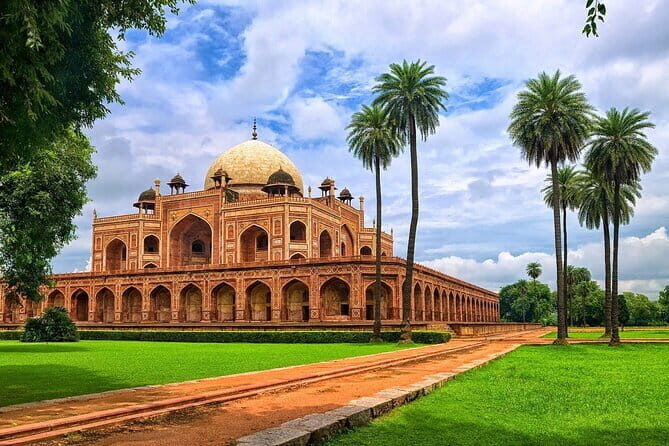
Humayun’s Tomb is one of those places where your first reaction is usually wow, then your second reaction is oh—this is designed. You get about an hour here, surrounded by gardens that help you understand Mughal symmetry and layout.
If you’re the kind of person who likes photography, this is a strong choice early in the day because the monument’s setting helps frame your shots. Also, it’s a UNESCO site, so you’ll notice the site management is more organized than many non-UNESCO stops.
Qutub Minar: The height and the Quranic carvings
Qutub Minar is the tallest stone minaret in India, and you can feel that scale even if you only spend around an hour. The key detail is the intricate carvings, including verses from the Quran, which makes the minaret more than a skyline landmark.
The practical tip: wear comfortable shoes and give yourself a minute to look upward. Your photos will improve once you stop trying to capture everything at eye level.
Lotus Temple: Peace-focused architecture with no ticket hassle
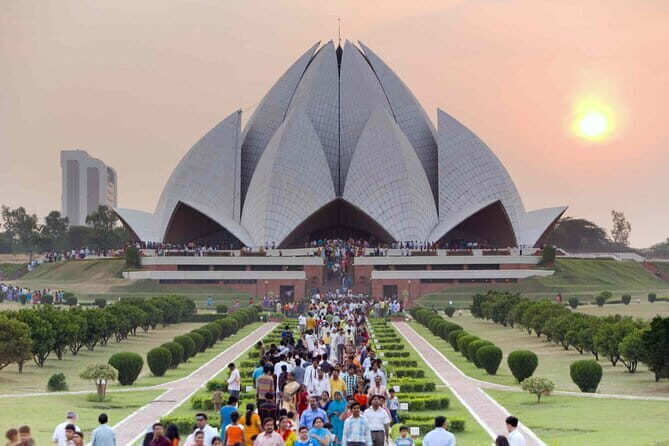
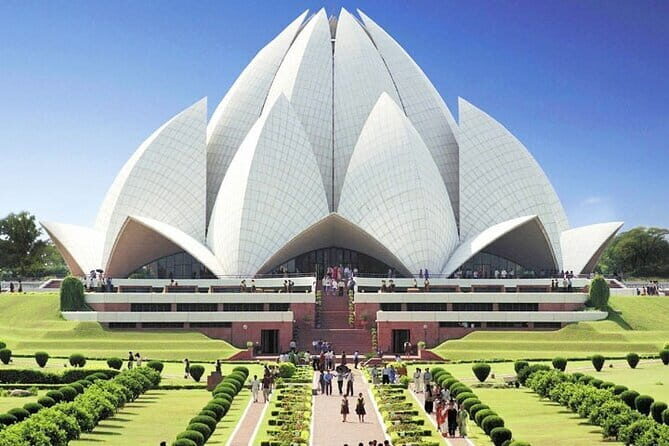
The Lotus Temple is shaped like a blooming lotus flower and is open to people of all faiths as a Baha’i House of Worship. Your stop is shorter (around 30 minutes), but it works well as a reset between older and busier parts of Delhi.
The good news: admission is free here, so you don’t need to plan a ticket queue.
A few more New Delhi tours and experiences worth a look





Jama Masjid: Old Delhi’s big mosque atmosphere
Jama Masjid sits right in Old Delhi and is one of the largest mosques in the area. Built by Emperor Shah Jahan in 1656, it’s known for the red sandstone and white marble architecture, which makes it visually striking in daylight.
This is also a stop where you’ll experience the energy of Old Delhi. If you’re sensitive to crowds or prefer quiet, keep your expectations flexible. With about 30 minutes on the clock, you’ll want to pick a viewing angle quickly and then enjoy the surroundings without overthinking it.
India Gate and Raj Ghat: A calm close to a dense day
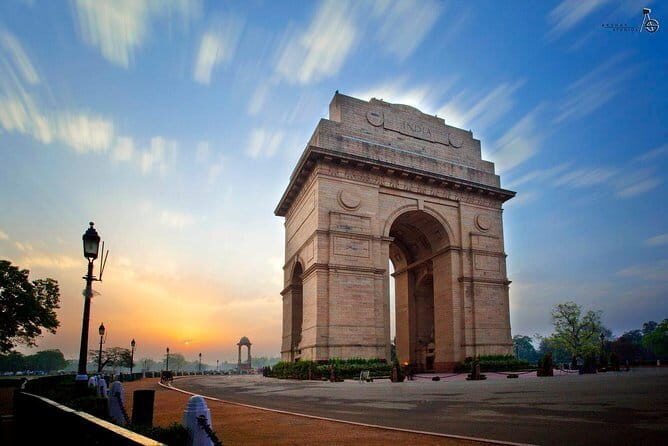
You finish Day 1 with India Gate for a short look (around 15 minutes), then a brief stop at Raj Ghat, the memorial dedicated to Mahatma Gandhi. These are not the kind of places you linger all day, but they’re useful for context—especially after the heavy architecture stops.
If your body is tired, this closing combo helps you wrap Delhi with something reflective rather than exhausting.
Day 2: Taj Mahal First, Then Agra Fort and the Baby Taj Area
Day 2 is built around Agra’s Mughal power center. The day’s main anchor is the Taj Mahal, and the rest of the time supports it—fortifications and other mausoleums that show the same design thinking from a different angle.
Taj Mahal: Plan for the ticket part, then enjoy the geometry
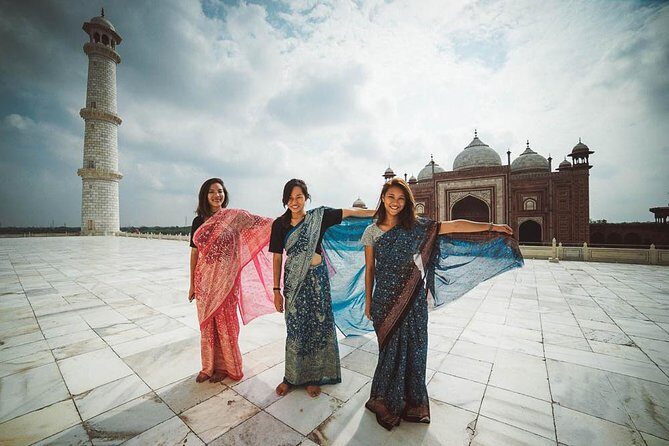
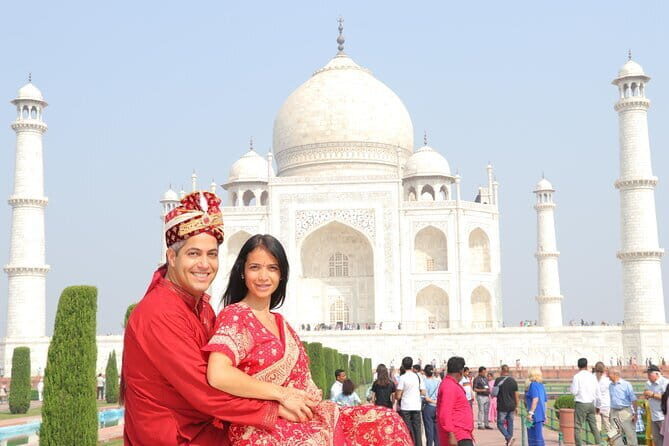
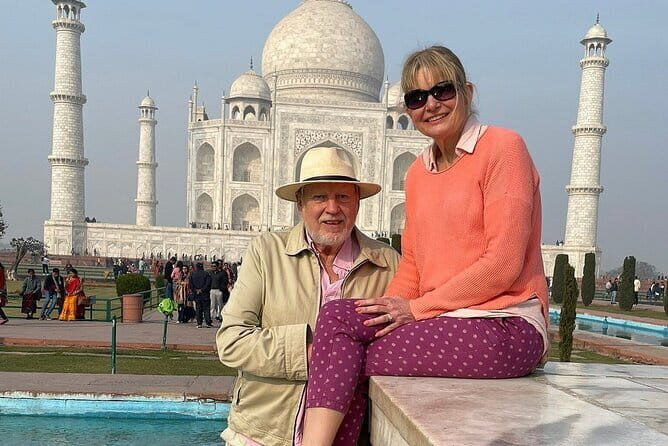
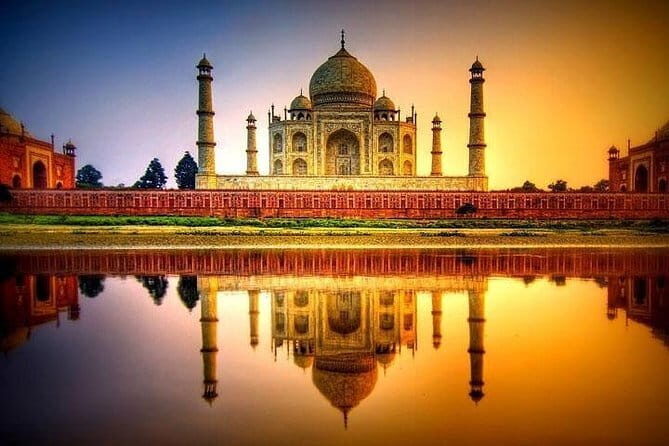
The Taj Mahal is one of the Seven Wonders of the World, and UNESCO status isn’t just a label here. You get about 45 minutes, and that’s usually enough to take in the white marble work and appreciate how the monument’s symmetry drives your attention.
Because admission ticket costs are not included, I strongly suggest you budget for it ahead of time so you don’t get stuck mid-trip. The time you do spend there will feel more relaxed if you know you’re not waiting on paperwork.
Agra Fort: Mughal grandeur with thicker walls
Agra Fort offers a different kind of wow than the Taj. It’s a UNESCO World Heritage Site and a major red sandstone complex connected to Mughal rule. With about an hour, you can walk enough to understand how the fort functions as a power base.
This is where you start noticing how rulers wanted both beauty and control—architecture plus defense. If you enjoy interiors or palace structures, your guide can point out the key spots so you don’t wander with no direction.
Itmad-ud-Daula (Baby Taj): Smaller scale, heavy craftsmanship
Itmad-ud-Daulah is often called the Baby Taj and is known for intricate marble inlay work. You’ll have about 30 minutes, which is just about right for this kind of detail-focused monument.
It’s a great stop if you like art and craftsmanship. You’ll get more satisfaction by slowing down than rushing for photos.
Mehtab Bagh: The garden view across the river
Mehtab Bagh is across the Yamuna River and is designed as a kind of mirrored garden layout. The “perfect replica” idea is part of why it’s worth seeing, especially if you want a different angle on the Taj.
You’ll get about 30 minutes, so keep your goal simple: look for the view lines and let the garden layout do the work.
Day 3: Fatehpur Sikri’s UNESCO City—A Full Imagination Break
Fatehpur Sikri is a UNESCO World Heritage Site near Agra, built by Emperor Akbar in the 16th century. You get around an hour, and that’s enough to notice the Indo-Islamic architecture blend and the way the site functions like a planned royal city.
This is one of the days I’d call “brain food.” The Taj and forts show power and love, but Fatehpur Sikri helps you see the wider ambition of building a whole kingdom on a single plan. Even if you’re not a walking encyclopedia, the site feels designed rather than random.
A practical consideration: because your time is limited, don’t try to see every structure. Work with your guide to prioritize the main areas you want to understand, then enjoy the rest.
Day 4 in Jaipur: City Palace, Hawa Mahal, Jantar Mantar, and the Temple Stops
Jaipur is where the Golden Triangle shifts from Mughal muscle to Rajput-style showmanship and symbolic design. Day 4 is packed, so I like that it mixes palace architecture with religious sites and a UNESCO observatory.
City Palace: A royal complex still in use
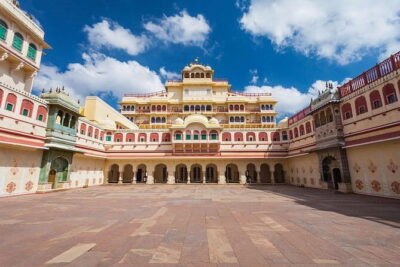
City Palace is the residence of Jaipur’s royal family and blends Mughal and Rajasthani architecture. With about an hour, you’ll get a solid orientation to how the complex is laid out, and you’ll see the courtyards and grand halls that made Jaipur’s royal power visible.
If you’re interested in how ruling styles connect across dynasties, this is the best stop to notice those overlaps.
Hawa Mahal: The Palace of Winds and its 953 window faces
Hawa Mahal is a five-storey pink sandstone icon with 953 jharokhas (arched windows). You get only about 30 minutes, so this is a quick hit. The trick is to focus on the facade pattern and the idea behind the windows—how it functioned for observation and public-facing presence.
Short stop means fewer chances to linger, so choose your photo angle and don’t waste time circling.
Jantar Mantar: UNESCO instruments built for astronomy
Jantar Mantar is a UNESCO site and an extraordinary astronomical observatory built by Maharaja Sawai Jai Singh II. It houses large instruments, and there are 19 major ones featured here.
With about 30 minutes, you won’t master astronomy, but you will understand that this wasn’t decoration. Your guide can help you read what the instruments were built to measure, which turns “cool shapes” into “oh, that’s clever.”
Birla Mandir and Govind Dev Ji Temple: Peaceful pauses in a busy day
Birla Mandir is a marble temple dedicated to Lord Vishnu and Goddess Lakshmi. Govind Dev Ji Temple is dedicated to Lord Krishna and located within the City Palace complex. These are shorter stops (around 30 minutes each), but they act as breathing space between the harder architecture sites.
If you want a moment that isn’t about taking in grand structures, these two provide a calmer tone. Admission ticket details are not included here, but the timing is structured so you won’t feel rushed.
Monkey Temple (Galtaji Temple): Natural springs and sacred kunds
Monkey Temple, also known as Galtaji Temple, is in the Aravalli Hills and is famous for natural springs and sacred water tanks (kunds). You’ll have about 30 minutes, and it’s a different kind of attraction—less palace, more pilgrimage site.
Because your time is short, aim to see the main water features and enjoy the hill setting. Wear shoes you don’t mind getting a little dirty; sacred places often involve uneven ground.
Day 5: Fly Out from Jaipur International Airport (Sanganeer)
Your tour wraps with arrival at Jaipur International Airport, also called Sanganeer Airport. It’s about 13 kilometers from the city center, which is useful to know because it affects how quickly you’ll reach the airport once your sightseeing ends.
This final day is mostly about transit, so don’t plan anything ambitious after the pickup.
Price and Value: What $31.50 Per Person Really Covers (and What It Doesn’t)
At $31.50 per person, this package looks like a bargain on paper—but value comes down to what’s included versus what you pay separately. You’re getting 4 nights of accommodation, breakfast, hotel pickup and drop-off, a private English-speaking guide, and water during travel. You also have tolls and parking covered, which can add up on multi-city routes.
The trade-off is clear: monument entrance fees are not included. That means the “final cost” depends on how many paid sites you enter and what ticket prices are during your travel dates.
Still, the private setup is where the money can feel justified. Between cities, time is expensive. Having a private guide and private transport means you’re not paying for the same day twice in stress and lost time.
If you’re traveling as a small group and you want the Golden Triangle highlights without turning your trip into a spreadsheet, this price can feel very fair.
What to Budget for Entrance Tickets and Realistic Time at Each Site
Since entrance fees are not included, you’ll want to plan for at least the paid sites like the Taj Mahal and likely others that charge entry. Your guide can usually help you understand which places will require tickets before you arrive, and you can budget accordingly.
Also, pay attention to the time allotments. Many key stops are around 30 to 60 minutes, which works if you want highlights with context. If you’re the type who likes slow museum pacing, you may wish you had more time at places like Agra Fort or the detail work at Itmad-ud-Daula.
The good news is that your route is structured for momentum. You’ll see a lot, and the guide’s narration helps you make sense of it.
Who This Private Golden Triangle Tour Fits Best
This tour fits you best if you want the classic Delhi–Agra–Jaipur route with private guidance and minimal hassle. It’s a strong choice for couples, families, and friends who prefer comfort and a clear plan.
It also suits you if you want UNESCO sites like Humayun’s Tomb, the Taj Mahal, Qutub Minar, Agra Fort, and Jantar Mantar without spending your trip hunting transportation and timing. One reported highlight from an NRI couple: their Delhi and Agra guidance included Mr. Mohd. Riyaz, described as extremely strong in the way he handled the experience.
If you travel solo and you don’t want to do everything yourself, private planning can be a good way to keep the trip moving with fewer decisions on the road.
Should You Book This Golden Triangle Tour?
I’d book it if you want a private Golden Triangle with a guide doing the heavy lifting and you’re fine budgeting for monument entrance fees. The route makes sense: start with Delhi icons, anchor on the Taj Mahal, add Fatehpur Sikri for a bigger “city” feeling, then go full Jaipur architecture and observatory day.
I wouldn’t book it if you need tons of free time inside each monument. The stops are timed, so this is a highlights-and-context style trip, not a slow wander plan.
If you like clear schedules, comfort, and an English-speaking guide, this is one of the more practical ways to do the Golden Triangle in five days.
FAQ
How much does the 5-Day Private Luxury Golden Triangle Tour cost?
The price is listed as $31.50 per person.
How long is the tour?
It’s about 5 days (4 nights and 5 days).
Does the tour include pickup and drop-off?
Yes. Hotel pickup and drop-off are included.
Is there an English-speaking guide?
Yes. An English speaking private guide is included.
Are monument entrance fees included?
No. Monument entrance fees are not included.
Are meals included besides breakfast?
Breakfast is included for 4 days. Drinks are not included.
Is water provided during travel?
Yes. Water bottle while travelling is included.
What is included in the accommodation?
The package includes 4 nights of accommodation with single/double sharing basis.
What is the cancellation window for a full refund?
Free cancellation is available, and you can cancel up to 24 hours in advance for a full refund.