REVIEW · NEW DELHI
5-Day Private Golden Triangle Tour with Udaipur & Pushkar by Car
Book on Viator →Operated by Taj Mirror Tours · Bookable on Viator
Delhi to Udaipur in five days sounds ambitious, and it is. What makes this one work is the private AC car plus a live tour guide who helps you connect the dots between Mughal monuments and Rajasthan’s royal-and-religious sites. You’ll get sunrise time at the Taj Mahal, then forts and palaces, and finally the sacred water of Pushkar and the lake-town calm of Udaipur.
Two things I really like: you’re not stuck on a cramped group schedule, and the itinerary keeps you moving with smart pacing (big sights early, lighter stops later). I also like that the tour includes pickup in Delhi and drop in Udaipur, so you’re not piecing rides together. One drawback to plan around: monument entry fees are not included, and some days (like Fridays for the Taj Mahal) can change what you’re able to see.
If you want the basics—private driver, live guide, and a tight route—this tour fits. The only real question is whether you’re okay with early starts and budgeting for entry tickets along the way.
In This Review
- Key highlights worth your attention
- Before you go: the tour style (and who it suits best)
- Day 1 in Delhi: Qutub Minar, Lotus Temple, and Humayun’s Tomb momentum
- Pickup and the Delhi orientation
- Qutub Minar: the skyline wow moment
- Lotus Temple: quiet, no idols, all-faith space
- India Gate and Humayun’s Tomb: monuments with a big mood
- Practical note for Day 1
- Day 2 in Agra: Taj Mahal sunrise plus the Mughal forts
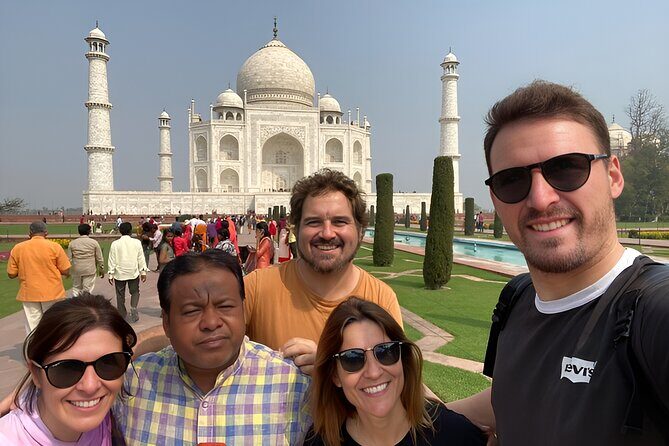
- Taj Mahal at sunrise: why timing matters
- Agra breakfast and then the “fort day”
- Baby Taj (Itmad-ud-Daula): calmer, detailed, easier to enjoy
- Budget reality for Agra day
- Day 2 to Day 3 transfer: Jaipur arrival, then royal Jaipur landmarks
- Jaipur evening reset: markets without pressure
- Day 3 in Jaipur: City Palace, Hawa Mahal, and Jantar Mantar
- City Palace: layers of Rajput, Mughal, and European influence
- Hawa Mahal: a façade with a job
- Jantar Mantar: astronomy made of stone
- Optional scenic view: Jal Mahal
- Albert Hall Museum: an easy cultural wrap
- Day 4: Pushkar’s sacred lake and Brahma Temple, then drive to Udaipur
- Pushkar start: sacred town with a legend
- Pushkar Lake: ghats, rituals, and the holy water focus
- Brahma Temple: rare for a reason
- Savitri Temple trail: a view break on Ratnagiri Hill
- Drive to Udaipur: arrive late, unwind by the lakeside
- Day 5 in Udaipur: City Palace, temple carvings, and Lake Pichola sunset
- City Palace: royal opulence on Lake Pichola
- Jagdish Temple: active worship and stone detail
- Sahelion Ki Bari: garden time that actually helps
- Lake Pichola boat ride: the classic Udaipur memory
- Optional Bagore Ki Haveli dance show
- Airport or station drop
- Price and Logistics: does $555 buy good value?
- Guides and communication: why it can feel smooth
- Should you book this 5-day private route?
- FAQ
- Is the tour private or shared?
- Do you get pickup in Delhi and a drop in Udaipur?
- Is there a live tour guide?
- What transportation is included?
- Are hotel and breakfast included?
- Are monument entry fees included in the price?
- What if I’m visiting on a Friday?
- Do I need photo ID at monuments?
- Do I need to remove shoes at temples?
- When is the Pushkar Camel Fair?
Key highlights worth your attention
- Sunrise at the Taj Mahal to catch the changing marble tones and morning calm
- Qutub Minar + Lotus Temple in Delhi for a strong first-day mix of history and quiet
- Amer Fort and Agra Fort layering: Mughal power and architecture in two different cities
- Pushkar Lake + Brahma Temple: one of India’s most distinctive sacred-town experiences
- Udaipur boat ride on Lake Pichola for a classic sunset-style finish
- Clear guidance from your team, including guides named Azhar, Neeraj Sharma, and Wasim in past trips
Before you go: the tour style (and who it suits best)
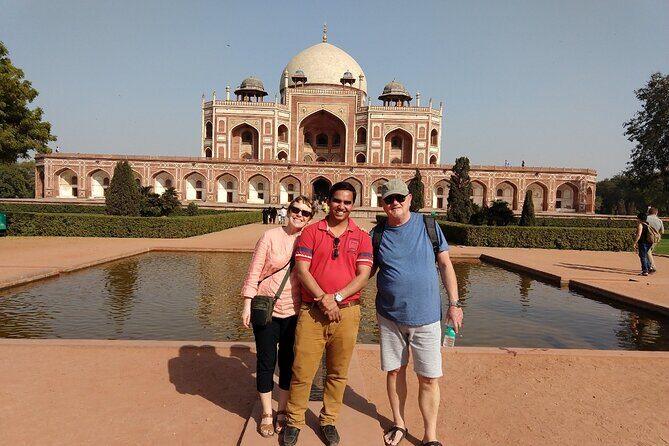
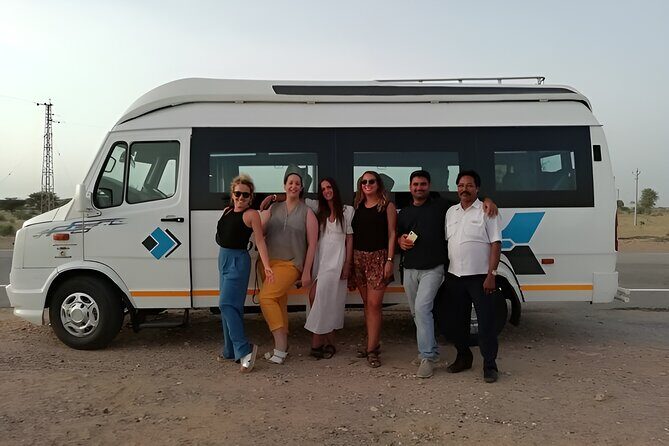
This is a private road trip: your group travels in one vehicle with a driver and a live guide. That matters because Golden Triangle-style routes can feel exhausting when you’re always waiting for someone, always switching plans, or always wondering where you’re supposed to be. Here, the structure is built around guided time at major stops, with driving time handled by your chauffeur.
This tour suits you if you want:
- A first-timer-friendly route that still hits the big spiritual and architectural landmarks
- Comfort during long transfers (AC car, hotel night(s), included parking/tolls/fuel basics)
- A small-group experience with the option to customize what you want
It may feel like “too much” if you prefer slow travel, lots of unplanned wandering, or you hate early mornings. Sunrise at the Taj Mahal requires you to wake up early and follow the timing your guide sets.
You can also read our reviews of more private tours in New Delhi


Day 1 in Delhi: Qutub Minar, Lotus Temple, and Humayun’s Tomb momentum
Day 1 is a well-built Delhi intro: you start with major sights without getting stuck in one neighborhood all day. Even if you’re jet-lagged, the plan still gives you quick wins—tower views, then peace and silence, then monuments with gardens.
Pickup and the Delhi orientation
You can be picked up from the airport, railway station, or your hotel, then you’ll meet your driver and guide in an AC car. This is a practical start because Delhi can be chaotic for navigation. Having someone handle directions and timing helps you focus on the sights.
Qutub Minar: the skyline wow moment
Qutub Minar rises about 73 meters and sits inside a UNESCO site with several historic elements. You’ll also pass by parts of the complex, including the Quwwat-ul-Islam Mosque and the Iron Pillar. The main value here is not just the tower—it’s the way the whole site shows you layers of early medieval Delhi in one area.
Entry fees for Qutub Minar are not included, so budget for that separately.
Lotus Temple: quiet, no idols, all-faith space
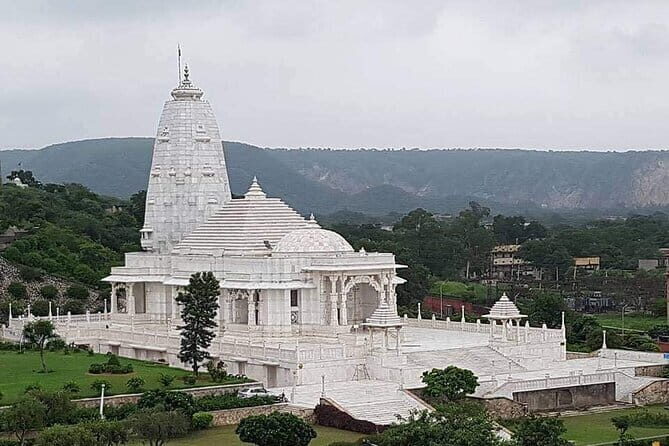
Then you shift from stone history to a calmer place: the Lotus Temple. It’s a Bahá’í House of Worship with no idols—just meditation space and a very peaceful atmosphere. It’s a good reset between busier sites, especially if you need a breather.
A few more New Delhi tours and experiences worth a look




India Gate and Humayun’s Tomb: monuments with a big mood
You’ll drive past India Gate, a WWI memorial, and nearby you’ll see Parliament House. After lunch, you go to Humayun’s Tomb, another UNESCO highlight with Persian-style garden planning and striking symmetry. If you like Mughals, this stop makes the rest of the trip easier to understand—because it shows you the design ideas that later echo at the Taj Mahal.
Practical note for Day 1
You’ll likely do a fair amount of walking at Qutub Minar and around the tomb area. Wear comfortable shoes. Also, the tour notes you may need to remove shoes at temples and sacred places—so have something easy to slip off and on.
Day 2 in Agra: Taj Mahal sunrise plus the Mughal forts
Day 2 is built around the Taj Mahal at the time most people miss: sunrise. You’ll wake up early, go before the crowds peak, and see the marble shift as light moves across it.
Taj Mahal at sunrise: why timing matters
The Taj Mahal is famously beautiful, but the sunrise part changes your experience. The plan is designed so you see the marble in softer morning light, not harsh midday glare. You’re also going when the place feels calmer—more about craft and scale, less about fighting through crowds.
Entry fees here are not included, and the tour reminds you that the Taj Mahal is closed on Friday. If your trip lands on a Friday, you’ll need a plan B with your guide.
Agra breakfast and then the “fort day”
After sunrise, you return for breakfast (hotel or a local spot). Then you explore Agra Fort, which is less a single monument and more of a walled imperial complex—almost like a mini city. The key areas listed include Diwan-i-Khas, Jahangiri Mahal, and the Musamman Burj, where Shah Jahan was once imprisoned. This is the “power behind the beauty” stop.
Baby Taj (Itmad-ud-Daula): calmer, detailed, easier to enjoy
After that, you visit Itmad-ud-Daula, often called the Baby Taj. The benefit is atmosphere: it’s typically less crowded than the main Taj complex, and the marble inlay designs feel more intimate. The route also includes views toward the Yamuna River, which adds a nice background for photos and just for atmosphere.
Budget reality for Agra day
This day has two monuments where entry tickets can add up. Since the tour includes parking, fuel, and guide service, the most important extra cost to watch is monument entry fees. Bring extra cash/card and keep your photo ID handy for checks at monuments.
Day 2 to Day 3 transfer: Jaipur arrival, then royal Jaipur landmarks
The trip from Agra to Jaipur is a driving day through Rajasthani countryside. You also have an optional en route stop at Fatehpur Sikri—an abandoned Mughal capital made of red sandstone buildings. If you want one more big heritage hit without adding another overnight, this is where it can fit.
Jaipur evening reset: markets without pressure
You arrive by evening and check into your hotel. The plan gives you downtime to relax or visit local markets known for handicrafts, block prints, and jewelry. This matters because after two big heritage days (Delhi and Agra), you don’t want every hour to be a checkpoint. You get choice here.
Day 3 in Jaipur: City Palace, Hawa Mahal, and Jantar Mantar
Jaipur day is classic “royal aesthetics plus science.” It’s also a good example of why a live guide helps: you can read each site more accurately when someone explains the function behind the design.
City Palace: layers of Rajput, Mughal, and European influence
You’ll visit City Palace, a complex with courtyards, museums, and parts like Mubarak Mahal. It houses royal artifacts, costumes, and armory, so it’s more than decoration. It gives context for how Jaipur’s rulers collected power, identity, and craft.
Entry fees are not included, so keep that in mind for budgeting.
Hawa Mahal: a façade with a job
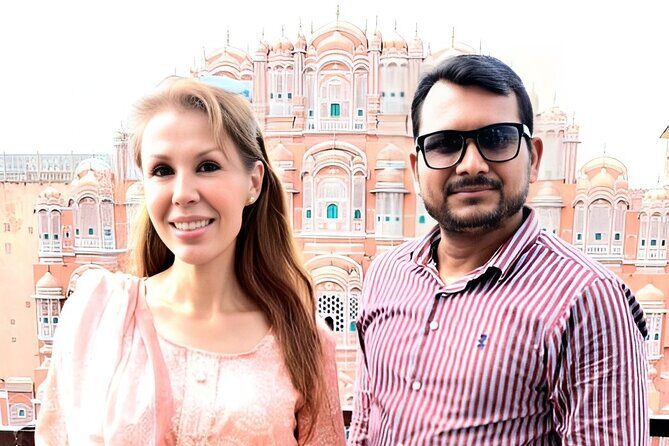
Next comes Hawa Mahal—the Palace of Winds—with 953 small windows. The point of the windows wasn’t just beauty. The design allowed royal women to watch street life while staying unseen. When your guide explains how it worked, you start seeing the building as a tool, not only a landmark.
Jantar Mantar: astronomy made of stone
Then Jantar Mantar, a UNESCO observatory with 19 instruments, including the world’s largest stone sundial mentioned in the itinerary. If you like architecture that mixes art with measurement, this stop is a satisfying break from forts and palaces.
Optional scenic view: Jal Mahal
You also stop at Jal Mahal, the Water Palace on Man Sagar Lake. The top floor is visible above water, and the structure is a nice photo target. The plan notes it can be especially pretty around sunset from the lakeshore. Just remember it’s mostly about viewing from outside; it’s not listed as an inside visit.
Albert Hall Museum: an easy cultural wrap
You finish with Albert Hall Museum, Jaipur’s oldest museum, located in Ram Niwas Garden. The Indo-Saracenic building is part of the appeal, and it displays artifacts such as paintings, carpets, ivory, metalwork, and ancient coins.
Day 4: Pushkar’s sacred lake and Brahma Temple, then drive to Udaipur
Day 4 is a switch from “palace tourism” to spiritual-town rhythm. Pushkar is one of India’s easier places to feel difference quickly because the town’s identity is tied to the lake and daily rituals.
Pushkar start: sacred town with a legend
You head to Pushkar early, where you’ll visit the Pushkar Lake area and learn the religious story connected to the town. The itinerary emphasizes Pushkar’s status as one of the five sacred dhams for Hindus and connects the lake to Brahma through legend.
Pushkar Lake: ghats, rituals, and the holy water focus
The lake is surrounded by 52 ghats, and the area is active with pilgrims and saints doing daily routines. The itinerary also notes the belief that a dip can cleanse sins and bring blessings. Even if you’re not there to participate, it’s the reason Pushkar feels different from most cities.
Brahma Temple: rare for a reason
Next you visit the Brahma Temple, one of the few temples dedicated to Brahma. It’s known for its red spire and the four-faced Brahma image. This stop can feel very “on purpose,” because Pushkar is about this one deity connection.
Savitri Temple trail: a view break on Ratnagiri Hill
Then there’s a calmer break: a short hike or ropeway to Savitri Temple on Ratnagiri Hill. You get panoramic views of Pushkar town and surrounding hills. It’s a good pacing tool—after hours of temple and lake area activity, you can breathe.
Drive to Udaipur: arrive late, unwind by the lakeside
After Pushkar, the plan drives to Udaipur for a late evening check-in at a lakeside hotel. The tone shifts again—Udaipur is where you slow down a bit after fast heritage days.
Day 5 in Udaipur: City Palace, temple carvings, and Lake Pichola sunset
Udaipur closes the loop nicely: you go from royal rule (City Palace) to living devotion (Jagdish Temple) to leisure by water (Lake Pichola boat ride).
City Palace: royal opulence on Lake Pichola
Start at City Palace, a massive complex on the banks of Lake Pichola. You’ll see marble balconies, peacock mosaic details, and royal courtyards. The itinerary also includes a museum inside for attire, weapons, and ornate carriages—so you get more than “pretty rooms.”
Entry fees are not included.
Jagdish Temple: active worship and stone detail
Then Jagdish Temple, dedicated to Lord Vishnu. It’s described as an active place of worship with intricate stone carvings. If you’re used to museums, this one feels more real because people are there for prayer, not just photos.
Sahelion Ki Bari: garden time that actually helps
Sahelion Ki Bari is a garden created for the queen and her companions, with fountains, marble elephants, and lotus pools. It’s a green pause, useful if your legs are tired and you want calmer visuals.
Lake Pichola boat ride: the classic Udaipur memory
In the afternoon, you enjoy a boat ride on Lake Pichola, gliding past Lake Palace, Jag Mandir, and the ghats. The itinerary highlights sunset views with the Aravalli Hills in the background. This is the “slow down and look” part of the trip, and it’s often the moment people remember most.
Optional Bagore Ki Haveli dance show
If time permits, you can visit Bagore Ki Haveli, an 18th-century mansion with many rooms and a nightly folk dance show (the itinerary notes it as part of the experience). It’s a nice cultural add-on if your day has space.
Airport or station drop
Finally, you’re transferred to Maharana Pratap Airport or another drop point you choose in Udaipur.
Price and Logistics: does $555 buy good value?
At $555 per person, the value depends on what you’re comparing it to—especially your comfort needs and how much you’d pay for a private driver plus guided monument time on your own.
Here’s what your money covers in the plan:
- Private uniformed chauffeur and private AC transport
- Pickup in Delhi and drop in Udaipur
- Live tour guide (with various foreign languages)
- Parking, tolls and taxes, fuel, and allowances
- 5-star hotel accommodation with breakfast if you pick that option
The biggest “not included” cost is also clear: entry fees of monuments. That’s common in India, but it changes how far $555 really goes once you add multiple UNESCO/major sites. If you travel with a group and share costs, it can feel very reasonable. If you’re expecting everything to be fully ticketed, plan on paying monument entry separately.
Also note the Taj Mahal Friday closure and your need for a valid photo ID at monuments.
Guides and communication: why it can feel smooth
This tour’s success often comes down to how the guide structures time and how the driver handles long roads. In past experiences tied to this operator, there were clear themes: good explanations, calm driving, and communication that keeps you from feeling lost.
For example, one Agra-focused portion credited Azhar for explaining history clearly and making the Agra day feel well handled. Another trip named Neeraj Sharma as the driver for Agra and Jaipur, with praise for the Taj Mahal and Amer Fort time. For Jaipur, Wasim was praised for being helpful in the city. And in overall coordination, Chand was mentioned as a contact who set expectations and avoided hidden-charge surprises.
Even if guide styles differ day to day, the pattern here is that your guide is there to interpret what you’re seeing, not just check boxes.
Should you book this 5-day private route?
Book it if you want:
- A single organized plan that covers Delhi, Agra, Jaipur, Pushkar, and Udaipur in one run
- Private comfort plus guided time at major monuments
- Sunrise Taj Mahal and a Udaipur lake boat ride as your standout memories
Think twice if:
- You’re very budget-tight and don’t want to pay monument entry fees on top of the tour price
- You dislike early mornings or can’t do long transfer days
- You’re traveling on a Friday and really want the Taj Mahal on schedule
My practical advice: before you go, confirm which day you’re visiting the Taj Mahal and ask how they’ll adjust if it’s closed. Then make a simple budget for entry fees and set aside extra time for shoe removal at sacred sites. If you do that, this route is a solid way to get maximum India in five days without turning your trip into a logistics project.
FAQ
Is the tour private or shared?
It’s private. Only your group participates.
Do you get pickup in Delhi and a drop in Udaipur?
Yes. Pickup is offered in Delhi, and there is a drop in Udaipur.
Is there a live tour guide?
Yes. The tour includes a live guide with various foreign languages.
What transportation is included?
Sightseeing is done by private AC car (or tempo traveller, depending on the setup).
Are hotel and breakfast included?
Hotel accommodation with breakfast is included if you choose the option with 5-star stays.
Are monument entry fees included in the price?
No. Entry fees of monuments are not included.
What if I’m visiting on a Friday?
The Taj Mahal remains closed on Friday, so your Taj timing may need adjustment.
Do I need photo ID at monuments?
Yes. Bring a valid photo ID for monument entry checks.
Do I need to remove shoes at temples?
Yes. You’ll need to remove shoes before entering temples and sacred places.
When is the Pushkar Camel Fair?
The famous Pushkar Camel Fair takes place every year from October 30 to November 5.