REVIEW · NEW DELHI
5 Day Golden Triangle with Akshardham Temple-Taj Mahal at Sunrise
Book on Viator →Operated by Joyful Holidays · Bookable on Viator
Sunrise at the Taj is worth losing sleep for. This 5-day private Golden Triangle uses an air-conditioned vehicle with city guides, and it stacks Delhi’s highlights (Jama Masjid and Chandni Chowk) with the showpiece moment: Taj Mahal at sunrise.
I also like that you can match comfort to your budget with hotel options (3, 4, or 5 star) or choose a version with no accommodation. The one real drawback to consider is the early wake-up—your Taj Mahal sunrise start time is 5:45 AM.
In This Review
- Key moments that make this route work
- Golden Triangle in 5 days: the smart pacing you’ll appreciate
- Day 1 in Delhi: Jama Masjid, rickshaw rides, and Akshardham’s scale
- Day 2: Delhi landmarks with Qutub Minar plus the drive to Agra
- Taj Mahal at sunrise: timing matters more than you think
- Agra Fort and the road to Jaipur: a useful culture switch
- Jaipur sightseeing day: Fort, City Palace, Jal Mahal photo time, and Jantar Mantar
- Comfort, guides, and the value of $449 per person
- Should you book this 5-day Golden Triangle with Akshardham and Taj sunrise?
- FAQ
- What kind of pickup does this tour include?
- Are hotels included, and can I choose the level?
- Is the tour private?
- When is the Taj Mahal sunrise visit?
- Are monument entry fees included in the $449 price?
- What is the cancellation policy?
Key moments that make this route work
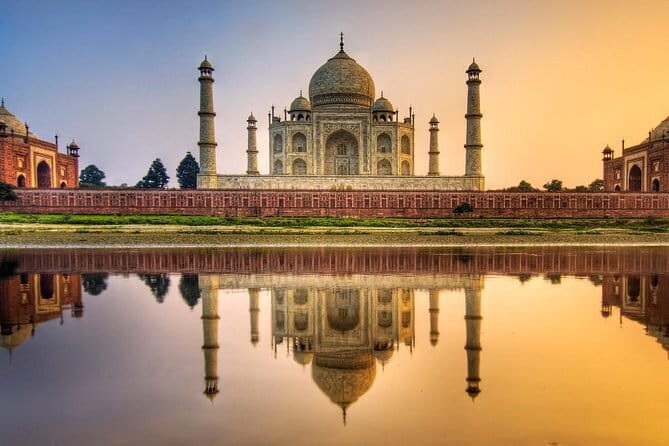
- Taj Mahal at sunrise with a guide meeting you at the hotel lobby
- Air-conditioned, licensed-driver comfort while you crisscross Delhi, Agra, and Jaipur
- City guides in each stop, so you get narration rather than just travel-by-photo
- Old Delhi + modern Delhi mix: Jama Masjid, Chandni Chowk, then Qutub Minar and Lutyens-era landmarks
- Jaipur in a tight day: Fort, City Palace, Hawa Mahal photo stop, and Jantar Mantar
- A private format (only your group), which helps when you want a slower pace or extra time for pictures
Golden Triangle in 5 days: the smart pacing you’ll appreciate
The Golden Triangle is famous for a reason. In just five days you cover the “classic three” (Delhi, Agra, Jaipur) and you don’t waste time on random stops. The structure matters: long transfers happen in the car, and the sightseeing is broken into focused blocks with guides who can explain what you’re looking at.
I like that this trip is built around a clear priority list. You get the big-ticket sights, but you also get the texture—Old Delhi street life by rickshaw, a major Hindu temple campus in Delhi, and Jaipur’s mix of palace architecture and astronomical geometry.
This is also one of those itineraries where the “private tour” part is not just marketing. Only your group participates, which means you can move at a pace that fits you instead of waiting for a dozen unrelated people. And since it’s planned with guides in each city, you’re not stuck trying to decode everything alone.
A few more New Delhi tours and experiences worth a look



Day 1 in Delhi: Jama Masjid, rickshaw rides, and Akshardham’s scale
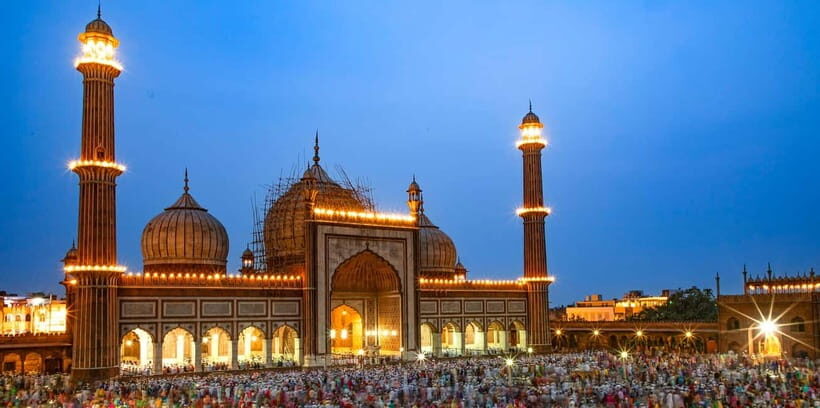
Day 1 is about easing into Delhi with high-impact contrasts. You’re picked up from the airport or your hotel between 0700 to 1100 hrs (or at your given time), then you start with Jama Masjid, one of India’s largest and most famous mosques. Even if you’re not religious, the red sandstone and marble feel like a real visual statement. You also get a proper sense of how Mughal-era architecture still anchors Old Delhi.
From there, you roll into Chandni Chowk Market, and the tour includes a rickshaw ride. That’s the kind of simple add-on that makes a city visit feel real fast. You’re moving through the crowd, not just standing at the curb, and it’s one of the quicker ways to understand why Old Delhi is busy and intense.
Then you get a quick outside look at Red Fort. The key practical detail here is that you see it from outside because much of the fort is acquired by the Indian Army. So plan your expectations: this isn’t a full inside fort day. It’s a photo-and-context stop that still gives you a landmark reference for later.
The evening-style stop is Raj Ghat and the India Gate area (the tour groups these as photo/sight stops rather than long museum time). India Gate is treated as a war memorial context stop, so you’re looking at a monument with a story, not just a pretty arch.
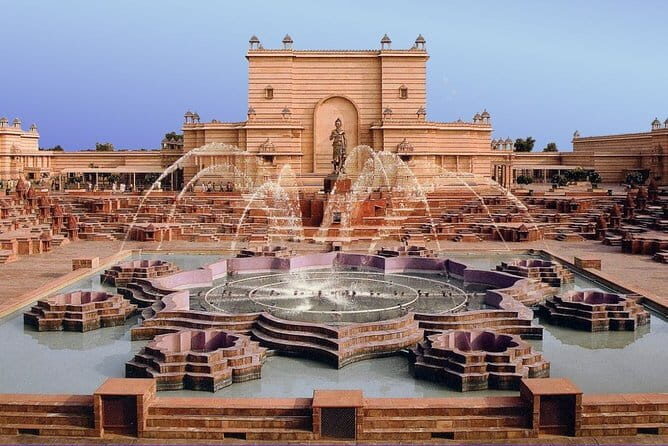
Finally, you end with Swaminarayan Akshardham. This is the “big campus” moment in Delhi. The tour schedules about an hour there, and admission is not included in the stated monument fee structure. If you like places that mix architecture with cultural storytelling, this is one of the best fits on the whole schedule.
Practical note: Day 1 is a lot of movement in a single day, but it’s handled with guided stops and car transfers, which keeps you from getting mentally fried by logistics.
Day 2: Delhi landmarks with Qutub Minar plus the drive to Agra
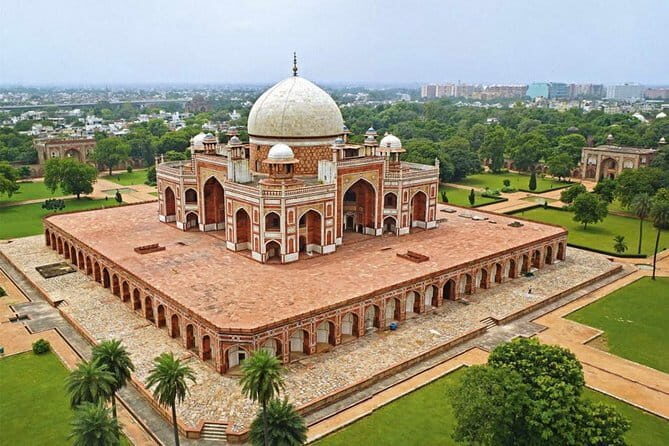
Day 2 keeps the Delhi focus, but it shifts from Old Delhi’s dense energy to New Delhi’s planned geometry. You start after breakfast at 8 AM with the core sightseeing loop.
You pass India Gate again as a shorter stop for photos and context, then you move into government-building territory with photo stops at Parliament House and Rashtrapati Bhavan. These are brief, but they matter because they show you the Lutyens-era design language that defines a lot of New Delhi.
The main historical anchor of the day is Qutub Minar. It’s scheduled for about an hour, and it’s a world heritage site. This is one of those sights where you can’t fully appreciate it from a quick glance—seeing it with time to look at scale and shape helps. The tower’s history is part of the narration, and the tour sets aside enough time for that story to land.
After Qutub Minar, you transition to Agra, with an overnight stay. You’ll spend hours on the road that day, but the car is air-conditioned and driven by a licensed driver, so you’re not dealing with sketchy transit or constant route confusion. It’s the kind of practical comfort that makes the next morning’s early start more bearable.
Taj Mahal at sunrise: timing matters more than you think
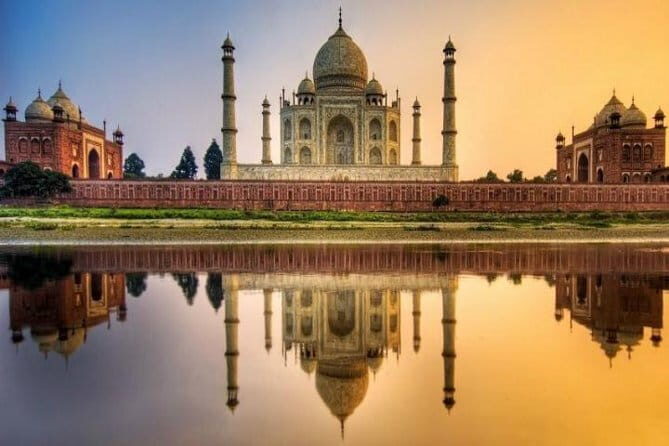
The heart of this whole trip is Taj Mahal at sunrise. You meet your guide in the hotel lobby at 5:45 AM, then head out to catch the morning light. The tour schedules a short window at the site, followed by a longer period to experience the Taj Mahal after sunrise.
What I love about doing this early is not just the view. It’s the rhythm. The Taj Mahal is still settling into the day, and you get a softer light on the white marble rather than harsh midday glare. The result is easier photos and a calmer atmosphere, even if you’re not chasing photography.
You’re given about 2 hours at the Taj Mahal after the initial sunrise moment. That matters because the Taj isn’t a one-minute monument. Time lets you notice the details around it—symmetry cues, the way the surface reflects light, and how the complex frames the tomb.
After the Taj visit, you return to the hotel for breakfast and freshening up. Then you check out and visit Agra Fort—scheduled for about an hour. Agra Fort is marked as a UNESCO World Heritage Site and built by Emperor Akbar in 1565, so you’re not just collecting another fortress stop. It’s a chance to see Agra as an active imperial center, not only as a backdrop for the Taj.
Then it’s off to Jaipur, the “Pink City.” The transfer is long (the tour notes around 5 hours), but again, the air-conditioned car plus a driver who knows the route helps you save mental energy for the next day.
Agra Fort and the road to Jaipur: a useful culture switch

Agra and Jaipur feel different on purpose. Agra leans Mughal monumental scale; Jaipur gives you Rajput architecture, fort massing, and palace courtyards. The timing of the fort visit works too. You see Taj Mahal early in the morning, then you shift to Agra’s political architecture before leaving the city.
Agra Fort is also a good follow-up for how you look at the Taj. Once you’ve spent time in the Agra complex, you start noticing the broader design language—materials, fort-like boundaries, and how power shows itself in stone.
When you arrive in Jaipur, you check into your pre-booked hotel and overnight there. The tour’s hotel flexibility is a real plus here because Jaipur can be pricey at higher tiers. If you’re choosing 3, 4, or 5 star, you’re really deciding how much downtime comfort you want after a long driving day.
A few more New Delhi tours and experiences worth a look




Jaipur sightseeing day: Fort, City Palace, Jal Mahal photo time, and Jantar Mantar

Day 4 is Jaipur in full color—well, pink-ish tone, plus a mix of palaces and precision science.
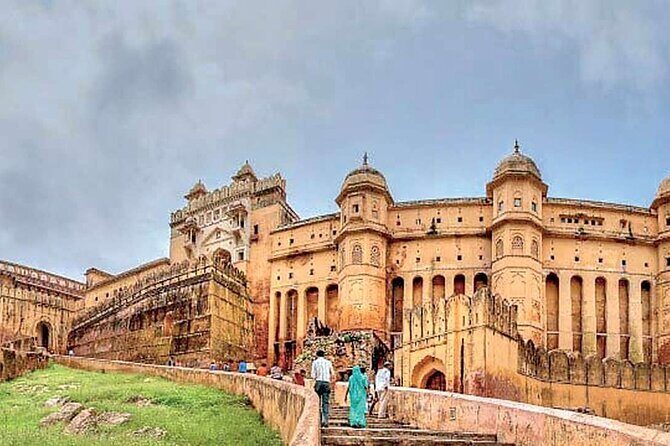
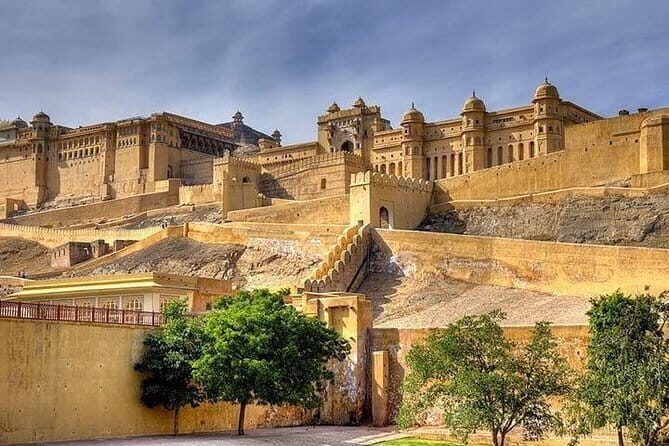
You start with Jaipur Fort (about 2 hours). This is a core stop because it’s built into the rocky hillside setting, and the fort complex gives you a Rajput architecture experience that feels “built to dominate the view.” The tour treats it as the must-see fort moment of the city.
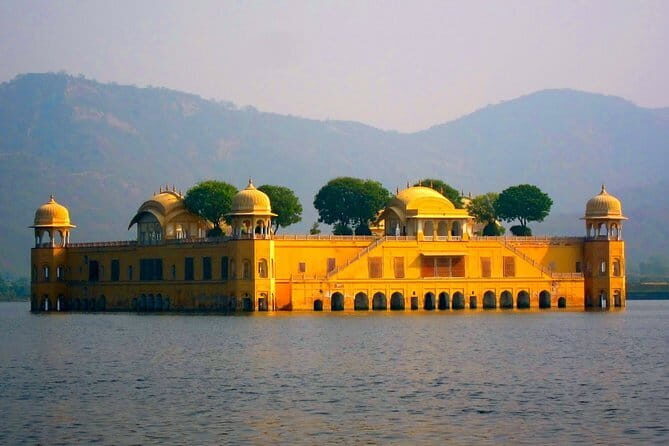
Next comes Jal Mahal as a photo stop. You’re not touring inside; you’re getting the image of the Water Palace in the Man Sagar setting. Photo stops can feel short, but they work well when you’re trying to fit several top sites into one day.
Then you visit City Palace of Jaipur for about an hour. This is the royal residence area, and the tour frames it as a blend of Rajasthani and Mughal architecture. That blend is the key takeaway: Jaipur isn’t only one style. It’s an evolving set of tastes and power centers.
You also get a photo stop at Hawa Mahal (Palace of Winds). It’s scheduled for around 10 minutes. This is one of those landmarks where even a quick stop can feel worthwhile because of its honeycombed facade and tall, pink presence. You’re not meant to “live” at Hawa Mahal; you’re meant to know it, get your photos, and move on.
The most interesting offbeat stop is Jantar Mantar. It’s described as an observatory with UNESCO recognition, using geometric instruments to monitor the movement of stars and planets. It’s not just “old rocks.” It’s a practical science layout, and it’s one of the places that makes you slow down and think for a minute. Expect about 40 minutes here, which is enough time to understand what you’re looking at without feeling rushed.
Then you return to your hotel for the night. Jaipur days can be tiring—this one stays efficient without trying to squeeze in every single shop lane in the city.
Comfort, guides, and the value of $449 per person
At $449 per person, you’re paying for a bundle: transportation across three cities, air-conditioned comfort, professional city guides, packaged drinking water, and a route built around key sights. You’re also paying for the “private tour” approach, which reduces waiting time and makes it easier to adjust when your group wants more photo time.
What’s extra to budget for is the monument fees: listed as $69.00 per person and not included. Also, the tour marks several admissions as not included at specific stops (and some stops are marked as free). Translation: some entry costs are covered by the tour’s structure, and some aren’t. When you plan your total trip budget, add the monument fees line and keep a little buffer for anything you decide to enter on the spot.
Hotel cost depends on your chosen option. The tour includes accommodation in 3, 4, or 5 star properties if you choose the hotel version. It also offers versions without accommodation, which can be cheaper but puts more burden on your own planning.
Breakfast is included 4 times, which is helpful in India where breakfast choices can vary by hotel level. It also helps you keep your mornings moving without searching for a standalone meal before departing.
And then there’s the human factor. A strong driver makes Golden Triangle days feel safe and smooth, and one standout example tied to this tour is driver Dev, described as kind, funny, and accommodating while keeping you comfortable and safe. On a route with early mornings and long transfers, that kind of calm competence is not a small thing.
Should you book this 5-day Golden Triangle with Akshardham and Taj sunrise?
Book it if you want a classic Golden Triangle with a smart edge: Taj Mahal at sunrise plus a major Delhi temple campus (Akshardham) and Old Delhi texture from Jama Masjid through Chandni Chowk. You’ll get guided narration across Delhi, Agra, and Jaipur, and you’ll travel in a comfortable car that removes a lot of stress from the schedule.
Don’t book it if you hate early starts. Meeting at 5:45 AM is not optional. Also, if you’re trying to keep costs ultra-tight, remember the monument fees are $69 per person and some entries are marked as not included, so your final spend may be higher than the base price.
If you’re flexible on hotel class and you’re comfortable with a packed but logical rhythm, this tour is a strong value way to do the Golden Triangle without cobbling together separate bookings city by city.
FAQ
What kind of pickup does this tour include?
Pickup is offered from the airport or from your desired location or hotel in New Delhi between 0700 and 1100 hrs, or at your given time.
Are hotels included, and can I choose the level?
Yes. Hotel accommodation is included if you choose that option, with stays in 3, 4, or 5 star categories. There are also tours available without accommodation.
Is the tour private?
Yes. It’s described as a private tour/activity, so only your group participates.
When is the Taj Mahal sunrise visit?
You meet your guide at the hotel lobby at 5:45 AM for the Taj Mahal sunrise visit.
Are monument entry fees included in the $449 price?
No. Monument fees are listed separately at $69.00 per person and are not included.
What is the cancellation policy?
You can cancel up to 3 days in advance for a full refund. If you cancel less than 3 full days before the experience’s start time, the amount paid is not refunded.