REVIEW · NEW DELHI
2-Night Private Ranthambore National Park and Wildlife Tour from Delhi
Book on Viator →Operated by GeTS Holidays · Bookable on Viator
Wild tigers are the whole point here.
This 3-day Ranthambore plan turns a long, planning-heavy trip from Delhi into a simple rail-and-jeep routine, with two timed safaris inside the park and a 3-star base in Ranthambore. I like that the itinerary is built around real wildlife timing, not just sightseeing checklists, and that you get expert eyes helping you read what you’re seeing.
Two things I really like: the train logistics are handled for you (hotel-to-station transfer in Delhi, plus an air-conditioned overnight ride), and the safaris come with a naturalist who can explain tracks, calls, and animal behavior while you’re out in the jeep.
One drawback to weigh up front: tiger sightings aren’t guaranteed. Even when the day is well-run, you may still come home with lots of other wildlife and great jeep time, but without a tiger moment.
In This Review
- Key Points That Matter Before You Go
- Why This Ranthambore-from-Delhi Plan Works
- The Overnight Train: What the Comfort Level Really Means
- Day 1 in Real Life: Delhi to Ranthambore Without Wasted Time
- Day 2: The Two Safaris That Make or Break the Tiger Odds
- What You’ll Likely See (Even If Tigers Are Elusive)
- The Shared Jeep Reality Check (About “Private” vs Actual Sharing)
- Ranthambore Beyond Tigers: What Makes the Park So Interesting
- Hotel Base: 3-Star Comfort and the “Don’t Panic” Level of Expectation
- Food, Timing, and How You’ll Feel Day to Day
- Price and Value: Is $384 per Person Worth It?
- Who Should Book This Tour (And Who Should Maybe Choose Another Option)
- Should You Book It? My Practical Verdict
- FAQ
- What does the tour include?
- Are hotel meals and drinks included?
- Are the safari jeeps shared?
- How long are the safari drives?
- Do I have to share any documents for the train?
- Is seeing a tiger guaranteed?
- What type of hotel room options are available?
- Will I get picked up in Delhi?
- Does the tour include a transfer on the last day?
- Is there a special dinner fee around December 24 and 31?
Key Points That Matter Before You Go
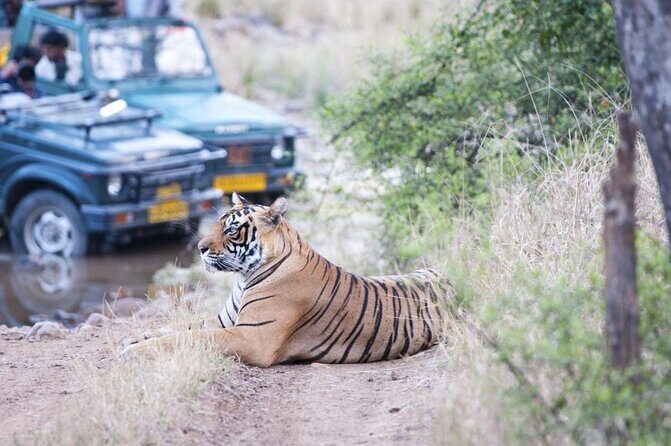
Two 3-hour safaris in the park (shared jeep) give you more chances than a single-day option.
Overnight rail from Delhi helps you sleep through the travel day instead of losing a full day.
3-star hotel in Ranthambore keeps you close to the park action after the morning drive.
Tiger sightings depend on conditions and the park’s tiger distribution across zones/sections.
Service quality can vary—a few reviews mention missed meetings or paperwork/ticket issues, so be ready to advocate for yourself politely.
Why This Ranthambore-from-Delhi Plan Works
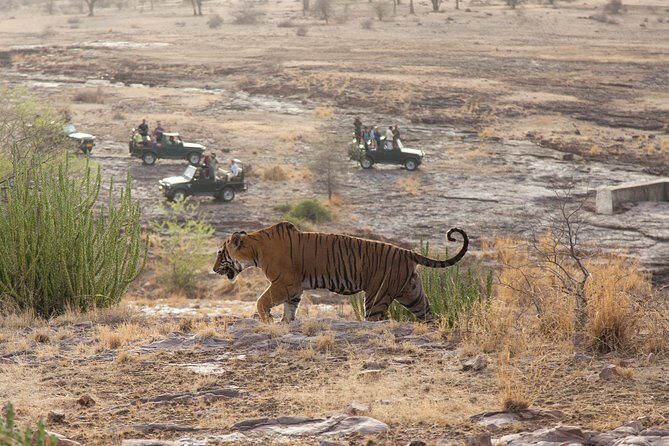
Ranthambore is one of India’s classic tiger safari destinations for a reason, but the trip can feel like a hassle if you’re doing it on your own. This tour helps because it packages the hard parts: train travel, transfers, a hotel stay, and the two safari sessions that typically make or break the experience.
You’re looking at a tight rhythm: arrive by train, do a morning/early-day safari when animals are active, sleep in town, then do a second safari later for another shot at sightings. The value is in how the pieces fit together—when they run smoothly, you spend less time coordinating and more time in the park.
Also, the park isn’t only about tigers. Your drives are set up for you to notice the smaller stuff too: peacocks, deer, monkeys, and other mammals that share the same forest lanes and water points.
You can also read our reviews of more private tours in New Delhi


The Overnight Train: What the Comfort Level Really Means
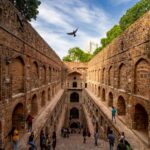
The heart of this trip is the overnight rail leg between Delhi and Ranthambore. On paper, you’re traveling in an air-conditioned coach (and the schedule is built around a roughly evening departure and morning arrival). In practice, comfort can depend on what cabin/coach type you end up with.
A couple of review notes are useful for your decision-making:
- One guest was very happy with a first-class overnight carriage and said they were met and escorted at each stage.
- Another guest warned that second-class sleeper conditions were rough enough to feel like a prison ship.
So here’s the practical takeaway: if sleep quality matters to you (it should on safari), try to confirm the class/coach you’ll get before departure. Even with a well-run itinerary, the overnight train comfort can swing your overall mood for the next day.
Another useful point: the guide/representative support seems to be one of the strengths when everything goes right. Multiple reviews describe being helped right up to their seat and being guided through transfers. That can be a big deal if it’s your first time using Indian Railways.
Day 1 in Real Life: Delhi to Ranthambore Without Wasted Time
Day 1 is intentionally low stress. You’re picked up from your Delhi hotel area and taken to H. Nizamuddin station. The train then becomes your travel “sleep day,” not a day you burn with transfers and check-in lines.
When you arrive, you check into the hotel and have dinner. That’s a sensible setup because Ranthambore safaris often start early, and you don’t want to be tired, late, or hungry on that first drive. This is one of those plans that feels simple because it’s doing the right things at the right times.
Day 2: The Two Safaris That Make or Break the Tiger Odds
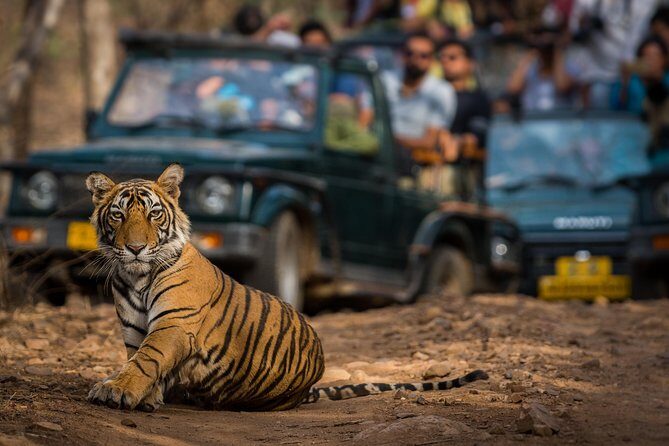
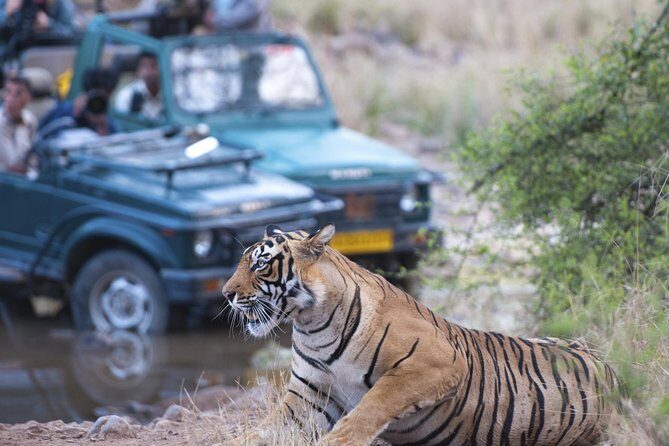
Your Day 2 is the “big day”: an early morning arrival into Ranthambore followed by a 3-hour jungle safari in a shared jeep with an English-speaking naturalist.
This is where the tour’s main value lives. The naturalist isn’t just there for show. You’re out in a huge protected area, and the difference between spotting something and missing it often comes down to knowing what to look for:
- animal tracks and movement patterns
- calls and body language
- likely watering/foraging areas based on season and time of day
On timing, one review gave a helpful example: one person mentioned being assigned to zone 8 for the morning session and zone 4 later, with better results in the afternoon. The important lesson isn’t the exact zone—it’s that the park is organized into segments/zones with vehicle limits, and your location within the park can change your odds.
Your second drive happens after a break and lunch. The itinerary gives you time to reset at the hotel before heading back out for another 3-hour safari session. That structure is great for two reasons: you avoid rushing between long stretches, and you keep your energy up for another search when conditions may be different.
What You’ll Likely See (Even If Tigers Are Elusive)
Let’s be honest: tigers are the headline, but your jeep time is often about wildlife variety. Based on the tour description and guest experiences, you might spot:
- peacocks
- deer
- monkeys
- sloths
- jackals
- gazelles
- wild boars
- bears
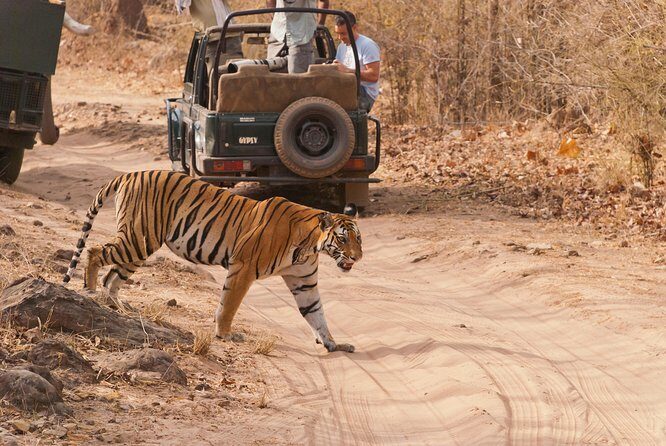
Some guests report multiple tiger sightings across the two safaris. Others report none. Both outcomes can still be a good safari day because the park’s ecosystem is active and visible from a jeep—but you should go in with flexible expectations.
You can also read our reviews of more evening experiences in New Delhi




The Shared Jeep Reality Check (About “Private” vs Actual Sharing)
This is a key place where you should calibrate expectations. The safari rides are described as shared jeep excursions. That means your jeep seat is not the only variable—your overall group is also mixed with other visitors during your safari windows.
Some reviews also raised frustration about the word “private,” suggesting the tour felt private only for short transfers, while the safaris themselves were shared with other people from different hotels. Even so, you still get a naturalist and the same structured safari blocks.
If you hate crowds and you want an entirely separate vehicle and guide, this may not feel like what you imagined. If you’re fine sharing the jeep as long as the naturalist helps you spot wildlife, you’ll likely feel like you got a lot for your money.
Ranthambore Beyond Tigers: What Makes the Park So Interesting
Ranthambore has a specific “there’s history under your feet” feeling, even when you’re focused on wildlife. The park includes the Ranthambore Fort, which once served as the private hunting grounds for the maharajas of Jaipur. Later it became a game sanctuary and then officially a national park.
That matters because the park isn’t just random jungle—it’s a protected area shaped by how people historically used the landscape. When your naturalist points out where animals move and how people and wildlife both used these routes over time, you get a deeper sense of place fast.
Also, the park’s structure helps explain why sightings vary. The limited number of vehicles per section and the segmentation of the park can affect where you’re placed during each safari session. That’s why two people can have totally different outcomes even on similar dates.
Hotel Base: 3-Star Comfort and the “Don’t Panic” Level of Expectation
Your stay is listed as 3-star hotel accommodation for two nights in Ranthambore. In a good tour, that means you get reliable basics: a place to freshen up, decent meals at the right times, and a quiet enough setting to rest between early drives.
One review mentioned a tent-style stay being awesome, which suggests your accommodations may feel more nature-adjacent than a plain city hotel, depending on what’s available. The main thing to verify is what room type you want (single, twin, or triple options are offered) and what you can realistically expect for comfort at this level of hotel class.
Practical tip: plan to use the hotel for what it’s meant for—sleep, showers, and meals—so the park day stays the star.
Food, Timing, and How You’ll Feel Day to Day
Meals are largely covered for convenience: breakfast is included, plus lunch and dinner. Food and drinks outside what’s listed aren’t included unless specified.
The timing is simple:
- Train arrival day ends with check-in and dinner.
- Safari day includes lunch, then another safari later, then dinner.
- Departure day includes breakfast.
That matters because on safari trips, you want your energy steady. Being fed at predictable times means less decision fatigue and fewer chances to miss a departure window.
Price and Value: Is $384 per Person Worth It?
At $384 per person, you’re paying for a bundle: overnight rail, a 3-star hotel, transfers, two 3-hour safari drives, and a naturalist-led experience (in shared jeeps).
If you try to DIY this from Delhi, you’ll quickly feel the pain in the transport planning alone—train timing, station navigation, and coordinating two separate safaris. This tour reduces that stress and lines everything up on a schedule built around safari sessions.
Where value can dip is when things go wrong: a few reviews mention missed meet-ups at the station, mistakes with train departures, or even invalid tickets. Those issues are not “small.” They can turn a smooth wildlife day into a stressful morning.
So my balanced take: the tour can be a strong value when the operations run cleanly. For peace of mind, keep your documents handy, arrive early at stations, and don’t be shy about confirming your pickup/meeting points the day before.
Who Should Book This Tour (And Who Should Maybe Choose Another Option)
This tour suits you if:
- you want help with the logistics from Delhi rather than building it yourself
- you care more about safari time than micromanaging trains and transfers
- you’re okay with shared jeeps
- you like the idea of two safari chances instead of one
It may not fit you if:
- you’re ultra-sensitive to sleep quality and you can’t accept variability in train class
- you expect a fully private vehicle and a completely private safari experience
- you need near-perfect operational reliability and get stressed by last-minute hiccups
Should You Book It? My Practical Verdict
I’d book this if your main goal is to spend real time in Ranthambore with minimal planning. The two safari blocks, the naturalist-guided rides, and the overnight train structure are exactly what makes tiger country manageable from Delhi.
But go in with two smart expectations set:
1) Tiger sightings are never guaranteed, even when the guides do everything right.
2) “Private” can be more about transfers than about the jeep safari itself, since the safaris are shared.
If you want a smooth, low-stress start and you’re comfortable sharing a jeep, this tour is a sensible way to experience one of India’s best tiger safari regions.
FAQ
What does the tour include?
It includes breakfast and lunch, plus two dinners, two-night accommodation in a 3-star hotel, hotel pickup and drop-off in Ranthambore, and two shared jeep safari excursions with an accompanying English-speaking naturalist. It also includes an air-conditioned chair car train ticket and train transfers.
Are hotel meals and drinks included?
Breakfast, lunch, and dinners are included as listed. Food and drinks are otherwise not included unless specified.
Are the safari jeeps shared?
Yes. The tour includes two shared jeep safari excursions.
How long are the safari drives?
Each safari drive is listed as 3 hours.
Do I have to share any documents for the train?
Yes. You must provide your full name, date of birth, nationality, and passport expiration date at least 3 days prior, and a scanned copy of your passport is required at least 3 days in advance.
Is seeing a tiger guaranteed?
No. The tour notes that tiger sightings cannot be guaranteed.
What type of hotel room options are available?
Single, twin, or triple accommodation options are available at the 3-star hotel.
Will I get picked up in Delhi?
The itinerary says a representative meets you from your Delhi hotel and takes you to H. Nizamuddin station. On return, you’re driven to your Delhi hotel after arriving.
Does the tour include a transfer on the last day?
You’re transferred to the train station after breakfast for the trip back to Delhi, and then met on arrival and taken to your Delhi hotel.
Is there a special dinner fee around December 24 and 31?
Yes. There is a mandatory supplement for a Gala Dinner on December 24 and December 31 night, and the final cost isn’t stated in advance.