REVIEW · NEW DELHI
5 Day Golden Triangle Tour – Delhi Agra Jaipur Tour
Book on Viator →Operated by Julie International Tours · Bookable on Viator
Wake up for the Taj, then rest in comfort. This 4 nights/5 days Golden Triangle plan strings together major UNESCO World Heritage sites across Delhi, Agra, and Jaipur, with a private chauffeur and professional guides keeping your route efficient (and your logistics stress-free). I like how the day-by-day structure includes both the big icons and the in-between moments, like riding through Chandni Chowk by rickshaw before you hit Humayun’s Tomb and Qutub Minar.
One thing to plan for: monument entrances and meals (lunch/dinner) aren’t included, and the sunrise Taj Mahal start is early. If you prefer slow mornings every day, this schedule will feel demanding—but it’s also the only way to see the Taj at its best.
In This Review
- Key highlights you’ll actually feel
- How this Golden Triangle tour fits a short trip
- Price and what you really get for $399
- Private driver, clean car, and the calm of being on your own schedule
- Day 1 in Delhi: Mughal power, city markets, and Humayun’s Tomb
- Day 2 to Agra: the drive, the check-in, and Agra Fort
- Taj Mahal sunrise at 5:45 AM: when early is actually worth it
- Fatehpur Sikri to Jaipur: from abandoned city to planned city
- Jaipur’s royal sights: Amber Fort, Jal Mahal photos, City Palace, Jantar Mantar
- Day 5 back to Delhi: a straightforward finish
- Tips to get more out of this tour (without spending extra time)
- Who should book this Golden Triangle tour
- Should you book the 5 Day Golden Triangle Tour?
- FAQ
- What cities are included in the 5 day Golden Triangle tour?
- How long is the tour?
- Is hotel or airport pickup included?
- Do you travel in a private air-conditioned vehicle?
- Are hotel rooms included?
- Are meals included?
- Are entrance tickets to monuments included?
- Which UNESCO World Heritage sites are visited?
- What time is the Taj Mahal sunrise visit?
- Can I cancel and get a full refund?
Key highlights you’ll actually feel
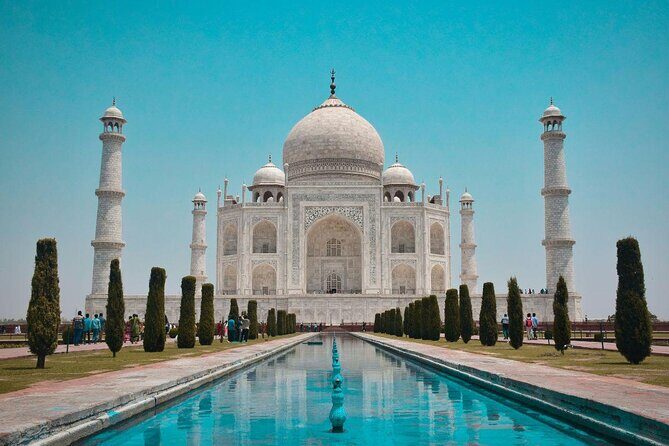
- Taj Mahal sunrise at 5:45 AM with a guide who focuses on the architecture and gardens you’d otherwise miss
- Private air-conditioned vehicle + licensed driver, so you’re not stuck waiting on a larger group
- Real Delhi street flavor: Jama Masjid, Chandni Chowk, and a rickshaw ride for quick local orientation
- UNESCO lineup across all three cities, including Humayun’s Tomb, Qutub Minar, Agra Fort, Fatehpur Sikri, and the Taj
- Guides named Vivek, Raj, and Suraj are noted for being friendly and good at practical details (and photo spots)
- Driver Shiva gets mentioned for clean car, punctual timing, and safe handling
How this Golden Triangle tour fits a short trip
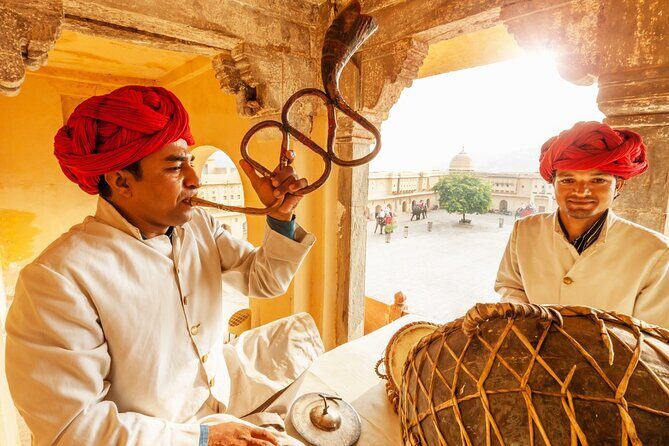
The big promise of the Golden Triangle—Delhi, Agra, Jaipur in one loop—is that you get the essentials without spending days figuring out transportation. What I like about this version is that it’s built around time-efficient movement and guide-led pacing, not just a checklist of monuments.
You’ll spend five days moving between three cities, but the private vehicle changes how it feels. You’re not sharing transfers with strangers, you’re not waiting as long for people to show up, and you can keep the day structured. That matters in India, where traffic can make “simple” plans turn into long ones fast.
The tour also leans into the most memorable experiences: sunrise at the Taj, Mughal-era masterpieces in Delhi and Agra, and Jaipur’s royal monuments. Even if you’ve seen photos, the order helps. Delhi’s Mughal sites help explain the Taj’s style; Jaipur then shifts you from empire grandeur to royal planning and astronomy.
If you want one tight, guided loop that covers the headline sights with minimal friction, this plan is a good match.
A few more New Delhi tours and experiences worth a look



Price and what you really get for $399
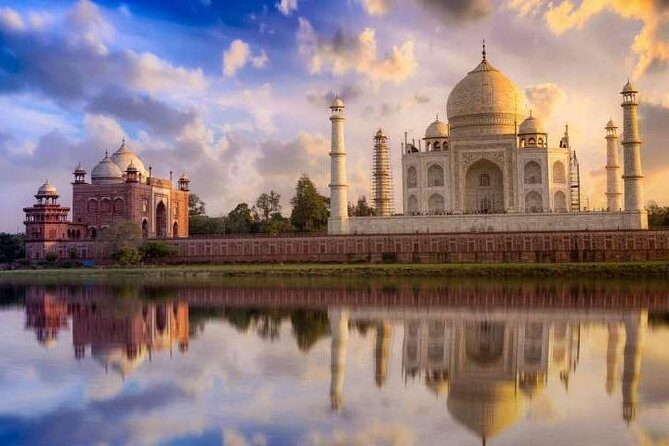
At $399 per person, the real value isn’t the word high-end—it’s what’s included and what isn’t.
Included value
- Hotel pick-up and drop
- A licensed driver and private air-conditioned vehicle for all transfers
- Knowledge-focused guide service
- Water bottles
- Hotels in the 3/4/5 star range based on your option selection
- Breakfast for 4 days (one fewer than the total days, since you’re on the road early at least once)
Not included (so budget for it)
- Monument entrances
- Lunch and dinner
That “not included” part is the main budget surprise. Major sites can add up, and Taj-related ticketing and the general entrance costs are part of why tour prices can look lower than you expect. Still, you can usually manage this well if you decide in advance how much you want to spend on entrances and meals.
For me, the pricing makes sense if you value convenience—private car, guide-led visits, and not having to coordinate anything between cities yourself.
Private driver, clean car, and the calm of being on your own schedule
A private chauffeur can sound like a luxury line, but on this route it’s practical. Delhi to Agra alone is a multi-hour push, and when you add sightseeing stops and photo time, you want a driver who’s not improvising in traffic.
The reviews make this point clearly. Driver Shiva is praised for punctuality and for keeping trips safe and smooth, plus the car is noted as clean. Guides (including Vivek, Raj, and Suraj) are also mentioned as helpful with details and photo stops, which matters because timing and angles can make or break your photos.
One other detail I appreciate: you get water bottles. On hot mornings and late afternoons, that small inclusion prevents the day from turning into a constant “where do we buy water now?”
Day 1 in Delhi: Mughal power, city markets, and Humayun’s Tomb
Your Delhi day is a packed mix of monumental and street-level sites. You’re picked up from your hotel, airport, railway station, or chosen location in Delhi/Noida/Gurgaon, then guided through classic highlights.
Here’s how the day works and why it’s worth it:
- Red Fort (photo stop) gives you a quick visual anchor for Mughal Delhi. It’s short, but it helps your brain map what you’re seeing later.
- Jama Masjid is the anchor for Old Delhi’s religious architecture. It’s India’s biggest mosque, and it’s a dramatic shift from the Fort’s fortress feel.
- Chandni Chowk rickshaw ride is the “get your bearings fast” moment. You see the market energy up close, without having to navigate on your own or guess where to turn next.
- Rajghat slows the mood with a memorial space dedicated to Mahatma Gandhi. It breaks up the sightseeing intensity.
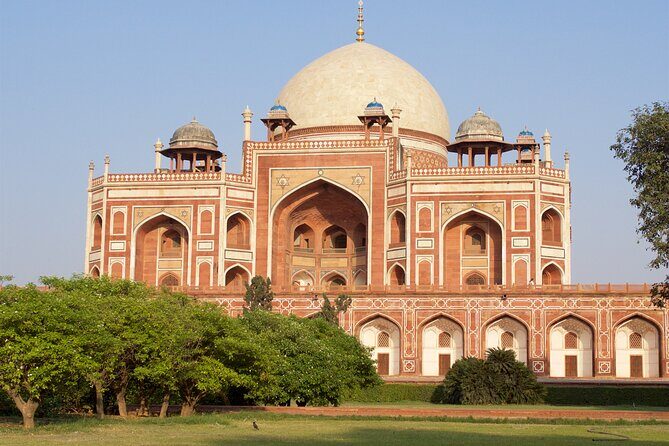
- Humayun’s Tomb (UNESCO) is where you start seeing the design language that later shows up in the Taj Mahal.
- Qutub Minar (UNESCO) adds a different architectural flavor—tall, historic, and unmistakably bold.
- India Gate closes the loop with a war memorial on Rajpath, giving the day a final landmark frame.
The one drawback of this day is simple: it’s long. Day 1 can feel like a sprint because Delhi sightseeing is dense and you’re mixing street time with guided monument time. If you’re the type who gets tired from constant walking and standing around, pace yourself early. Save energy for the big sites like Humayun’s Tomb and Qutub Minar.
Day 2 to Agra: the drive, the check-in, and Agra Fort
After breakfast, you head to Agra via an expressway drive that’s typically 3 to 4 hours. Arriving by car means you keep the day structured instead of losing time to train schedules.
Agra’s focus is Mughal power, and the tour leans into that. You check in to your hotel, refresh, then head out with your guide.
- Agra Fort is the big one: the main residence for Mughal emperors until the capital shifted to Delhi in 1638. Seeing it with a guide matters, because the fort’s layout is what makes it feel like a living seat of power rather than just a wall-and-courtyard stop.
- Mehtab Bagh follows, providing a garden-style break after the heavier fort visit. It’s a good momentum reset before the Taj day later in the trip.
The most practical part of Day 2 is that it protects you from doing everything in one nonstop rush. You get a hotel buffer between travel and monuments, which makes your sunrise day more realistic.






Taj Mahal sunrise at 5:45 AM: when early is actually worth it
This is the moment most people come for, and this tour handles it the smart way: you meet your guide at 5:45 AM to visit the Taj Mahal at sunrise.
Why that timing matters:
- Sunrise light changes the Taj Mahal’s look fast, especially on stone surfaces and gardens.
- The experience is less about looking at a postcard and more about noticing how the building’s symmetry, garden layout, and white-marble presence work together.
The Taj is described here as a classic example of Mughal architecture built with Islamic themes of paradise, and the story is tied to it being the final resting place of a king’s favorite wife. A guide’s job in a case like this is to help you connect what you’re seeing with why it was built that way. If you’re the type who loves details, this is where the guide can really pay off.
After sunrise, you head back to the hotel for breakfast and then check out. That gives you a breather so you don’t burn out immediately after the main event.
One consideration: you are signing up for an early wake-up. If you already know you struggle with mornings, prepare yourself the night before (and keep your expectations for the day at a “focused and efficient” level).
Fatehpur Sikri to Jaipur: from abandoned city to planned city
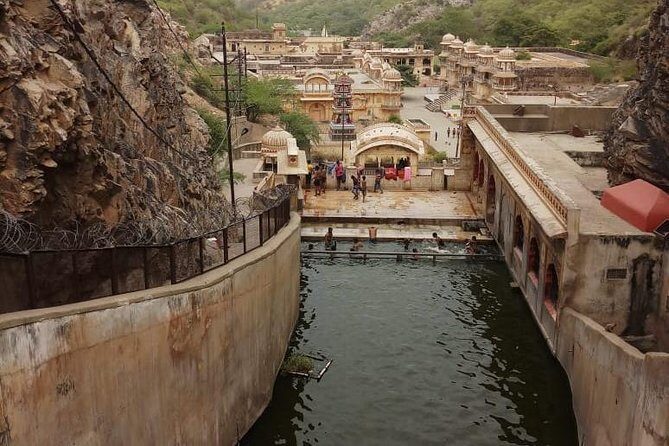
Once the Taj day finishes, you’re not done with world-class sights. You travel to Fatehpur Sikri, about 36 km (around 1 hour).
Fatehpur Sikri is treated as a “ghost city” experience in the tour narrative. It was built by Mughal Emperor Akbar in the 16th century as a capital for his empire, then mysteriously abandoned after around 15 years due to scarcity of water. That abandonment is what makes it feel different from active cities. You’re walking through a place that reads like a monument to ambition—and then reality.
Then you continue onward and arrive in Jaipur, checking into your hotel for the night.
This transition is a smart design choice: you go from a living landmark (even at sunrise) to an abandoned capital city, and then into Jaipur’s royal skyline and planned-city geometry. That rhythm keeps the trip from feeling repetitive.
Jaipur’s royal sights: Amber Fort, Jal Mahal photos, City Palace, Jantar Mantar
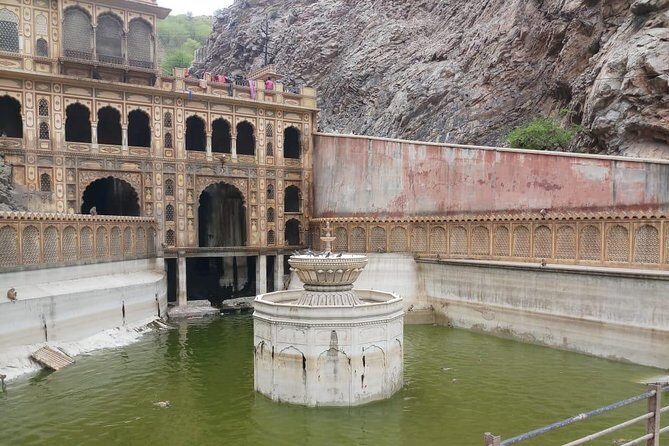
Jaipur is where the tour turns from Mughal empire to royal planning and palace grandeur. You start after breakfast and meet your guide around 8:00 AM.
A few reasons this day works well:
Jaipur, the Pink City, and why the color matters
Jaipur was founded in 1727 by Maharaja Sawai Jai Singh II, and it’s described as being painted pink to honor Prince Albert’s visit in 1882. Even if you only grasp that quickly, it gives context for why Jaipur looks the way it does.
Amber Fort
You visit the Amber Fort palace complex with courtyards. Forts like this can feel like “more walls” unless someone explains the logic of the space. In a guided format, you’re more likely to understand what parts were meant for rulers, visitors, daily life, and ceremonies.
Jal Mahal (photo stop)
This is a water palace in the middle of Man Sagar Lake, and it’s listed as a photo stop. It’s short, but it offers a visual palate cleanser after the fort complex.
City Palace
You see the seat of the Maharaja and the royal residences, including Chandra Mahal and Mubarak Mahal. City Palace usually works best with a guide because you can connect architecture to power.
Jantar Mantar
The tour also includes Jantar Mantar, one of Jaipur’s famous monument complexes. Even when you know very little going in, the guide helps you see it as more than decoration.
The only real drawback here is time pressure. Jaipur monuments are spread out enough that you’re always moving. If you like to linger, you may wish you had more hours—so choose what you want to photograph most and don’t try to do everything equally.
Day 5 back to Delhi: a straightforward finish
On the final day, you’re driven back toward Jaipur airport or Delhi, with the trip taking about 5 hours depending on where you’re dropped. You’ll be dropped at your hotel, airport, railway station, or a chosen location in Delhi/Noida/Gurgaon.
This wrap-up is simple, which is exactly what you want at the end of a packed loop. The tour ends with the practical kind of “you’re done” that helps you catch onward travel without panic.
Tips to get more out of this tour (without spending extra time)
A few practical moves make the biggest difference:
- For the Taj sunrise day, plan to be calm and ready early. The value is in seeing the building at sunrise, not rushing in late.
- For monument entrances, budget ahead. Since entrances and meals aren’t included, decide what you’ll pay for so you’re not negotiating at the gate.
- Wear shoes you can stand in. Forts, tombs, and palace courtyards add up fast.
- Bring a hat and sun protection for daytime. Jaipur and Agra can feel intense in the afternoon.
- If photo spots matter to you, ask your guide about the best angles as you go. The guides on this tour are known for helping with photos, not just facts.
Who should book this Golden Triangle tour
This is a strong pick if:
- You want a guided, private Golden Triangle loop with a dedicated chauffeur
- You care about UNESCO sites and want them paired with context, not random stops
- You have limited time and don’t want to manage inter-city logistics yourself
- You’re okay with one early start for the Taj sunrise
It may not be ideal if:
- You hate early mornings
- You’re on a strict budget for entrances and meals, since those costs sit outside the listed inclusions
- You prefer long, slow museum-style pacing with lots of free time
Should you book the 5 Day Golden Triangle Tour?
If you want the Golden Triangle done right in a short window, this tour is worth serious consideration. The biggest reasons are the UNESCO-focused route, the sunrise Taj Mahal timing, and the practical comfort of a private air-conditioned vehicle with a licensed driver. Add in helpful guidance from named guides like Vivek, Raj, and Suraj, plus the review-highlighted driving of Shiva, and you get a trip that feels organized without feeling mechanical.
My recommendation: book it if you’re treating this as a highlights-first trip and you’re willing to plan for entrance fees and lunches. Do that, and you’ll come away with a smooth, memorable north-India circuit instead of a stressful transportation puzzle.
FAQ
What cities are included in the 5 day Golden Triangle tour?
The tour covers Delhi, Agra, and Jaipur, starting from New Delhi.
How long is the tour?
It runs for about 5 days, described as 4 nights and 5 days.
Is hotel or airport pickup included?
Yes. You can be picked up from the Delhi Airport, your hotel, railway station, or another desired location in Delhi/Noida/Gurgaon, and you’ll also be dropped off at the end.
Do you travel in a private air-conditioned vehicle?
Yes. Transportation is included in a private air-conditioned vehicle with an experienced licensed driver.
Are hotel rooms included?
Yes. Good reviewed 3/4/5 star hotels are included based on the option you select.
Are meals included?
Breakfast is included for 4 days. Lunch and dinner are not included.
Are entrance tickets to monuments included?
No. Monument entrances are not included in the listed inclusions.
Which UNESCO World Heritage sites are visited?
The tour includes Taj Mahal, Agra Fort, Fatehpur Sikri, Humayun’s Tomb, and Qutub Minar.
What time is the Taj Mahal sunrise visit?
You meet your guide at 5:45 AM for the Taj Mahal sunrise visit.
Can I cancel and get a full refund?
You can cancel up to 3 days in advance for a full refund, and cancellation must be at least 3 full days before the experience start time.