REVIEW · NEW DELHI
Golden Triangle Tour with Varanasi
Book on Viator →Operated by S.A.M Tours & Travels · Bookable on Viator
Golden Triangle plus Varanasi hits different. The plan that matters is the smooth handoff between cities with a/c private car and English-speaking guides.
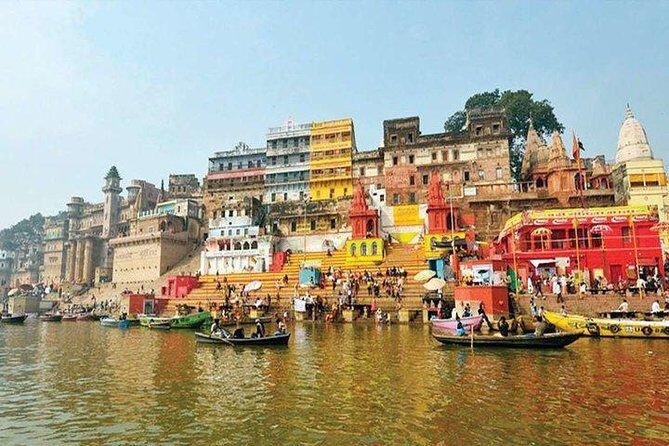
I really love the way Varanasi is built in two parts: a morning boat ride on the Ganges and an evening aarti on the riverfront.
One thing to plan for: monument entrance tickets are not included, so you’ll still pay on-site at multiple stops, and the pace is busy by design.
In This Review
- Key highlights I’d mark for you
- Price and logistics: what you’re really paying for
- Day 1 in Delhi: arriving at IGI and getting your bearings fast
- Day 2: Delhi sights that mix Mughal power and modern memorials
- Red Fort and Jama Masjid for old Delhi scale
- Humayun’s Tomb, the Qutb complex, and Qutub Minar
- India Gate and Rashtrapati Bhavan for the capital’s official face
- Time for lunch and a rickshaw-style old Delhi feel
- Day 3: Jaipur’s Pink City intro—palace luxury and a working observatory
- City Palace: where the royal past still feels present
- Jantar Mantar: history you can see as math
- Evenings in Jaipur markets
- Day 4: Amber Fort + Hawa Mahal viewpoints, with Fatehpur Sikri en route to Agra
- Amber Palace (Amber Fort): big fort energy and serious photogenic angles
- Hawa Mahal: why the windows matter
- Fatehpur Sikri on the way to Agra
- Day 5: Taj Mahal sunrise energy, plus Agra Fort and the Baby Taj
- Taj Mahal with a guide, then breakfast back at the hotel
- Agra Fort and Itimad-ud-Daulah
- Mehtab Bagh sunset view and evening markets
- Day 6: Varanasi arrival and the evening aarti on the Ganges
- Day 7: Varanasi at dawn—boat ride, key ghats, and the temple route
- Morning boat ride on the Holy River Ganges
- Sankat Mochan, Bharat Mata Temple, and Kashi Vishwanath
- Banaras Hindu University and Sarnath excursion
- Day 8: Flying back to Delhi and wrapping up at IGI
- Who this tour fits best (and who should reconsider)
- Should you book the Golden Triangle Tour with Varanasi?
- FAQ
- FAQ
- What cities are included in the Golden Triangle Tour with Varanasi?
- How long is the tour?
- Are hotel rooms included, and what standard are they?
- Is the Varanasi boat ride included?
- Are monument entrance tickets included?
- Can I cancel for a full refund?
Key highlights I’d mark for you
- City-to-city structure so you spend less time figuring out transport and more time seeing places
- English-speaking historian-style guidance at major monuments for context you can actually use
- Varanasi at both day and night: boat ride in the morning, aarti at night
- 3-star hotels throughout (so you’re not switching standards every few days)
- Overnight train Agra to Varanasi to save daytime hours
- Support at arrival and departure points via a representative at station, hotel, and airport
Price and logistics: what you’re really paying for
At $866.67 per person for about 8 days, this tour is priced like a “managed itinerary,” not like a do-it-yourself trip. You’re paying for the parts that usually eat vacation time: transport between cities, a guide presence at the big sights, hotel pickups and check-ins, and the train and flight legs that connect Delhi and Varanasi.
Included basics that affect value:
- 3-star hotel accommodation at all locations
- Private A/C car with an English-speaking chauffeur
- Tour guide during sightseeing
- Boat ride in Varanasi
- Train tickets Agra to Varanasi
- Air fare Varanasi to Delhi
- Breakfast (6)
Not included (so budget for it):
- Monument entrance tickets
- Tipping
If you want maximum freedom to wander alone, this might feel structured. If you want less stress while covering Delhi, Agra, Jaipur, and Varanasi, the price starts making sense fast.
You can also read our reviews of more tours and experiences in New Delhi.



Day 1 in Delhi: arriving at IGI and getting your bearings fast
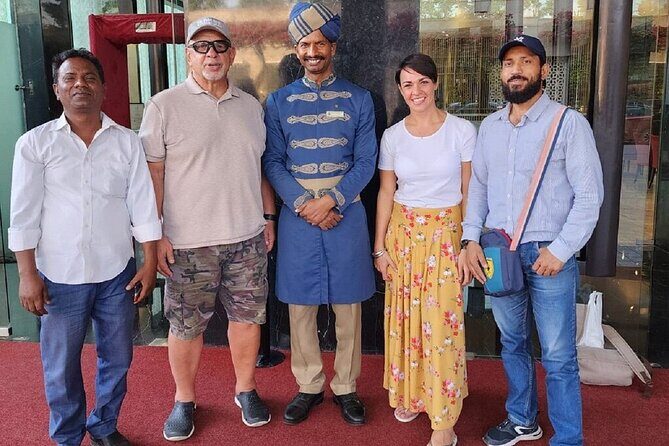
Your journey begins at Indira Gandhi International Airport, Terminal 3 in Delhi. A representative meets you in traditional style, helps with the transfer to your pre-booked hotel, and hands over travel documents plus a short tour brief.
This matters because Delhi is big and traffic can be chaotic. Having that first handoff arranged means you don’t lose your first evening to confusion. You check in, relax, and settle before the sightseeing starts.
A practical tip: on arrival day, keep your evening light. Tomorrow starts early with major monuments, and Delhi’s heat can be a factor depending on season.
Day 2: Delhi sights that mix Mughal power and modern memorials
Delhi here isn’t a single vibe. It’s a stack of time periods, and the order helps you feel the transitions.
Red Fort and Jama Masjid for old Delhi scale
You start with Red Fort, the red-stone Mughal marvel that practically defines Mughal authority in the capital. Then you move to Jama Masjid, one of Delhi’s largest mosques, built by Shah Jahan between 1644 and 1656.
What I like about this pairing is how it shifts your brain from one kind of grandeur to another—fortifications and governance, then religious architecture built for huge congregations.
Humayun’s Tomb, the Qutb complex, and Qutub Minar
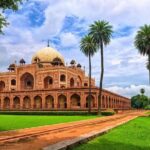
Next comes Humayun’s Tomb, often described as more palace-like than tomb-like, and a key step toward later Mughal architecture. From there, you visit Qutub Minar, part of the UNESCO-listed Qutb complex.
If you’ve ever looked at the Taj Mahal and wondered where that style came from, this is a useful stop. It’s not just about seeing a monument—it’s about seeing how styles evolve.



India Gate and Rashtrapati Bhavan for the capital’s official face
Later, you reach India Gate, with its roll of names and the Amar Jawan Jyoti memorial detail. Then you see Rashtrapati Bhavan, the President of India’s residence.
These are less “hands-on” than forts and tombs, but they help you understand the civic mood of modern Delhi—where old empires and current state symbolism both exist in the same city.
Time for lunch and a rickshaw-style old Delhi feel
The day also includes time to explore old Delhi lanes with a rickshaw ride experience and grab lunch at your own pace.
Drawback: Delhi sightseeing days can run long, and ticketing is not included. So you’ll want some cash and patience for on-site admissions.
Day 3: Jaipur’s Pink City intro—palace luxury and a working observatory
After breakfast, you drive from Delhi to Jaipur. Once you arrive, you check into your pre-booked 3-star hotel and meet your representative for check-in support.
City Palace: where the royal past still feels present
You visit the City Palace of Jaipur and its royal museum. The key value here is texture. Even if you’ve seen palaces before, City Palace gives you a real sense of how luxury was built into daily governance, not just ceremonial life.
Jantar Mantar: history you can see as math
Next stop is Jantar Mantar, the observatory built by Jai Singh. This is one of those sights that quietly changes how you see the old world: astronomical instruments that were meant to measure real sky data, not just decorate a courtyard.
Evenings in Jaipur markets
The day ends with time for Jaipur’s colorful markets. This is where you can slow down a bit, snack, shop lightly, and absorb local street rhythm.
Planning note: markets can be busy. Keep your electronics and wallet secure, and try not to treat the first shop you see as your last stop.
Day 4: Amber Fort + Hawa Mahal viewpoints, with Fatehpur Sikri en route to Agra
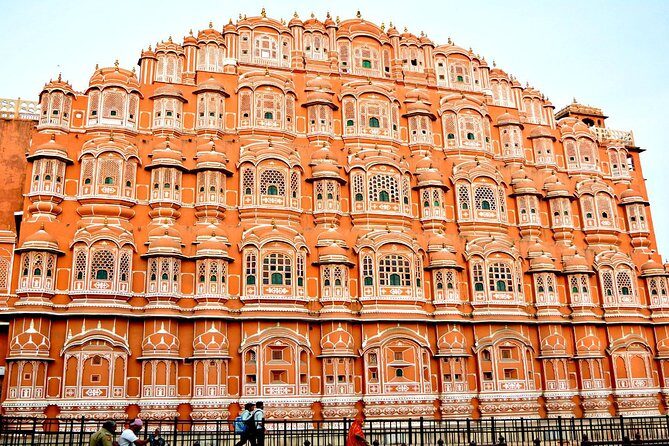
This day has two Jaipur icons and then a long historical detour on the way to Agra.
Amber Palace (Amber Fort): big fort energy and serious photogenic angles
You visit Amber Palace (Amber Fort), located a little outside Jaipur’s center. It’s built in the context of the Amer state and carries the feel of power concentrated in stone, arches, and courtyards.
The “value move” here is going early enough to enjoy the light and avoid peak crowd stress.
Hawa Mahal: why the windows matter
Then comes Hawa Mahal, the Palace of Wind, built in 1799 for royal women who followed a seclusion system. Its many windows let them see processions and street life while staying unseen.
This is a fun contrast against Amber Fort: one is built to guard and govern, the other to observe the world beyond palace walls.
Fatehpur Sikri on the way to Agra
You drive toward Agra with a stop at Fatehpur Sikri, a 16th-century Mughal city west of Agra. The red sandstone buildings and the Mughal layout give you a sense of how grand projects rise and then shift over time.
You’ll see the Buland Darwaza gate area and nearby highlights like the Jama Masjid mosque and the marble Tomb of Salim Chishti.
By the end of the day, you’re ready for a change of pace—overnight in Agra.
Day 5: Taj Mahal sunrise energy, plus Agra Fort and the Baby Taj
Agra is where the tour earns its reputation. This day is designed around key timing.
Taj Mahal with a guide, then breakfast back at the hotel
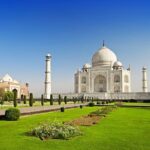
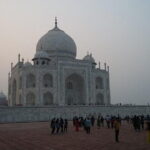
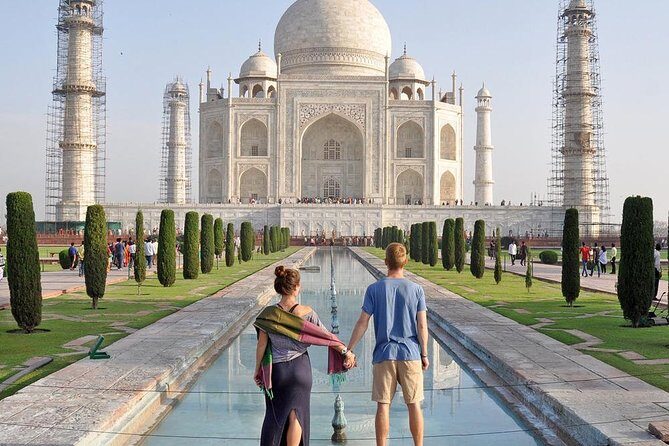
You start with an early morning Taj Mahal visit with your tour guide, then return to the hotel for breakfast.
Early is worth it because the Taj looks different depending on light, and the crowds feel less aggressive earlier in the day. The guide helps you focus on design details, symmetry, and the layout beyond just the postcard shot.
Agra Fort and Itimad-ud-Daulah
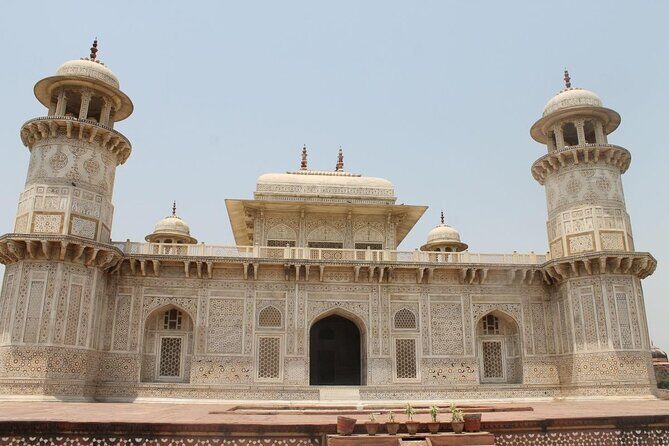
Next comes Agra Fort, another power architecture experience—fortifications and grand facades. Then you visit Tomb of Itimad-ud-Daulah, known as the Baby Taj. This one’s less about scale and more about fine marble lattice screens and delicate carving style.
If Taj Mahal is the headline, Itimad-ud-Daulah is the footnote that teaches you how craftsmanship matters.
Mehtab Bagh sunset view and evening markets
In the evening you visit Mehtab Bagh for a Taj Mahal sunset view. After that, you have time for local markets in Agra, then dinner and a transfer to the station.
That night includes an overnight train to Varanasi, so you wake up in a new city without losing the whole day to transit.
Practical consideration: overnight trains can be tiring. If you like sleep, bring eye shades or earplugs. The tour includes the tickets, but your comfort depends on you.
Day 6: Varanasi arrival and the evening aarti on the Ganges
You arrive in Varanasi by train, and your representative meets you at the station. You transfer to your hotel, check in, and rest.
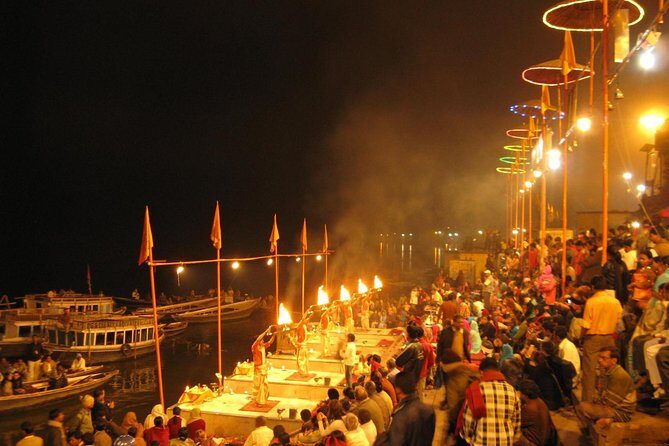
Later, you go to the evening Ganga Aarti ceremony, where thousands of pilgrims gather along the river. This is the emotional center of many people’s India trips—part ritual, part crowd energy, part music and flame, all tied to the river.
One thing I appreciate about including this on day 6 rather than later: you’re not waiting too long to feel why Varanasi is different. It gives you context for the next day’s boat ride and temple circuit.
Day 7: Varanasi at dawn—boat ride, key ghats, and the temple route
This is the big day in Varanasi.
Morning boat ride on the Holy River Ganges
The tour includes a boat ride in the Holy River Ganges, and it’s framed as a lifetime experience. You also get time to walk around famous ghats such as Harischandra Ghat and Dashwamedha Ghat, and learn about typical Hindu rituals connected to daily river life.
The practical value of a boat ride here is simple: Varanasi is hard to understand from land alone. Seeing the ghats from water helps you grasp how the river acts like the city’s main street.
Sankat Mochan, Bharat Mata Temple, and Kashi Vishwanath
After the boat and ghats, you visit:
- Sankat Mochan Hanuman Temple
- Bharat Mata Mandir, with a large marble map of undivided India carved into it
- Kashi Vishwanath Temple, dedicated to Lord Shiva
Kashi Vishwanath is especially meaningful because it’s one of the most famous Shiva temples in Varanasi and the tour gives a key historical note: it was constructed in 1780 by Maharani Ahilyabai Holkar. For me, that kind of detail helps you see the temple as a living institution, not just a tourist stop.
Banaras Hindu University and Sarnath excursion
You also visit Banaras Hindu University (BHU) and then head to Sarnath, the Buddhist pilgrimage site associated with Lord Buddha. There’s also a Sarnath museum with historical Buddhist-related items.
This pairing is smart because it prevents Varanasi from feeling one-note. You get a Hindu-focused city day, then an adjacent Buddhist context that helps broaden your understanding.
Time management note: this day packs a lot. Wear comfortable shoes and keep water handy. You’ll do plenty of walking.
Day 8: Flying back to Delhi and wrapping up at IGI
After breakfast, your driver picks you up and drops you at Varanasi airport for your flight back to Delhi (airfare is included). The tour ends back at the meeting point.
If you’re the type who likes a final buffer day, you might feel a bit rushed. But as a fast cultural circuit, it makes sense: you finish with a flight rather than another long road/rail segment.
Who this tour fits best (and who should reconsider)
This is a great match for:
- People who want a guided Golden Triangle plus Varanasi without DIY transfers
- First-timers to India who prefer having support at airports and stations
- Travelers who care about context—history and architecture explanations from guides—rather than just photos
You might reconsider if:
- You hate schedules and want to spend most days wandering freely
- You strongly prefer a slow pace in fewer cities
- You don’t want to handle additional monument entrance fees, since those aren’t included
Vegetarian option is available, so that’s a helpful checkbox if you’re planning meals with less friction.
Should you book the Golden Triangle Tour with Varanasi?
If your goal is to see the highlights of Delhi, Agra, Jaipur, and Varanasi in one coherent trip, I’d say this is worth considering. You’re getting the big logistical wins—private transport, guided sights, boat ride, overnight train, and the flight back to Delhi—and you’re not left alone to stitch it together.
My main caution is the money you’ll still spend on monument entrance tickets. If you budget for that from the start, the overall value holds up. If you don’t want any surprise costs, pick a tour that includes entrances or set aside a clear budget for them.
FAQ
FAQ
What cities are included in the Golden Triangle Tour with Varanasi?
The tour covers Delhi, Agra, Jaipur, and Varanasi.
How long is the tour?
The duration is 8 days (approx.).
Are hotel rooms included, and what standard are they?
Yes. You get three-star hotel accommodation at all locations.
Is the Varanasi boat ride included?
Yes. A boat ride in Varanasi is included.
Are monument entrance tickets included?
No. Monuments entrance tickets are not included.
Can I cancel for a full refund?
Yes. Free cancellation is available if you cancel at least 24 hours in advance of the experience start time.