REVIEW · NEW DELHI
5 Day Delhi Agra Jaipur with Ranthambore-Taj Mahal Sunrise/Sunset
Book on Viator →Operated by Tour Guide Delhi · Bookable on Viator
Five days, three icons, and one serious tiger hunt. This tour strings together Delhi sights, Taj Mahal sunrise, and a Ranthambore tiger safari in one smooth loop, with A/C transport and private guides in each city. You’re also in good hands if you like structure: early starts, clear routes, and the big hits covered.
I especially like the way the early Taj Mahal sunrise is built in, with a meet-up in the hotel lobby at 5:45 AM for that first light magic. Second, I like the human factor: you get private tour guides in every city, and in real life that’s where the photos get better and the meaning clicks faster. A clean car and a driver who knows the traffic can also turn long drives into something you can actually tolerate.
One thing to weigh: monument tickets aren’t included, and the days move early and long, especially with the Delhi to Agra drive and the big transfer down to Ranthambore. If you hate early mornings, this one will feel like training for an endurance event.
In This Review
- Key Highlights You’ll Want to Know Before You Go
- The Big Idea: Golden Triangle Plus Ranthambore in 5 Days
- Day 1 Around Delhi: Qutub Minar, Old Delhi Stops, and a Hotel in Agra
- Day 2 Taj Mahal Sunrise at 5:45 AM: Why Morning Changes Everything
- Agra Fort to Ranthambore Transfer: The Unsexy Part That Helps Your Safari
- Day 3 Ranthambore Tiger Jungle Safari: Shared Jeep, Big Payoff
- Jaipur’s Pink City Day: Amber Fort, Jal Mahal Photos, City Palace, Jantar Mantar, Hawa Mahal
- Day 4 to Day 5 Flow: Back to Delhi and the End of the Loop
- Price and Value: What $499 Covers (and What You Need to Budget)
- Who This Tour Fits Best (and Where It Might Not)
- Should You Book This Delhi–Agra–Jaipur With Ranthambore Tour?
- FAQ
- How long is the tour?
- Where does the tour start and end?
- Is pickup included?
- What is included in the price?
- Are monument tickets included?
- When do you visit the Taj Mahal for sunrise?
- Is the Ranthambore safari private?
- What hotel quality is provided?
- How many breakfasts are included?
- What is the cancellation policy?
Key Highlights You’ll Want to Know Before You Go
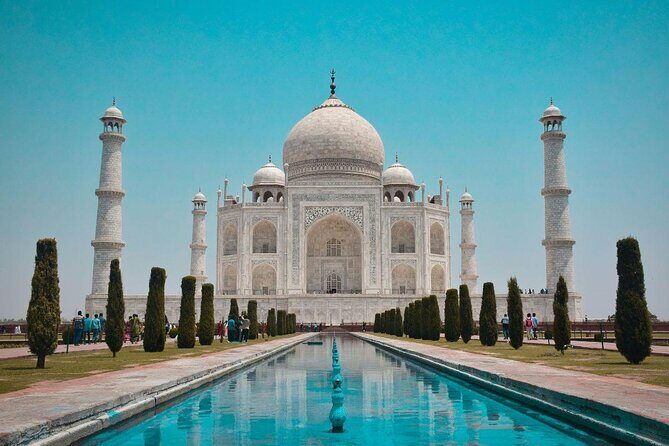
- Taj Mahal at sunrise (5:45 AM meet): One of the best ways to see it with fewer distractions.
- Agra Fort added after Taj: Another UNESCO site, so you’re not only doing one Mughal stop.
- Ranthambore tiger jungle safari: A true wildlife morning in a shared jeep/canter setup.
- Private guides in each city: Helps you connect the dots in Delhi, Agra, and Jaipur.
- Pink City day planned well: Amber Fort, Jal Mahal photo stop, City Palace, Jantar Mantar, and Hawa Mahal.
- Hotel options (3/4/5 star): You can match comfort level to budget.
The Big Idea: Golden Triangle Plus Ranthambore in 5 Days
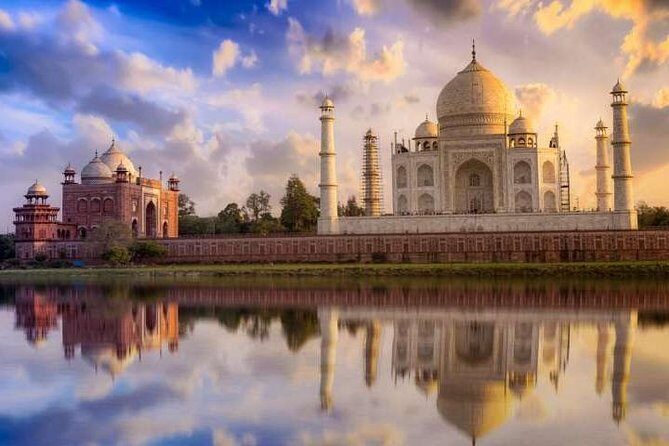
This isn’t a “pick at random” trip. It’s a classic Golden Triangle run—Delhi, Agra, Jaipur—then it adds Ranthambore for the one thing that can’t be replicated in a museum: the chance to see tigers.
For you, the value is in the pacing. You’re not just hitting landmarks; you’re also getting guided context—Mughal architecture in Agra and fort-city planning in Jaipur—then switching gears to wildlife in Ranthambore. That contrast is the whole point. It makes the trip feel like more than a checklist.
If you’re traveling as a small group, the setup helps: it’s private in the sense that only your group participates, but the Ranthambore safari is shared (more on that below). You still get a chauffeur and guides, so you’re not doing navigation math all day.
You can also read our reviews of more evening experiences in New Delhi



Day 1 Around Delhi: Qutub Minar, Old Delhi Stops, and a Hotel in Agra

You start with the kind of Delhi day that gives you instant context—where the old power sits, where the newer symbols stand, and how the city layers itself.
You’ll be picked up from your airport/railway station/hotel, including options around Delhi, Gurgaon, or Noida. Then the route includes a mix of “stop-and-see” moments: a photo stop at Red Fort, Jama Masjid (listed as the largest mosque in India in your tour notes), Raj Ghat (Gandhi’s memorial), and India Gate. You also drive past Parliament House and the Presidential Palace before heading to Qutub Minar.
Qutub Minar is a highlight because it’s UNESCO and because it anchors you in the early history of Delhi’s monumental architecture. If you’re the kind of traveler who likes your first day to actually teach you something, this works.
Practical consideration: the day ends with a drive to Agra taking 3–4 hours (about 200 km). By the time you check in for the night, you’ll want to keep dinner simple and sleep early—tomorrow is a wake-up-heavy day.
Day 2 Taj Mahal Sunrise at 5:45 AM: Why Morning Changes Everything

This is the day you plan for on this whole trip.
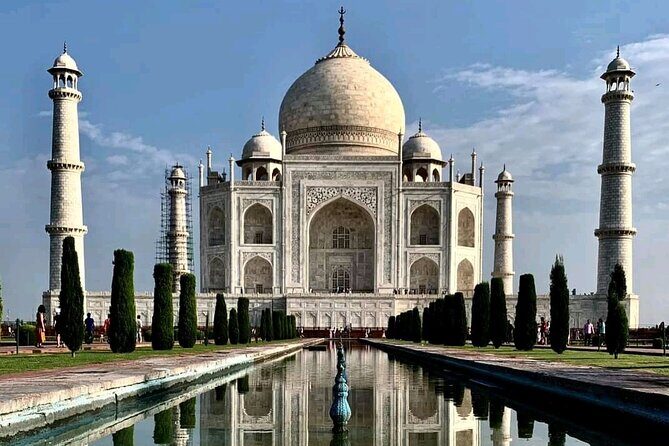
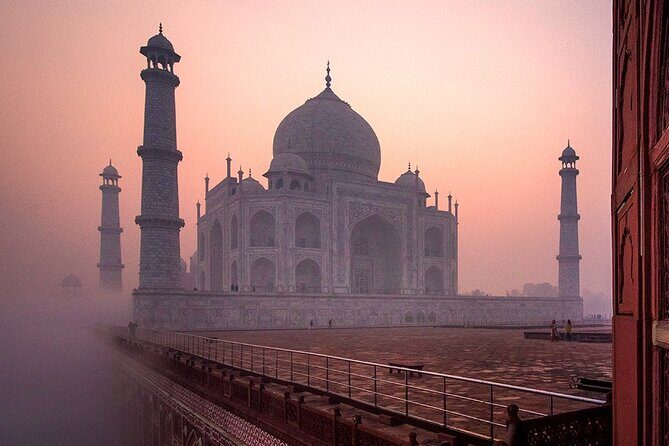
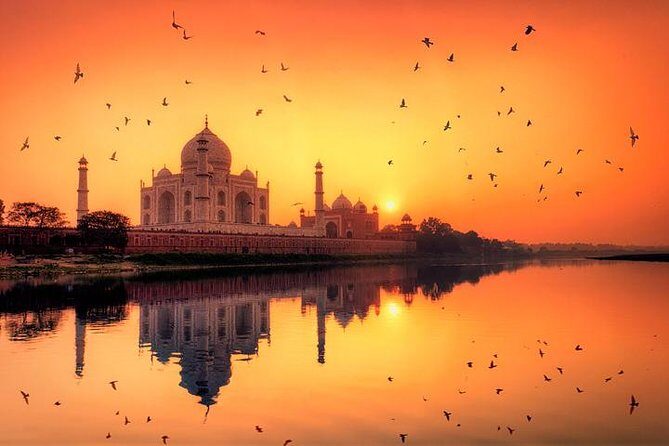
Your morning starts with a guide meeting in the hotel lobby at 5:45 AM to visit the Taj Mahal at sunrise. Seeing it in early light changes the feel. You get softer shadows, a more cinematic tone for the marble, and that classic moment where the monument looks like it belongs to the sky as much as the ground.
After the sunrise visit, you return to the hotel to refresh and have breakfast. Then you check out and move to Agra Fort, another UNESCO World Heritage Site, described as the fort where early Mughal emperors lived. This is a smart pairing because it keeps you from treating Taj Mahal as a one-off. Instead, you’re viewing it as part of a larger Mughal world.
Then you transfer toward Ranthambore—about 6 hours (270 km)—and check in for the night. Expect a long stretch in the car. Bring something for comfort, and try not to overpack your schedule with extra stops. The tiger safari day ahead matters more than squeezing in one last viewpoint.
Agra Fort to Ranthambore Transfer: The Unsexy Part That Helps Your Safari
The route from Agra to Ranthambore is a big one—around 6 hours—so this day is where the “chauffeur + A/C vehicle + bottled water” details stop being small fine print and start being the difference between a smooth day and a cranky one.
Why it’s worth it: Ranthambore works best when you’re rested enough for an early safari. So while you’re traveling, you’re also setting yourself up for the morning that counts.
One more note: your Taj and Agra stops happen early and then you move again. If you’re sensitive to schedule pressure, I’d plan on keeping your evening low-key once you arrive in Ranthambore—no long wandering, no “let’s just see one more thing.”
Day 3 Ranthambore Tiger Jungle Safari: Shared Jeep, Big Payoff
This is where the tour switches from architecture to wildlife, and it’s also where the day’s rhythm becomes simple: wake, go, hope, then recover.
You do an early morning tiger jungle safari at Ranthambore National Park in a shared jeep/canter. Your tour notes describe Ranthambore as an ideal home for tigers and a tiger reserve, so you’re heading into the right place for this specific kind of wildlife viewing.
The value here isn’t just the chance of a tiger sighting—it’s the experience of being inside a protected landscape with an actual game-drive format. Even if tiger sightings aren’t guaranteed every trip, you’re still getting a structured wildlife search and an early day that feels like a real adventure instead of a bus tour.
Back at the hotel, you have breakfast and then check out. Then you’re driven to Jaipur, the famous “Pink City,” though your notes don’t sugarcoat the timing: this is another long travel-heavy portion of the itinerary.
If you get a guide with strong storytelling, this is the moment it helps most. The tour guides in the cities are private, and you may find that a guide’s explanations make wildlife time feel less random and more meaningful. (In past trips with similar setups, guides like Sunil have been praised for being sharp and helpful, and Vivek has also been mentioned by name.)
A few more New Delhi tours and experiences worth a look






Jaipur’s Pink City Day: Amber Fort, Jal Mahal Photos, City Palace, Jantar Mantar, Hawa Mahal
Jaipur is one of those places where a good plan saves you from walking in circles. Your day is packed, but it’s packed with the best-known stops for understanding why Jaipur looks the way it does.
You start with Amber Fort, described as a four-part fort with courtyards. Amber is a great first choice because it instantly gives you the fort-and-palace logic of the city. Then you have a Jal Mahal photo stop at the Water Palace. The notes call it a photo stop, so treat it as a quick moment—enough time to see it and grab photos, not enough to turn it into a detour day.
Next is City Palace, including Chandra Mahal and Mubarak Mahal, and described as the seat of the Maharaja of Jaipur. This is where you connect the architecture back to royal life and planning.
Then comes Jantar Mantar, a UNESCO-listed set of nineteen architectural astronomical instruments built by Sawai Jai Singh II. One practical reason I like this stop: it’s not just “pretty buildings.” It’s science made visible in stone, including the world’s largest stone sundial as noted in your tour description.
Finally, you end with Hawa Mahal—the Wind Palace—also a photo stop. It’s iconic, and you don’t need a long sit-down here to get why it’s famous. But it does make the whole day feel complete: fort, palace, astronomy, then the famous façade.
This is a full day, and Jaipur nights are best enjoyed calmly. You’ll likely want to slow down, eat well, and let your feet recover.
Day 4 to Day 5 Flow: Back to Delhi and the End of the Loop
After breakfast, the tour moves you back toward Delhi and finishes with drop-off at your desired location in Delhi or at Jaipur Airport (as your notes state Jaipur Airport is connected with major cities).
So the ending is flexible. If you came to India for the Golden Triangle + Ranthambore combination, this is a practical handoff: you’re not left stranded in some unknown spot. You’re also not forced to stay in a single hotel area.
Real talk: by the last day, you’ll likely be tired in a good way. You’ve had early mornings, transfers, and a lot of seeing. If you have an evening flight, you’ll probably be grateful you’re not doing more guided sightseeing.
Price and Value: What $499 Covers (and What You Need to Budget)
At $499 per person, the tour price feels reasonable for what you’re getting: multi-city transport, chauffeur service, hotel nights, and private guides across the cities.
Here’s the value math as I see it:
- You’re paying for organization: A/C vehicle with bottled water, planned route, and guides.
- You get the two biggest “anchor experiences”: Taj Mahal sunrise and a Ranthambore safari.
- Hotel accommodations are included, with options for 3/4/5 star properties depending on what you choose.
What you must budget for: monument fees/tickets aren’t included. Your tour notes also indicate that admission tickets aren’t included at key points like the Day 1 Qutub Minar stop and the Day 2 Taj/Agra blocks. That means you should expect extra costs on arrival or during guided visits.
Also, note the safari format: it’s in shared jeep/canter. That can be a plus for cost control, but it also means you won’t have the entire vehicle to yourself.
If you want a smooth first trip to North India—especially if you don’t want to coordinate transport and guides on your own—this price is easier to justify.
Who This Tour Fits Best (and Where It Might Not)
This tour is a good fit if you:
- Want a first-timer-friendly Golden Triangle route plus one major wildlife add-on.
- Like early starts when it pays off (Taj Mahal sunrise).
- Prefer private guidance rather than wandering alone.
- Are okay with long drives between cities.
It may not fit you as well if you:
- Hate early mornings and rigid timing.
- Want zero driving days (this is a lot of moving).
- Don’t want to manage extra museum/monument ticket costs, since fees are not included.
Should You Book This Delhi–Agra–Jaipur With Ranthambore Tour?
Yes, if your priority list includes Taj Mahal sunrise, Ranthambore tiger safari, and a guided Golden Triangle with real monuments (not just quick photo stops). The structure is solid, and the included guides and A/C transport make the long days feel manageable.
Before you book, I’d do two things: confirm which hotel star option you’re selecting, and plan a budget for monument tickets since they aren’t included. If you handle those, this is the kind of trip that can give you the big India moments without the stress of coordinating them yourself.
FAQ
How long is the tour?
The tour is listed as 5 days (approx.), running from New Delhi back to New Delhi.
Where does the tour start and end?
It starts and ends in New Delhi.
Is pickup included?
Yes. Pickup is offered from the airport, railway station, hotel, or your desired location in Delhi, Gurgaon, or Noida.
What is included in the price?
Included items are hotel accommodations (3/4/5 star options), an air-conditioned vehicle with packaged bottled water, a morning jungle safari in Ranthambore (shared jeep/canter), private tour guides in each city, a professional chauffeur, and breakfast for 4 days. You also get a mobile ticket.
Are monument tickets included?
No. Monument fees/tickets are not included.
When do you visit the Taj Mahal for sunrise?
You meet your private guide in the hotel lobby at 5:45 AM for the sunrise visit.
Is the Ranthambore safari private?
No. The morning jungle safari is in a shared jeep/canter.
What hotel quality is provided?
The tour includes accommodations in 3/4/5 star hotels based on the option you select.
How many breakfasts are included?
Breakfast is included for 4 days.
What is the cancellation policy?
You can cancel up to 3 days in advance of the experience for a full refund. If you cancel less than 3 full days before the start time, the amount paid will not be refunded.