REVIEW · JAIPUR
Temple tour of Jaipur with ropeway ride
Book on GetYourGuide →Operated by Ultimate Urban Adventures Pvt. Ltd. · Bookable on GetYourGuide
Jaipur wakes up with devotion and monkeys. I love how this temple circuit strings together multiple faiths, from early Ganesh temple offerings to a ropeway ride with hilltop views. I also like the pacing: hotel pickup, a guided sweep of major sites, and then a drop-off so you keep the rest of your day flexible.
One thing to plan for: it is a lot of walking on temple grounds, and the dress code is real, not optional. Bring comfortable shoes and leave the shorts and sleeveless tops at home.
In This Review
- Key Highlights You’ll Notice Fast
- The Core Idea: Faith, Architecture, and Viewpoints in 5.5 Hours
- Ganesh Temple at Dawn: Why That Early Start Feels Different
- Birla Mandir’s White Marble and Raised Platform
- Jain Temple Stop: Learning Jainism Through the Setting
- Galta Ji Monkey Temple: Rituals at the Sacred Water Tanks
- Ropeway to the Hilltop Temple: The 10-Minute Ride That Changes Everything
- Old Hanuman Temple: A Calm Finish After the Descent
- Sikh Gurudwara and the Communal Kitchen: Service You Can Actually See
- Price and Logistics: What $38 Buys You in Jaipur
- What to Bring, Wear, and Skip in Temple Areas
- Who Should Go (and Who Should Skip This One)
- Should You Book This Jaipur Temple Tour With Ropeway Ride?
- FAQ
- How long is the Jaipur temple tour with ropeway?
- What’s included in the tour price?
- Is the ropeway ticket included?
- Are meals included?
- What language is the tour guide?
- Do I get hotel pickup and drop-off?
- What should I wear or bring for temple visits?
- Is this tour suitable for wheelchair users or limited mobility?
Key Highlights You’ll Notice Fast
- 18th-century Ganesh temple with early morning offerings you can actually witness before the city fully kicks in
- Birla Mandir (white marble) on a raised platform, with modern-looking details worth slowing down for
- Galta Ji monkey temple water tanks where rituals and customs shape what you see
- Ropeway ride (about 10 minutes) that gives you a new angle on the hilltop forest-and-temple complex
- Sikh Gurudwara communal kitchen with daily service for hundreds of people
The Core Idea: Faith, Architecture, and Viewpoints in 5.5 Hours
This is a guided Jaipur temple tour built around variety. You move through Hindu sites (Ganesh, Hanuman, Galta Ji), you see Jain and Sikh religious spaces, and you finish with a ropeway that turns the day’s pace from street-level walking into a slow, scenic climb.
At 5.5 hours, the value is in compression. You get hotel pickup and drop-off, an English-speaking local guide, and visits to a string of well-known temple stops without you needing to coordinate transport between them. The trade-off is that it is not a relaxed stroll through one monument. It is a compact circuit, so your comfort on foot matters.
The ropeway adds a lot of payoff for the time. Even if you are not a cable-car person, the ride changes your perspective, and it gives you a natural pause point in a day that otherwise stays focused on worship spaces.
You can also read our reviews of more tours and experiences in Jaipur.


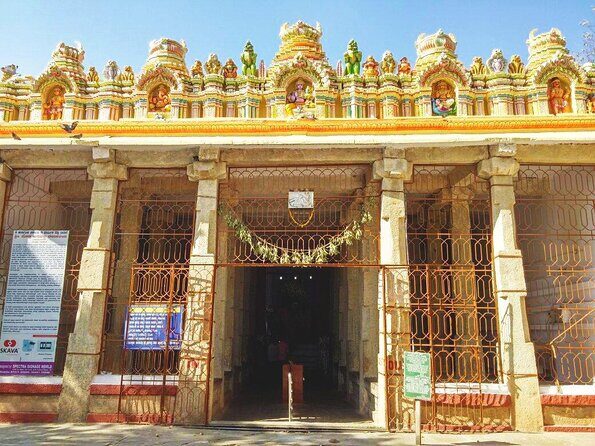
Ganesh Temple at Dawn: Why That Early Start Feels Different
The tour begins at an 18th-century Ganesh temple, and timing is the whole point. You are there for early morning offerings by local people before work starts. That means the atmosphere is less sightseeing and more rhythm—quiet devotion, steady movement, and the sense that the temple is part of daily life, not just a photo spot.
Ganesh is the center of attention here. The Lord Ganesha idol draws most eyes, and the guide’s explanations help you understand what you are seeing beyond the visuals. If you go expecting only architecture, you may be surprised by how much the experience is about custom and intention.
Practical tip: temples can have strict rules for what you wear and what you bring inside. Wear something that matches the dress expectations and plan to spend time looking, not just walking through.
Birla Mandir’s White Marble and Raised Platform
Next comes Birla Mandir, built from white marble and positioned on a raised platform. The architectural style is described as modern, which is a useful contrast to the older-looking, ornate temple shapes you might expect in Jaipur. The result is a temple that feels crisp and structured, like it was designed for light, symmetry, and visibility.
Morning worship is part of the experience. If you arrive at the right time, you may see people actively engaged in ceremony rather than waiting for a performance. One standout detail to watch for is the way names and likenesses of Hindu gods and even saints from other parts of the world are engraved into the temple’s columns. It is not just decoration; it is a statement about where devotion reaches.
If you like design, this is your stop. If you like stories, the guide can connect the visuals to broader ideas about faith and community.
Jain Temple Stop: Learning Jainism Through the Setting
You then visit a Jain temple and get a chance to learn Jain philosophy. Jainism is often easier to understand when you are physically inside the environment it shapes—rules about conduct, values around non-harm, and the idea that spirituality shows up in daily choices.
This stop is a good reminder that temple visits can work like informal lessons. You do not need a textbook. You just need patience to read what is around you and listen for the guide’s explanations.
A small caution: Jain temples, like other religious spaces, may be quiet and focused. Keep your voice low, watch your pace, and save your most active photo bursts for when you are not interfering with worship.
Galta Ji Monkey Temple: Rituals at the Sacred Water Tanks
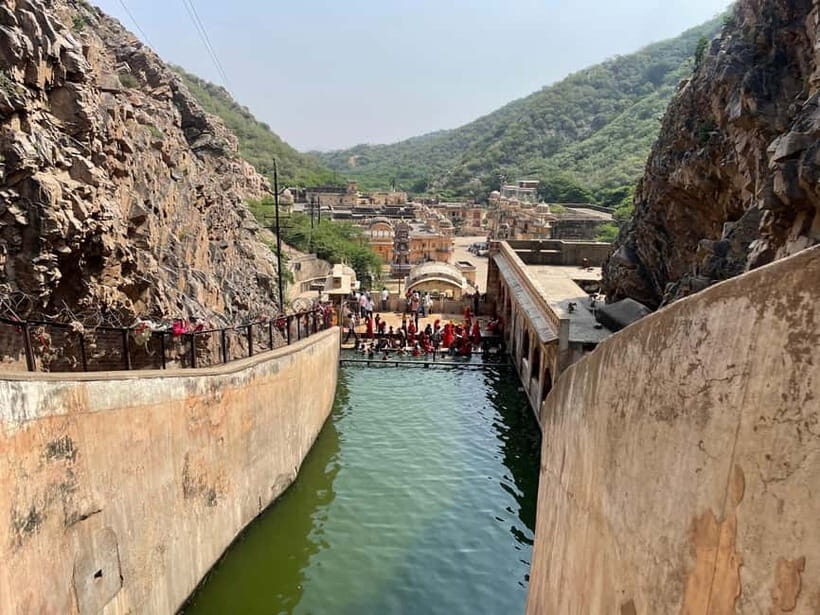
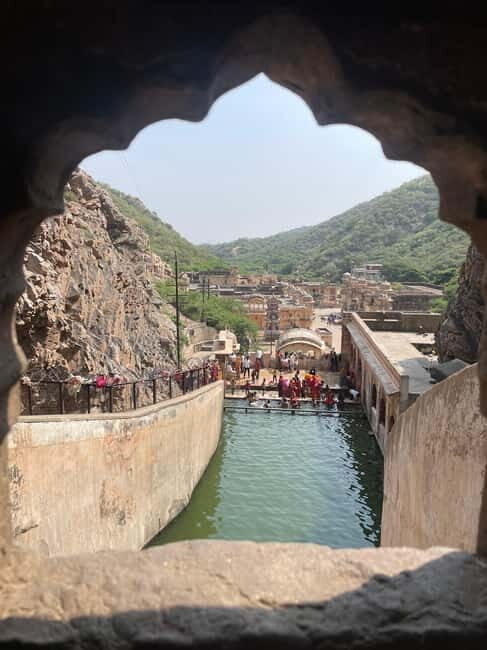
Galta Ji, also known as the monkey temple, is one of the most visually distinctive parts of the day. It is a heritage temple complex, and what makes it special is the mix of sacred space and everyday ritual energy.
You’ll watch rituals and customs connected to the sacred water tanks. This is where the experience feels grounded: people come to perform practices, not just to look. The water tanks are the stage, and ceremonies give them meaning that a casual photo can’t capture.
There is also free time for photography, which is your chance to slow down and frame the tanks, temple steps, and surrounding architecture. One practical point: follow your guide’s instructions about where to stand and how to behave around active religious areas and animals. It is not a zoo tour; it is a functioning sacred site.






Ropeway to the Hilltop Temple: The 10-Minute Ride That Changes Everything
After Galta Ji, the tour takes you to a hilltop temple. Getting there is part of the fun: the ropeway ride is about 10 minutes. You also get safety guidance before the ride, which matters because it is a controlled, enclosed experience compared to open-air temple walking.
The payoff is views. From the top, you get a panorama over the forest and temple complex. Even if you only have a camera and a few minutes, you’ll likely find it hard not to pause. This stop also gives your legs a break before the next temple.
Important logistics detail: the tour does not include the ropeway ticket. The operator says you can skip the ticket line, but you should still budget for the ticket itself. Carry water, stay hydrated, and expect some sun exposure if the hilltop is bright.
Old Hanuman Temple: A Calm Finish After the Descent
Once you come back down, you visit one of the oldest Hanuman temples. The hilltop stop is all about views. The Hanuman stop is more about tradition and continuity. You get another Hindu focus, but with a different mood than the morning Ganesh start.
Because the tour is tightly scheduled, this late-in-theloop stop can feel like a soft landing. It is a good moment to slow down, reset your attention, and take in the devotional environment without rushing to the next photo.
If you are sensitive to crowds, keep an eye on where people are gathering for ceremony. Your guide can help you time your viewing so you are not constantly in the flow.
Sikh Gurudwara and the Communal Kitchen: Service You Can Actually See
A big part of why this tour works is that it does not treat Sikhism like a side quest. You visit a Sikh Gurudwara (Sikh temple) and observe religious ceremonies along with the communal kitchen.
This communal kitchen provides meals to hundreds of people each day, including people from every religion, caste, and nationality. That detail matters. It reframes the visit from sightseeing into something practical: service is the point, and the temple is a working system of care.
You may even be invited to try your hand with volunteers in the kitchen. If you do, go with a learning mindset. Follow instructions, be respectful, and understand you are joining a real routine for real people.
Even if you do not help, watching how the kitchen operates can teach you something you will not get from a quick history stop.
Price and Logistics: What $38 Buys You in Jaipur
At $38 per person for about 5.5 hours, you are paying for structure. You are not just paying for temple entry; you are paying for guided interpretation across several sites plus hotel pickup and drop-off.
Here’s the practical value equation:
- You get an English-speaking local guide and transport coordination.
- You visit multiple major religious sites in one morning block.
- You still pay separately for the ropeway ticket and meals, so budget extra for that.
Also note what can change the feel of the day: small-group or private options are available, which can make Q&A easier and help you move at a pace that fits you. If you want a tour where you can ask questions and not feel rushed, this format can be a plus.
If you are traveling with limited time in Jaipur, the price starts to look even more fair. This tour helps you see a lot without losing hours to transit planning.
What to Bring, Wear, and Skip in Temple Areas
This is one of those tours where preparation makes the difference between pleasant and annoying.
Bring:
- Comfortable shoes (you will walk)
- Hat and sunscreen (Jaipur sun can be strong)
- Camera (there is photography time)
- Water (you will be happier if you hydrate)
Dress and behavior rules matter:
- Shorts and short skirts are not allowed.
- Sleeveless shirts are not allowed.
- Alcohol and drugs are not allowed.
- Drones are not allowed.
- Flash photography and food and drinks are not allowed inside temples.
Also plan your day around the reality that you may be taking photos outdoors and inside quickly, based on temple rules and ceremony timing. If you want the cleanest photos, ask your guide when it is a good moment rather than forcing shots during active worship.
Who Should Go (and Who Should Skip This One)
This tour fits best if you want a guided, multi-faith overview of Jaipur’s temple life in a short window. It is also a good match for people who like learning through seeing—Ganesha at dawn, Jain philosophy in a temple setting, Sikh ceremony and service, and Galta Ji customs around the water tanks.
It is less ideal if you have mobility limits. The tour is not suitable for people with mobility impairments, wheelchair users, or people over 80. Even with a guide and car transport, temple grounds include walking and steps. Ropeway access does not remove the need to move.
For solo travelers, this type of tour can also feel safer than going it alone, since you have a driver and guide handling the routing. You can ask questions and keep your focus on the experience rather than logistics.
Should You Book This Jaipur Temple Tour With Ropeway Ride?
I think you should book if you want a compact morning that mixes major Jaipur temple types and gives you that hilltop view via ropeway. The biggest win is the variety: you see not only Hindu landmarks, but also Jain and Sikh spaces, plus the communal kitchen element that turns religion into something you can witness in action.
Skip it if you dislike walking, need fully accessible routes, or know you struggle with strict dress expectations. Also, remember the ropeway ticket and meals are not included, so plan for those add-ons.
If your goal is to get oriented quickly in Jaipur and leave with more than photos—context, customs, and a better sense of how faith shows up in daily life—this tour is a strong choice.
FAQ
How long is the Jaipur temple tour with ropeway?
The duration is 5.5 hours.
What’s included in the tour price?
Hotel pickup and drop-off, visits to the Ganesh temple, Birla temple, Jain temple, Sikh Gurudwara, Galta Ji monkey temple, a guided visit at the hilltop temple, and a Hanuman temple stop are included.
Is the ropeway ticket included?
No. The ropeway ticket is not included.
Are meals included?
No. Meals are not included.
What language is the tour guide?
The live tour guide is available in English.
Do I get hotel pickup and drop-off?
Yes. Hotel pickup and drop-off are included, and pickup can be arranged from your hotel or within the city.
What should I wear or bring for temple visits?
Bring comfortable shoes, a hat, a camera, and sunscreen. Avoid shorts, short skirts, and sleeveless shirts.
Is this tour suitable for wheelchair users or limited mobility?
No. It is not suitable for people with mobility impairments, wheelchair users, or people over 80.