REVIEW · NEW DELHI
3 Day Golden Triangle Tour : Delhi – Agra – Jaipur
Book on Viator →Operated by Taj One Day Tour · Bookable on Viator
Golden Triangle in three days sounds fast. It is fast, but this tour is built around good pacing and big sights—so you actually get that Delhi-to-Agra-to-Jaipur story without guessing logistics.
I like the mix of Old and New Delhi in Day 1, with a local guide who keeps things organized between major landmarks. I also like that you get a sunrise Taj Mahal morning (picked up around 6:00 am) because it changes how the monument feels in the light.
One thing to think about: monument entrance fees are not included, so your final budget depends on ticket prices, and you’ll want to plan for them up front. Also, like any multi-city trip, timing can get stressful if transport runs late, so build a little flexibility in your mindset.
In This Review
- Key highlights you’ll notice right away
- Golden Triangle, three cities, one practical plan
- Day 1 in Delhi: Humayun Tomb to Jama Masjid, plus New Delhi icons
- What I’d do with this day
- Chandni Chowk by rickshaw: the Delhi street moment that breaks up the monuments
- The long drive to Agra: where comfort matters
- Day 2 in Agra: Taj Mahal at sunrise, then Fort and Fatehpur Sikri on the way to Jaipur
- Fatehpur Sikri en route to Jaipur
- A realistic caution about Day 2
- Day 3 in Jaipur: Amber Fort, City Palace, Hawa Mahal, Jal Mahal, Jantar Mantar
- What I think you’ll enjoy most
- Guides, escort support, and what it feels like in real life
- About shopping stops
- Price and value: what $320 covers, and the part you must budget separately
- Logistics that can make or break your experience
- Start early when you can
- Don’t underestimate Delhi-to-Agra and Agra-to-Jaipur driving time
- Weather matters
- You’ll see lots of big names—so ask for meaning
- So, should you book the 3-Day Golden Triangle: Delhi–Agra–Jaipur?
- FAQ
- What’s included in the tour price?
- Are hotel stays included for Agra and Jaipur?
- Do I need to pay for monument tickets?
- What time do we visit the Taj Mahal?
- What’s the daily sightseeing pace like?
- What happens if the weather is bad?
Key highlights you’ll notice right away
- Sunrise Taj Mahal pickup timing (around 6:00 am) for the best first-light experience
- Delhi landmark day that covers Humayun Tomb, Qutub Minar, Raj Ghat, India Gate, Lotus Temple, and Jama Masjid
- Chandni Chowk rickshaw ride that adds a classic-feeling texture to the city tour
- Jaipur morning sights with Amber Fort, City Palace, Hawa Mahal, Jal Mahal, and Jantar Mantar
- Escort support included (representative cum escort) so you’re not on your own
- Private A/C car with driver for the long drives between cities
Golden Triangle, three cities, one practical plan
This is one of those “big India” tours that tries to do the Golden Triangle the sensible way: one city per day (plus driving) and a full guide-led day inside each place. You’re not just ticking boxes from a bus window. You’re moving in a private air-conditioned vehicle, getting a local guide’s explanations, and hitting the headline sights that most first-timers want.
The best part is how the days are structured around time of day. Delhi gets the full daylight sweep; Agra is anchored by sunrise Taj; and Jaipur is scheduled early enough to tackle the forts and palaces before the heat (and before the day starts feeling like a slog).
At $320 per person, you’re paying for the “glue”: guiding, transport, and hotel nights in Agra and Jaipur when that hotel option is booked. What you’re not paying for are entrance tickets to the monuments, plus meals beyond breakfast.
A few more New Delhi tours and experiences worth a look



Day 1 in Delhi: Humayun Tomb to Jama Masjid, plus New Delhi icons
Delhi is huge and confusing if you arrive cold. This itinerary helps you get your bearings fast by mixing two different faces of the city.
On the historic side, you start with Humayun Tomb and Qutub Minar—both excellent for understanding how Delhi’s monumental culture developed over time. Then you move into the memorial spaces like Raj Ghat, and you continue toward New Delhi’s central government-and-ceremony zone with stops around India Gate and Parliament Street.
You’ll also see religious landmarks that feel different from one another: Lotus Temple is modern and clean-lined, while Jama Masjid brings a heavier, older-city atmosphere. The tour also includes the Red Fort as an outside view, which is a smart move if you’re trying to keep the day from turning into a long line festival.
A practical detail: President House is mentioned as something only delegates can enter, or possibly with a special pass. So treat it as a viewing/route stop, not a “sure thing” for inside access. That mindset keeps expectations realistic.
What I’d do with this day
If you love photos, this is your day. The variety is the whole point: domes and arches, then gardens and modern lines, then the grand ceremonial scale around India Gate. And because you’re traveling by private A/C car, you can handle the distance between neighborhoods without spending the whole day exhausted.
Just note the tour hits a lot of major points. If you’re the kind of person who needs long unstructured time, you might feel rushed. But if you want a guided “map in motion,” this is a solid approach.
Chandni Chowk by rickshaw: the Delhi street moment that breaks up the monuments
One of the most memorable parts of this kind of itinerary is usually not the biggest monument—it’s the sensory break. Here, that break is a rickshaw ride at Chandni Chowk.
Chandni Chowk is a classic Old Delhi shopping-and-street corridor. A short rickshaw ride helps you experience the energy without having to figure out routes and crowd timing yourself. It’s also a nice contrast to the earlier stops that are mostly solemn, spacious, or monumental.
If you go in with a “slow down and watch” attitude, you’ll get more out of it. The streets move fast, people call out, and the visual rhythm can be intense. The rickshaw ride turns that chaos into something you can absorb safely and comfortably.
The long drive to Agra: where comfort matters
After Delhi, you drive to Agra, and you’ll check in to your hotel there for overnight stay. In a three-day tour, this is where comfort becomes less of a luxury and more of a survival tool.
You’re traveling in a private A/C car with driver, and the tour includes all tolls, taxes, and fuel surcharge. That matters because a lot of cheaper tours hide these costs until you’re already on the road. Here, the plan is cleaner: you pay up front and you keep moving.
Also, the tour includes bottled water, which sounds small, but in India heat it’s one of those practical details that reduces friction.





Day 2 in Agra: Taj Mahal at sunrise, then Fort and Fatehpur Sikri on the way to Jaipur
Agra can be either magical or stressful, depending on the timing. This plan leans toward magical.
You’re picked up around 6:00 am to visit the Taj Mahal during sunrise, then you head back to the hotel with the morning memory you came for. Sunrise timing is a big deal here: the monument’s mood changes as the light shifts, and you also tend to avoid the heaviest crush hours compared with later in the day.
After breakfast and checkout, the tour moves to Agra Fort. Forts give you a different angle on the Mughal story—less postcard, more architecture and structure. It’s also a good place to reset mentally after Taj, since Taj is so emotionally dominant that it can be hard to focus on anything else if you see it too late.
Fatehpur Sikri en route to Jaipur
On the way to Jaipur, you stop at Fatehpur Sikri. It’s a strong “bonus” because it breaks up the drive with another major cultural site. Having it included means you’re not just burning time between cities—you’re gaining context.
When you arrive in Jaipur, you check in and overnight.
A realistic caution about Day 2
This kind of route can be sensitive to transport delays. One issue that showed up in the feedback is that train problems beyond anyone’s control can create problems on the ground. The takeaway for you: keep calm if there’s delay, and avoid assuming every schedule will go perfectly. If you’ve booked flights, give yourself a little buffer when possible.
Day 3 in Jaipur: Amber Fort, City Palace, Hawa Mahal, Jal Mahal, Jantar Mantar
Jaipur gets started early—around 8:00 am with guided sightseeing. That early start helps because Jaipur’s sights are spread out and require walking and climbing depending on where you stop.
You’ll cover:
- Amber Fort: the big fort centerpiece, and a must-do for views and atmosphere
- City Palace: where you get a sense of royal life and palace architecture
- Jal Mahal (Water Palace): a striking stop that looks like it belongs in a painting
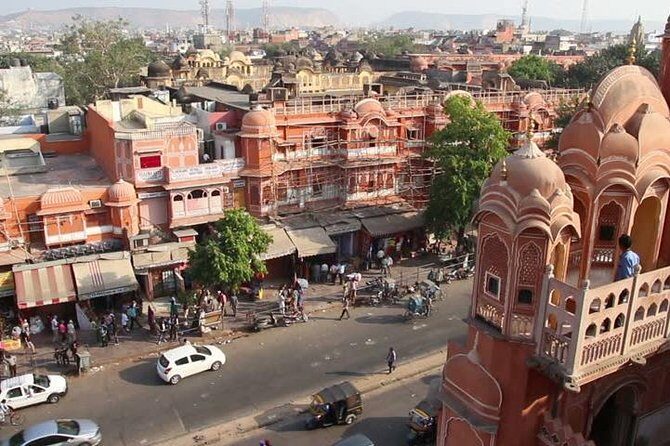
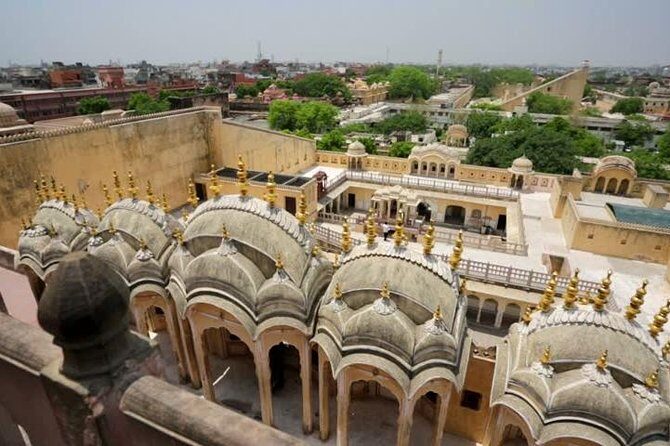
- Hawa Mahal (Palace of Winds): the iconic facade that signals why Jaipur became famous for its crafted street-level elegance
- Jantar Mantar (Observatory): the science-and-stone side of Jaipur that people often skip, but you shouldn’t
Then the driver heads back to Delhi around 5:00 pm, with arrival around 9:00 pm and drop-off to your airport or hotel in Delhi / NCR / Gurugram.
That back-and-forth timing can feel long, but it also means you’re not splitting Jaipur into another partial day. For a short trip, it’s a practical trade.
What I think you’ll enjoy most
If you like variety, Jaipur is perfect for it. You get forts, royal spaces, architectural icons, and an observatory—all in one morning-to-afternoon sweep. And if you’re a photographer, Jal Mahal and Hawa Mahal give you two very different styles of “Jaipur looks.”
Just be ready for the fact that this is a guided push through many stops. Build in a quick rest whenever you can—water, shade when available, and short breaks where the schedule allows.
Guides, escort support, and what it feels like in real life
This tour includes live tour guide service, plus a representative cum escort who is there to take care of guests, and you’re told there’s no extra payment needed for that part.
That matters because you’re not just handed a plan on paper. You have someone to help with pacing, route changes, and the little frictions that crop up in multi-city travel.
One piece of feedback that stands out: some groups had guides who spoke good Italian, with multiple guides working through the three days. If you’re an Italian speaker, that’s a confidence boost for understanding what you’re seeing and asking questions on the spot.
About shopping stops
A note from feedback: guides may route you to shops connected to their contacts. The issue isn’t that shopping exists—it’s what can happen when sales pressure shows up. If you prefer to keep control, treat any shop stop as optional. If you see a lot of persuasion or pricing that feels inflated, step back and stick to your plan: look only, ask for pricing, and don’t commit on the spot.
You can still enjoy the tour while keeping your wallet closed.
Price and value: what $320 covers, and the part you must budget separately
At $320 per person, you’re paying for a lot of “travel operations,” not just sightseeing. Here’s what’s included in the cost:
- Private A/C car with driver
- Live guide
- Breakfast
- Rickshaw ride at Chandni Chowk
- Bottled water
- All tolls, taxes, fuel surcharge, and fees
- Hotel stays in Agra and Jaipur with breakfast and all taxes, but only if that option is booked
- Entrance fees are not included
This is where value lives: entrance fees can add up fast across multiple cities, but the big bundled costs—transport, guidance, and driving time—are handled. If you want to travel comfortably and avoid piecing together taxis and guide payments, this sort of package often works out well.
My practical budget advice: assume you’ll pay monument tickets separately, and plan your spending around that. If you don’t like surprises, check the entrance fee expectations for Taj Mahal, Agra Fort, Fatehpur Sikri, Amber Fort, City Palace, and Jantar Mantar before you finalize.
Also remember tipping is not included. Even if you don’t tip lavishly, it’s good to carry small cash for the people who help you day to day.
Logistics that can make or break your experience
Three-day Golden Triangle tours are always a mix of joy and speed. Here are the factors you can control to make it smoother.
Start early when you can
This tour already plans early mornings for key moments: sunrise Taj around 6:00 am and Jaipur sightseeing around 8:00 am. Arrive with your energy, not your sleep debt. Eat breakfast if it’s provided and easy, and carry water.
Don’t underestimate Delhi-to-Agra and Agra-to-Jaipur driving time
Even in private cars, traffic can be real. The tour includes a driver throughout the journeys, which is a big plus compared with self-driven travel for first-timers. Still, keep your plan flexible. If you’re flying out the same day, add buffer time for the return trip to Delhi (the tour returns around 9:00 pm).
Weather matters
The tour notes it requires good weather. If weather is poor, you’ll be offered a different date or a full refund. So don’t schedule this like it’s a lock in the calendar. If your trip has fixed flights, you’ll want a backup date where possible.
You’ll see lots of big names—so ask for meaning
You’ll be shown major monuments by category: tombs, forts, palaces, and observatory architecture. The best way to enjoy this fast sweep is to ask your guide a simple question at each stop, like what makes this one different from the others. That turns a checklist into a story you can actually remember.
So, should you book the 3-Day Golden Triangle: Delhi–Agra–Jaipur?
I think you should book if:
- You want a guided, private, low-stress way to cover Delhi, Agra, and Jaipur in about three days
- You care about seeing Taj Mahal at sunrise, not just any time of day
- You like structure: your transport, timing, and major stops are handled
- You’re okay paying monument entrance fees separately
I’d hesitate if:
- You hate shopping stops connected to guides and don’t want any sales pressure at all
- You’re extremely schedule-sensitive (multi-city travel can get disrupted by issues beyond the operator’s control)
- You want lots of free time for wandering on your own without a tight plan
If you’re traveling for the classic first-Triangle experience and you want it done with a guide, a driver, and a realistic route, this is a strong value choice—just budget for entrance tickets and keep expectations flexible for timing.
FAQ
What’s included in the tour price?
The tour price includes a private A/C car with driver, live tour guide service, breakfast, bottled water, and a rickshaw ride at Chandni Chowk in Delhi. It also includes all tolls and taxes, fuel surcharge, and landing/facility fees. Monument entrance fees are not included.
Are hotel stays included for Agra and Jaipur?
Hotel stays in Agra and Jaipur city are included only if you booked the option that includes them. The description says you get 2 day stays with breakfast and all taxes for those included nights.
Do I need to pay for monument tickets?
Yes. Entrance fees for monuments are not included in the tour price.
What time do we visit the Taj Mahal?
You’ll be picked up from the hotel around 6:00 am to visit the Taj Mahal during sunrise, then you return to the hotel afterward.
What’s the daily sightseeing pace like?
Each day packs in major sites: Delhi covers multiple Old and New Delhi landmarks, Agra focuses on Taj Mahal at sunrise plus Agra Fort and a stop at Fatehpur Sikri, and Jaipur includes Amber Fort, City Palace, Jal Mahal, Hawa Mahal, and Jantar Mantar. It’s designed to be efficient, not slow and leisurely.
What happens if the weather is bad?
The tour requires good weather. If it’s canceled due to poor weather, you’ll be offered a different date or a full refund.