REVIEW · NEW DELHI
20-Day Cultural Heritage Tour of Rajasthan from New Delhi
Book on Viator →Operated by Abyss Tours · Bookable on Viator
A good plan beats frantic planning. This private 20-day route strings together Delhi, Rajasthan’s big cities, Agra, Khajuraho, and Varanasi with hotel stays and local guides so you can focus on the sights, not schedules. I like the practical setup: air-conditioned private transport plus pickup at New Delhi. I also like the standout cultural moments, especially the desert night in Jaisalmer and the Ganges aarti in Varanasi. One thing to weigh: major sights often have extra costs for entrance tickets, and the itinerary includes internal flights you need to budget for if they’re not booked through the provider.
You’re getting a lot of ground covered, but the day-by-day pace is still readable because the tour handles the “how do I get there?” part. Just remember that in India, closures happen: Taj Mahal is closed on Fridays, and Red Fort and Lotus Temple are closed on Mondays, so your plan may shift a bit.
In This Review
- Key highlights to know before you go
- The big idea: a private loop that covers Rajasthan and the must-sees beyond
- Day 1 and 2: landing in Delhi, then Old Delhi and New Delhi in one tidy arc
- Udaipur and Jodhpur: forts and palaces with a more relaxed rhythm
- Jaisalmer: the fort-city look, camel ride, and a real Thar night
- Bikaner to Jaipur: the state capitals you remember, plus the fort-and-temple rhythm
- Agra and Fatehpur Sikri: Taj Mahal time, plus Mughal backup planets
- Orchha and Khajuraho: temple art that rewards your time
- Varanasi: aarti by night and the river rhythm in daylight
- Transportation, guides, and what you’re actually buying for $1,500
- What’s not included: entrances, flights, boat ride, and the meals gap
- Who this tour fits best (and who might want something else)
- Should you book the 20-day Rajasthan cultural heritage tour?
- FAQ
- FAQ
- Is this tour private?
- Where does the tour start?
- Are flights included in the price?
- What kind of hotel accommodations are included?
- Is breakfast included?
- Are entrance fees included?
- Does the itinerary include a camel ride?
- Is the boat ride in Varanasi included?
- Do I need a rickshaw in Varanasi?
- What happens if Taj Mahal is closed?
- Is the tour suitable for most travelers?
Key highlights to know before you go
- Private vehicle + local English-speaking guides keep each city feeling guided, not just driven-through.
- Hotel stays are 3-star (twin share), which helps value compared with piecing everything together.
- Jaisalmer Thar desert overnight means you get the desert experience, not just a daytime stop.
- Varanasi aarti on the Ghats is built into the schedule and timed for evening.
- Taj Mahal timing + closure rules are handled with a plan that can adjust by day.
- Budget for entrance tickets and flights since those aren’t included.
The big idea: a private loop that covers Rajasthan and the must-sees beyond
This is a classic Indian “heritage circuit” built like a machine. You start in New Delhi, then move west through Rajasthan—Udaipur, Jodhpur, Jaisalmer, Bikaner, Jaipur—then loop toward Agra, go to Orchha and Khajuraho for temples, and finally finish in Varanasi before returning to Delhi.
The value isn’t just the long list of stops. It’s that the tour covers the heavy lifting: pickup and drop-off, an air-conditioned private car with driver, hotel accommodation (3-star on twin share), breakfast, and local English-speaking guides at the locations. That combination is what turns “20 days of stress” into “20 days of sightseeing.”
The one drawback: you still need to handle what’s not included—entrance fees, internal flights (if you arrange them separately), and a few local paid add-ons (like the Varanasi rickshaw situation and the boat ride).
You can also read our reviews of more historical tours in New Delhi



Day 1 and 2: landing in Delhi, then Old Delhi and New Delhi in one tidy arc
You arrive in Delhi and go straight to a hotel after a meet-and-greet. That matters more than it sounds. After a flight, the last thing you want is “figure it out” logistics.
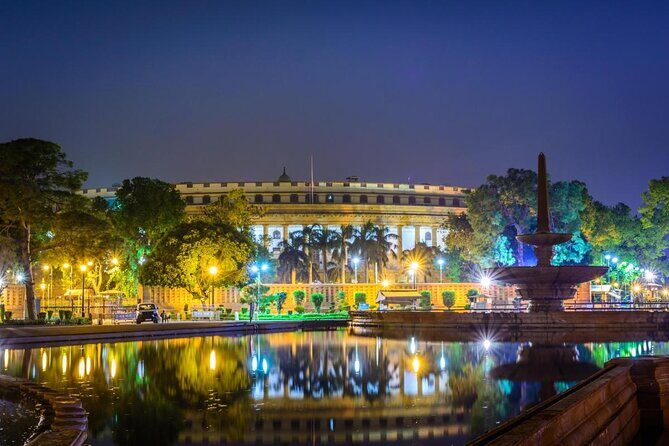
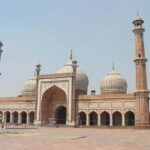
Day 2 is a full Delhi day that mixes Old and New. You’ll hit big hitters like Qutub Minar and Humayun’s Tomb, then swing into New Delhi’s landmarks such as Lotus Temple and India Gate. The Old Delhi stretch is anchored by the Red Fort area and the Jama Masjid Mosque.
Practical note: closures can affect some Delhi sights. The Red Fort and Lotus Temple are closed every Monday, with the alternative being drive-by photo stops. So if you’re traveling near a Monday, check the calendar and ask your guide how they’ll adjust.
Udaipur and Jodhpur: forts and palaces with a more relaxed rhythm
On Day 3 you fly to Udaipur (Delhi to Udaipur flights are not included in the price unless you add them), then spend Day 4 exploring. Udaipur’s appeal isn’t only the famous structures—it’s how the city layers royal history with religious and folk culture.
You’ll see the City Palace and Museum and the Folk Art Museum. If you’re even mildly interested in Rajasthan beyond monuments, these two places help explain why the region’s crafts and traditions look the way they do.
Day 5 drives you to Jodhpur, where Day 6 is a fort-and-spaces day: Mehrangarh Fort, plus stops around Jaswant Thada and the gardens at Umaid. Jodhpur feels like the right stop for travelers who want views and stonework, not just temples. It also works well because you get a real contrast from Udaipur’s lakeside mood.
If you get motion-sensitive, remember this tour relies on driving between many cities. The car is air-conditioned, but expect long stretches on transfer days.
Jaisalmer: the fort-city look, camel ride, and a real Thar night
Jaisalmer is the moment many people picture when they think Rajasthan: golden buildings, desert light, and the sense that the landscape is part of the story.
Day 7 is a drive into Jaisalmer with time at leisure. Then Day 8 is the full circuit: Jaisalmer Fort, street markets, and a camel ride to the sand dunes. You’ll end the day with an overnight in a tent in the Thar desert, with evening snacks and dinner.
This is one of the most compelling parts of the itinerary because it changes the tempo. You’re not just seeing the desert—you’re sleeping under it. Nights in the desert can be cooler than daytime, so it’s smart to pack a light layer even if you’re traveling in warmer months.
Day 9 keeps things religious and local: you drive onward to Bikaner and stop at places like Bhanda Sagar Jain and Deshnoke Rat Temple. This pairing gives you a side of Rajasthan that doesn’t always get center stage in big-city-only trips.
Bikaner to Jaipur: the state capitals you remember, plus the fort-and-temple rhythm
Day 10 brings you into Jaipur. The evening is left for leisure, which is a smart choice in a schedule this packed. Jaipur deserves a slower start: freshen up, grab a snack, and get your bearings.
Day 11 is your big Jaipur day, and it’s packed with the major sights:
- Amber Fort
- City Palace
- Jantar Mantar
- Jai Singh II observatory areas
- Hawa Mahal
Jaipur is where you get a mix of royal power, scientific curiosity (yes, really), and architecture that’s designed to create dramatic effects. Hawa Mahal’s look is instantly recognizable, but the fun part is connecting it to the larger city story in the same day.




Agra and Fatehpur Sikri: Taj Mahal time, plus Mughal backup planets
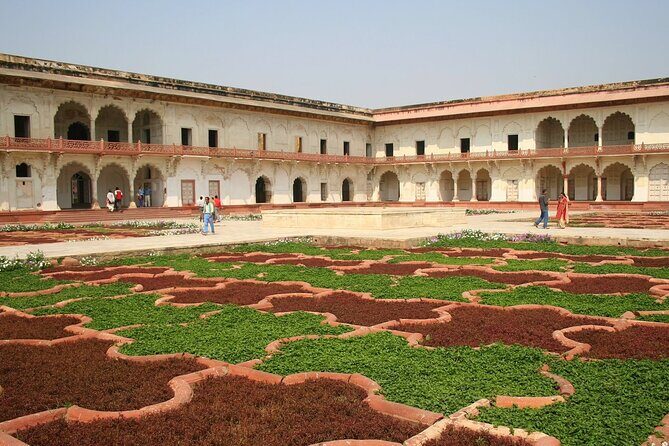
Day 12 is your transfer toward Agra, with a stop at Fatehpur Sikri en route. Fatehpur Sikri is a reminder that Mughal history isn’t only Taj Mahal. It’s also a reminder that these places were built as ambitious political statements.
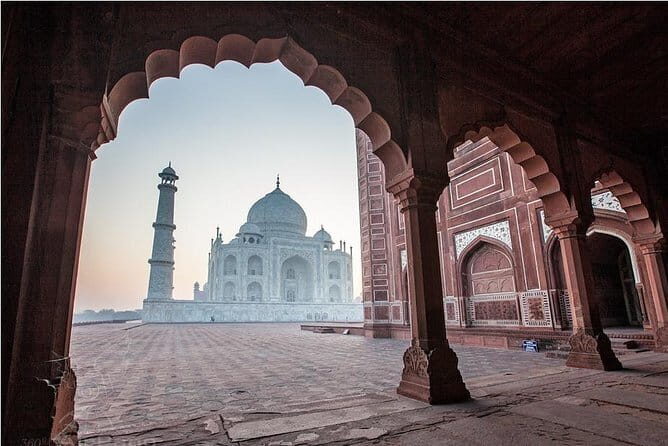
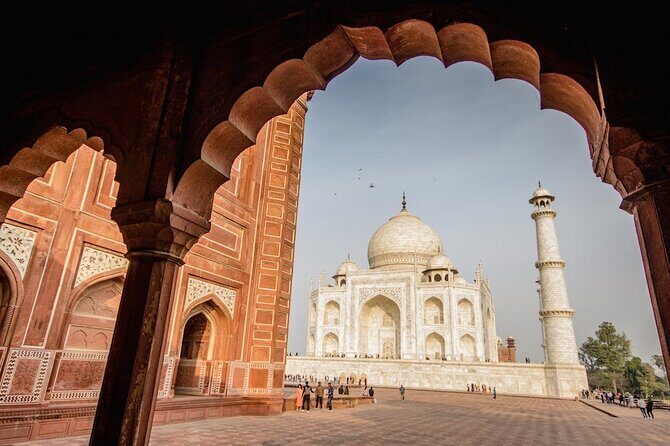
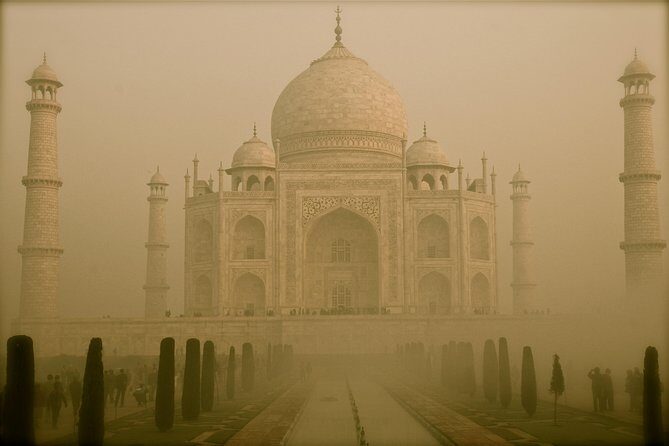
Day 13 is where the itinerary gets serious: sunrise Taj Mahal plus Agra Fort. Taj Mahal is closed on Fridays, so the tour plan can shift seeing it to the day before or after. If you want the sunrise experience specifically, it helps to align your dates so the Taj Mahal day lands at the right time.
A practical note: Taj Mahal and Agra Fort entrance fees and any camera fees are not included. Your guide can help you buy entrance tickets, but you’ll still want to budget for it.
Orchha and Khajuraho: temple art that rewards your time
Orchha is the in-between stop that changes the tone. Day 14 drives you there and you overnight at the hotel. Orchha’s temple and monument vibe is different from the palace-heavy feel in places like Udaipur and Jaipur, and it sets you up for what comes next.
Day 15 is a mix: you tour Orchha’s monuments and temples, and you’ll also see painted murals connected to the Bundela school of painting. Then you drive on to Khajuraho.
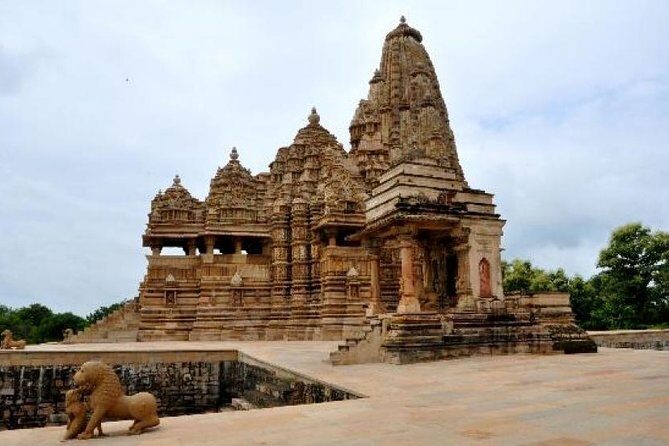
Day 16 is Khajuraho’s full temple day—southern, western, and eastern temples. Khajuraho is one of those places where the details matter. Even if you don’t read every panel, you’ll notice how the carvings communicate ideas, daily life, and devotion through stone. This is also a good break from the constant palace/fort rhythm.
Entrance tickets for these sites are not included, so check what you’ll likely need when your guide sets you up.
Varanasi: aarti by night and the river rhythm in daylight
Day 17 is a flight to Varanasi (Khajuraho to Varanasi flights are not included unless you add them). In the evening, you attend aarti ceremony on the Ghats. This is one of the most emotionally charged experiences on the route, and it’s built into the itinerary rather than left as an optional add-on.
Day 18 starts with a morning boat cruise on the Ganges, plus Sarnath in the daylight: the deer park and museum. One important detail: the boat ride is listed as not included. So the plan includes it, but you’ll pay separately.
Day 19 is more Varanasi exploration, including temples and Aurangzeb’s Mosque. You’ll end with Day 20 back in Delhi, with a free day for relaxation and an evening departure to the airport or station.
Local logistics matter here. Getting around the lanes to reach the ghat can be tight, so a rickshaw ride in Varanasi is required, and your guide will arrange it for you. You pay a nominal charge directly.
Transportation, guides, and what you’re actually buying for $1,500
At $1,500 per person for roughly 20 days, the cost feels reasonable only if you see what’s included: 3-star hotels on twin share, breakfast for 19 days, airport pickup and drop-off, an air-conditioned private car with driver, and local English-speaking guides.
That’s not a small package. If you’ve ever tried to stitch this kind of route together yourself, you know the hidden costs—time spent coordinating, the risk of wrong connections, and the fact that independent travel often means more taxi hunting.
The tour adapts the vehicle to group size:
- 1 to 3 adults: small air-conditioned car
- 3 to 5 adults: Toyota Innova
- 8 adults: mini air-conditioned tempo traveler coach
- Over 8 adults: mini air-conditioned bus
That’s a practical comfort detail. It also affects how crowded long drives feel.
One more value point: you’re on a private tour, meaning it’s only your group. No waiting around for strangers’ pace.
What’s not included: entrances, flights, boat ride, and the meals gap
This tour covers a lot, but it doesn’t pretend everything is included.
Not included:
- Entrance tickets and camera fees for sights
- Lunch and dinners (they can be organized on request in or out of the hotel)
- Flight tickets for Delhi/Udaipur, Khajuraho/Varanasi, and Varanasi/Delhi (can be booked for an additional cost)
- Tip and gratuities for guides and driver
- Boat ride in Varanasi
- Rickshaw rides in Varanasi (you pay nominal charges; guide arranges)
So your real budgeting task is this: add internal flights (unless you’re booking them through the operator), then estimate entrance fees for major UNESCO-style stops like Delhi monuments, Agra’s Taj Mahal and fort, Khajuraho’s temples, and Varanasi’s key sights.
If you like predictable costs, request an estimate from your guide before the paid parts start. It’s easier to keep spending in control when you know the major ticket items up front.
Who this tour fits best (and who might want something else)
This works well for you if:
- You want a guided route across many Rajasthan highlights without planning every day
- You like mixing big landmarks with cultural moments (especially the aarti and desert night)
- You’re okay with internal flights and a travel-heavy itinerary
You might want a different style if:
- You prefer slower travel with fewer long transfer days
- You’re strongly price-sensitive and want to control every ticket yourself
- You don’t like paying extra for attractions once you arrive
Room notes matter too. Rooms are generally twin share. If there are 3 guests, the default is triple sharing unless you pay for 2 rooms.
Should you book the 20-day Rajasthan cultural heritage tour?
If you want one booking to handle transport, hotels, and guiding across Rajasthan plus Agra and Varanasi, this is the kind of trip that makes sense. The included structure is what makes it feel like value: private transport, local guides, and a desert overnight.
I’d book it if your priority is seeing a lot of Rajasthan with less hassle, and you’re willing to budget extra for entrances and the internal flights. I’d pause if you hate add-on costs, since tickets, camera fees, the Varanasi boat ride, and flight segments can change the final total.
One last tip: keep an eye on closure days (Taj Mahal Fridays; Red Fort/Lotus Mondays). Your guide can shift plans, but the more flexible your date choice is, the easier your schedule will feel.
FAQ
FAQ
Is this tour private?
Yes. It’s a private tour/activity with only your group participating.
Where does the tour start?
It starts at Indira Gandhi International Airport in New Delhi, with a start time of 9:00 am.
Are flights included in the price?
No. Flight tickets for Delhi/Udaipur, Khajuraho/Varanasi/Delhi are not included, though they can be booked at an additional cost.
What kind of hotel accommodations are included?
The tour includes 3-star hotels on a twin share basis (and one night in a tent accommodation in the Thar desert).
Is breakfast included?
Yes. Breakfast is included for 19 days.
Are entrance fees included?
No. Entrance tickets and camera fees at sights are not included, and your guide can help you buy tickets where needed.
Does the itinerary include a camel ride?
Yes. There’s a camel ride to the sand dunes on the Jaisalmer day, followed by an overnight in the desert.
Is the boat ride in Varanasi included?
No. The boat ride is listed as not included.
Do I need a rickshaw in Varanasi?
A rickshaw ride is required due to busy lanes to reach the ghat, and your guide arranges it. You pay a nominal charge directly.
What happens if Taj Mahal is closed?
Taj Mahal is closed on Fridays. It can be seen on the day before or after depending on how the plan is arranged.
Is the tour suitable for most travelers?
The tour notes that most travelers can participate. It doesn’t mention medical restrictions, so if you have specific concerns, check with your provider before booking.