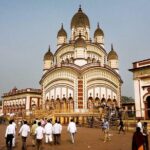
REVIEW · KOLKATA
Visit Mother Teresa’s house and Churches of Kolkata
Book on Viator →Operated by 5 Senses Walks · Bookable on Viator
A church crawl with real meaning. This Kolkata tour strings together historic Christian sites and a visit to the Mother Teresa House of the Missionaries of Charity, guided by a local pro who can explain what you’d otherwise miss.
I love the practical stuff: hotel pickup and drop-off means you lose less time fighting traffic and finding meeting points. I also like that lunch is included, so you’re not hunting for food between stops.
One consideration: it runs about 7 hours and the main photo stops are timed (around 45 minutes each), so you’ll want comfortable shoes and an easy pace mindset.
In This Review
- Key highlights at a glance
- From your hotel to the first church: how the morning runs
- St Andrew’s Church (the Kirk): Kolkata’s Scottish anchor
- Practical tip for this stop
- Possible drawback
- St Paul’s Cathedral: what makes it “first” and why that matters
- What you’re likely to notice
- Practical tip for this stop
- South Park Street Cemetery: reading 19th-century Kolkata through graves
- Why this stop is valuable
- Possible drawback
- Mother Teresa House and the Missionaries of Charity: a quieter kind of visit
- What I’d pay attention to
- Practical tip
- The guide effect: why this tour feels smoother than DIY
- Lunch and pacing: what a 7-hour day really means
- Quick self-check before you book
- Price and value: is $110 a fair deal?
- Who should book this tour
- Should you book this Kolkata churches and Mother Teresa day?
- FAQ
- FAQ
- How long is the tour?
- What time does the tour start?
- Is lunch included?
- Does the price include hotel pickup and drop-off?
- Are admission tickets included?
- What’s the cancellation policy?
Key highlights at a glance
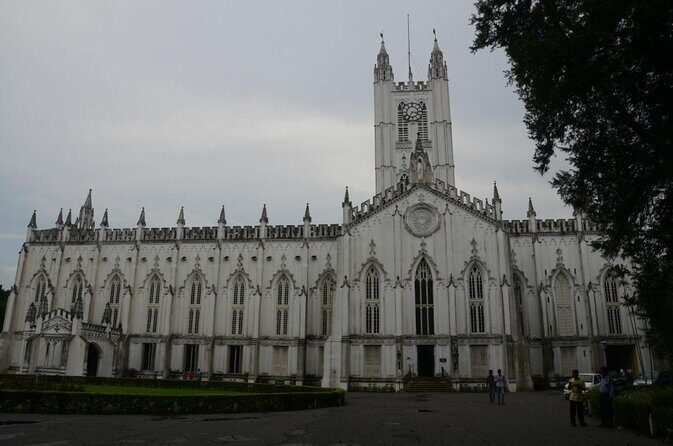
- St Andrew’s Church (the Kirk): completed in 1818, and described as Kolkata’s only Scottish church
- St Paul’s Cathedral: the first Episcopal church of the eastern world, consecrated on 8 Oct 1847 by Bishop Wilson
- South Park Street Cemetery: an 8-acre necropolis with about 1900 graves of prominent British citizens
- Mother Teresa House: the former residence of Mother Teresa and headquarters of the Missionaries of Charity
- Practical guide-led routing: full-time guide + admission tickets handled + lunch included
From your hotel to the first church: how the morning runs
This tour is built for an easy start. You begin at 8:00am, with pickup and drop-off arranged from city hotels. That matters in Kolkata. Distances can be deceptive, and one late taxi scramble can throw off the whole day. Here, the schedule does the heavy lifting for you.
You’ll also move with a full-time guide/cultural evangelist, plus a local perspective on Christianity’s history in Kolkata. That’s the hidden value: churches aren’t just pretty buildings on this route. They connect to the city’s colonial-era communities, migration patterns, and how religious institutions took root over time.
The group setup is also straightforward: it’s a private tour/activity for your group. You won’t be merged into a huge crowd, which usually makes questions and photo stops feel less chaotic.
You can also read our reviews of more tours and experiences in Kolkata.



St Andrew’s Church (the Kirk): Kolkata’s Scottish anchor
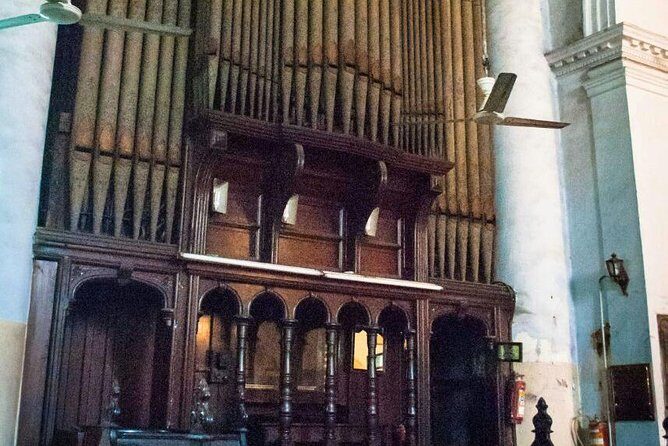
Your first stop is St Andrew’s Church, also called the Kirk, with about 45 minutes on site. It was completed in 1818, and the tour frames it as the only Scottish church in Kolkata. Even if you don’t care about denominations, that kind of detail changes how you look at the building—suddenly it’s not generic “old church,” it’s a specific footprint left by a particular community.
The stop also gives you a named design credit: the church was designed by M/s Burn, Currie & Co. Knowing the architects or firms connected to a site helps you “read” history a bit better. You start noticing the choices made for the congregation, the era’s building style, and why certain churches look the way they do.
Practical tip for this stop
Give yourself a few minutes to slow down. With 45 minutes, you’ll likely spend time inside and then want time to look back outside. If you rush, you’ll miss the simple payoff—standing where people worshipped long before today’s city traffic existed.
Possible drawback
If you’re the type who wants long, quiet chapel time, the timing here may feel short. The benefit is momentum; the tradeoff is less lingering.
St Paul’s Cathedral: what makes it “first” and why that matters
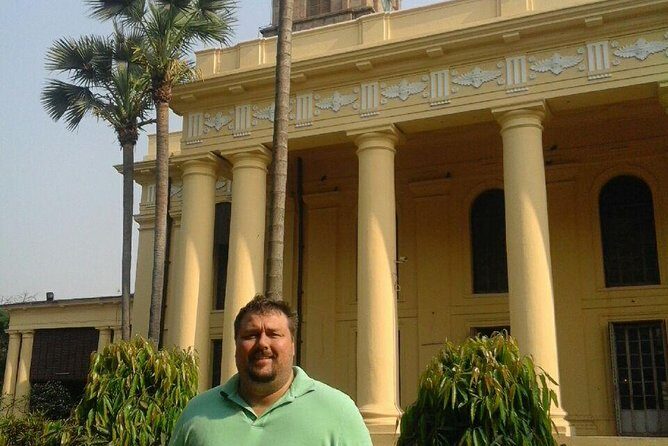
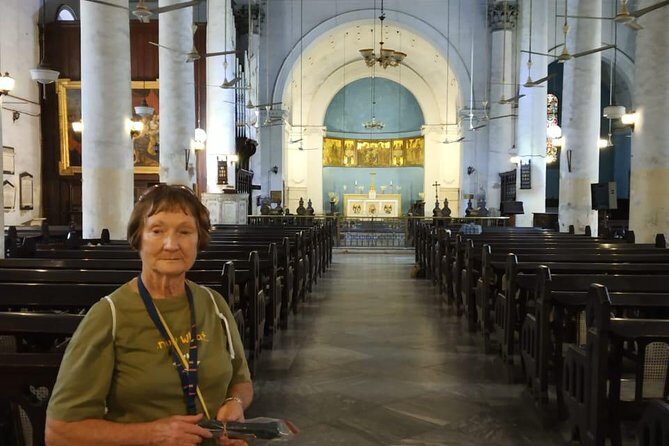
Next is St Paul’s Cathedral, another 45-minute visit. This is where the tour’s “context” approach really shows. The cathedral is described as the first Episcopal church of the eastern world. That’s an attention-grabber fact, but it’s also useful because it tells you the visit isn’t only about architecture—it’s about a landmark in the spread of Episcopal Anglican traditions.
The tour highlights the build timeline too: it took 8 years to construct, and it was consecrated on 8 October 1847 by Bishop Wilson. Those dates are more than trivia. They let you connect the cathedral to mid-19th-century Kolkata and the people who funded, planned, and attended such institutions.



What you’re likely to notice
With a stop like this, you’ll usually get:
- A clearer sense of how the building functions as a church, not just a monument
- A guided explanation that turns “pretty interior” into “this is why it exists”
And because the visit is admission ticket included, you spend less time worrying about separate payments and more time seeing the site.
Practical tip for this stop
Plan for respectful silence at key moments. Even when a guide is speaking, churches tend to feel most meaningful when you pause and listen with your eyes too—details in the space, lines of sight, and how the room carries sound.
South Park Street Cemetery: reading 19th-century Kolkata through graves
Then you head to South Park Street Cemetery, again with about 45 minutes. This stop is one of the most emotionally interesting on the route because it changes the mood. Instead of active worship space, you’re looking at memory carved into stone.
Here’s what the tour emphasizes:
- In the 19th century, it was the largest Christian cemetery outside Europe and America
- It covers 8 acres
- There are about 1900 graves belonging to prominent British citizens
That scale matters. When a cemetery is that large and tied to a specific community group, it becomes a social map of who lived nearby, who mattered politically or economically, and how the city organized its foreign and colonial populations.
Why this stop is valuable
Most sightseeing skips cemeteries because they can feel heavy. But on this tour, it’s balanced with the church visits and the visit to Mother Teresa’s house. The cemetery anchors you in a different kind of history: not sermons and buildings, but the people who built the era—and the people whose lives ended in this place.
Possible drawback
It can feel chilly or quiet depending on weather and light, and 45 minutes can be just enough to feel rushed. If you’re sensitive to melancholy topics, take breaks as needed and focus on the context your guide provides.
Mother Teresa House and the Missionaries of Charity: a quieter kind of visit
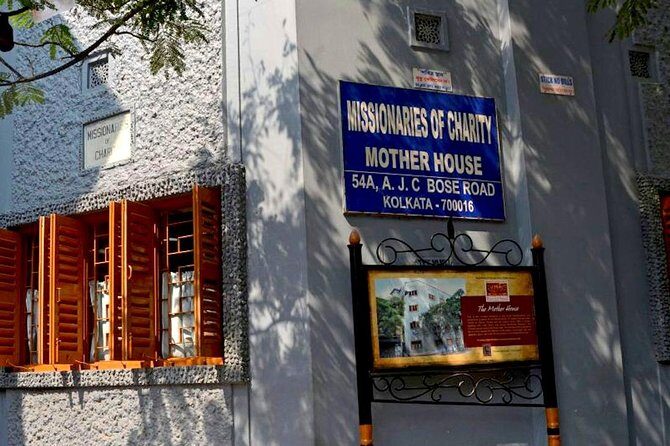
The final main stop is Mother Teresa’s House of the Missionaries of Charity. You’ll have about 1 hour here, with admission included.
This isn’t framed as tourism theater. The tour describes the house as the erstwhile residence of Mother Teresa, and it connects her life directly to the mission: she dedicated her life to caring for the underprivileged. The building also serves as the headquarters for the Missionaries of Charity.
That combination is important for how you should approach the visit. You’re not just looking at a museum-like “famous person lived here” stop. You’re visiting an active institution tied to ongoing humanitarian work. That’s why this hour can feel very different from the earlier church stops—less about architectural “wow” and more about how place shapes purpose.
What I’d pay attention to
Even without inventing details, you can still get a lot from:
- The overall atmosphere: calm, respectful, and focused
- The contrast between memorial sites (like the cemetery) and a living service institution
- How the guide links her personal story to the wider work
Practical tip
Bring your best listening voice. This is a place where the most meaningful moments often come when you slow down rather than when you chase photos.
The guide effect: why this tour feels smoother than DIY
One of the strongest signals from the tour’s customer feedback is the quality of the guide. In at least one standout experience, the guide was named Prasenjit, praised as knowledgeable and excellent company. That kind of guide is exactly what makes this itinerary worth paying for.
Churches and heritage sites can turn into a checklist when you travel alone. A good guide changes the shape of the day:
- They explain what you’re seeing in plain language
- They connect dates and facts to bigger patterns in the city
- They keep time realistic between locations
And because all taxes and fees are included, you avoid the “add-ons surprise” that can happen with DIY planning.
Lunch and pacing: what a 7-hour day really means
Lunch is included, which is a big deal on a route like this. It keeps the schedule intact and reduces the chance you’ll waste time searching for food in between stops. It also helps energy levels—because by mid-day, you’re mentally working hard even if you’re not walking a huge distance.
Still, the day moves. Most of your time is made of short visits:
- 45 minutes at St Andrew’s
- 45 minutes at St Paul’s Cathedral
- 45 minutes at South Park Cemetery
- 1 hour at Mother Teresa House
That pacing is ideal if you like seeing several meaningful places in one go. It’s not ideal if you’re trying to do deep, slow study at every site.
Quick self-check before you book
Ask yourself: do you like a guided plan that gets you to several landmarks efficiently? If yes, this is a good fit. If you prefer to roam freely and linger, you may want more downtime than this schedule gives you.
Price and value: is $110 a fair deal?
At $110 per person, the headline cost isn’t low. But look at what’s wrapped in:
- Hotel pickup and drop-off
- Lunch included
- Full-time guide
- Admission tickets included for the stops
- Mobile ticket
- Taxes, fees, and handling charges covered
If you try to replicate this DIY, you’d likely pay for transport, pay admission for multiple sites, and spend a surprising amount of energy figuring out timing and routes. Here, the tour solves those friction points up front.
Also, the price point fits what you’re buying: a themed day where the stops connect under one “Christianity in Kolkata” storyline, and the ending at Mother Teresa’s house brings the emotional center home. For many visitors, that’s the difference between a random church-hopping day and a coherent cultural experience.
You’ll also see group discounts, and the tour is commonly booked about 26 days in advance—a sign that people plan ahead for this route and for good reason.
Who should book this tour
This is a strong choice if you:
- Want a structured, guided introduction to major Christian sites in Kolkata
- Care about more than photos and want context behind each stop
- Appreciate having admissions and lunch handled
- Prefer not to manage transport across multiple locations yourself
It’s also a good fit for religious travelers. The visit to the Missionaries of Charity headquarters gives the day a faith-connected spine, not just a sightseeing theme.
If you’re only interested in one or two sites—say, only the cathedral or only Mother Teresa’s house—this may feel like you’re paying to get more than you personally need. In that case, a more focused outing might suit you better.
Should you book this Kolkata churches and Mother Teresa day?
If you want a meaningful day that mixes landmark churches, a historic cemetery, and Mother Teresa’s house under one guided storyline, I’d book it. The combination of included lunch, admission tickets, and hotel transfers makes the experience easier than DIY, and the guide quality looks to be a real strength, with Prasenjit specifically called out for making the tour more enjoyable.
Book it especially if you’re short on time in Kolkata but still want depth and good pacing. It starts at 8:00am and runs around 7 hours, so commit if you can handle an active schedule.
FAQ
FAQ
How long is the tour?
The tour lasts about 7 hours (approx.).
What time does the tour start?
It starts at 8:00am.
Is lunch included?
Yes. Lunch is included. Drinks are not included.
Does the price include hotel pickup and drop-off?
Yes. The tour includes hotel pickup and drop-off for city hotels.
Are admission tickets included?
Yes. Admission tickets are included for the listed sites on the route.
What’s the cancellation policy?
You can cancel for a full refund up to 24 hours before the experience’s start time. If you cancel less than 24 hours before, the amount paid is not refunded.