REVIEW · MYSORE
The Mysuru Maharaja Walk
Book on Viator →Operated by Unventured Mysore City Tours · Bookable on Viator
Mysuru starts making sense fast on this walk. You follow paths shaped by the Maharajahs of Mysuru, linking their political ideas to what you see today in the city’s markets, institutions, and architecture. The whole thing is built around a practical rhythm: eat first, then walk, then spend real time in the palace where the Wadiyar story becomes visible.
One reason I like this experience is the breakfast stop at Paras Indra Cafe, an old-school Mysuru spot established in 1956, where South Indian breakfast sets the tone. Another is the palace visit at Amba Vilas Palace with an English-speaking guide who can answer questions on the spot (and guides like Sauharda are known for tailoring the talk to your interests).
A possible drawback: it runs about four hours and is weather-dependent, so you’ll want to dress for a morning walk and be ready for heat if the day warms up.
In This Review
- Key highlights you shouldn’t miss
- Why this Maharaja walk works so well in Mysuru
- Morning fuel at Paras Indra Cafe (Indra Cafe Paras)
- Dufferin Clock Tower (Chikkagadiyara): 1886 in plain view
- Devaraja Market: where trade shows up in the details
- Mysuru Palace (Amba Vilas Palace): the focal point you can’t fake
- Food and local flavors: breakfast, snacks, and Mysuru nugget coffee
- The guide is the difference-maker
- Value and price: what your $40.54 is really paying for
- Logistics that matter on a four-hour walk
- Who should book this walk, and who might skip it
- Should you book the Mysuru Maharaja Walk?
Key highlights you shouldn’t miss
- Paras Indra Cafe breakfast: a classic South Indian start at a long-running Mysuru institution
- Dufferin Clock Tower (Chikkagadiyara): a historic 1886 relic that gives scale to the city’s old-modern mix
- Devaraja Market trade culture: Tipu Sultan-era bazaar energy, with photo-friendly spices and vermilion powder
- Mysuru Palace (Amba Vilas Palace) guided time: a focal point of the Wadiyar dynasty, not just a quick photo stop
- Small-group feel (max 10 people): easier questions, better pacing, less waiting around
- Local flavors included: snack-and-food stops plus Mysuru nugget coffee mentioned in the tour’s food plan
Why this Maharaja walk works so well in Mysuru
Mysuru can feel like a city of symbols until someone connects the dots. This half-day walk does that job by moving from everyday places to the places where power and design mattered. You’re not trying to cover everything in one day; you’re building understanding in a tight route.
I also like the pacing. You get a real breakfast first, then you walk through landmarks that explain how trade and governance shaped daily life. By the time you reach Amba Vilas Palace, you’ve already picked up the vocabulary to notice what you’re seeing.
The format is also practical for short trips. Four hours is long enough to feel like you had a plan, but short enough to still do something on your own afterward—like another market, a museum, or a slow coffee break.
You can also read our reviews of more walking tours in Mysore

Morning fuel at Paras Indra Cafe (Indra Cafe Paras)
Your walk kicks off with breakfast at Indra Cafe Paras, a well-known Mysuru restaurant and sweet shop established in 1956. If you’re the type who likes to understand a place through what people actually eat, this is a strong opening move. Breakfast here is part of the cultural setup, not an afterthought.
The big advantage is timing. Starting with food means you’re not hungry while you’re scanning streets for details later. It also puts you around the kind of local flow that makes Mysuru feel lived-in, not staged.
What to keep in mind: this is a group start in the morning, so you’ll want to arrive a few minutes early and keep your morning schedule flexible. Also, bottled water isn’t included, so if you run thirsty early, consider bringing a small bottle before you meet up.
Dufferin Clock Tower (Chikkagadiyara): 1886 in plain view
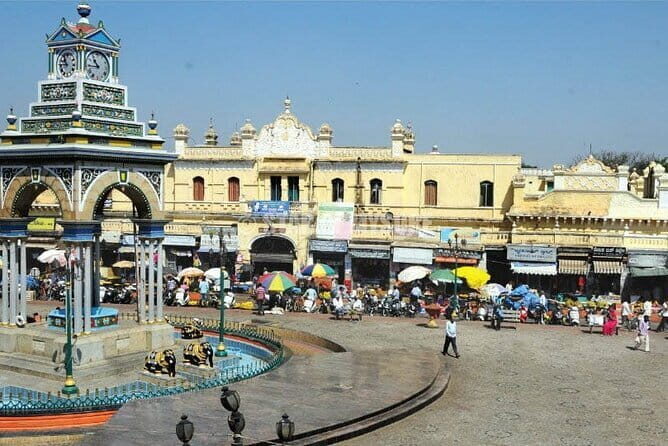
Next comes the Dufferin Clock Tower, also called Chikkagadiyara, built in 1886. A clock tower might sound like a quick photo stop, but the value here is context: it’s a visible marker of the city’s layered history, where older Mysuru meets later civic design.
This is also a helpful breather. The stop is short, so you’re not stuck waiting. You get the name, the era, and the significance, and then you’re back on foot.
If you like street-level history, this kind of landmark works well. It’s the sort of thing you’d otherwise miss because it’s not a palace or a temple. But once your guide connects it to the broader story, you start noticing the “why” behind the skyline.
Devaraja Market: where trade shows up in the details
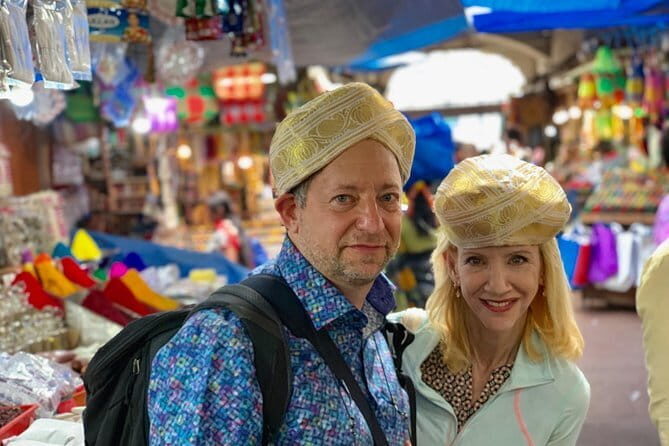
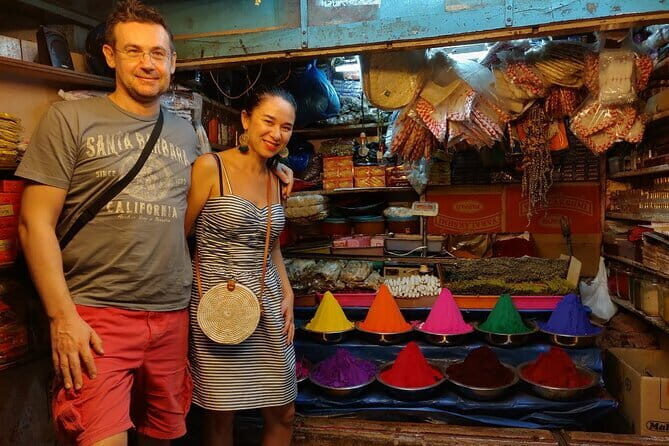
Then you hit Devaraja Market, a huge and lively bazaar that dates from Tipu Sultan’s reign. This is where the walk becomes fun in a very practical way: you’re seeing goods, textures, and color in motion. You’ll spot traditional sellers with flower garlands, incense, spices, and those conical piles of vermilion powder used for bindi dots.
Photo-wise, it’s one of the easiest stops to enjoy because there’s visual variety everywhere. You can frame stalls by product, by hands-at-work, or by the rhythm of shoppers moving through. Even if you’re not shopping, the market teaches you what people value—scents, bright powders, everyday ingredients for rituals and home use.
The fruit and vegetable sections help too. That mix matters because it keeps the market from feeling like only a tourist bazaar. It’s part of normal life: food, fragrance, and small necessities all together.
Two notes to keep your experience smooth:
- Wear shoes you’re happy to stand in. The market is the kind of place where you’ll pause often.
- Keep your attention on what you’re buying or photographing. It’s easy to get distracted and then lose your group pace.
Mysuru Palace (Amba Vilas Palace): the focal point you can’t fake
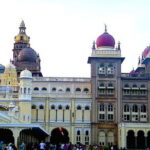
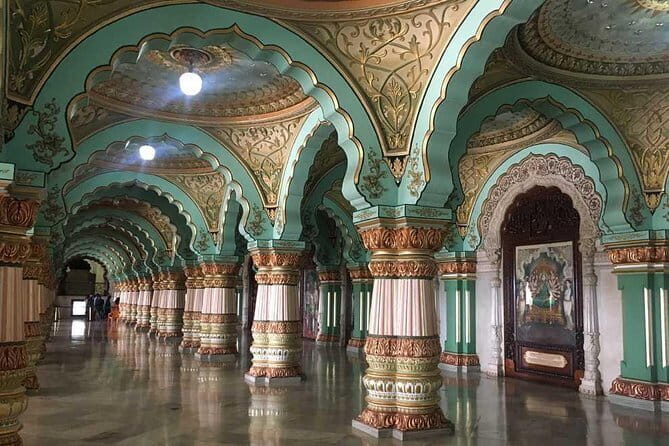
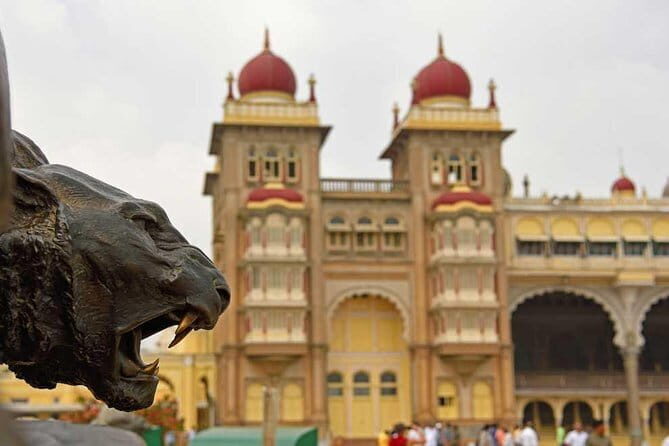
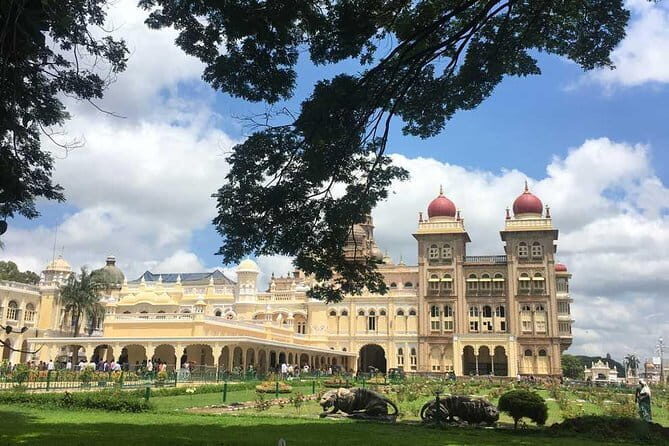
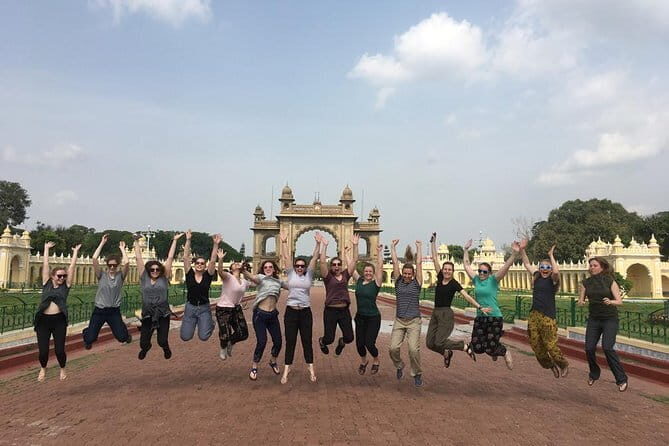
The highlight for most people is Mysuru Palace, also called Amba Vilas Palace. This is the focal point of the city, and it’s the official residence of the Wadiyar dynasty—the seat of the Kingdom of Mysore.
What makes the palace visit valuable on this particular walk is that you’re not going in cold. Before you enter, you’ve already seen civic and market life, plus older landmarks. So when you’re inside a royal residence, you can start connecting systems: governance, economics, and how art and architecture weren’t separate from power.
The tour includes admission, and the palace time is long enough to feel like you’re actually touring, not rushing. You’re also not left alone with a guidebook and confusion. With an English-speaking guide, you can ask questions about what you notice—what the palace represents, why it’s arranged a certain way, and how the Maharajahs shaped Mysuru.
Practical consideration: palace areas can be busy and you may do some walking indoors and outdoors. Plan for slower movement than you’d expect, especially if you like lingering to read details or take photos.

Food and local flavors: breakfast, snacks, and Mysuru nugget coffee
Food is woven into the experience rather than thrown in at the end. The included plan covers breakfast at Paras Indra Cafe and then additional snacks and food along the route as mentioned by the operator. You also get local flavors, including Mysuru nugget coffee.
That matters because Mysuru nugget coffee isn’t just a drink you order while sightseeing. It’s a local ritual built for mornings and conversation, and it pairs naturally with a walk that starts early. After markets and palace architecture, having a food break makes the day feel complete.
What I’d recommend for you: treat the coffee stop like a reset button. Take a few minutes, sip slowly, and let your guide’s explanations land. It’s the kind of moment where you’ll suddenly connect the story you’ve been hearing to the city you’re standing in.
Also remember: bottled water isn’t included. You don’t want to end a four-hour walk hunting for water in a busy place.
The guide is the difference-maker
This tour caps out at 10 people, and that small-group size changes the whole feel. You can ask questions, get follow-up answers, and actually steer the discussion toward what you care about—political systems, economics and banking, education, or the arts and architecture angle that shaped royal Mysuru.
In the feedback, one guide stands out: Sauharda. People highlighted how he’s personable and how he adjusts his comments quickly to different interests. One account also mentions he’s done long-distance cycling from Kashmir to Kanyakumari, which hints at a guide who brings lived perspective, not just textbook facts.
Even if you don’t get Sauharda, the point is clear: the best version of this walk happens when your guide is actively responding to you. If you enjoy dialogue—asking why a market grew, how a royal decision affects a modern city—you’ll likely get more out of the experience than if you prefer silent sightseeing.
Value and price: what your $40.54 is really paying for
The price is listed as $40.54 per person, and it includes a lot of the parts that usually cost extra on independent plans: breakfast, snacks/food along the route, an English-speaking guide, and all fees and taxes. Palace admission is also included.
Here’s how I think about the value for you:
- If you’d otherwise have to book breakfast somewhere, pay for a guided palace entry, and then spend time piecing together a half-day route yourself, the cost starts to feel reasonable.
- The route doesn’t only hit one landmark. It connects multiple stops—market, historic tower, and palace—so you get variety in both topics and scenes.
- Small-group pacing (max 10 people) is part of what you’re paying for. You’re not squeezed into a large crowd with a rushed guide.
One small warning: because bottled water isn’t included, you might spend a bit more than you expect on a hot day. That’s not a dealbreaker, but it’s good to budget a couple of rupees for comfort.
Logistics that matter on a four-hour walk
Start time is 8:00 am, and the meeting point is Kote Sri Anjaneya Swamy Temple, Jayarama Gate, Chamaraja Circle area (Chamaraja Cir, Agrahara, Chamrajpura, Mysuru). The tour ends back at the meeting point. That simple loop is convenient if you’re continuing your day on your own afterward.
The activity is near public transportation, so you’re not locked into hiring a car just to start the morning. Still, because it begins early, make sure you’re set for that start time and not sprinting at the last minute.
Group size is capped at 10, which helps with pacing, but it also means the tour can feel full if you’re arriving late. Aim to show up with a little buffer.
Weather also matters. The experience is described as requiring good weather, so plan your Mysuru sightseeing with that in mind.
Who should book this walk, and who might skip it
Book this if you want more than quick landmark photos. You’ll enjoy it if you like history that explains how a city works—political systems, economic choices, education, and the arts that shaped Mysuru into a model city in its own time. The market stop plus the palace time is a smart combination for seeing both daily life and royal design.
Skip it if you already have a strong palace background and you prefer to wander solo with no structure. This is guided and scheduled, so it’s not built for long solo detours. Also, if you dislike early mornings, 8:00 am may not be your favorite start.
If you’re short on time in Mysuru, this is one of the better ways to get a coherent understanding without burning your day in transit.
Should you book the Mysuru Maharaja Walk?
I’d recommend booking if you want a guided, story-connected half-day that mixes Mysuru’s everyday market life with a focused visit to Amba Vilas Palace. The included breakfast at Paras Indra Cafe, the Devaraja Market details, and the palace admission plus English-speaking guidance add up to real convenience for the money.
I’d hold off if you’re not into structured walks or if weather uncertainty could derail your schedule. But if you can make the morning work and you want a route that teaches you how Mysuru’s past shows up in the present, this walk is a strong choice.