REVIEW · MYSORE
Immersive walk in Mysore by tourism ministry approved company
Book on Viator →Operated by 5 Senses Walks · Bookable on Viator
Mysore’s clock towers turn a stroll into a story. This 2-hour walk links Jaganmohan Palace paintings with the way Mysore’s rulers dealt with the British Empire, then it rolls through circles, landmarks, and bazaar streets to finish at the old clock-tower area.
Two things I really like: the storytelling. Guides such as Faisan/Fez and Shiva bring facts to life with anecdotes, quizzes, humor, and even tailoring the direction to who’s in the group. I also like that the tour ends with a real food payoff—Mysore Pak—after you’ve soaked up the city’s sights.
One heads-up: it’s mostly an outdoor walk in city streets for about two hours, so you’ll want to plan for weather and comfortable walking shoes.
In This Review
- Key highlights you’ll feel the moment you start
- Why this Mysore heritage walk fits the city so well
- The value call: $50 for 2 hours, with real inclusions
- Guides matter here: Faisan, Fez, and Shiva bring it to life
- Stop-by-stop: from Jaganmohan Palace to Chikka Gadiyara
- Stop 1: Jaganmohan Palace Art Gallery and Auditorium (about 30 minutes)
- Stop 2: Landsdowne Building (about 15 minutes, no ticket)
- Stop 3: KR Circle (about 15 minutes, no ticket)
- Stop 4: Chamaraja Circle (about 15 minutes, no ticket)
- Stop 5: Dodda Gadiyara (about 15 minutes, no ticket)
- Stop 6: City Market (about 15 minutes, no ticket)
- Stop 7: Gadiyara / Dufferin clock tower finish (about 15 minutes, no ticket)
- The clock-tower story: power, time, and a changing empire
- City Market + your Mysore Pak tasting: the perfect combo
- Who this tour is best for
- A few practical tips for your 4:00 pm start
- Community-minded tourism: how your dollars stay local
- Should you book the Mysore Heritage Walk?
- FAQ
- How long is the Mysore heritage walk?
- What does the tour cost?
- What’s included with the ticket price?
- Where does the tour start and end?
- What time does the tour begin?
- How many people are in the group?
- Is the tour easy to join if I’m not familiar with Mysore?
- Is there free cancellation?
Key highlights you’ll feel the moment you start
- Jaganmohan Palace art that tracks about 700 years of Mysore
- Clock-tower stops that connect the Maharaja and the British Empire
- Short, easy strolls from KR Circle to Chamaraja Circle to Dodda Gadiyara
- City Market time for everyday Mysore, not staged tourism
- Mysore Pak tasting timed as the grand finish at the Dufferin clock tower area
- Small group size (max 10) that keeps questions and pacing comfortable
Why this Mysore heritage walk fits the city so well
Mysore is built for walking: key royal-era sites and big intersections sit close enough that you can get the overall story without long commutes. This tour uses that layout well, taking you from the art-gallery start point into the city center and then out toward the clock-tower finish.
What makes it more than just a sightseeing loop is the way it moves between three “layers” of the city: the royal narrative (palace + art), the power-and-politics narrative (clock towers and the Maharaja–British angle), and the everyday narrative (city market streets). If you like understanding how a place works, not just what it looks like, this format clicks.
It also helps that the company runs the experience as a tourism-ministry approved operation through 5 Senses Walks, with a local-guides-first approach. That tends to translate into better context on the ground and more practical answers to your questions.
You can also read our reviews of more walking tours in Mysore
The value call: $50 for 2 hours, with real inclusions

At $50 per person for about 2 hours, you’re paying for a guided “story path” through central Mysore, not just a free walking chat. The value gets stronger because the walk includes at least one ticket cost: admission to Jaganmohan Palace Art Gallery and Auditorium is part of the price.
A few other things add up:
- You get a mobile ticket, which is convenient and reduces friction at the museum stop.
- There’s a maximum of 10 travelers, which usually means less waiting around and more back-and-forth with your guide.
- The route is structured, so you’re not stuck deciding on the spot what to see next.
One extra value angle: group discounts are offered, so if you’re traveling with a couple friends, it can become a very good deal per person compared with paying for separate tickets and guides.
Guides matter here: Faisan, Fez, and Shiva bring it to life
This is the kind of tour where the guide can change the experience from decent to memorable. In the stories you’ll hear, you’ll notice three skills:
1) They use humor and mini-games
One guide style that stands out is the mix of anecdotes and quizzes. It keeps the “why it matters” part from turning into a lecture.
2) They adjust to your group
Some guides shift the emphasis depending on where participants are from—so the same facts land differently for different audiences. That’s a smart move, because it helps you connect the details to what you already know.
3) They explain without drowning you in dates
You’ll hear about connections between the Maharaja and the British Empire, but in a way that’s tied to what you’re physically seeing: paintings at Jaganmohan, then architecture and city landmarks as you move along.
If you’re the type who likes asking questions mid-walk, a small group size helps a lot. You’ll get more chances to clarify things like how Mysore’s royal power evolved over time, or what to look for in the architecture and signage as you pass by.
Stop-by-stop: from Jaganmohan Palace to Chikka Gadiyara
This walk is built as a chain of short segments. Each one adds a piece to the puzzle—royal art, colonial-era connections, then everyday city life.
Stop 1: Jaganmohan Palace Art Gallery and Auditorium (about 30 minutes)
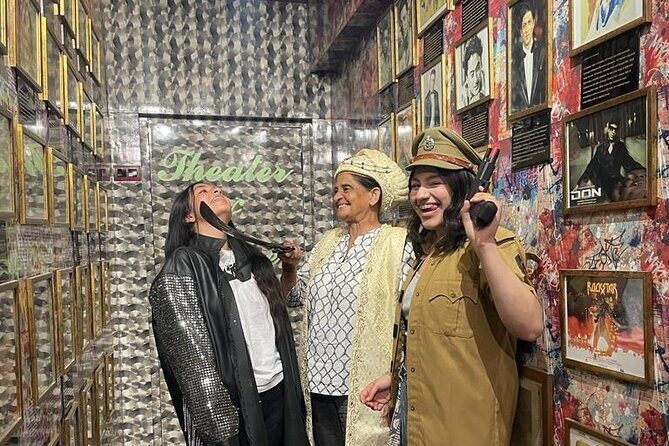
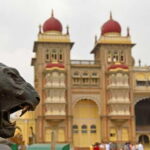
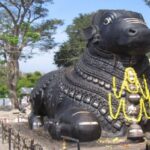
You start at Jaganmohan Palace (Sri Jayachamarajendra Art Gallery and Auditorium). This is the anchor stop. The focus is on paintings that tell a story of Mysore stretching back around 700 years.
Why this matters: if you start with the visuals and the cultural “memory” of the city, the rest of the route makes more sense. Later, when you’re watching for symbolic details on buildings and clocks, you’ll better understand how Mysore wanted to present itself—then how outside power shaped the story.
Practical note: since admission is included here, this is where the tour gives you the most “ticket value” for your money. Plan to give your guide your attention for the first half hour so the rest of the walk feels like it’s building, not repeating.

Stop 2: Landsdowne Building (about 15 minutes, no ticket)
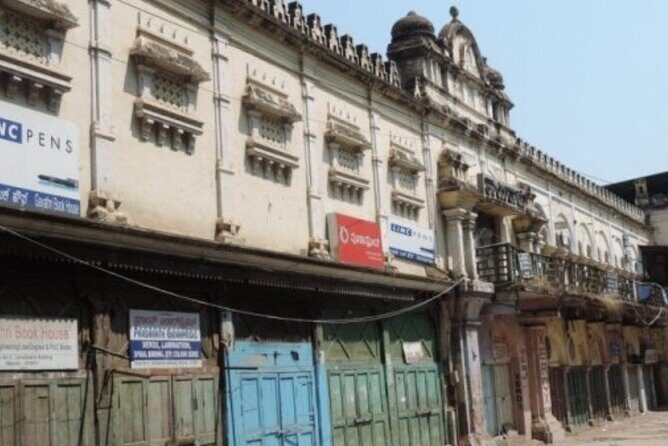
Next you walk past the Landsdowne Building, a heritage structure that also functions as a commercial complex. Your guide connects it to the building’s past while you take in the exterior in context.
The upside of passing rather than touring: you keep momentum. The slight downside: you won’t get the same depth you would if you could go inside or spend longer there. Still, it’s a smart “checkpoint” to link architecture to the city’s evolution.
Stop 3: KR Circle (about 15 minutes, no ticket)
At KR Circle (Krushna Rajendra Circle), you’ll get a landmark lesson. This intersection is used as a storytelling point to bring in how the kingdom’s identity is visible in the city’s layout.
This stop is more about orientation than lingering. If you want to understand how Mysore’s main road geometry connects to historic power centers, this kind of circle stop is useful.
Stop 4: Chamaraja Circle (about 15 minutes, no ticket)
Then comes Chamaraja Circle, described as the heart of Mysore. Your guide frames it as a key meeting point in both movement and memory.
Again, it’s not a museum stop—it’s a “read the city” stop. You’ll learn what to notice as you watch people pass through, how street life maps onto historic significance, and what the guide thinks is worth paying attention to in photographs.
Stop 5: Dodda Gadiyara (about 15 minutes, no ticket)
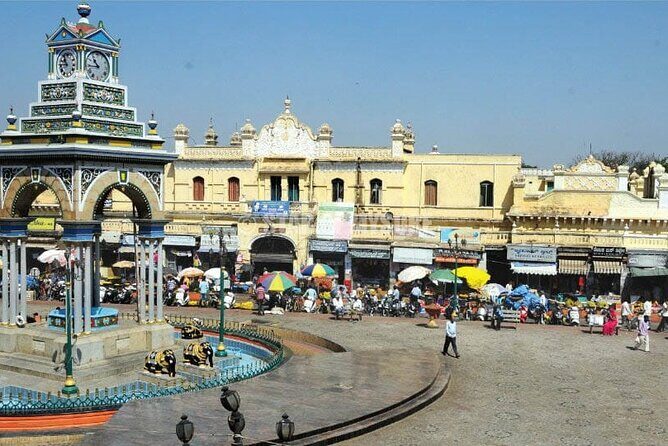
Now you hit a standout sight: Dodda Gadiyara, a busy square associated with a clock tower built to commemorate 25 years of rule of Krishnaraja Wodeyar IV.
This is where the tour’s political thread becomes easier to feel. When you see a clock tower tied to a reign milestone, you understand that timekeeping wasn’t just practical—it was messaging.
If you like symbolism in public spaces, this stop delivers.
Stop 6: City Market (about 15 minutes, no ticket)
The tour turns from royal narrative to everyday Mysore at City Market. You get time to walk through an area where the city’s energy is front and center, with the guide pointing out what’s going on around you.
This is the stop that makes the whole experience feel grounded. After a couple of history-focused stops, it’s refreshing to shift to real commerce: what people buy, how stalls operate, and how the market atmosphere signals daily life.
If you’re sensitive to crowds, you’ll still be okay—your time here is limited (about 15 minutes). It’s enough to catch the feel without forcing you to spend half a day in a market.
Stop 7: Gadiyara / Dufferin clock tower finish (about 15 minutes, no ticket)
Finally, you end at the Gadiyara area, specifically tied to the Dufferin clock tower, where the walk concludes after tasting Mysore Pak.
This ending works because it rewards you at the moment you understand the theme. You’ve learned about Mysore’s identity through art and monuments, then you finish by tasting one of its most famous sweets. It’s not random. It’s a cultural wrap-up you can remember with your mouth.
The tour also drops you at the end point at the clock tower area, so you’re not left hunting for your way out at the finish.
The clock-tower story: power, time, and a changing empire
One of the most interesting ideas in this walk is the way it connects clock towers to the relationship between Maharaja rule and the British Empire. Instead of treating colonial-era history as distant, you’re guided to interpret it where it shows up: in monuments, public spaces, and the way rulers marked legitimacy.
Here’s the practical benefit for you: you can look at a clock tower and not just see a nice photo subject. You’ll see a political signal—someone trying to fix their authority in the public mind, using a structure that people can’t ignore.
Dodda Gadiyara and the Dufferin clock tower area make that theme easier to grasp because clock towers are visible, central, and tied to specific reign memories. Even if you’re not a “history person,” the physical landmarks help you remember the lesson.
City Market + your Mysore Pak tasting: the perfect combo
I like that the walk doesn’t end with just standing around for a final photo. It ends with something you can’t fake: Mysore Pak.
That matters because food is a shortcut to cultural memory. When you taste Mysore Pak after learning about the city’s royal arc, it feels like you’re getting the present-day echo of a refined tradition. You also get a natural reason to stop and slow down at the end.
At City Market, the value is different: it gives you context for daily Mysore. You see what “now” looks like, not just what “then” looked like. The combination makes the history stick better in your head.
Who this tour is best for
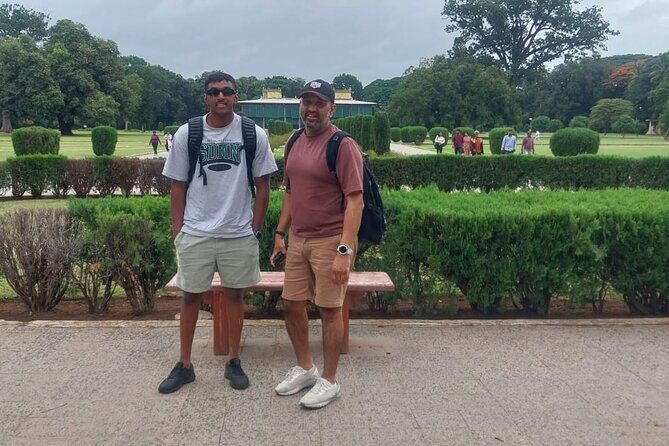
This one is a strong match if you:
- Want a 2-hour guided overview without overplanning
- Like guided storytelling that mixes humor and short quizzes
- Enjoy architecture and public landmarks (especially clock towers)
- Prefer seeing markets during a structured visit, not wandering until you’re tired
It’s also a good choice if you have limited time in Mysore. Because the route concentrates on the city center, you get a compact view that can help you plan what to do with the rest of your day.
A few practical tips for your 4:00 pm start
The walk starts at 4:00 pm, and that’s a thoughtful time window for a city-center stroll. Late afternoon often gives you better lighting for photos and a calmer pace in streets than midday.
Since the tour includes an art-gallery admission stop and outdoor walking between multiple intersections, I’d plan like this:
- Wear comfortable shoes for urban sidewalks
- Carry water, especially if the weather runs hot
- Bring a charged phone for the mobile ticket
- If you have dietary questions, ask your guide about the Mysore Pak stop ahead of time (the tasting is part of the experience, but details beyond that aren’t specified)
Also, with a max of 10 travelers, you’ll likely find it easier to keep up with the group. Still, if your walking pace is slow, mention it early so the guide can keep the route comfortable.
Community-minded tourism: how your dollars stay local
One thing I respect in this kind of tour model is the community focus. The company states that it helps train and employ local guides and supports local businesses, aiming to keep travel dollars in the places you’re visiting.
You’ll also likely get a chance to hear more about community initiatives from your guide during the walk. Even if you’re not a social-impact person, it’s a useful lens: it helps explain why the storytelling feels locally grounded.
Should you book the Mysore Heritage Walk?
If you want a short, well-structured introduction to Mysore that connects art, monuments, street life, and a local sweet, I’d book this. The strongest case is the mix of (1) the Jaganmohan art-gallery start, (2) the clock-tower lessons tied to major political shifts, and (3) the ending with Mysore Pak.
I’d skip it only if you dislike walking in city streets for two hours or if you want a deep museum-style experience without gaps for landmarks and market time. In that case, you might prefer a longer museum visit on its own.
For most first-timers, though, this is a smart way to get oriented fast and learn the stories that make the city feel like more than postcards.
FAQ
How long is the Mysore heritage walk?
It lasts about 2 hours.
What does the tour cost?
The price is $50.00 per person.
What’s included with the ticket price?
Admission ticket is included for the Jaganmohan Palace Art Gallery and Auditorium stop, and you’ll also get an opportunity to taste Mysore Pak as part of the walk.
Where does the tour start and end?
You start at Jaganmohan Palace (Sri Jayachamarajendra Art Gallery and Auditorium). The walk ends at the Chikka Gadiyara clock tower area, and you’ll be dropped there.
What time does the tour begin?
The tour starts at 4:00 pm.
How many people are in the group?
The tour has a maximum of 10 travelers.
Is the tour easy to join if I’m not familiar with Mysore?
Most travelers can participate, and it’s near public transportation.
Is there free cancellation?
Yes, you can cancel for free up to 24 hours in advance for a full refund.