REVIEW · HYDERABAD
Cult Immersions 1 -Charminar Historical Walking Tour 3 hrs
Book on Viator →Operated by Gabay Local Tours · Bookable on Viator
Old Hyderabad rewards slow walking. This Charminar-area tour threads together palaces, mosques, bazaars, and Shia monuments so you understand how Hyderabad formed and how people still live around it. I like that it’s guided by a licensed, story-focused guide, and I also like that you get a practical walking route through the Old City instead of just quick photo stops.
Two standout parts for me were the first stop at Chowmahalla Palace (you spend a full hour there, with entry included) and the way the tour moves from major landmarks to everyday markets like Laad Bazaar and Mir Alam Mandi. You’re not only looking at buildings; you’re learning why they matter in the city’s mix of Qutb Shahi, Mughal-era influence, and Nizam-era patrimony.
One drawback to plan around: there’s no transportation included, and Charminar entry isn’t included. If you’re hoping for everything paid up-front with no coordination, you’ll want to budget for that and sort your ride timing.
In This Review
- Key Highlights You’ll Want to Know
- A Charminar Route That Explains How Hyderabad Was Built
- Price and Value: What $40 Buys You (and What It Doesn’t)
- Chowmahalla Palace: Your First Big Moment (And Why It’s Worth 60 Minutes)
- Mecca Masjid: A Large Mosque Stop With a Short Time Window
- Laad Bazaar: Bangles, Color, and Learning the Shopping Rhythm
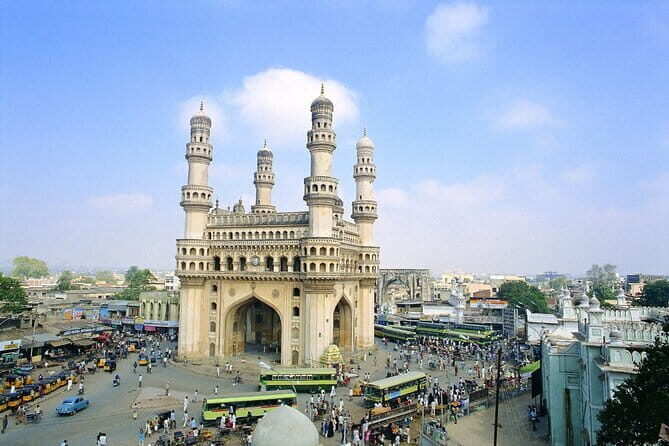
- Charminar: The Four Minarets Photo (Plus the Meaning Behind Them)
- Gulzar Houz: The City’s Planning Idea in Brick and Water
- Mir Alam Mandi, Pathar Gatti, and Pathergatti Lanes: Heritage Through Trade
- Ashurkhana Stops: Naal-E-Mubarak and Badshahi’s Muharram Connection
- Naal-E-Mubarak Ashurkhana
- Badshahi Ashurkhana
- How the 3.5 Hours Actually Work on Your Feet
- Who This Tour Is For (and Who Might Want a Different Plan)
- Should You Book This Charminar Historical Walking Tour?
- FAQ
- How long is the Charminar historical walking tour?
- What does the tour cost?
- Is the tour private?
- What’s included in the tour price?
- Is transportation included?
- Is entry to Charminar included?
- Is entry to Chowmahalla Palace included?
- Are there any free-entry stops?
- Is there a mobile ticket?
- What’s the cancellation policy?
- Do I need moderate physical fitness?
Key Highlights You’ll Want to Know
- Chowmahalla Palace for a full hour with entry and camera fees handled
- Charminar Old City route that links heritage sites with daily markets
- A real storyteller guide (Naga) who sets the pace and adds context
- Religious sites included beyond the headline monuments, including Mecca Masjid and Shia Ashurkhana
- Refreshments and water so you’re not rationing during the walk
- Mobile ticket and possible group discounts for easier booking and value
A Charminar Route That Explains How Hyderabad Was Built
This tour is designed for when you have limited time in Hyderabad and want the “big picture” without doing hours of independent research. The route is built around Charminar and the Old City, with stops that show the city’s layers: Qutb Shahi roots, Mughal influence, and the Nizam era’s civic and religious footprint. It aims to connect those eras to what you see today—streets, markets, and places of worship.
You’ll walk through narrow lanes where the city still moves at street level. That matters, because Old Hyderabad isn’t a museum you stroll through once; it’s an active neighborhood. If you enjoy hearing why a place was built and how people use it, this kind of route works really well.
Also, the guide format is private for your group, which usually makes questions easier. The review feedback was strong on Naga’s ability to stay patient with the pace—especially when one person in the group wasn’t feeling 100%.
You can also read our reviews of more walking tours in Hyderabad


Price and Value: What $40 Buys You (and What It Doesn’t)
At $40 per person for a walking tour that runs about 3 hours 30 minutes, you’re paying for expert guide time and included admission at one key site. The tour includes the guide fee, entry and mobile camera fee at Chowmahalla Palace, plus drinking water and light refreshments.
What’s not included is also important. Charminar entry fee isn’t included, and transportation isn’t included (though the provider says they can help you get your Uber/Ola cabs after the tour, and transportation can be arranged separately on request). In other words, you’re paying for guidance and access to one major palace stop, while other major “pay to enter” moments are your responsibility.
For me, the value is strongest if you want interpretation more than independent wandering. If you’re the type who reads plaques and can figure it out alone, you might skip a paid guide. But if you want someone to connect the dots—palace to mosque to markets—this price can feel fair fast.
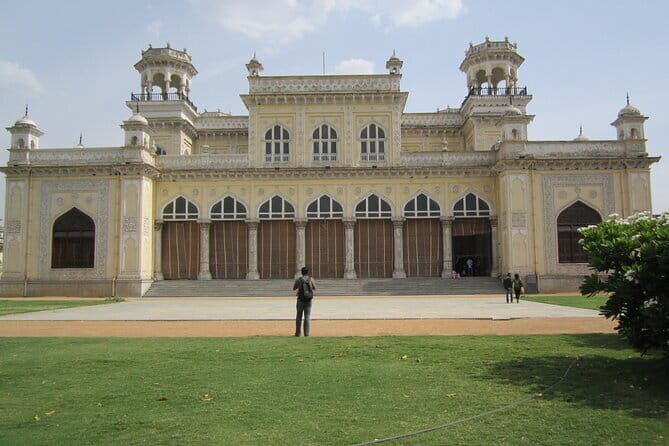
Chowmahalla Palace: Your First Big Moment (And Why It’s Worth 60 Minutes)
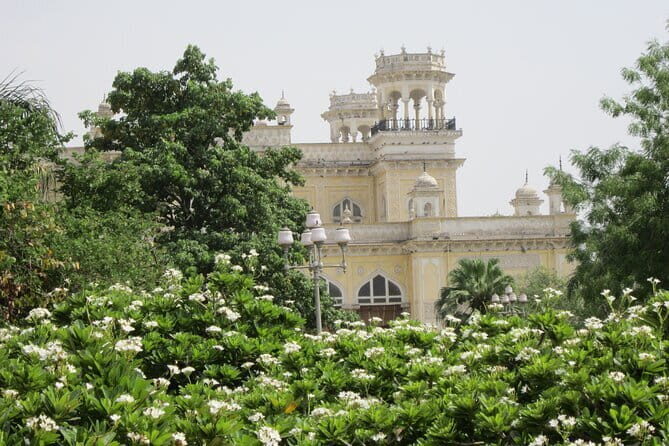
The tour starts with Chowmahalla Palace, and the schedule gives it the time it deserves: about one hour, with entry included (plus the mobile camera fee). This isn’t just a “look and go” stop. You get a chance to actually absorb the palace’s mixed architectural styles and the way it reflects different tastes and eras.
What I’d focus on when you’re there:
- Chandeliers and marble thrones, because they show the palace’s ceremonial role.
- Portraits and hand-painted landscape maps, which hint at how rulers thought about power and territory.
- Porcelain, armory, textiles, and even a vintage car mentioned in the stop description, because it helps the place feel lived-in rather than static.
A small practical note: palaces can be visually intense, and it’s easy to lose the thread. That’s where a strong guide matters. You’ll get the “why” behind what you’re seeing, not only the “what.”
If you’re someone who gets tired quickly with indoor heritage sites, pace yourself in the first 15 minutes. But if you enjoy architecture and symbols, you’ll likely appreciate that this stop isn’t rushed.
Mecca Masjid: A Large Mosque Stop With a Short Time Window
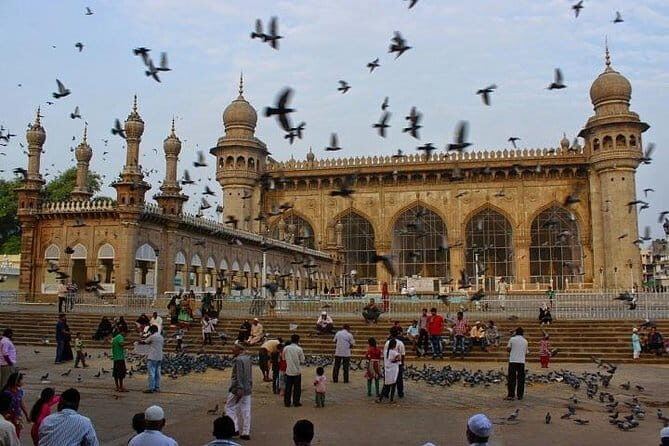
Next up is Mecca Masjid, the congregational mosque in Old Hyderabad. The tour allots about 15 minutes here, and it’s free to enter. The key detail to keep in mind is scale: it can accommodate more than 10,000 people for Eid prayers.
In only 15 minutes, you’re not going to “tour” the mosque the way you would a palace. Instead, treat it like a context stop. You’ll likely see enough to understand its role in the city’s religious life and the importance of congregation spaces in Old City neighborhoods.
What to watch for as you go:
- Lighting and sightlines inside can be dramatic, so look up briefly.
- If you want photos, be respectful with where you stand. Religious spaces are not the same as public monuments.
If you prefer longer mosque visits, you might feel this is brief. But as part of a tight heritage walk, it does its job.
Laad Bazaar: Bangles, Color, and Learning the Shopping Rhythm
After the mosque, you step into the energy of Laad Bazaar, a colorful market area toward the west of Charminar. You only have about 15 minutes here, but it’s a smart hit because it puts you in the “daily Hyderabad” mindset right away.
The stop is especially geared toward what Laad Bazaar is known for: glittering and colorful lacquer bangles, with the market being a common place to negotiate and buy. If shopping is your thing, this is the window where you’ll know what you want—before the walk moves on.
Practical advice:
- Go in with a price range in mind. Negotiation is part of the experience here.
- If you don’t plan to buy, still look closely. The point is to understand how heritage and commerce sit side by side.
One caution: markets are not quiet. If you get overwhelmed by noise and crowds, take a slower scan and focus on one pocket of stalls rather than trying to see everything.
You can also read our reviews of more historical tours in Hyderabad





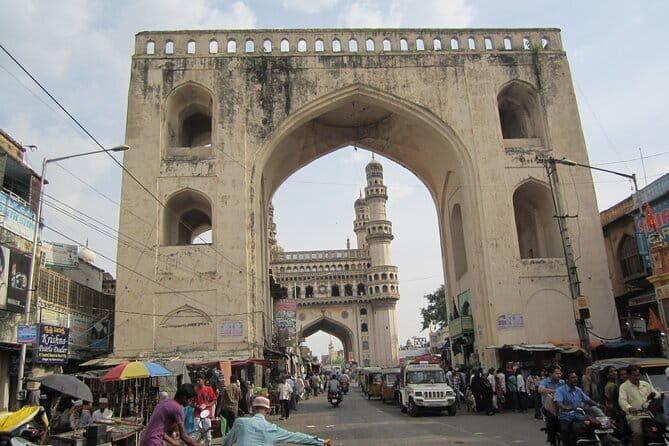
Charminar: The Four Minarets Photo (Plus the Meaning Behind Them)
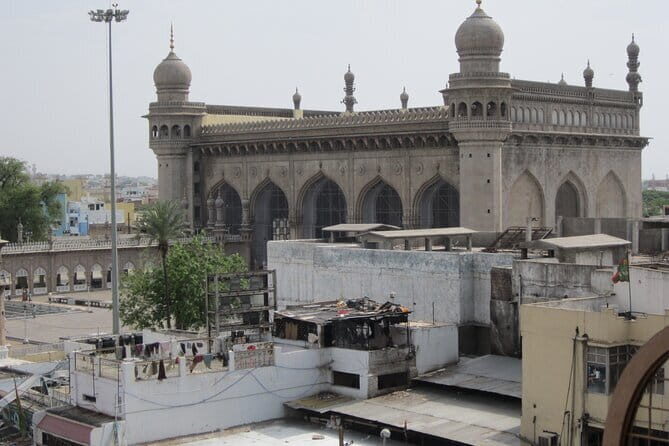
Then you reach Charminar itself. Expect about 30 minutes at the landmark, and entry isn’t included. That’s normal for many tours, but it’s a real decision point: you can enjoy the outside views and context from the guide, then decide if you want to pay separately to go inside.
Charminar’s key identifiers from the tour description:
- It means four minarets.
- It was constructed in 1591 by the Qutb Shahis.
- It was built as a replica of the tomb of Imam Hussai.
Even without entry, knowing that background changes how you look at the structure. You’ll probably notice how the monument anchors the neighborhood—especially because it sits in the center of a dense street network that still feels connected to daily life.
If you’re visiting with kids or you’re simply tired from walking, the 30-minute slot works well. It’s long enough to regroup, but not so long you get bored staring at the same angles.
Gulzar Houz: The City’s Planning Idea in Brick and Water
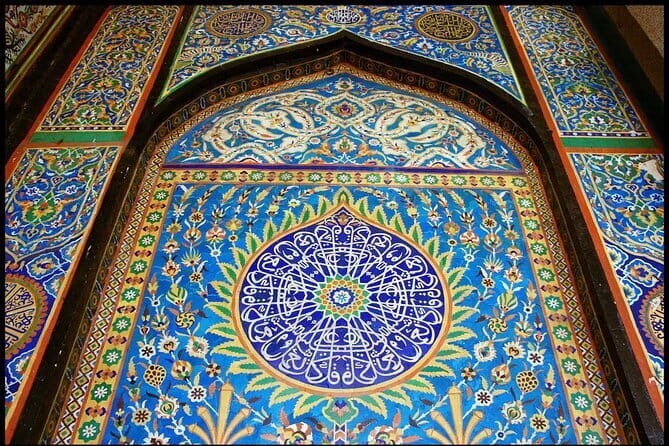
A quick stop brings you to Gulzar Houz, also known as Char-Su-Ka-Houz, described as a central point of Old Hyderabad’s plan. You’re allotted about 10 minutes, and it’s listed as free.
This is one of those stops that can feel easy to skip—until you understand what it represents. The description notes it was built with a Char Bagh concept, tied to the founding-era layout of Old Hyderabad. So instead of only learning about buildings, you’re seeing the “logic” of how space was organized.
If you like urban design or city planning stories, you’ll probably enjoy this moment. If not, treat it as a mental reset: look, take a few photos, and then brace for the more market-focused lanes ahead.
Mir Alam Mandi, Pathar Gatti, and Pathergatti Lanes: Heritage Through Trade
Now the tour leans hard into street life. You’ll walk through Mir Alam Mandi for about 20 minutes, with it described as one of the oldest vegetable and spices markets, and also tied to Burqa Galli. This kind of stop is valuable because food, cloth, and daily necessities tell you what a city is actually doing.
Next is Pathar Gatti, a set of restored market buildings in the early 20th century by CIB, with busy shops along lanes and local community shopping. You get about 10 minutes there.
Then you move along Pathergatti Road (about 10 minutes), which connects the commercial streets to religious sites in a way that feels very Hyderabad. You’re learning that in this part of town, sacred and practical life aren’t separated.
Practical expectations:
- Bring your senses. This section is about smells, chatter, and how people move through narrow passages.
- If you’re shopping, your attention will be pulled in many directions. Keep your priorities clear so you don’t spend the whole time negotiating when you should be listening.
These stops can be the most memorable parts of the day because you feel like you’re walking with the city, not just around it.
Ashurkhana Stops: Naal-E-Mubarak and Badshahi’s Muharram Connection
The last stretch includes Shia religious sites with historical importance tied to the Muharram period of mourning. These stops are about meaning, not just architecture.
Naal-E-Mubarak Ashurkhana
At Pathergatti Road, the tour mentions Naal-E-Mubarak Ashurkhana, described as a Shia religious place with historical importance. A standout detail in the description: it contains metal pieces of helmet of Imam Hussain, said to have been used in the battle of Karbala in 680 AD.
Badshahi Ashurkhana
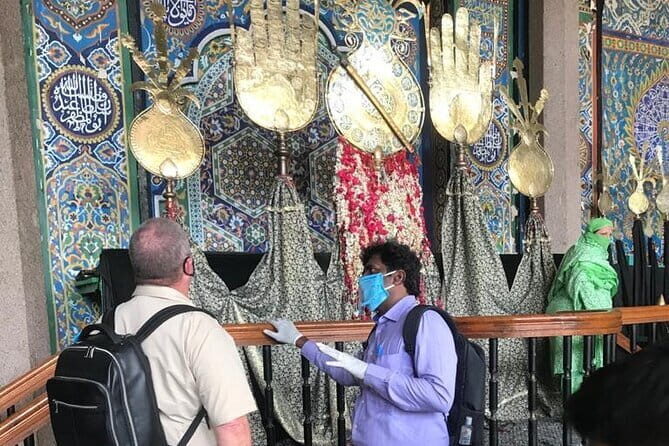
Then you visit Badshahi Ashurkhana for about 20 minutes. The description says it’s associated with Shia Muslims and serves as a place of mourning during Muharram, built in 1594 AD in memory of the martyrdom of Imam Hussain in the Battle of Karbala. It also notes the site has very beautiful elements, though the specific “what” isn’t spelled out in the provided details.
Why these stops matter on a historical walking tour:
- They show that Hyderabad’s heritage isn’t only palace walls and minarets.
- They connect the Qutb Shahi and later eras to civic and religious life that continues on a yearly rhythm.
Keep your tone respectful here. Also, these are not the stops where you’ll rush for selfies. Look, listen, and let the guide’s stories do the work.
How the 3.5 Hours Actually Work on Your Feet
The tour runs around 3 hours 30 minutes total. It’s listed as requiring moderate physical fitness, which makes sense for a walking-heavy Old City route. Some of the lanes are narrow, and you’ll move from one neighborhood rhythm to another.
One of the best parts from the feedback you were given: the guide—Naga—followed the group’s pace while encouraging them to experience as much as possible, even when someone wasn’t feeling their best. That tells me this tour isn’t just “speed-run heritage.” It’s guided, with pacing that can flex.
You’ll also get drinking water and light refreshments, which makes the walking segment more comfortable. Still, bring a little common sense:
- Wear comfortable shoes. Old Hyderabad lanes can be uneven.
- If it’s hot when you go, plan to lean on that water and refreshments.
Transportation isn’t included, so think about your end-of-tour plan. The provider says they help you get an Uber/Ola cab after the tour. That’s helpful if you don’t want to navigate the ride situation with tired legs.
Who This Tour Is For (and Who Might Want a Different Plan)
This tour fits best if you want:
- A guided heritage story centered on Charminar and the Old City.
- A mix of major monuments (like Chowmahalla Palace and Mecca Masjid) and everyday places (like Laad Bazaar and Mir Alam Mandi).
- A guide who can explain connections between Qutb Shahi, Mughal-era influence, and the Nizams’ civic and religious legacy.
You might want a different plan if:
- You hate walking in dense areas and prefer slow, spread-out stops.
- You’re only interested in a single landmark (because the tour is a route, not a one-stop visit).
- You strongly dislike paying separate entry fees, because Charminar entry isn’t included.
Should You Book This Charminar Historical Walking Tour?
If you have a half-day in Hyderabad and want the Old City story without spending your time planning, I think this is a smart booking. The strongest reason: you start with Chowmahalla Palace in a way that actually uses the time, and then the route keeps teaching you—mosque to market to planning concept to Ashurkhana—so you leave with context, not just photos.
Book it if you like your travel guided and you enjoy street-level culture. Skip it if you’re looking for a “sit-down” sightseeing day or if transportation convenience is your top priority, since you’ll handle getting there and Charminar entry separately.
In short: for people who want understanding and momentum in one neat walking loop, this tour delivers.
FAQ
How long is the Charminar historical walking tour?
It lasts about 3 hours 30 minutes.
What does the tour cost?
The price is $40.00 per person.
Is the tour private?
Yes. It’s a private tour/activity, and only your group participates.
What’s included in the tour price?
Included items are the professional guide fee, entry and mobile camera fee at Chowmahalla Palace, drinking water, and light refreshments.
Is transportation included?
No. Transportation is not included, but it can be arranged separately upon request for an additional price in advance.
Is entry to Charminar included?
No. Entry fee at Charminar is not included.
Is entry to Chowmahalla Palace included?
Yes. Entry fee and mobile camera fee at Chowmahalla Palace are included.
Are there any free-entry stops?
Yes. Mecca Masjid, Laad Bazaar, Gulzar Houz, Mir Alam Mandi, Pathar Gatti, Naal-E-Mubarak Ashurkhana (Pathergatti Road), and Badshahi Ashurkhana are listed as free in the itinerary.
Is there a mobile ticket?
Yes. The tour uses a mobile ticket.
What’s the cancellation policy?
Free cancellation is available. You can cancel up to 24 hours in advance for a full refund; if you cancel less than 24 hours before the start time, the amount paid isn’t refunded.
Do I need moderate physical fitness?
Yes. The tour notes that travelers should have a moderate physical fitness level.