REVIEW · NEW DELHI
Spice Market & Old Delhi Highlights: Guided 3-Hour Tour
Book on Viator →Operated by Go City Adventures · Bookable on Viator
Old Delhi teaches your senses fast. This small-group, guided 3-hour tour strings together Khari Baoli spice market lanes, the Chandni Chowk area, and the Mughal-era Jama Masjid, while metro tickets keep you moving without getting lost.
I especially like the 12-person limit, which helps your guide keep the pace under control in crowded streets. I also like that the route mixes big landmarks and everyday markets, so you get both the wow factor and the practical street-level shopping and photo stops.
One consideration: you’ll hit a few rules and extra costs. Jama Masjid entry is not included, and at places of worship you’ll need to remove shoes and cover shoulders and knees.
In This Review
- Key highlights worth planning around
- Why this Old Delhi route works in just 3 hours
- Getting there: Connaught Place meetup and the metro jump to Chawri Bazar
- Stop 1: Chawri Bazaar and the feeling of Old Delhi’s inner core
- Stops 2 to 3: Jama Masjid viewing and Dariba Kalan shopping time
- Stop 4: Kinari Bazaar for trims, laces, beadwork, and paper goods
- Stop 5: Naughara row of nine houses and the Jain Svetamber Mandir calm
- Stop 6: Gurudwara Sis Ganj Sahib and a quieter moment after the markets
- Stop 7: Khari Baoli spice market, wholesale scale, and the rickshaw exit
- Price and value: what $9 really covers (and what to budget extra)
- The practical stuff that makes or breaks your enjoyment
- Who should book this spice market and Old Delhi highlights tour
- Should you book it? My decision guide
- FAQ
- FAQ
- Is the Jama Masjid entry fee included?
- Are metro tickets included in the tour price?
- Do I need to pay extra for the rickshaw ride?
- What is the meeting point for the tour?
- How long is the tour?
- What languages are the guides offered in?
- Can I cancel for a full refund?
Key highlights worth planning around
- Easy starting point at Connaught Place with a clear meetup at United Coffee House (Rajiv Chowk).
- Metro rides included, including the hop to Chawri Bazar to cut down on hassle.
- Jama Masjid visuals without rushing, with time set aside for viewing even though entry costs extra.
- Market stops built for browsing, from Dariba Kalan jewelry and antiques to Kinari Bazar trims, laces, and beadwork.
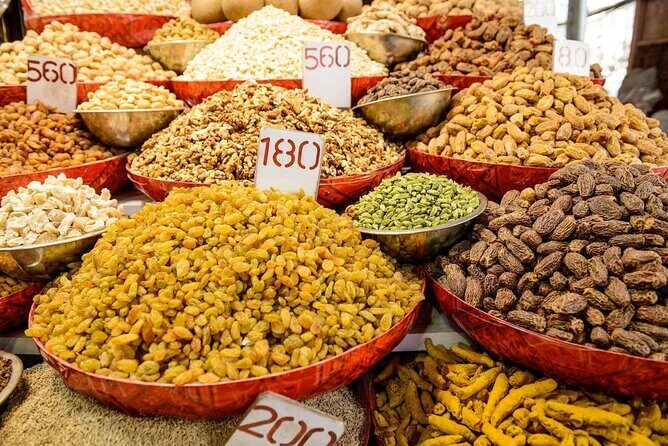
- Khari Baoli spices at wholesale scale, with time to see herbs, nuts, and spices up close.
- A short rickshaw moment to rest your feet, followed by a return toward Chandni Chowk metro.
Why this Old Delhi route works in just 3 hours

Old Delhi can feel like information overload. The trick is picking a path that gives you structure while still letting the street life do its thing. This tour keeps it tight: you’re walking through classic market areas, but the schedule includes short, manageable segments and built-in stops so you don’t spend the whole time trying to figure out where to go next.
The best part is the mix. You don’t just do a market walk—you also get a serious cultural anchor at Jama Masjid. That combination helps you understand why these neighborhoods look the way they do, where commerce fits next to major religious sites, and how the city’s “old” identity lives in day-to-day life.
It’s also small-group by design. With a maximum of 12 people, your guide can slow down when needed and regroup when the lanes get tight. That matters on Chandni Chowk-adjacent streets where the crowd pressure is real.
You can also read our reviews of more guided tours in New Delhi


Getting there: Connaught Place meetup and the metro jump to Chawri Bazar
You meet at a spot that’s hard to mess up: United Coffee House at Rajiv Chowk, E-15, Block E, Connaught Place, New Delhi. It’s one of those areas where you can orient quickly, even if you’re new to the city.
From there, the tour uses the Delhi Metro to reach Chawri Bazar. Instead of forcing you to fight traffic or pile onto buses you may not trust yet, you get a clean transition from the newer business core into Old Delhi’s market world. That metro segment also buys you breathing room. Even a short ride helps when you’re about to start walking through busy lanes.
The tour time is listed as about 3 hours, so you’re not going to “linger forever” at any single spot. But the included metro tickets are a practical value add: you’re not juggling ticket lines or figuring out which line makes sense while also keeping up with the group.
Stop 1: Chawri Bazaar and the feeling of Old Delhi’s inner core

Chawri Bazaar is one of the classic gateways into Old Delhi’s market maze. The tour frames this part as being part of what used to be a walled area of the old capital, which gives you a helpful mental picture: you’re stepping into a neighborhood where boundaries shaped how people traded, built, worshipped, and traveled.
You’ll spend about 30 minutes here with the tour’s focus on getting you oriented. This is where your guide’s context matters most. If you’ve only seen Old Delhi from the outside, you’ll likely feel the difference the moment you’re in the flow of local movement—shops, street-level activity, and that constant churn of movement.
Photo-wise, you’re in a spot where you can capture the “market texture” without needing a formal viewpoint. Just keep your attention split the right way: look around for images, but also watch the ground and the crowd patterns. On market streets, balance is part of sightseeing.
Stops 2 to 3: Jama Masjid viewing and Dariba Kalan shopping time

Jama Masjid is the headline stop. The tour walks you from the market lanes to the mosque, highlighting it as the largest mosque in the Asian continent. Even if you don’t enter, the viewing time is set up so you can take in the scale and the architectural style associated with the Islamic era.
Important practical note: Jama Masjid entry is not included, and you should plan for the stated entry fee of 350 INR. Also, this is a worship space, so you’ll need to remove shoes and cover shoulders and knees. If you show up in clothing that doesn’t fit the rule, the tour can still be enjoyable, but you’ll want to be ready to adjust.
Then comes Dariba Kalan, one of the oldest markets. This is where the tone shifts toward shopping. You’ll get around 10 minutes to check out the jewelry and antiques focus. Short time here is not a flaw—it’s realistic. It’s enough to browse, pick up what catches your eye, and understand the character of the area before the route continues.
A smart approach: decide in advance whether you’re shopping or just browsing. With only 10 minutes, you’ll enjoy yourself more if you treat it like a quick reconnaissance mission rather than a slow shopping expedition.
Stop 4: Kinari Bazaar for trims, laces, beadwork, and paper goods
Kinari Bazar is the kind of market that surprises people who expect spices only. Here, the wholesale focus shows up in what you see: fancy paper items, laces, bead works, decorations, and lots of detail-oriented goods.
You’ll have about 30 minutes, which is a better match for this stop than the quick-hit style of Dariba Kalan. If you like photographing patterns and close-up textures, Kinari Bazar gives you plenty of material. The trick is to keep moving with the group while still taking the time to inspect what’s on display.
If you’re shopping for party supplies, craft items, or decorative trims, this is the kind of place where browsing can turn into actual purchases fast. And because it’s wholesale-style, it can feel like a concentrated sampler of what’s available in the city.
You can also read our reviews of more shopping tours in New Delhi




Stop 5: Naughara row of nine houses and the Jain Svetamber Mandir calm
After the market energy, the route slips into a quieter alley feel at Naughara, described as the row of nine houses and a sweet, calmer corner of the Chandni Chowk area. You get about 10 minutes here, and that’s exactly what works about it: it breaks up the sensory overload before the religious stops.
The tour then includes time near the Jain Svetamber Mandir. This is a nice change of pace. You’re moving from commercial lanes into spaces where the atmosphere is more still. For you, it’s a mental reset. For photos, it’s a chance to shift from crowds and signage to architecture and calmer scenes.
Again, dress and shoes matter here too. Plan for worship-site rules so you’re not rushing at the doorway.
Stop 6: Gurudwara Sis Ganj Sahib and a quieter moment after the markets
Sis Ganj Gurudwara is dedicated to the ninth Sikh Guru, and the tour positions it as a calm stop before the final market payoff. You’ll get around 30 minutes here, which is plenty of time to pause, observe respectfully, and let your body catch up.
This is also where your guide’s pacing and tone can make the experience feel less chaotic. A good guide helps you transition from “street mode” to “respect mode” without turning it into awkward etiquette drills. If your guide happens to be someone like Jatin, groups have appreciated the mix of clear explanations and a personable style that makes the stops feel human, not just instructional.
The best advice: treat this as a break. Sit for a moment if that feels right, drink water if you need it, and let the noise fade. You’ll appreciate Khari Baoli more after you’ve had this reset.
Stop 7: Khari Baoli spice market, wholesale scale, and the rickshaw exit
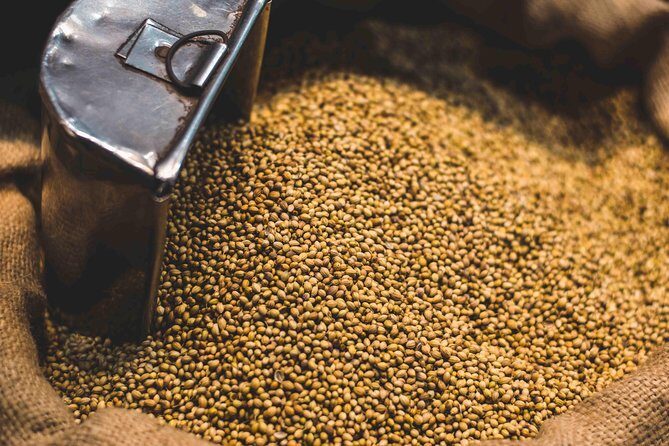
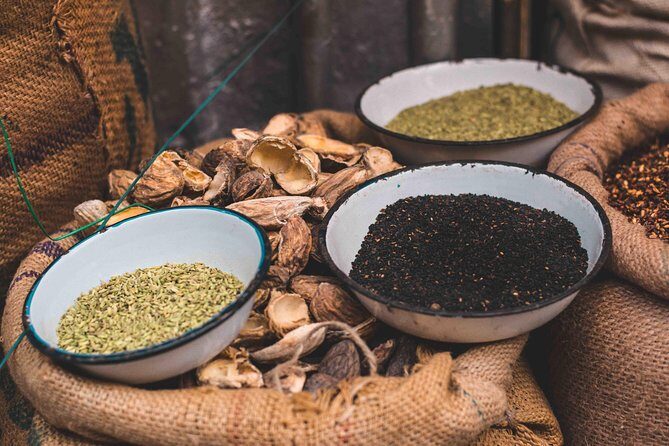
Khari Baoli is the tour’s final wow. This is a wholesale market for spices, herbs, nuts, and more. You’ll have about 30 minutes to look around and understand what you’re seeing beyond the labels—how spices and ingredients are displayed, grouped, and sold in bulk.
If you love food culture, this stop delivers. The smell hits first, then your eyes start noticing textures: dried herbs, nut varieties, and spice colors that look deeper than what you may be used to at a supermarket.
Then the tour gives your feet a rest with a rickshaw ride in Old Delhi. The rickshaw is not included in the base price, but it’s part of the planned wrap-up. Expect the stated cost range of 200–300 INR. After that, you’re dropped around Chandni Chowk metro station, with the option to connect back toward the meeting point or your hotel.
That ending matters. Old Delhi isn’t easy to exit on your own after a few hours. Having a guided route plus a defined finish point helps you avoid the common problem of feeling tired and then having to re-navigate everything.
Price and value: what $9 really covers (and what to budget extra)
At $9 per person for a 3-hour guided experience in central Old Delhi, the value is tied to what’s included.
What you get:
- A guide in English/Spanish/German/Italian/French
- Metro/subway tickets
- Hotel pick-up and drop-off if you choose that option
- A small group capped at 12 participants
- A mobile ticket
What costs extra:
- Jama Masjid entry fee: 350 INR
- Rickshaw ride: 200–300 INR
So you’re not paying a full-price “museum-and-transport” package. You’re paying for someone to set the route, handle the transitions, and take you to specific market areas in a short window. For most people, that’s the real cost-saving: time, clarity, and not getting turned around.
If you want maximum value, plan to use the metro included in the tour and bring enough cash for the two extras above. If you skip the rickshaw, you’ll still likely finish near metro access, but the tour schedule specifically uses the rickshaw as a foot-saver.
The practical stuff that makes or breaks your enjoyment
This tour is ideal if you’re comfortable with city crowds and walking. You should have moderate physical fitness, and you’re doing a full Old Delhi circuit in about three hours.
Wear comfortable walking shoes. You’ll also need to remove shoes at worship sites, and you’ll need shoulders and knees covered at places of worship. If you don’t like thinking about clothing on vacation, this is the one part you should set up early.
Also, keep expectations realistic: Old Delhi lanes can feel hectic. The tour’s job is to keep you moving in the right direction and help you understand what you’re seeing without stopping every five minutes to explain the obvious. That balance is why a guided route works better here than a self-wander for a short half-day.
Who should book this spice market and Old Delhi highlights tour
Book it if you:
- Want a focused Old Delhi route in about 3 hours
- Like markets, street detail, and photo opportunities without spending all day planning
- Appreciate having metro tickets included so you don’t waste energy on logistics
- Want a mix of major religious architecture (Jama Masjid) and everyday commerce (spice and wholesale bazaars)
Consider skipping or adjusting your expectations if you:
- Hate crowds and noise and can’t handle dense walking streets
- Want a long shopping session for jewelry/antiques (Dariba Kalan is short)
- Don’t want any extra fees at major sights (Jama Masjid entry is not included)
Should you book it? My decision guide
Yes, I’d book it if your main goal is to experience Old Delhi in a short, organized way. The biggest strength is practical: you’re guided through the market maze, you get metro support, and your route ends at a logical metro exit point.
I’d only hesitate if you’re very sensitive to crowds or if you’re not willing to follow worship-site rules like shoe removal and covered shoulders and knees. If you can handle that, this tour is a smart way to understand the city’s spice-market world and its iconic Mughal-era mosque within one half-day.
FAQ
FAQ
Is the Jama Masjid entry fee included?
No. Jama Masjid entry is not included, and the listed fee is 350 INR.
Are metro tickets included in the tour price?
Yes. Metro/subway tickets are included, including the ride to Chawri Bazar.
Do I need to pay extra for the rickshaw ride?
Yes. The rickshaw ride in Old Delhi is not included, and the listed cost range is 200–300 INR.
What is the meeting point for the tour?
The tour starts at United Coffee House, Rajiv Chowk, E-15, Block E, Connaught Place, New Delhi.
How long is the tour?
The tour lasts about 3 hours.
What languages are the guides offered in?
Guides are offered in English, Spanish, German, Italian, and French.
Can I cancel for a full refund?
Yes, you can cancel for a full refund if you cancel at least 24 hours before the experience start time.