REVIEW · NEW DELHI
7 Days Delhi Agra Jaipur Private Golden Triangle Tour
Book on Viator →Operated by Indo Routes · Bookable on Viator
Golden Triangle sounds basic, but this route is tightly planned. You get a private 7-day circuit across Delhi, Agra, and Jaipur that hits major UNESCO sites while still making room for food stops and downtime. I like the way the itinerary mixes big-ticket landmarks with small, real-city moments like Chandni Chowk by rickshaw and a Gandhi-area visit. One watch-out: the days run full, and some sights are timed for best light and fewer crowds, so you’ll want a calm attitude about start times.
I also appreciate the practical extras included in the car—mineral water, seasonal snacks, and Wi‑Fi—because this tour moves fast between cities. Your experience should feel smooth because transfers and sightseeing are handled by private transport, not buses and cattle-call schedules. The main downside to consider is heat and walking: forts and outdoor monuments mean sun, steps, and long moments standing in lines if you go during peak hours.
In This Review
- Key highlights (what makes this tour worth your time)
- Golden Triangle in 7 days: what you really get
- Price and logistics: private car, English guidance, and included entrances
- Day 1 Delhi after landing: Red Fort, Jama Masjid, Chandni Chowk, and Raj Ghat
- Day 3 New Delhi landmarks and the move to Agra: Qutub Minar, Humayun’s Tomb, and more
- Day 4 sunrise Taj Mahal and Agra Fort plus Fatehpur Sikri
- Day 5 Jaipur arrival: Abhaneri stepwells, Chand Baori, and a Rajasthan night
- Day 6 Amber Fort to City Palace to Jantar Mantar and Hawa Mahal
- Day 7 Jaigarh Fort, Monkey Temple, Jal Mahal, and back to Delhi
- UNESCO stops in plain language: how the route stays logical
- What to expect day-to-day: timing, walking, and comfort
- Value check: who this private tour fits best
- Should you book this Golden Triangle private tour?
- FAQ
- Where does the tour start?
- Is airport pickup included?
- Do you travel by private transportation?
- Are monument entrance fees included?
- Will there be a guide?
- Is rickshaw ride included in Delhi?
- Is breakfast included?
- What food or drinks are included during the tour?
- What is the cancellation policy?
- What happens if weather is poor?
Key highlights (what makes this tour worth your time)
- 8 UNESCO World Heritage sites matched to a sensible 7-day route across three cities
- Private transportation throughout, including a Wi‑Fi enabled car for city-to-city travel
- Delhi by rickshaw through narrow lanes near Chandni Chowk, then Jama Masjid and Raj Ghat
- Taj Mahal and Agra Fort in a classic sequence, starting with early light
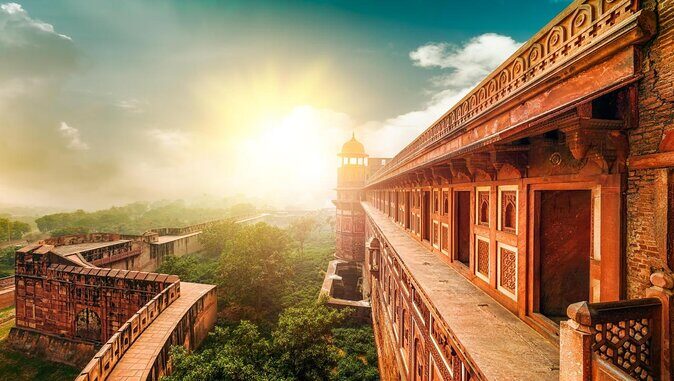
- Jaipur fort + palace circuit, plus Jantar Mantar and Hawa Mahal for iconic views
- Comfort touches on the road: bottled water and seasonal fruits/biscuits/snacks
Golden Triangle in 7 days: what you really get
This is the standard Golden Triangle geography—Delhi, Agra, Jaipur—but the value is in how it’s stitched together day by day. In one week, you’re not just collecting photos. You’re seeing the main layers of India’s power and culture: Delhi’s Sultanate-era landmarks, Mughal architecture around Agra, and Rajput-era strongholds in Jaipur.
What I like most is the focus on UNESCO targets that are already widely recognized, because it keeps your time from getting wasted on random add-ons. You’ll also get a mix of outdoor architecture (tombs, minarets, forts) and lived-in city streets (markets, memorial spaces, evening entertainment).
A quick realism note: a 7-day circuit means you’ll rarely have the full day “free.” If you hate being on a schedule, this might feel like too much. If you like having days that are packed but still organized, it’s a strong format.
You can also read our reviews of more private tours in New Delhi


Price and logistics: private car, English guidance, and included entrances
At $479.95 per person, the price lands in the range of “serious sightseeing,” not budget backpacking. The math looks better once you factor in what’s actually included.
You get all sightseeing and transfers by private transportation, plus entrance fees for the monuments and museums listed in the plan. There’s also a rickshaw ride in Delhi, and the car comes with Wi‑Fi. On top of that, the tour includes mineral water bottles throughout and seasonal fruits/biscuits/snacks in the car. If you’re traveling with fatigue from a long flight, these small comfort items matter more than you’d expect.
Guide support is another key point. For groups up to five people, you get a local English-speaking guide. For six people and above, there’s a tour escort. That matters because it affects explanations, pacing, and how smoothly lines and timing work.
One more detail I find practical: the tour uses mobile tickets, and it starts with pickup at Indira Gandhi International Airport in New Delhi. That reduces stress on day one, especially if you arrive late or aren’t sure how to get from the airport to the right area.
Day 1 Delhi after landing: Red Fort, Jama Masjid, Chandni Chowk, and Raj Ghat
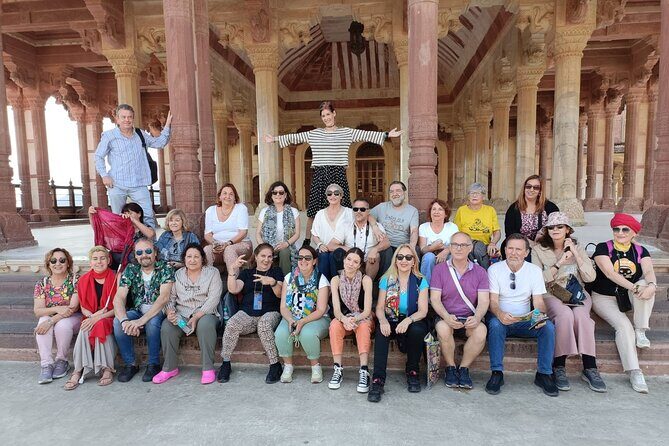
Day one begins with airport welcome and transfer to your hotel, so you’re not scrambling immediately after arriving. Then you jump into Old Delhi. The big anchor is the Red Fort complex, famous for its massive red sandstone walls and its role in the Delhi Sultanate era.
Next comes a very Delhi moment: a rickshaw ride through the narrow lanes of Chandni Chowk. This is where you feel the city’s street scale—close buildings, fast movement, and a market atmosphere that can’t be replaced by a car window.
From there, you visit Jama Masjid, described in the plan as India’s largest mosque. It’s an obvious stop for architecture and history, but the real payoff is the atmosphere: you’re walking through a working sacred space and seeing how large-scale Mughal-era design still shapes daily life.
The day closes at Raj Ghat, Mahatma Gandhi’s memorial site, and then you enjoy a welcome dinner at the hotel. That dinner piece is more than a perk. It gives you a clean finish to day one, when energy can be low after arrival and evening traffic.
What to watch: Old Delhi walking is tight and can be slow. Wear comfortable shoes and expect uneven pacing as drivers, rickshaws, and crowds share the lanes.
Day 3 New Delhi landmarks and the move to Agra: Qutub Minar, Humayun’s Tomb, and more
After your Delhi start, day three is where the itinerary fills in the “New Delhi” icons before you travel onward to Agra.
You’ll explore several landmark stops: Birla House (Gandhi Smriti Museum), India Gate, and the tomb complex areas tied to Delhi’s imperial periods. You also go to Humayun’s Tomb, described as the first garden-tomb on the Indian subcontinent. That garden layout is a big part of why it feels different from a plain mausoleum. You get symmetry, pathways, and the feeling that design controlled how people moved through memory.
Then you hit Qutub Minar, a UNESCO World Heritage site and the plan notes it as the tallest brick minaret in the world at 73 metres. It’s also presented as an early Islamic structure in India, with Arabic and Brahmi inscriptions—an impressive blend of languages carved into stone.
Timing matters here. These monuments can look similar if you only glance. If you take a few minutes to read details (inscriptions, layout, arch shapes), the stops start to feel connected rather than separate.
Another practical note: the plan includes Gandhi Smriti as the place where Gandhi spent his last 144 days before his death. You’ll likely want this visit if you’re interested in how public memory is built into everyday spaces in Delhi.
At the end of the day, you continue to Agra and stay overnight there, so you’re not left transferring late into the night without rest.
Day 4 sunrise Taj Mahal and Agra Fort plus Fatehpur Sikri
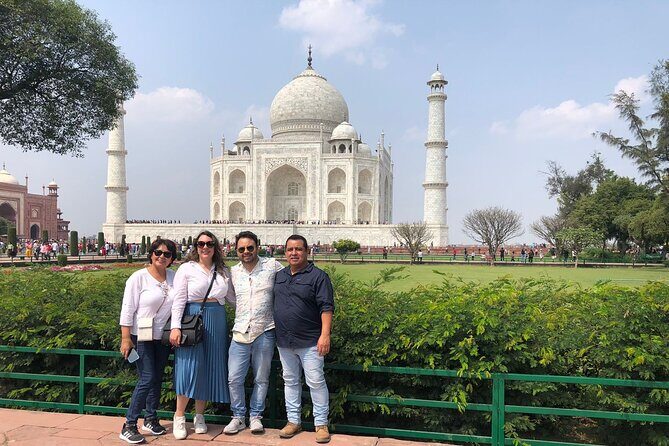
Day four is the “holy sites” day around Agra. The highlight is the Taj Mahal at sunrise, built between 1631 and 1648, as stated in the plan. Early light changes everything: the marble tones shift, and the surrounding atmosphere feels calmer than midday. Even if you’ve seen photos a hundred times, this is still the stop that people remember later.
After Taj Mahal, the sequence moves to Agra Fort, a UNESCO World Heritage site and the main Mughal residence until the capital shifted from Agra to Delhi in 1638. It’s a strong follow-up to Taj because forts show the practical side of empire—security, administration, and power housed in stone.
Then you continue to Fatehpur Sikri, noted as the Mughals’ first planned city, with palaces, religious buildings, and administrative spaces. The idea of a planned city matters here. You’re not only looking at scattered monuments. You’re walking through a designed layout meant to function as a full political and cultural center.
What to watch: this is a long sightseeing day. If you tend to get sun headaches or fatigue from standing in line, plan to pace yourself. Take water breaks and use shade when you can.
A few more New Delhi tours and experiences worth a look




Day 5 Jaipur arrival: Abhaneri stepwells, Chand Baori, and a Rajasthan night
The itinerary shifts gears on day five. After breakfast, you travel to Jaipur, called the Rose capital of Rajasthan in the plan. It’s a good day for arrivals because you still have meaningful stops without immediately tackling the big city palaces at full intensity.
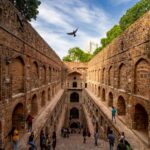
On the way, you visit Abhaneri, famous for stepwells. The plan then takes you specifically to Chand Baori, built in the 9th century AD and described as one of the largest stepwells in the world. Stepwells aren’t just photo spots. They were built to conserve water and give people relief from intense heat. Even if you don’t go deep on technical details, you can see the logic in how the design creates a cooling effect.
In the evening, you check into your pre-booked hotel and enjoy a Rajasthan dance performance with dinner. That’s a decent way to end a travel-heavy day because it doesn’t require extra planning and it keeps the energy in your favor.
One note: evening shows can run on a tight schedule. If you’re the type who needs to explore on your own, you might feel less free that night. Still, it’s included and it helps keep the week organized.
Day 6 Amber Fort to City Palace to Jantar Mantar and Hawa Mahal
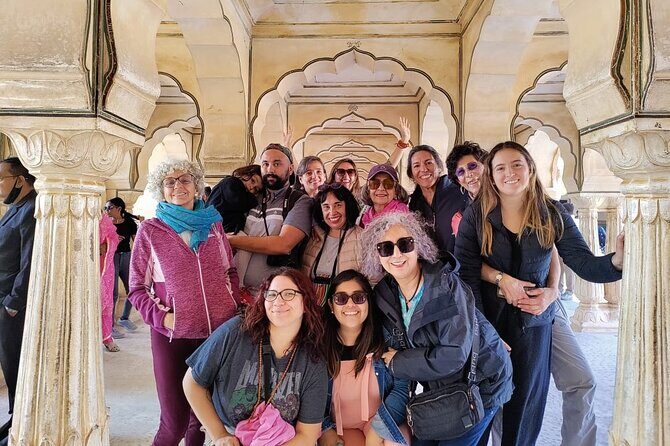
Day six is where Jaipur feels like a full-on architecture course, built around a series of locations you’ve probably seen on postcards—but that still have surprises when you stand in front of them.
Start with Amber Fort and enjoy the hilltop views from Amber Palace. The plan also lists stops at the Palace of Winds and Jantar Mantar (astronomical observatory). After that, you move into City Palace of Jaipur and then down to the colorful city areas.
The City Palace stop is described as multiple courtyards, pavilions, gardens, and temples, with prominent structures like Chandra Mahal, Mubarak Mahal, and the City Palace Museum. This is one of those complexes where you can’t see everything at once, but you can understand how the royal household evolved over time.
Then you hit Jantar Mantar, described as built by Sawai Jai Singh II around 1729 and presented as one of the world’s most accurate pre-modern observatories. If you like science history, this is the kind of site that changes your view of what “old” means. It’s not just decorative. It’s measuring and modeling.
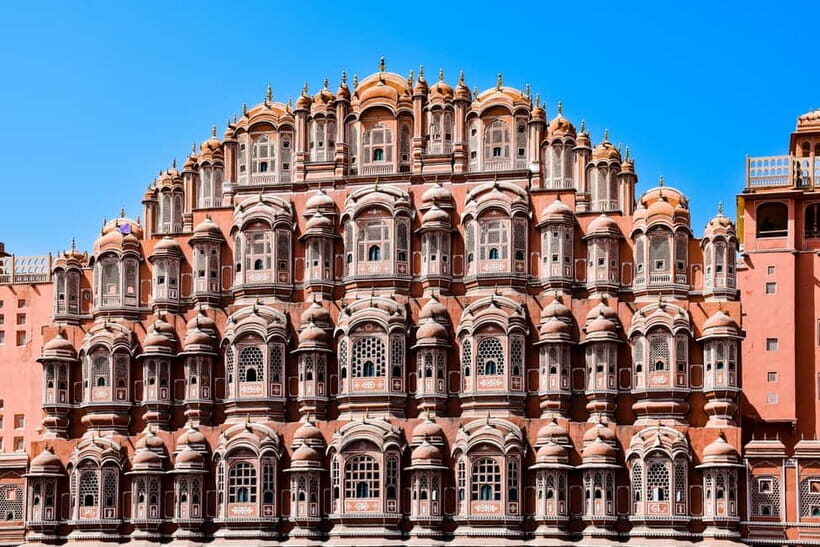
Finally: Hawa Mahal (Palace of Winds), built in 1799 with pink sandstone and famous for its five floors and jharokhas (latticed windows). It blends Hindu and Islamic architecture, and the shape alone gives you that instant Jaipur identity.
What to watch: this day includes multiple paid sights. The plan says admissions are included for the major stops listed for the day, so you don’t have to scramble for tickets mid-route. Still, bring a little patience and keep your shoes comfortable. Staircases and uneven surfaces are normal here.
Day 7 Jaigarh Fort, Monkey Temple, Jal Mahal, and back to Delhi
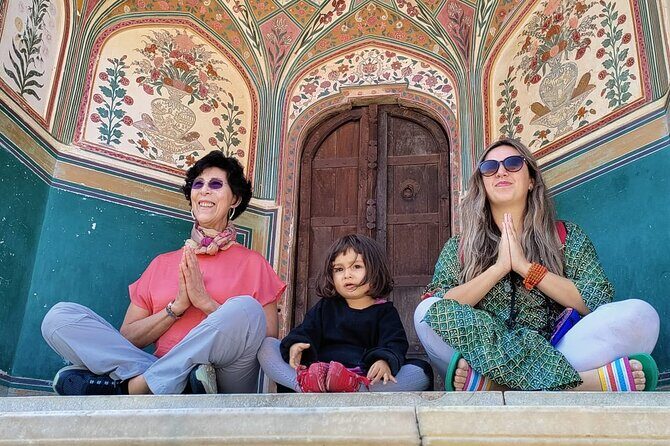
Your final day balances history with quick, scenic breaks.
First is Jaigarh Fort, described as a center for Rajput artillery production and home to the Jaivana, presented as the world’s largest cannon on wheels at the time of manufacture in 1720. The foundry where it was made is also located there. This gives you a different angle on fort life: not just palaces, but the machinery of defense and empire.
Next is the Monkey Temple, a 15th-century temple where macaque and langoor monkeys live. The plan frames this as a short stop, so it’s best treated as a palate cleanser between major monuments.
Then you visit Jal Mahal, built in 1799 and shown as a five-storey structure that appears partially submerged when the lake is full, leaving only the top visible. In practice, this is a photography stop that’s also about how architecture interacts with water and the surrounding hills (Man Sagar Lake and the Nahargarh Hills are mentioned). Expect a shorter time here, but it can be one of those views you remember because it looks so unusual.
After that, you return to New Delhi and are driven to Indira Gandhi International Airport for your flight home.
One logistics note: your exact flight time will affect how much you can linger anywhere. The plan keeps things structured so you’re not left racing at the end, which is what you want on day seven.
UNESCO stops in plain language: how the route stays logical
The plan highlights eight UNESCO World Heritage sites across the three cities. Here’s how that feels when you connect the dots:
- In Delhi, you focus on monuments tied to early Islamic rule and imperial design, including Red Fort, Qutub Minar, and Humayun’s Tomb. You also include Gandhi-area sites for modern political memory.
- In Agra, the UNESCO weight shifts toward Mughal architecture through Taj Mahal, Agra Fort, and Fatehpur Sikri.
- In Jaipur, UNESCO shows up as living royal geography and built science through Amber Fort and Jantar Mantar.
The practical advantage of this UNESCO-heavy plan is that it prevents “option overload.” You always know why you’re moving to the next place. Even if you’re not a museum person, these sites are strong enough to carry the day.
What to expect day-to-day: timing, walking, and comfort
This tour runs like a series of transitions. You start with guided stops, then move between neighborhoods and cities by private car, and you finish each day with a clear close—hotel check-in in Agra and Jaipur, then airport transfer in Delhi.
Comfort items are built into the plan: mineral water on hand, and snacks/fruits/biscuits in the car based on season. Wi‑Fi in the private car helps if you need to work, update maps, or share photos after a long day.
Walking and sun are the real challenges. Forts and tomb areas often have uneven ground and lots of stairs. A hat, sunscreen, and good shoes are not optional for this type of route.
If you’re sensitive to crowded sites, sunrise Taj Mahal is a good bet because the timing is designed to make the experience calmer. Still, UNESCO landmarks draw crowds. You’ll want to show up ready and accept that some queues are just part of the deal.
Value check: who this private tour fits best
This is a good fit if you want:
- A structured plan with major sights handled for you
- Private transport so you don’t waste hours coordinating with a bus
- Guide-led context, especially around inscriptions, architecture details, and memorial places
- Comfort extras like Wi‑Fi and bottled water
It’s also a strong choice for first-time visitors to India who want the best-known destinations without negotiating tickets, routes, and timing alone.
Where it may not fit: if you prefer slow travel with long free afternoons, or if you dislike early starts, the packed nature of sunrise and full-day sightseeing might wear you down.
One interesting detail from the operator’s past customer feedback: people praise the overall organization and the quality of guides and hotels. One review also mentions a situation where a phone was lost at an airport and later retrieved through the team’s coordination, which points to an operational level beyond just driving from A to B. Another review notes guides and hotels with Spanish in that traveler’s case, which suggests language support can vary by group needs, even if the standard description calls out English.
Should you book this Golden Triangle private tour?
If your goal is a classic Golden Triangle week with major UNESCO monuments and minimal logistics stress, I’d seriously consider booking. You’re paying for organization and private transport, and the included comfort touches (water, snacks, Wi‑Fi) make the pace more manageable. The Delhi-to-Agra-to-Jaipur flow is logical, and the itinerary keeps the biggest sights on days where you can realistically handle them.
Before you decide, ask yourself one question: do you like a schedule, or do you want days that are mostly yours? If you’re okay with full sightseeing blocks, this works. If you want flexibility and quiet mornings every day, you might choose a slower itinerary with fewer stops.
FAQ
Where does the tour start?
The tour starts at Indira Gandhi International Airport in New Delhi, as noted in the meeting point details.
Is airport pickup included?
Yes. You’re welcomed at the airport and transferred to your hotel on day one.
Do you travel by private transportation?
Yes. All sightseeing and transfers are done by private transportation throughout the tour.
Are monument entrance fees included?
Entrance fees are included for the monuments and museums listed in the itinerary (it notes admissions included or free depending on the stop).
Will there be a guide?
Yes. The plan includes a local English-speaking guide for groups up to five people. For groups of six or more, a tour escort is provided.
Is rickshaw ride included in Delhi?
Yes. The itinerary includes a rickshaw ride in Delhi, specifically through the lanes around Chandni Chowk.
Is breakfast included?
Breakfast is included for 6 mornings (labeled as breakfast (6) in the inclusions).
What food or drinks are included during the tour?
The car includes mineral water throughout the tour, plus seasonal fruits, biscuits, and snacks during the drive between stops.
What is the cancellation policy?
You can cancel for free up to 24 hours in advance of the experience start time for a full refund.
What happens if weather is poor?
The plan states that the experience requires good weather. If it’s canceled due to poor weather, you’ll be offered a different date or a full refund.