REVIEW · NEW DELHI
Small- Group Delhi Slum Walking Tour
Book on Viator →Operated by Pete For India Travel · Bookable on Viator
Small-group Delhi slum tours can feel risky. This one is designed for safety and respectful, real-life context in Sangam Colony. I like that you’re not just sightseeing—you’re getting a clear socioeconomic picture from someone who knows the neighborhood, plus time at a local training center that connects the walk to real outcomes. I also like the simple, human touch: a chance to share tea or a cold drink with a local family and hear survival stories at close range.
One consideration: this is a walking tour in an informal settlement, so conditions can be uneven and weather matters. One review noted a slow start when the guide arrived later than expected, so I’d plan to show up on time and be ready for a bit of flexibility.
In This Review
- Key things that make this tour work
- Sangam Colony and Pandav Nagar: a tour with real purpose
- Why the railway-track setting changes everything
- Stop 1: Pandav Nagar’s industries, temples, and fruit markets
- Stop 2: Sangam Colony and the small-group conversation style
- Stop 3: The educational and vocational training center in Pandav Nagar
- What’s included (and why it affects the mood)
- Small-group logistics: what to expect with a max of 9
- Guide impact: why names like Sunny and Abhishek matter
- The price: $23.47 is the deal if your goal is human contact
- Practical tips for a respectful slum walking tour
- Should you book this Delhi slum walking tour?
- FAQ
- How long is the Small-Group Delhi Slum Walking Tour?
- How much does the tour cost?
- Where is the meeting point?
- What areas does the tour cover?
- What stops are included in the itinerary?
- What is included in the tour price?
- Is there a tea break with a local family?
- How big is the group?
- Is hotel pick-up or drop-off included?
- What if the weather is bad?
Key things that make this tour work

- Max 9 travelers means you’re not lost in a big crowd; your guide can actually answer questions.
- Railway-track neighborhoods: you’ll see life on both sides of the tracks, with trains passing by.
- Pandav Nagar education + vocational center visit turns curiosity into support.
- Local guide from the area helps you understand everyday life instead of getting vague facts.
- Tea or cold drinks with a local family keep the tone personal, not performative.
- Eighty percent of proceeds benefit a local non-profit organization.
Sangam Colony and Pandav Nagar: a tour with real purpose
This walking tour is built around a straightforward idea: if you want to understand Delhi beyond monuments, you need to spend time where people actually live. You’ll move through Sangam Colony and nearby Pandav Nagar in West Delhi, including areas on both sides of the railway track. That track isn’t just scenery. It’s part of how daily life is arranged—work, movement, and community routines.
I also appreciate the tone the tour keeps. The goal isn’t shock value. The best moments are the ordinary ones: how people describe their neighborhood, the small businesses you pass, and the way the local center keeps focusing on education and vocational training. The tour feels designed to leave you with context and a sense of connection—not just a photo.
You can also read our reviews of more walking tours in New Delhi



Why the railway-track setting changes everything

A lot of “slum tours” go wrong because they treat a community like a backdrop. Here, the railway setting is part of the story you’re meant to understand. In Pandav Nagar, you can watch Indian railways passing by as you walk around the areas built on both sides of the track. That alone is memorable because it makes the space feel active and real.
You’ll also notice how the neighborhood isn’t just one thing. The area you pass includes industries, temples, and fruit markets. Those details matter because they show a working community with daily rhythms, not a single-note hardship narrative. You’re seeing how faith and commerce coexist right alongside challenges.
The tradeoff is that railway-adjacent neighborhoods can feel different from the rest of Delhi. Footpaths and routes may be tight, and the tour is only “2 to 3 hours approx.” because it’s meant to be manageable on foot. If you want a stroller-friendly, paved-walk experience, this probably won’t match your expectations.
Stop 1: Pandav Nagar’s industries, temples, and fruit markets

Stop 1 is your first deep look at Pandav Nagar. You’re in the neighborhood for about an hour, and the visit is structured to help you connect the visible with the human story behind it. Expect to see a mix of day-to-day features as you walk: temples, fruit markets, and areas tied to different industries.
This is also where your guide’s role becomes most important. A guide from the same area can explain things like how residents think about work, safety, and community support—things you won’t get from signage or a museum label. If you tend to learn best through conversation, this part will likely be the best use of your time.
What can be tricky here is your expectations of “formal tourist pacing.” There’s no glossy path to follow. You’re walking through lived-in spaces, so the flow depends on what the guide decides is important that day—like focusing on a market moment or pointing out a temple and explaining its place in neighborhood life.
Stop 2: Sangam Colony and the small-group conversation style
Next comes Sangam Colony, about 30 minutes. This is described as a small slum area built on both sides of the railway track. The short time here might sound brief, but it helps keep the experience human-scale. You’re not being rushed through a checklist; you’re being walked through a reality.
This stop is where the “listening” matters as much as the “seeing.” You’ll hear stories of survival, and you may have time for a personal exchange with residents as you go. The tour also includes the possibility of a tea break with a local family (described as optional), which tends to shift the tone from observation to shared conversation.
Practical note: you’ll want to keep your questions respectful and simple. Focus on understanding daily life and local priorities. If you go in with a click-hungry mindset, you’ll feel it in the atmosphere. Go in curious and calm, and you’ll likely feel welcomed.
Stop 3: The educational and vocational training center in Pandav Nagar
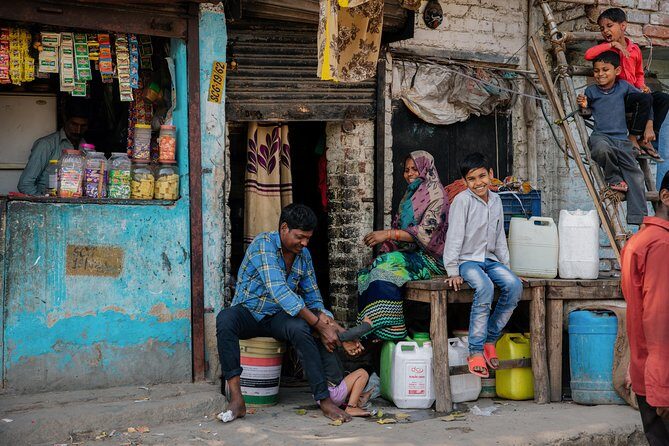
Stop 3 returns you to Pandav Nagar for about 25 minutes at the educational center. This part is key because it’s the clearest bridge between your curiosity and real-world support.
The center visit is described as a place where educational and vocational centers operate. That’s not a vague “aid project” stop. It’s a direct look at training and learning—plus it’s where your tour contributes meaningfully. The tour information also states that the majority of proceeds—eighty percent—benefit a local non-profit organization. So you’re not just walking past good intentions; your ticket funds a specific local mission.
One more detail I like: the tour design doesn’t pretend education fixes everything overnight. Instead, it shows a longer-term approach. That makes the experience feel more balanced. You get the reality on the ground, then you see a concrete attempt to improve futures.





What’s included (and why it affects the mood)
The tour includes quite a bit for the price, but what stands out is how it shapes the atmosphere:
- A local guide from the same area
- Visits to the center, slum areas, fruit market, temple, and local homes
- Cold drinks and tea options (black tea or milk tea)
Those drinks matter more than they sound. A cold drink or tea break gives the tour a natural pause. It also creates space for conversation that doesn’t feel like an interview. This is one of the things that tends to earn the strongest reactions—when the experience becomes relational, not transactional.
Also, since hotel pick-up/drop isn’t included, you should plan to reach the meeting point yourself (more on that below). That independence is normal for a neighborhood walk, and it helps keep the tour focused on the on-the-ground time.
Small-group logistics: what to expect with a max of 9
This is capped at a maximum of 9 travelers, which is a sweet spot for a walk like this. With fewer people, your guide can adjust the pace, explain with more patience, and keep the group together. You’re also more likely to feel like part of the conversation instead of an audience member.
The meeting point is:
Main Patel Rd, Block B, Baljit Nagar, Shadipur, New Delhi, Delhi 110008, India
The tour ends back at the meeting point.
You’ll start and finish near the same location, so it’s less complicated than tours that scatter you across the city. Plus, it’s described as near public transportation, so you’re not stuck relying on taxis.
One small warning based on the tour feedback you’ve been given: timing can be imperfect. In one case, a guide arrival ran late and the start felt disorganized. That’s not something I’d panic about, but I would treat it as a reason to keep your schedule flexible that day.
Guide impact: why names like Sunny and Abhishek matter
In guides like this, the person makes the experience. The information you have includes examples of guides being called out specifically—Sunny and Abhishek. One review noted Sunny stepping in at short notice after some administrative confusion, while still keeping the tour thoughtful and safe-feeling. Another praised a guide (Abhishek) for showing a socio/economic lens rather than treating the stop as fashion-worthy trend sightseeing.
That theme is consistent with what makes these tours valuable: you want local interpretation, not generic facts. A guide can help you understand what you’re seeing and what questions are worth asking. If you care about respectful access—learning without turning people into props—that guide-led approach is the difference between an uncomfortable “tour” and a meaningful experience.
The price: $23.47 is the deal if your goal is human contact
At $23.47 per person for roughly 2 to 3 hours, the cost is lower than many Delhi experiences that focus on landmarks. The value here isn’t fancy gear. It’s time with a local guide and access to specific neighborhood spaces that are usually off most visitor routes.
The biggest value driver is that eighty percent of proceeds benefits a local non-profit. That means part of what you pay ties to community projects and ongoing support. You’re also included in the tour’s practical elements—tea or cold drinks and a center visit—so you’re not paying extra to “unlock” basic parts of the experience.
Is it perfect value? The answer depends on what you want. If you want polished, controlled scenery and minimal street contact, this won’t be your best use of money. If you want to understand daily life and support local efforts through a guided visit, it’s priced like a solid bargain.
Practical tips for a respectful slum walking tour
You’ll get the most from this tour by coming prepared for how neighborhood walks feel.
Wear:
- Comfortable shoes for walking near railway areas and through tight neighborhood spaces
Bring:
- A light layer if weather shifts during the walk
Plan:
- A calm mindset. This isn’t a “check photos and go” activity.
Also, since the tour requires good weather, check conditions before you leave your hotel or wherever you’re starting your day. If the tour is canceled because of poor weather, you’re offered another date or a full refund.
Finally, remember the rules of respect that should apply anywhere: ask before filming, keep your voice calm, and let your guide set the tone. You’re walking through people’s lives.
Should you book this Delhi slum walking tour?
I think you should book if you:
- Want an on-the-ground look at neighborhood life in West Delhi through Sangam Colony and Pandav Nagar
- Prefer a small-group format (this one keeps it under 9)
- Care about learning the social and economic context, not just taking pictures
- Appreciate a tour that connects the walk to a real local education and vocational center
I’d skip it if you:
- Want a fully polished, controlled tourist experience
- Can’t handle uneven walking routes and the reality of street-level travel
- Need everything to start exactly on time with no flexibility
If your goal is thoughtful learning and direct community support, this tour hits the right balance. The best version of it feels safe, guided, and genuinely human—especially when you take the time to sit for tea or a cold drink and listen.
FAQ
How long is the Small-Group Delhi Slum Walking Tour?
It runs about 2 to 3 hours.
How much does the tour cost?
The price is $23.47 per person.
Where is the meeting point?
Meet at Main Patel Rd, Block B, Baljit Nagar, Shadipur, New Delhi, Delhi 110008, India.
What areas does the tour cover?
You’ll visit Pandav Nagar and Sangam Colony in West Delhi, including parts on both sides of the railway track.
What stops are included in the itinerary?
The tour includes a visit to Pandav Nagar, a walk through Sangam Colony, and a visit to the educational and vocational training center in Pandav Nagar.
What is included in the tour price?
It includes visits to the center, slums, fruit market, temple, and local homes, a local guide from the area, and cold drinks/black tea/milk tea.
Is there a tea break with a local family?
An optional tea break with a local family is part of the experience.
How big is the group?
The maximum group size is 9 travelers.
Is hotel pick-up or drop-off included?
No, hotel pick/drop is not included.
What if the weather is bad?
The tour requires good weather. If it’s canceled due to poor weather, you’ll be offered a different date or a full refund.