REVIEW · MUMBAI
Private Mumbai Sightseeing Tour
Book on Viator →Operated by Mystical Mumbai · Bookable on Viator
Mumbai can feel chaotic fast. This half-day tour keeps it human. You get a private guide and air-conditioned transport, plus a flexible route that covers big landmarks without turning your day into a stressful checklist. I especially liked how the guide connects Mumbai’s British-era landmarks to Gandhi’s legacy, and I also liked the practical pacing that squeezes a lot into about 4–5 hours. One thing to consider: several stops are brief, so you may not get time for deeper entry into major interiors like Chhatrapati Shivaji Terminus.
Pickup is built in, so you’re not hunting for a meeting point in a city that never stops moving. Hotel, port, or railway station pickup and drop-off helps a lot if you’re on a cruise or arriving by train. You’ll also get bottled water, and the tour uses a mobile ticket, which is handy when you’re bouncing between places quickly.
If you want one afternoon that gives you a strong first look at southern Mumbai’s history and daily life, this is a solid fit. Wear comfortable loose clothing and plan for short walks and photo stops. If your idea of a “tour” means long museum hours and zero drive time, you’ll likely want to add time on your own.
In This Review
- Key Points to Know Before You Go
- Private, Air-Conditioned Mumbai Hits: What the Half-Day Actually Delivers
- Banganga Tank and Walkeshwar Temple Area: A Calm Start in Malabar Hill
- Gateway of India and the Taj Mahal Palace: Colonial Splendor Meets Today’s Waterfront
- Haji Ali and a Jain Temple Stop: Where Religion Shapes the City’s Rhythm
- Mani Bhavan Gandhi Museum: Gandhi’s Mumbai Years in One Focused Stop
- Chhatrapati Shivaji Terminus: UNESCO Glory with Real-Time City Energy
- Rajabai Clock Tower and the Victorian-Art Deco Ensemble Connection
- Marine Drive, Kamala Nehru Park, and Bombay High Court: Views Between Big Stops
- Dhobi Ghat: The Day-to-Day Mumbai Moment You’ll Remember
- Modern Art and Heritage Libraries: National Gallery of Modern Art and David Sassoon Library
- Taj Mahal Palace Area Finish: Big Landmark, Quick Wrap-Up
- Price and Value: Why $90 Can Make Sense for a Half-Day Private Tour
- What to Watch For: Bus Comfort, Hearing Your Guide, and Tight Timing
- Who This Tour Suits Best (and Who Should Skip It)
- Should You Book This Private Mumbai Sightseeing Tour?
- FAQ
- How long is the Private Mumbai Sightseeing Tour?
- Does the tour include pickup and drop-off?
- Is this tour private?
- What’s included in the price?
- Are admission tickets included?
- What if I need to cancel?
Key Points to Know Before You Go
- Private guide for quick questions: You can steer the route if you care more about religion, politics, or street-level Mumbai.
- Air-conditioned transport with transfers: Pickup and drop-off from your hotel, port, or station saves energy.
- UNESCO stops in one sweep: Chhatrapati Shivaji Terminus and the Victorian-era ensemble components are on the route.
- Real-world views, not just monuments: Dhobi Ghat shows Mumbai’s everyday work life up close.
- Admission math is mostly easy: Mani Bhavan Gandhi Museum admission is included; many other listed stops are free.
- Timing is tight: You’ll see a lot, but expect “look and move” more than “stay and linger.”
Private, Air-Conditioned Mumbai Hits: What the Half-Day Actually Delivers
This tour is designed for people who want structure without wasting hours. You start after pickup from your hotel, port, or railway station, then ride around in an air-conditioned vehicle with transfers handled. Bottled water is included, which matters in Mumbai when the day shifts from bright to sticky.
The tour is also private, meaning only your group goes on the route. That makes it easier to ask for small adjustments—like spending an extra few minutes at a viewpoint—without worrying about holding up strangers.
What makes it feel different from a basic “drive and point” day is the guide’s role as a professional art historian. You’re not just shown buildings. You’re given the story behind them: British rule, royal-era commemorations, Gandhi’s Mumbai years, and the layered religious landscape. In at least one well-rated experience, a guide named Raj was praised for keeping the day clear and engaging, which is exactly what you want when you’re moving fast.
You can also read our reviews of more private tours in Mumbai



Banganga Tank and Walkeshwar Temple Area: A Calm Start in Malabar Hill
You begin at Banganga, an ancient tank connected to the Walkeshwar temple complex in Malabar Hill. It’s a good “warm-up” stop because it’s not all grand monuments and crowds. You get a sense of Mumbai’s older spiritual and civic roots before the day turns more outward-facing.
Time here is about 20 minutes, and admission is free. That short window works well because you can take a few photos, look around the tank area, and then still have energy for the heavier hitters later.
Practical tip: this kind of start is ideal if you’re arriving on a cruise day. It helps you get your bearings early—less frantic, more grounded.
Gateway of India and the Taj Mahal Palace: Colonial Splendor Meets Today’s Waterfront
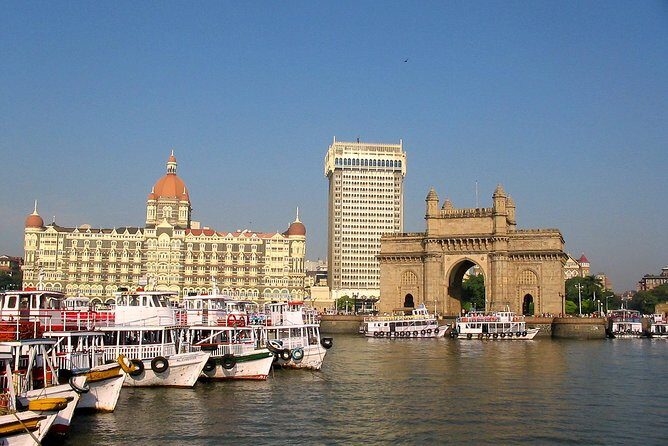
Next comes the Gateway of India, the arch monument built to commemorate King-Emperor George V’s 1911 visit (with Queen-Empress Mary). This is one of those places where the building explains the era without needing a lecture.
You’ll also get a view of the Taj Mahal Palace Hotel nearby—opened in 1903 and still a major landmark right by the waterfront. The point of stopping here isn’t to daydream about postcards. It’s to see how Mumbai’s colonial-era presence still shapes the way the city frames its public spaces.
Time is about 20 minutes and admission is free. If you’ve only got a half day, that’s the right length: enough to feel the scale, not enough to lose the rest of your day in traffic and waiting.
Haji Ali and a Jain Temple Stop: Where Religion Shapes the City’s Rhythm
After the waterfront, the route moves into religious stops, including Haji Ali. This is a venerated Muslim tomb where people come from across India to pay respects. Seeing it as part of your tour helps you understand that Mumbai’s identity isn’t only built on empires and film sets—it’s also built on places of worship that keep drawing pilgrims.
You also stop at a Jain temple, known for intricate stone carvings and a dome painted with zodiac designs. That kind of detail is hard to appreciate when you’re just speeding by. With a guide, you’ll know what you’re looking at and why it matters.
These stops are shorter in the schedule (roughly 15 minutes for the Jain temple), so don’t expect a long sit-down moment. Instead, use it as a chance to respect the setting, observe quietly, and get a better sense of Mumbai’s layered culture.
Mani Bhavan Gandhi Museum: Gandhi’s Mumbai Years in One Focused Stop
Then you hit Mani Bhavan Gandhi Museum, Gandhi’s former residence, Mani Bhavan. Gandhi used it as his Mumbai headquarters for about 17 years, from 1917 to 1934. That timeline gives the museum a strong purpose: it’s not random artifacts, it’s place-based context.
Admission here is listed as included, and you’ll have about 25 minutes. That’s a very reasonable window for what the stop is trying to do. You’ll leave with a clearer picture of Gandhi’s presence in Mumbai, which helps the rest of the day make sense.
If you like history that connects to real lives, this museum stop is often the one that makes the city story feel more personal—because it moves from architecture and rule to people and choices.



Chhatrapati Shivaji Terminus: UNESCO Glory with Real-Time City Energy
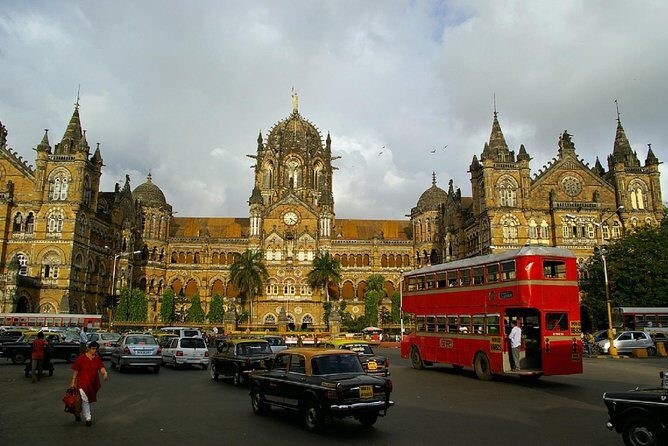
Chhatrapati Shivaji Terminus is a UNESCO World Heritage site, and it’s a big deal for good reason. You’ll spend about 25 minutes here. Even if you’re not going deep inside every corner, the station itself communicates power and ambition through design and scale.
This is also the kind of place Mumbai has turned into a living set. It’s been portrayed in many films over the years, and the station’s identity as transportation infrastructure and cultural landmark overlap all day long.
A key consideration: with only about 25 minutes, you might mainly view it rather than explore every interior section. One person wished they could have gone inside more. If going deeper matters to you, tell your guide early. In a private setting, your request can often shape how that time gets used.
Rajabai Clock Tower and the Victorian-Art Deco Ensemble Connection
After the station, you’ll see Rajabai Clock Tower. It’s 85 meters high and part of the Victorian and Art Deco Ensemble of Mumbai, which was added to the World Heritage list in 2018. That date matters because it signals how recent this recognition is—Mumbai isn’t just old-world charm; it’s also modern heritage thinking.
Time here is short (about 10 minutes) and admission is free. Treat it like a focused “look and learn.” Get your photos, notice the architectural style, and then move on—because your day keeps rolling.
Marine Drive, Kamala Nehru Park, and Bombay High Court: Views Between Big Stops
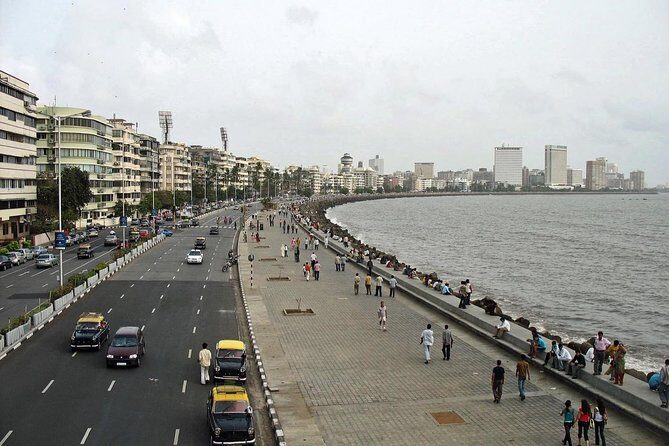
You’ll drive past Marine Drive, also known as the Queens Necklace. Even from the car, it’s a recognizable sweep of coastline and urban linework. It’s a good reset after the station: less sacred, more skyline, and it helps you picture how Mumbai performs day and night.
Kamala Nehru Park is next, about 25 minutes with free admission. It’s been a favorite for decades, and it has a distinctive feature: a boot-shaped structure that people notice right away. This stop also gives you a better look at the skyline from a more open vantage point.
You’ll also pass by Bombay High Court, one of India’s oldest high courts. Here, you’re mostly getting the exterior context—still worth seeing because it shows how the colonial-era and post-colonial legal systems sit in the same urban fabric.
Dhobi Ghat: The Day-to-Day Mumbai Moment You’ll Remember
Dhobi Ghat is one of those places that can’t be faked. It’s the world’s largest outdoor laundry, and you’ll see row upon row of colorful clothing hung to dry in the sun. The visual impact is immediate, and the meaning is practical: Mumbai is working, living, producing—right in the open.
This stop is about 20 minutes with free admission. It’s short, but enough time to understand the scale and take in what’s going on around you. If you like street-level culture and everyday routines, this is the stop that often sticks after the photos fade.
Quick tip: aim to photograph respectfully. Stay mindful of people working, and don’t block pathways.
Modern Art and Heritage Libraries: National Gallery of Modern Art and David Sassoon Library
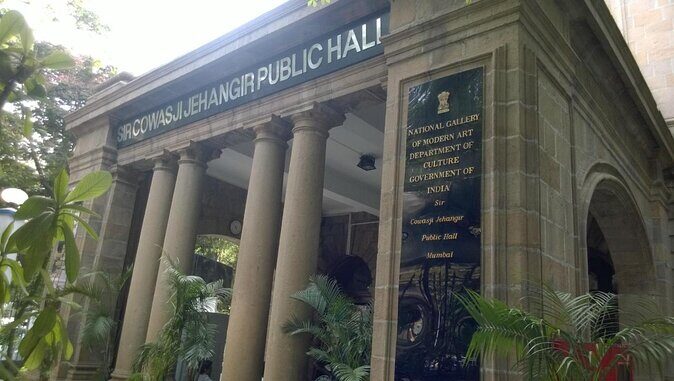
The route also includes stops that point you toward Mumbai’s art and literary culture, including the National Gallery of Modern Art, Mumbai. It opened to the public in 1996 and hosts exhibitions and art collections. You’ll also see the David Sassoon Library, described as a heritage structure tied to Albert Sassoon’s idea of placing a library in the city center.
These are included as part of the day, but the schedule suggests they’re not long sit-down visits. Treat them as “proof” stops: you’ll get a sense of where Mumbai’s creative institutions are, even if you don’t go fully deep on this particular afternoon.
If you want more time with art exhibits, plan an add-on later. In a half-day tour, these stops help you decide what’s worth your attention on a second visit.
Taj Mahal Palace Area Finish: Big Landmark, Quick Wrap-Up
You’ll see the Taj Mahal Palace Hotel area again as part of the tour’s closing arc, with time listed around 10 minutes for this viewpoint. It makes a nice full-circle feeling—starting near the Gateway, seeing the Taj’s presence up close, then returning to the same neighborhood for your last photos before heading back.
The tour ends back at your hotel.
Price and Value: Why $90 Can Make Sense for a Half-Day Private Tour
At $90 per person, the value depends on how you compare it to alternatives. What you’re paying for isn’t just a driver. You’re paying for a professional art historian guide, air-conditioned transport, hotel/port/station transfers, and bottled water.
If you’re traveling as a couple or small family group, the private format can feel more efficient than separate taxis plus museum planning plus navigation. You also get a mobile ticket, which reduces admin friction when you’re juggling multiple places.
Group discounts are mentioned too, which can make it even better if you’re flexible and can share the tour arrangement with others. If your priority is privacy and you’re traveling with just your own group, it’s still a fair price for a structured half-day with multiple landmarks spread across southern Mumbai.
What to Watch For: Bus Comfort, Hearing Your Guide, and Tight Timing
A private tour is great, but it’s still a vehicle ride in a city. One real-world caution: if the A/C is loud or blowing directly at your seat, you can miss parts of what your guide is explaining. If you’re sensitive to noise, pick a seat where the airflow isn’t blasting toward your head, and don’t be shy about asking the driver to adjust vents if it’s excessive.
Another consideration: because the schedule is packed, your experience depends on how your guide manages time. Some people wished they could go inside more areas at Chhatrapati Shivaji Terminus. If that matters, ask early in the day what’s possible within your time window.
Finally, one traveler reported being contacted before the tour and asked to switch from private to shared. That’s not something you should assume will happen, but it is a reminder to confirm what you’re booked for and keep an eye on any pre-tour messages.
Who This Tour Suits Best (and Who Should Skip It)
This is a strong choice if you:
- Want a half-day structure and don’t want to plan routes through southern Mumbai yourself
- Care about history tied to places you can see, from British-era landmarks to Gandhi’s Mumbai years
- Like a mix of major sights and real-city routines like Dhobi Ghat
- Need pickup and drop-off because you’re arriving by cruise or train
You might want to skip or modify it if you:
- Want long museum time and deep entry into interior spaces at every stop
- Prefer food included in the price (meals and drinks are not included)
- Have very specific accessibility needs not described in the tour details
Should You Book This Private Mumbai Sightseeing Tour?
Yes, if your goal is a high-value first pass through southern Mumbai in one afternoon. The combination of guided context, air-conditioned transfers, and UNESCO-level stops makes the day feel efficient without becoming superficial. And if you’re especially interested in Gandhi-era history and the way religion shows up in everyday life, Mani Bhavan and the religious stops give you strong anchors.
Book it with two expectations: you’ll move fast, and some stops are likely more about viewing than deep exploration. If you want more inside time at Chhatrapati Shivaji Terminus or you want to trade one quick stop for something else, tell your guide early. That flexibility is part of the point.
If you’re trying to fit Mumbai into a short trip, this is one of the better ways to get your bearings fast—without turning the day into a stressful scavenger hunt.
FAQ
How long is the Private Mumbai Sightseeing Tour?
The tour lasts about 4 to 5 hours.
Does the tour include pickup and drop-off?
Yes. You’ll get hotel, port, or railway station pickup and drop-off.
Is this tour private?
Yes. It’s private, and only your group participates.
What’s included in the price?
Included are a professional art historian guide, hotel/port pickup and drop-off, an air-conditioned vehicle, bottled water, and fuel surcharge.
Are admission tickets included?
Admission is included for the Mani Bhavan Gandhi Museum. The rest of the listed stops are marked as free in the tour details.
What if I need to cancel?
You can cancel for a full refund up to 24 hours before the experience’s start time.