REVIEW · NEW DELHI
Private & Group 5 Days Golden Tringle Tour by Train or Car – All Inclusive
Book on Viator →Operated by Tour4Fun · Bookable on Viator
A first taste of India starts with a smooth pickup in Delhi. This tour strings together major UNESCO sites in Delhi and Agra, plus the sunrise Taj Mahal experience, with car-or-train travel to keep the logistics from eating your time. Two things I like a lot: the variety (big monuments plus real-life markets) and the smart timing (sunset viewpoint, then sunrise later). One thing to consider: you’re moving fast, so expect long days and early starts, especially for the Taj timing.
The best part is how the trip is built to reduce stress. You get planned stops across Delhi, Agra, and Jaipur, and the route includes breaks like a masala tea stop on the way to Agra. If you pick the car option, you’ll be in an air-conditioned vehicle; if you pick trains, you still get coordination so you’re not stuck figuring out platforms on your own.
In This Review
- Key highlights that make this Golden Triangle tour tick
- Arriving in Delhi at IGI T3: pickup that sets the pace
- Qutub Minar to Lotus Temple: where the day gets visually dramatic
- India Gate to Bangla Sahib: don’t skip the contrast
- Day 2 travel to Agra: car or train, both with a plan
- The Baby Taj and Agra Fort: strong stops before the main event
- Taj Mahal sunrise: the timing you came for
- Abhaneri on the way to Jaipur: a stepwell detour worth it
- Amber Fort to Hawa Mahal: Jaipur in one packed but logical route
- Old Delhi on Day 5: Gandhi memorial to spice-market rooftop views
- Price and value: what $198.72 covers (and what to double-check)
- Guides and drivers make it feel easier: Gajendra and Pappu in the mix
- Room sharing and pacing: the two real-life details you’ll feel
- Who should book this Golden Triangle train-or-car tour
- Should you book this tour? My straight answer
- FAQ
- What cities are included in this Golden Triangle tour?
- Does the tour include pickup from the airport?
- Is the Taj Mahal sunrise included?
- How do you travel between Delhi, Agra, and Jaipur?
- Are entrance fees included?
- Is breakfast included?
- How many nights of accommodation are included?
- What is the maximum group size?
- What does the Old Delhi portion include on the final day?
Key highlights that make this Golden Triangle tour tick
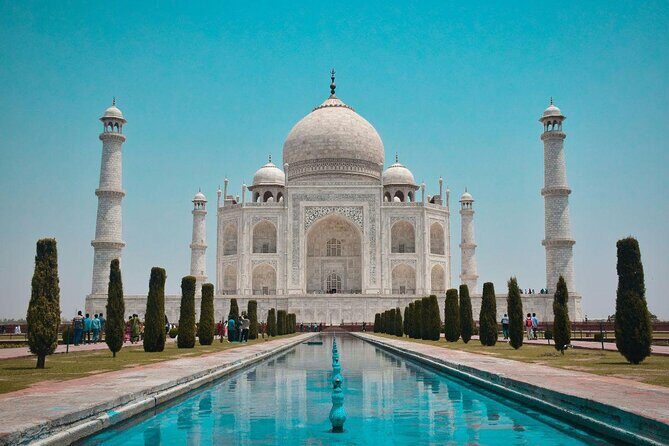
- Sunrise Taj Mahal: a headliner moment without waiting around all morning with everyone else
- Delhi’s top hits in one day: Qutub Minar, Lotus Temple, India Gate, Rashtrapati Bhavan, plus Bangla Sahib
- Agra warm-up sites: Itmad-ud-Daula (Baby Taj) and Agra Fort before you go big on the Taj
- Jaipur icons with variety: Amber Fort, Jal Mahal, Jantar Mantar, City Palace, and Hawa Mahal
- Old Delhi finale: Chandni Chowk rickshaw ride and Khari Baoli spice-market rooftop views
Arriving in Delhi at IGI T3: pickup that sets the pace
Day 1 starts the moment you land at IGI Airport Terminal-3. The tour includes meet-and-greet and a transfer to your hotel. That matters more than it sounds. Delhi airport can be a maze when you’re jet-lagged, and you don’t want your first afternoon spent on “where do we go now?” stress.
You then roll straight into Delhi’s monument zone. The order is a good one: you begin with Qutub Minar while the day is still fresh, then you shift from grand stone monuments to calmer religious and civic landmarks. It’s not random. It helps you avoid the fatigue that hits when you stack too many similar stops back-to-back.
If you’re choosing this tour for convenience, this is where it actually shows up. You’re not piecing together half-day plans. You’re just following a route that already makes sense.
You can also read our reviews of more private tours in New Delhi


Qutub Minar to Lotus Temple: where the day gets visually dramatic
Qutub Minar is the “wow” opener, with that famous tall brick minaret and the overall Qutb complex feel. Even if you only have an hour, you’ll get the scale and symmetry that make this site famous. The main drawback is simple: Delhi sun can be intense, so wear something light and keep water handy.
Next comes Lotus Temple, a Bahá’í House of Worship known for its flower-like shape. This stop is useful because it gives your eyes a break from the heavier historical stone vibe. It also gives you a different kind of architecture—one that feels calm rather than fortress-like.
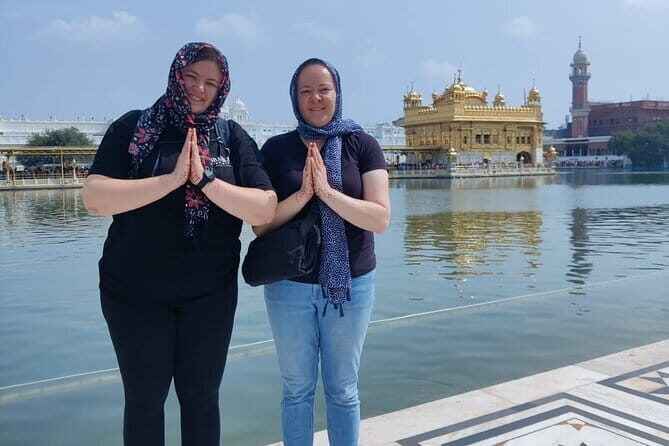
After that, you transition to a set of landmarks that show Delhi’s political and public face. India Gate is a war memorial on Rajpath, followed by Rashtrapati Bhavan, the official residence of the President of India. Then you end with Gurudwara Bangla Sahib, where the central feature for many people is the complex’s holy water area (the Sarovar). It’s a nice balance: big national symbols, then a place of worship that feels more human-scale.
India Gate to Bangla Sahib: don’t skip the contrast
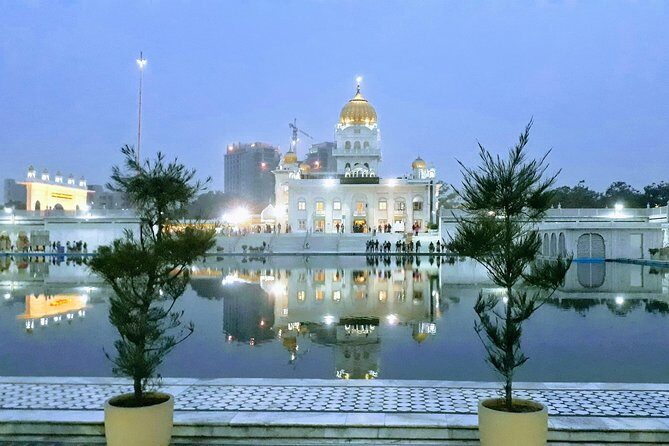
The middle of Day 1 has a theme: you see Delhi as both empire-era and modern civic capital. India Gate anchors the city’s ceremonial axis and gives you context for how public memory sits in the urban landscape. Rashtrapati Bhavan adds that “official capital” feeling, with a huge residence built as part of the grand axis design.
Then Bangla Sahib shifts your mood. Gurdwaras are usually lively in a quiet way—steady, grounded, and very normal for local life. If you’re someone who worries that India tours feel too tourist-bubble, this is one of the spots that keeps you connected to day-to-day culture.
The practical tip here is to dress respectfully and keep your pace easy. Delhi religious sites are not a sprint. You’ll enjoy them more if you slow down for a few photos and a little people-watching.
Day 2 travel to Agra: car or train, both with a plan

Day 2 is your transfer day from Delhi to Agra. The tour offers car or train, with train tickets depending on availability. Either way, the goal is the same: you get to Agra and drop to your hotel without wrestling transport details.
On the car days, you’ll likely stop at Shiva Dhaba on the Yamuna Expressway for a masala tea break. That sounds small, but it’s a smart rhythm. Long rides can drag, and a tea stop resets your body before sightseeing.
Once you arrive, the schedule keeps you moving through Agra’s classic Mughal highlights. You start with Itmad-ud-Daula (often called the Baby Taj). It’s a perfect warm-up before the big finale. Instead of rushing into the most famous monument, you learn the “smaller masterpiece” side first.
The Baby Taj and Agra Fort: strong stops before the main event
Itmad-ud-Daula is often described as a jewel box, and you feel why when you’re up close. You’ll get Mughal design details that are easier to process than the sheer scale of the Taj itself. It’s also a calmer stop if you’re not trying to fight crowds.
Agra Fort follows. This is where history starts to feel strategic—fortification, power, and the way rulers held the city. You get about an hour here, which is enough for highlights without turning it into a classroom lecture. Still, it helps to look at the fort’s layout and imagine how court life would have moved through spaces like this.
Then comes the Taj Mahal sunset viewpoint across the river, described as one of the best locations to see the Taj away from heavy crowd energy. That viewpoint is a thoughtful bridge between Day 2 and the sunrise on Day 3. You get the shape and glow of the Taj in softer light, and you don’t burn your full energy on the first Taj encounter.
A few more New Delhi tours and experiences worth a look




Taj Mahal sunrise: the timing you came for
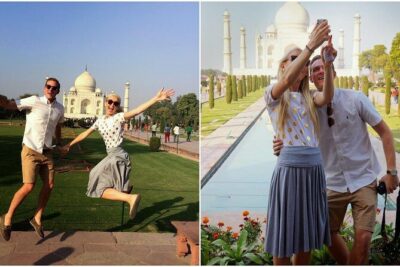
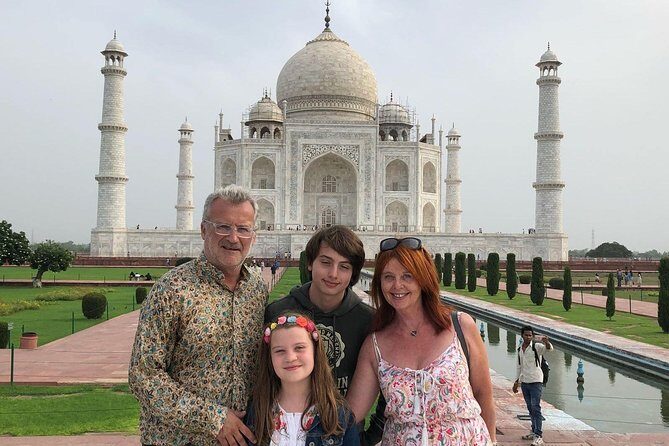
Day 3 begins with a sunrise Taj Mahal visit. This is the headliner moment: the ivory-white marble mausoleum built by Shah Jahan for Mumtaz Mahal, located on the south bank of the Yamuna. Sunrise is the difference between seeing a famous building and feeling the building’s mood. The light is gentler. The atmosphere tends to feel more stripped down.
Also, there’s a built-in “recovery” piece. After the Taj visit, you go back to your hotel for breakfast. That matters because Taj sunrise can be early and physical. If you’re planning your trip around this moment, you’ll appreciate that the schedule doesn’t end with a hard wall of more walking right after.
Then you head toward Jaipur by car or train. The day keeps its momentum, but it stays structured.
Abhaneri on the way to Jaipur: a stepwell detour worth it

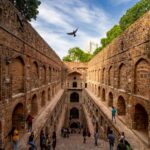
Before Jaipur, the tour includes a stop at Abhaneri, specifically for Chand Baori (the stepwell) and Harshat Mata Temple. This is one of my favorite kinds of additions: not just “another big monument,” but something that rewards your curiosity.
Chand Baori is famous for its dramatic, symmetrical stepped design. Even if you only have about an hour, it gives you shapes and patterns you won’t forget. It’s also a great change of pace from palace-and-museum sightseeing.
Then you drive to Jaipur and drop at your hotel. Jaipur feels different from Delhi and Agra. The light can change quickly too, so you’ll likely start noticing colors in stone and painted walls.
Amber Fort to Hawa Mahal: Jaipur in one packed but logical route
Day 4 is your Jaipur highlight day. It starts at Panna Meena ka Kund, a historic step well and rainwater catchment known for symmetrical stairways. If you’re photographing, this stop is a cheat code. Geometry makes good photos easier.
Next is Amber Palace (Amer Fort). It’s located high on a hill near Jaipur, and it’s a principal tourist attraction for a reason. You’ll get about two hours here, which is the right balance for a fort: enough time to wander courtyards and look for details, without feeling trapped in a never-ending complex.
Then you get a quick stop at Jal Mahal, a palace in the middle of Man Sagar Lake. The palace itself is short on time here, but it’s a great visual breather. It also breaks the fort-and-architectural rhythm. This is one of those “look, breathe, move on” moments that helps the rest of the day feel less exhausting.
Jantar Mantar comes next. The site has nineteen astronomical instruments built by Sawai Jai Singh II, completed in 1734. You’ll likely appreciate it more if you slow down and read how the instruments work rather than just speed through for photos.
Then City Palace gets an hour. This is the kind of stop that helps you understand why Jaipur exists as a planned capital. Finally, Hawa Mahal (Palace of Wind) wraps the day. It’s often seen from the street, but the tour gives you time to appreciate its red and pink sandstone facade and the way it relates to the City Palace and women’s chambers.
A quick reality check: Day 4 is a lot. So if you’re the type who loves deep museum time, you might feel the pace. If you prefer to see the big icons in good order, this day does that well.
Old Delhi on Day 5: Gandhi memorial to spice-market rooftop views
Day 5 flips from Jaipur back to Delhi, then goes straight into Old Delhi. You travel by car or train and stop for a tea break on the way. Then you hit Raj Ghat, a memorial dedicated to Mahatma Gandhi.
Raj Ghat is quick, but it’s a good tone-setter before you enter Old Delhi’s market maze. It’s not just a stop; it’s a mental reset. After that you visit Jama Masjid, one of India’s largest mosques.
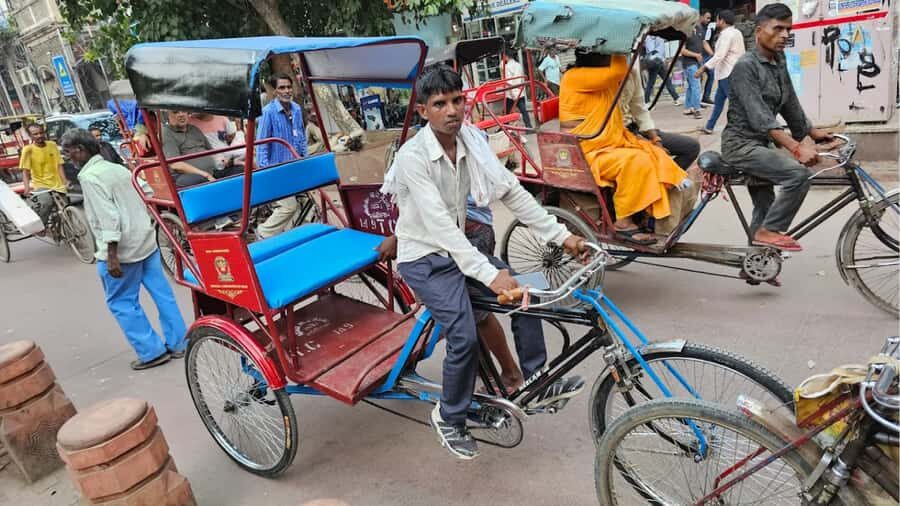
Then you shift into the fun part: Chandni Chowk. The tour includes a walking tour plus a rickshaw ride in narrow lanes. This is where you get a feel for Old Delhi’s density, trade, and everyday motion. If you don’t love crowds, you can still enjoy it by moving with the route and keeping your head up for the small scenes—signs, spices, and street food aromas.
Finally, Khari Baoli spice market delivers the “show me the senses” finish. You’ll visit the spice market area, see an old haveli, and go up to a rooftop for a birds-eye view. The tour even includes a cup of masala tea on the rooftop, which is a great way to end a visually intense day with a small pause.
Price and value: what $198.72 covers (and what to double-check)
At $198.72 per person, this tour is priced like you’re buying planning, coordination, and major-site access—especially since it runs 5 days and 4 nights with multiple big attractions across three cities.
The value gets better if your selected option includes:
- Breakfast (4)
- entrance charges (it says entrance charges are included if you choose that option)
- accommodation (4 nights) if you choose the accommodation option
One detail to take seriously: the accommodation tier can vary by option. The overview mentions 5-star luxury accommodation, but the additional info says accommodation is generally provided on a twin-sharing basis, and the alternative default mentions 3 or 4 star hotels or homestays depending on the option you choose. So before you book, match what’s promised (luxury stays) to what’s actually selected.
Also note the tour is group-friendly with discounts and a maximum of 100 travelers. That helps keep it social without turning it into a chaotic free-for-all.
Guides and drivers make it feel easier: Gajendra and Pappu in the mix
The tour’s success isn’t only about sights. It’s about how you get there. In the feedback, Gajendra is repeatedly praised for making the trip smooth and informative, and Pappu stands out as a careful, friendly driver who helps with timing and even practical stuff like getting you on the right train platform.
If you’re new to India and the idea of traffic feels intimidating, this is one of the strongest selling points. You’re not “brave-solo” your way through Delhi, Agra, and Jaipur. You have someone handling the flow so you can focus on the places.
And yes, this tour is the kind that can work even during tough weather, because you’re not spending days trapped between bad plans—you’re moving on schedule in an air-conditioned vehicle when you choose car transport.
Room sharing and pacing: the two real-life details you’ll feel
Most rooms are twin-sharing by default, and if there are three people in a booking, rooms become triple-sharing by default. That’s normal for group travel, but it can affect comfort if you’re a light sleeper or you want extra personal space. If you prefer two rooms for three people, it may require an additional charge.
Pacing is the other thing you’ll notice. This is a Golden Triangle circuit with many major stops packed in. That’s great if you want a checklist-style trip. It can feel tight if you want long, slow wanderings with zero schedule pressure.
If you like to see a lot but still want the trip to feel organized, this is a solid match.
Who should book this Golden Triangle train-or-car tour
This tour fits best if you:
- want Delhi, Agra, and Jaipur in 5 days without planning between cities
- care about the Taj Mahal sunrise and a sunset viewpoint too
- enjoy a mix of monument stops and real markets like Chandni Chowk and Khari Baoli
- appreciate having pickup, transfers, and a guide to reduce everyday confusion
It’s also a good choice if you’re overwhelmed by the mental workload of travel in a big country. Having someone coordinate the route lets you spend your energy looking up at monuments instead of checking maps.
If you prefer totally slow travel, this might feel like too much. But for a first Golden Triangle trip, it’s well built.
Should you book this tour? My straight answer
I’d recommend booking it if your priority is hitting the highlights across three cities with minimal hassle—and especially if you want a structured path to the Taj Mahal at the right time of day.
Before you pull the trigger, do two quick checks:
- Confirm whether your option includes accommodation and entrance charges, since those are “if you choose” items.
- Decide whether you want car or train for transfers, because that changes your daily rhythm.
If you get those aligned, you’ll end up with a classic Golden Triangle circuit that feels organized, memorable, and practical—ending in Old Delhi where the smells and scenes are half the reward.
FAQ
What cities are included in this Golden Triangle tour?
The tour covers New Delhi, Agra, and Jaipur.
Does the tour include pickup from the airport?
Yes. It includes meet-and-greet at IGI Airport Terminal-3 and a transfer to your hotel.
Is the Taj Mahal sunrise included?
Yes. The tour includes a sunrise Taj Mahal visit.
How do you travel between Delhi, Agra, and Jaipur?
You can travel by car or by train, depending on the option and train availability.
Are entrance fees included?
Entrance charges are included if you choose the option that includes entrance charges.
Is breakfast included?
Yes. Breakfast is included for 4 days (4 breakfasts).
How many nights of accommodation are included?
If you choose an accommodation option, it includes 4 night stays.
What is the maximum group size?
The tour has a maximum of 100 travelers.
What does the Old Delhi portion include on the final day?
It includes Raj Ghat, Jama Masjid, a walking tour of Chandni Chowk with a rickshaw ride, and a visit to Khari Baoli spice market with rooftop views and masala tea.