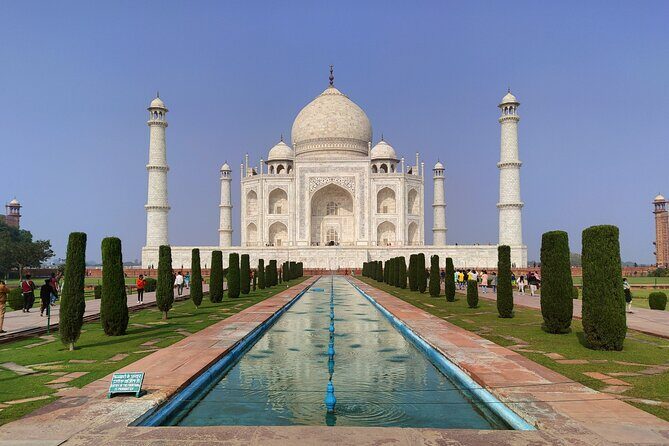
A Golden Triangle tour can be a whirlwind. This one works because it ties together private guiding with a logical route from Delhi to Agra to Jaipur. I like that you get door-to-door pickup and a setup that keeps you moving without doing the map math.
What really makes this package appealing is the mix of iconic sights and the day-by-day flow. You’ll get hands-on time at the big names (Taj Mahal at sunrise, Amber Palace, the Jaipur astronomy park), and you’re not stuck figuring out where to stand or what to skip.
One thing to consider: monument entrance fees aren’t included in the price as listed, and meals (lunch and dinner) aren’t either. Also, the last day is a longer road trip back toward Delhi, so plan your energy accordingly.
In This Review
- Key things you’ll notice on this Golden Triangle route
- A tight 6-day Golden Triangle run with private A/C comfort
- Door-to-door pickup in Delhi: less friction, more sightseeing
- Day 2 in Delhi: Qutub Minar, Lotus Temple, India Gate, Jama Masjid, Chandni Chowk
- Qutub Minar and the Qutub complex
- Lotus Temple: a pause in the middle of chaos
- India Gate and the government buildings nearby
- Jama Masjid and the Chandni Chowk area
- Raj Ghat: a reflective closer
- Day 3: Akshardham, the Yamuna Expressway drive, and a calmer Taj viewpoint
- Arrive in Agra, then a Taj Mahal sunset viewpoint
- Day 4: Sunrise Taj Mahal, Agra Fort, and Chand Baori in Abhaneri
- Why sunrise matters for your experience
- Agra Fort: the Mughal power base
- Chand Baori (Abhaneri): a detour that’s worth your time
- Day 5 in Jaipur: Amber Palace, Jal Mahal photos, City Palace, Jantar Mantar, Hawa Mahal
- Amber Palace: the fort that defines the area
- Jal Mahal: quick, visual, and very photogenic
- City Palace and the Rajput center of rule
- Jantar Mantar: astronomy in stone
- Hawa Mahal: the facade you recognize instantly
- Day 6: Jaipur to Delhi transfer—how to plan for the long return
- What’s included vs. what you’ll budget for
- The guide experience: named people, real responsiveness
- Who this private Golden Triangle tour is best for
- Should you book this 6-day private Golden Triangle tour?
- FAQ
- Are monument entrance fees included?
- Does the tour include hotels and breakfast?
- What about pickup and drop-off?
- Is Taj Mahal visiting included, and how do you get there?
- Is lunch or dinner included?
- Is there free cancellation?
Key things you’ll notice on this Golden Triangle route
- Private, A/C car with local guides across all three cities, so you spend time looking—not negotiating.
- Taj Mahal support details, including a battery bus ride up to the Taj area from the parking lot.
- A sunrise Taj visit plus a quieter sunset viewpoint the day before, which helps avoid the most chaotic timing.
- Multiple Delhi landmarks in one organized day, from Qutub Minar and Lotus Temple to India Gate and Jama Masjid.
- Jaipur highlights in the right order, combining Amber’s fort drama with City Palace, Jantar Mantar, and Hawa Mahal.
- Breakfast included for five days (if your booking includes hotels), plus water and soft drinks during journeys.
A tight 6-day Golden Triangle run with private A/C comfort
The Golden Triangle is popular for a reason: you’re stacking three of India’s most famous cultural centers in one trip. Delhi brings political and Mughal-era weight. Agra brings the most recognizable monument in the world. Jaipur brings Rajasthan’s royal design flair and daily-life color.
This tour is built around that classic arc, but it’s the private part that changes how it feels. When you travel in a group, you often lose time waiting. Here, you’re guided and moved by a driver in a private air-conditioned car, which makes it easier to keep a steady rhythm across long sightseeing days.
The price listed looks especially attractive at $40 per person, but you’ll want to read it as a starting point, not the whole budget. The package structure suggests the value comes from transport, guidance, pickup/drop-off, and (optionally) hotel nights—not from paying every entrance fee and every meal for you.
You can also read our reviews of more private tours in New Delhi



Door-to-door pickup in Delhi: less friction, more sightseeing
Day 1 is simple: you’re picked up from your hotel, airport, railway station, or another Delhi-area location (Delhi, Noida, Gurugram). That matters because Delhi traffic and distances can turn a “first day” into a half-day of transit if you start without a plan.
From there, the tour settles you into Delhi and sets up the next day’s sightseeing circuit. It’s a small thing, but it reduces stress. If you’re arriving with luggage or jet lag, having pickup and a driver lined up helps you get oriented faster.
If you’re booking with hotel options, you’re also dealing with less day-to-day logistics. The tour includes five nights of accommodation (if you select the hotel option) and daily breakfast.
Day 2 in Delhi: Qutub Minar, Lotus Temple, India Gate, Jama Masjid, Chandni Chowk
This is a full Delhi landmark day, and it’s packed in a way that makes sense geographically: you start with the Qutub complex area, shift to southern and central sights, and then head toward Old Delhi for Jama Masjid and Chandni Chowk.
Qutub Minar and the Qutub complex
Qutub Minar is part of a UNESCO-listed complex, and it’s a true “how did they build this” moment. The tower’s height and the surrounding architecture make it feel like a gateway to earlier Delhi. In this itinerary, the Qutub Minar ticket is not included, so you’ll likely pay the entrance fee separately if you want to go inside the sights that require it.
Lotus Temple: a pause in the middle of chaos
The Lotus Temple is a different kind of experience—calm, clean lines, and a sense of quiet even in a busy city. It’s shaped like a lotus flower with white marble petals, and you’re given about an hour here. The Lotus Temple ticket is marked included, which is a nice way to balance the day.
A few more New Delhi tours and experiences worth a look




India Gate and the government buildings nearby
Then you move to India Gate, followed by stops tied to Parliament House, Rashtrapati Bhavan (President’s residence), and quick time for each. These are more about scale, design, and the “you’re standing in the story of modern India” feeling than about long museum time. In the itinerary, India Gate, Parliament House, and Rashtrapati Bhavan tickets are marked included.
Jama Masjid and the Chandni Chowk area
Old Delhi is where the sights get louder and more sensory. Jama Masjid is one of the largest mosques in India, and you’ll also have time near Chandni Chowk’s bazaar area. The itinerary lists Jama Masjid more than once, which likely means repeat stops around the complex area. Either way, the key point is you’ll get time at a major Mughal-era site and then around the shopping lanes nearby.
Practical tip: plan to slow down for this area. You’ll be moving through crowds and narrow lanes, and your time here will feel different from the government-building photos in central Delhi.
Raj Ghat: a reflective closer
The day ends with Raj Ghat, a memorial associated with Mahatma Gandhi. It’s a shorter stop, but it lands well after the day’s mix of empire-era and modern-state landmarks. Raj Ghat is marked with ticket included in the itinerary.
Day 3: Akshardham, the Yamuna Expressway drive, and a calmer Taj viewpoint
Day 3 starts with Swaminarayan Akshardham, a Hindu temple complex and spiritual-cultural campus. It’s given about an hour, and the entrance is marked included. This stop is a good pacing move because it breaks up the Delhi-to-Agra travel with something visually structured and easy to orient around.
Then you head to Agra. The route includes a stretch identified as Yamuna Expressway, and the itinerary suggests a smoother travel segment (it’s marked admission free). When you’re doing long distances in India, expressways make a real difference in how exhausted you feel at the end of the day.
Arrive in Agra, then a Taj Mahal sunset viewpoint
You check in at your Agra hotel and later visit a Taj Mahal sunset viewpoint designed for watching the monument across the river with fewer people around. The time is set at about 30 minutes, and the ticket is marked included.
This is one of the smartest parts of the whole itinerary. You still get Taj Mahal magic, but not the same kind of crunch you’ll face at sunrise. If you’re the type who likes photos without constant jostling, you’ll probably appreciate this “warm-up” day.
Day 4: Sunrise Taj Mahal, Agra Fort, and Chand Baori in Abhaneri
Day 4 is the big one: Taj Mahal at sunrise. The itinerary calls out a UNESCO site visit and about two hours on-site. The Taj Mahal ticket is marked not included, so you’ll want to budget for entrance fees.
Why sunrise matters for your experience
Sunrise isn’t just a bragging right. In practical terms, early light often gives better photos and a calmer atmosphere than later in the day. It also helps you avoid the worst heat and reduces the “everything is moving too fast” feeling that can hit by mid-morning.
And here’s a logistics win: you get a battery bus ride to and from the Taj Mahal parking lot up to the monument area. That cuts down walking and helps you arrive less worn out, especially if you’re starting very early.
Agra Fort: the Mughal power base
After the Taj, you check out your hotel and move to Agra Fort. It’s a key Mughal site and once the main residence of emperors until the capital shifted. The stop is around three hours, and the ticket is marked not included.
Compared to the Taj, Agra Fort gives you a different angle on why rulers cared about this place. The fort doesn’t ask for awe in the same way; it delivers it through scale, structure, and the feeling of a fortress built for power and permanence.
Chand Baori (Abhaneri): a detour that’s worth your time
Then the itinerary includes Chand Baori in Abhaneri, a stepwell. This is not a headline stop for every Golden Triangle itinerary, but it’s memorable. The structure and geometry feel otherworldly, especially when you understand it as a functional design that became iconic.
The itinerary marks this stop as not included for admission, and it’s about one hour. If you like offbeat photo angles and don’t mind stepping away from the three “main” monuments for a moment, this detour can make your trip feel less repetitive.
Finally, you arrive in Jaipur and check in.
Day 5 in Jaipur: Amber Palace, Jal Mahal photos, City Palace, Jantar Mantar, Hawa Mahal
Jaipur is where the trip stops feeling like a checklist and starts feeling like a style. The itinerary focuses on major sights, and the order helps: you start with Amber, then scenic stops and royal-city architecture in central Jaipur.
Amber Palace: the fort that defines the area
You begin with Amber Palace (Amer Fort). It’s about two hours, and the ticket is marked not included. Amber is all about grand scale and craftsmanship, and it’s one of the places where Rajasthan’s royal design language becomes tangible.
If you’re thinking about dress codes and comfort, keep it simple: you’ll be walking around uneven areas, and the better you prepare for that, the more you’ll enjoy the details.
Jal Mahal: quick, visual, and very photogenic
Jal Mahal is next for a short 15-minute photo opportunity. It’s a palace-like structure on Man Sagar Lake, and the ticket is marked included.
This stop is quick by design. It’s there to give you that classic “palace on water” shot without eating your whole day.
City Palace and the Rajput center of rule
Then comes City Palace, with about one hour. The ticket is marked not included. City Palace is where you connect Jaipur’s founding story and royal administration to what you’re seeing today.
Jantar Mantar: astronomy in stone
Jantar Mantar is a UNESCO World Heritage site and is known for its architectural astronomical instruments. It’s about one hour, and the ticket is marked not included.
This stop is great if you want something that feels scientific and artistic at the same time. Instead of only ornate buildings, you’re looking at instruments made to track the sky.
Hawa Mahal: the facade you recognize instantly
The day closes with Hawa Mahal, the Palace of Wind, with a 15-minute stop. The ticket is marked included. Even if you’ve only seen images before, you’ll recognize the honeycomb-like window facade immediately in person.
Practical note: since time is short here, treat it as a viewpoint stop. Get your photos early, then move on before you’re stuck in a slow crowd cycle.
Day 6: Jaipur to Delhi transfer—how to plan for the long return
Day 6 is a drive from Jaipur back to Delhi, taking roughly five hours per the route description, with the drop-off at your Delhi airport or location. The itinerary indicates a longer time block for the day, so expect the day to feel like travel-heavy.
This is where you’ll feel the benefits of the private car. You’re not juggling multiple trains, transfers, or schedules. But you should still pack for the long ride: water is covered during journeys, yet you’ll still want to handle your own snacks if you prefer something specific.
Also, remember you’re checking out the hotel after breakfast, so try to keep your packing simple the night before.
What’s included vs. what you’ll budget for
The value here is mostly in the machine behind the scenes: private transport, daily breakfast (when hotels are included), guides at sightseeing stops, and a few key entry elements.
Included, based on the package notes:
- Private, air-conditioned car for transport
- All sightseeing with private local tour guides
- Pickup and drop-off
- Battery bus ride to and from Taj Mahal parking area
- Bottles of mineral water and soft drinks during journeys
- All taxes and service charges
- Breakfast for the five days (again, tied to hotel option)
Not included:
- Lunch and dinner
- Monument entrance fees (with some items marked as ticket included in the itinerary, but you should still expect there will be paid entrances on at least some stops)
This is why the $40 per person number can be a little misleading if you’re expecting everything baked in. The tour looks best for people who are comfortable handling:
- Your own meal budget in each city
- Any paid monument entries that weren’t marked included
The guide experience: named people, real responsiveness
One of the strongest signals from the feedback data is how the company responds when plans need adjusting. You’ll see mention of customization and smooth coordination even when people were already in Delhi before the start.
Names that come up in the feedback include Mr. Ashish (booking contact) and a driver named Gopal, along with a guide named Atul. That doesn’t guarantee your exact guides will be the same, but it does suggest the operator keeps communication tight and uses specific people for pickup and guiding—not just a generic handoff.
Who this private Golden Triangle tour is best for
I’d steer you toward this tour if you want:
- A first-time India trip that hits the headline cities quickly
- Private guiding rather than a big group shuffle
- A plan that includes both sunrise Taj Mahal and a less chaotic Taj viewing option beforehand
- Comfort upgrades like an A/C car and the battery bus support at Taj
It may be less ideal if you:
- Hate early mornings (sunrise Taj can be demanding)
- Want every meal and entrance fully covered in the upfront price
- Prefer lots of free time for wandering without a schedule
Also note: the tour explicitly says it doesn’t organize elephant or horse ride activities in Jaipur. If you were hoping for that style of activity, you’ll need to look elsewhere.
Should you book this 6-day private Golden Triangle tour?
Book it if you want a structured, private ride through Delhi, Agra, and Jaipur with enough guiding help to make the most of each stop. The sunrise Taj Mahal, the battery bus logistics, and the practical Delhi-to-Agra-to-Jaipur routing are the big reasons I’d feel confident recommending it.
Skip it or think twice if your main goal is an all-inclusive, pay-one-price-and-forget-it package. Since entrance fees and meals aren’t fully included, you’ll be doing some budgeting on top of the tour cost.
If you’re the kind of traveler who likes iconic sights, short photo windows that actually work, and guides who help you avoid unnecessary waiting, this tour fits the bill.
FAQ
Are monument entrance fees included?
The listing says monument entrance fees are not included. Some specific stops are marked with tickets as included, and your guide will help you buy entrance fees so you are not waiting in a ticket line.
Does the tour include hotels and breakfast?
Five nights accommodation and daily breakfast are included only if you book the option that includes hotels. If you book without hotels, you’ll need to arrange lodging separately.
What about pickup and drop-off?
Pickup is offered from your hotel, airport, railway station, or another desired location in Delhi, Noida, or Gurugram. At the end, the tour drops you back at the meeting point in Delhi or at Delhi airport or your location.
Is Taj Mahal visiting included, and how do you get there?
Yes, you visit Taj Mahal at sunrise. The package includes a battery bus ride to and from the Taj Mahal parking lot up to the monument area.
Is lunch or dinner included?
No. Lunch and dinner are not included, though breakfast is included when the hotel option is booked.
Is there free cancellation?
Yes. You can cancel up to 24 hours in advance for a full refund. If you cancel less than 24 hours before the start time, the amount paid is not refunded.