REVIEW · NEW DELHI
Private Golden Triangle Tour 4 nights 5 days (Delhi-Agra-Jaipur)
Book on Viator →Operated by Golden Taj Tours · Bookable on Viator
Five days, three cities, and a lot to see. This private Golden Triangle tour links Delhi, Agra, and Jaipur with a private vehicle and guide, so the big Mughal sights and the everyday street scenes feel connected instead of random.
What I like most is the blend of iconic landmarks and street-level color, especially the Old Delhi rickshaw ride and the Chandni Chowk shopping chaos (in the best way). I also love how guides like Atul, Babloo, Farman, Dharmendra Singh (D.S.), and Noor are praised for turning monuments into stories you can actually picture.
One consideration: the tour price covers guiding and transport, but accommodation, meals, and most entrance fees are not included, so your total budget will depend on what you choose to pay on site.
In This Review
- Key things that make this tour worth your time
- Golden Triangle in 5 Days: What You’re Actually Signing Up For
- Delhi Day: Old Delhi Monuments, Raj Ghat, and Rajpath Icons
- Humayun’s Tomb, Qutub Minar, and the Mughal-to-New-Delhi Contrast
- Old Delhi Market Time at Chandni Chowk: Where the Trip Gets Human
- Agra: Taj Mahal’s Emotional Impact Plus Agra Fort’s Power Story
- Jaipur: Pink City Icons from Hawa Mahal to Amer and Jantar Mantar
- Hawa Mahal (Palace of Wind)
- Jal Mahal on Man Sagar Lake
- Amer Fort
- Jantar Mantar
- The Private-Guide Factor: Why Your Day Can Feel Easy
- Entrances, Tickets, and the Real Cost of the $298.67 Price
- How the Whole Route Flows: From Delhi to Agra to Jaipur to Delhi
- Who Should Book This Private Golden Triangle Tour
- Should You Book This Tour?
- FAQ
- What time does the tour start?
- Is hotel accommodation included?
- Are meals included?
- Does the tour include a guide?
- Is the transportation private and air-conditioned?
- Are entrance fees included for major monuments like the Taj Mahal?
- Does the tour include pickup and drop-off?
- Is the tour shared with other groups?
- What’s the cancellation policy?
Key things that make this tour worth your time
- Private car with AC: less waiting, more control of pacing
- Old Delhi time: Red Fort, Jama Masjid, Raj Ghat, plus Chandni Chowk shopping hours
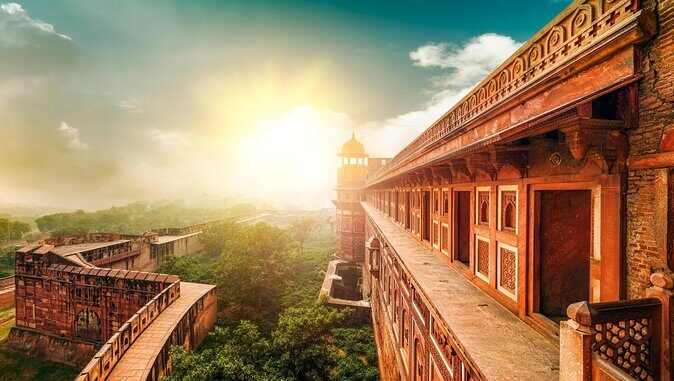
- Taj Mahal + Agra Fort: two major stops on the Yamuna river circuit
- Jaipur highlights in a logical route: Hawa Mahal, Jal Mahal, Amer Fort, Jantar Mantar
- Guides who explain clearly: common praise centers on history, context, and good on-the-ground guidance
- Mobile ticket + bottled water: small but practical touches for long days
Golden Triangle in 5 Days: What You’re Actually Signing Up For
A Golden Triangle trip is basically a fast tour through India’s power centers: empire-era Delhi, imperial Agra, and royal Jaipur. This one is built as a private 5-day circuit, which matters because you’re not squeezed into a loud, rolling schedule with strangers. Your guide and driver shape the flow as you move between sights.
The “private” part is also the main value behind the price. At $298.67 per person, you’re paying for the guide, AC transport, bottled water, local taxes, and the effort of getting you to the right places on time. What you’re not paying for is your hotel and day-to-day meals, so plan to add that piece yourself.
Also note the schedule starts around 9:00 am. That’s good if you like a full day, but it does mean early wake-ups once you’re in Delhi and again when you’re moving between cities.
You can also read our reviews of more private tours in New Delhi


Delhi Day: Old Delhi Monuments, Raj Ghat, and Rajpath Icons
Delhi is where this tour sets the tone. One day can feel like two, because you bounce between Old Delhi’s Mughal-era landmarks and New Delhi’s government-and-monument zone.
In Old Delhi you’ll see the Red Fort and Jama Masjid, plus Raj Ghat. The Red Fort is a historic fortress with special national symbolism, because every year on Independence Day the prime minister raises India’s tricolour flag there. If your guide points out that connection, you’ll better understand why this isn’t just a pretty stop—it’s tied to modern identity.
Jama Masjid is another major anchor: huge, dramatic, and built for scale. Then Raj Ghat adds a quieter, reflective moment that balances the big visuals. After that, you shift toward New Delhi and cover India Gate, Humayun’s Tomb, Qutub Minar, and Lotus Temple.
Lotus Temple deserves your attention for a different reason than the skyline monuments. It’s a Bahá’í House of Worship, dedicated in December 1986, and it’s open to all regardless of religion. Even if you’re not visiting with a faith background, the architecture and calm setting make it a good reset during a packed day.
Two practical notes for Delhi:
- You’ll likely do a lot of walking across different neighborhoods, so wear shoes you can move in comfortably.
- Bring patience for traffic. The route includes major sights across parts of the city, so you’ll want your driver to manage timing rather than you worrying about navigation.
A rickshaw ride in Old Delhi is also part of the experience. That’s the kind of short, memorable sensory moment that makes a Golden Triangle trip feel like more than just photo stops.
Humayun’s Tomb, Qutub Minar, and the Mughal-to-New-Delhi Contrast

Humayun’s Tomb is one of those monuments that rewards slowing down just a bit. The tour includes it for about an hour, which is enough to appreciate the setting and the design choices. It was commissioned by Empress Bega Begum in 1569–70, and designed by Mirak Mirza Ghiyas and Sayyid Muhammad, Persian architects chosen for the job. That fact alone helps you see it as a crafted project, not just an old grave.
Qutub Minar and the Lotus Temple give you two different kinds of “wow” too. Qutub Minar is tied to the older monument landscape of Delhi, while Lotus Temple is modern in date and feel. Putting them on the same day helps you understand how Delhi layers centuries side by side.
Then there’s the Rashtrapati Bhavan reference: it’s the official residence of India’s president, located at the western end of Rajpath. You may not spend tons of time inside here, but the stop helps you map where the ceremonial India sits in the city.
For you, this contrast is the point. Delhi isn’t just one style of history. It’s overlapping eras, and the tour gives you multiple angles in limited time.
Old Delhi Market Time at Chandni Chowk: Where the Trip Gets Human
Chandni Chowk is scheduled as a shopping-focused block of around two hours. This is where you trade monument brain for everyday life. The area is known for markets with spices, dried fruit, silver jewelry, vivid saris, plus narrow side streets with tiny shops selling essential oils, stationery, and traditional sweets.
Even if you don’t plan to shop much, you should treat this as a sensory break. You’ll see how commercial Delhi works, and your guide can help you avoid getting stuck in confusing lanes or overthinking every stall.
What I’d watch for:
- Don’t plan a huge meal right before this market time. Eat earlier if you can, because market walks can stretch longer than you expect.
- Keep your phone secured. Crowded lanes plus constant movement is a recipe for accidental drops.
This is also where bargaining culture matters. The tour doesn’t promise shopping assistance, so go in with the mindset that this is for browsing and maybe a small, practical purchase—something light you can enjoy later.
Agra: Taj Mahal’s Emotional Impact Plus Agra Fort’s Power Story
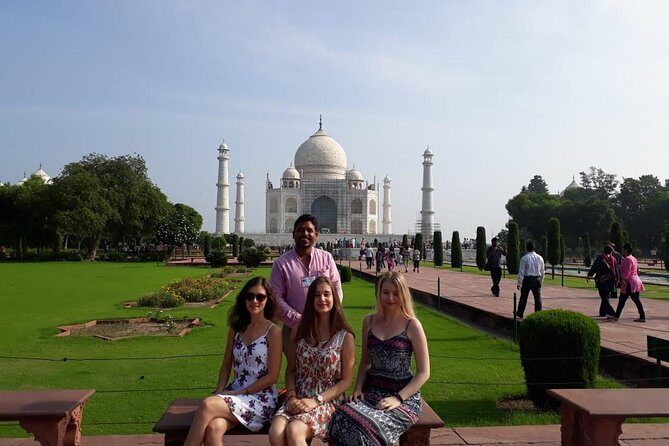
Agra is your “big monument” day, and this schedule hits two major sites: the Taj Mahal and Agra Fort. Agra sits on the Yamuna river, about 206 kilometers south of Delhi, so you’re moving into a different rhythm once you arrive.
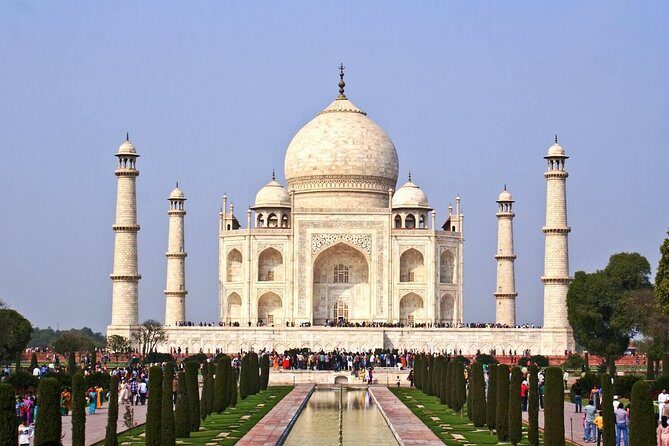
The Taj Mahal is described as an ivory-white marble mausoleum on the south bank of the Yamuna, commissioned in 1632 by Mughal emperor Shah Jahan to house the tomb of Mumtaz Mahal. It also includes the tomb of Shah Jahan himself. That’s the core of why the building hits so hard: it’s architecture tied to personal story, not only imperial branding.
You’ll also get around two hours allocated for the Taj Mahal stop. That’s a reasonable time window for photos and a calm walk around the complex, without turning it into a sprint.
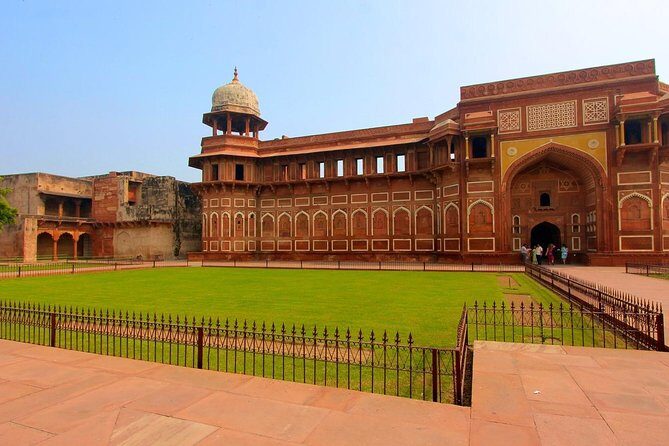
Agra Fort is the companion stop and it changes the mood. It was the main residence of Mughal dynasty emperors until 1638, when the capital shifted to Delhi. Before British capture, the last Indian rulers to occupy it were the Marathas. In other words, you’re seeing layers of control and transition, not just a static ruin.
If the Taj Mahal is about love and design, Agra Fort is about power, walls, and rule. Together, they make Agra feel complete.
One more practical tip: Taj Mahal days can be photo-heavy. If you care about good pictures, wear something comfortable enough that you can reposition and wait without feeling cranky.
A few more New Delhi tours and experiences worth a look




Jaipur: Pink City Icons from Hawa Mahal to Amer and Jantar Mantar
Jaipur is the city where the Golden Triangle becomes more playful. The tour paints it as the Pink City and ties it to the Rajput era. Jaipur is the capital of Rajasthan, founded in 1727, with the Old City often called the Pink City for the trademark color of its buildings.
The schedule includes the highlights that most first-time visitors hope for: Hawa Mahal, Jal Mahal, Amer Fort, and Jantar Mantar.
Hawa Mahal (Palace of Wind)
Hawa Mahal sits on the edge of the City Palace and extends to the zenana, the women’s chambers. It was built in 1799 by Maharaja Sawai Pratap Singh. The “wind” concept shows up in the design purpose of the façade, and the building looks incredible from different angles as you move around it.
Jal Mahal on Man Sagar Lake
Jal Mahal is a palace in the middle of Man Sagar Lake. It and the lake around it were renovated and enlarged in the 18th century by Maharaja Jai Singh II of Amber. Even if you’re not spending long here (about 30 minutes), the setting makes it a good breather after forts and temples.
Amer Fort
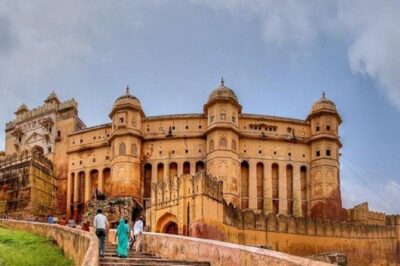
Amer Fort is scheduled for about two hours. It’s located 11 kilometers from Jaipur on a hilltop, and it’s presented here as the principal tourist attraction in the Jaipur area. Fort time tends to be worth it when you get context on the rulers and how the site functioned. A guide who explains what you’re seeing at each turn can make those hours feel less like climbing and more like understanding.
Jantar Mantar
Jantar Mantar is UNESCO World Heritage and it’s built as an astronomical instrument complex. The tour notes nineteen architectural instruments built by Sawai Jai Singh II, completed in 1734. It also mentions the world’s largest stone sundial. If you like science tucked into history, this is one of the most interesting stops on the list.
For Jaipur, your day is mostly light-to-moderate walking with lots of photo chances. Just don’t treat it like a museum crawl where you rush every stop. Let your guide slow you down for the best viewing angles.
The Private-Guide Factor: Why Your Day Can Feel Easy
A private Golden Triangle tour lives or dies on logistics and explanation. This one includes a professional guide and an AC vehicle, plus hotel pickup and drop-off. That means you’re not trying to coordinate transport between far-flung sights yourself.
The experiences I read about in this tour’s orbit emphasize guide quality. People highlighted guides such as Atul and Babloo for deep, clear explanations. Others praised Farman for helping the trip feel smooth with good views and well-explained details. Dharmendra Singh (D.S.) is specifically mentioned as excellent for explaining Indian history, and Noor is credited for making Agra’s sights click, including stops like the Taj Mahal, Agra Fort, and other local sites in the Agra day.
As for driving, one driver name came up for professionalism and feeling safe, which matters in a country where traffic patterns can be unpredictable if you’re not used to them.
Practical reality for you: even with a good driver, you’ll still feel the pace. When you book, ask yourself if you prefer “see a lot” over “slow down and linger.” Private tours tend to do well when you’re flexible about timing.
Entrances, Tickets, and the Real Cost of the $298.67 Price
Here’s the honest budgeting part. The tour price is $298.67 per person, but accommodations and meals aren’t included. Entrance fees are also not included on several key monuments.
The schedule labels some time blocks as admission ticket free, but it marks several big sights as not included. That includes Taj Mahal, Agra Fort, and Jantar Mantar, plus Hawa Mahal and Humayun’s Tomb are listed as not included in the itinerary information you provided.
So what does that mean for you? Your final spending has two layers:
- The fixed layer: guide + AC transport + bottled water + local taxes (included)
- The variable layer: hotel + meals + entrance fees (not included for many stops)
If you’re trying to keep costs low, you can treat the entrance fee list as your planning checklist. If you want maximum flexibility, carry some extra cash or card readiness for on-site ticket lines.
Also, bottled water is included, which sounds small until you’re outside all day.
How the Whole Route Flows: From Delhi to Agra to Jaipur to Delhi
The itinerary is built in a classic Golden Triangle arc:
- Day 1 focuses on Delhi and Old Delhi culture, with a mix of Mughal landmarks and New Delhi monuments.
- Day 2 routes you into more Delhi monuments and the market scene.
- Day 3 transitions you to Agra and builds toward Taj Mahal.
- Day 4 brings you deeper into Agra Fort, then moves toward Jaipur.
- Day 5 stays in Jaipur with Amer Fort and the Jantar Mantar science stop, then returns you to Delhi.
The final leg is a drive from Jaipur to Delhi after breakfast, with the service ending in Delhi. The tour notes about a 7-hour drive for that transfer.
That last transfer is another reason to plan meals and hydration smartly. Long drives are tiring, and you want to arrive ready for your next move.
Who Should Book This Private Golden Triangle Tour
This tour is a strong fit if you want:
- a private vehicle and guide rather than a bus group
- to see the headline sites in Delhi, Agra, and Jaipur
- a mix of monuments and real market time (Chandni Chowk)
- guided explanations that help you connect buildings to people and politics
It’s less ideal if you:
- hate early starts
- want long museum-style lingering
- expect everything to be paid-in-advance (entrance fees and hotels aren’t included)
If you’re traveling as a couple, a small family group, or a group of friends who can handle a full itinerary, private tends to feel like the sweet spot between freedom and structure.
Should You Book This Tour?
I’d book this private Golden Triangle tour if you want the classic Delhi–Agra–Jaipur highlights, but with enough structure that you’re not stressing about transport, timing, or figuring out what you’re looking at.
I’d pause if you’re budgeting very tightly, because the biggest cost variables outside the tour price are hotel, meals, and entrance fees for major monuments like Taj Mahal and others listed as not included. If you’re okay planning for those, the value is in the guide-driven flow and the AC transport that keeps your day moving.
If you can, match your booking decision to your travel style: if you like seeing a lot in a short time and prefer clarity over guesswork, this fits.
FAQ
What time does the tour start?
It starts at 9:00 am.
Is hotel accommodation included?
No. Accommodation is not included.
Are meals included?
No. Any meals are not included.
Does the tour include a guide?
Yes. A professional guide is included.
Is the transportation private and air-conditioned?
Yes. You travel by private vehicle with air-conditioning, and bottled water is included.
Are entrance fees included for major monuments like the Taj Mahal?
No. Entrance fees are not included, and Taj Mahal is listed as not included in the itinerary.
Does the tour include pickup and drop-off?
Yes. Hotel pickup and hotel drop-off are included, and your service ends back in Delhi.
Is the tour shared with other groups?
No. It’s a private tour/activity, so only your group participates.
What’s the cancellation policy?
Free cancellation is available up to 24 hours in advance for a full refund. Changes within 24 hours of the start time are not accepted.