REVIEW · NEW DELHI
Private Delhi Agra Jaipur Golden Triangle Tour
Book on Viator →Operated by MAM Holidays · Bookable on Viator
Delhi to Agra to Jaipur fast, with a driver doing the busy work. This private Golden Triangle style trip stacks major Mughal and royal sights into a tight plan, with round-trip hotel pickup and an English-speaking driver who helps you keep the day moving.
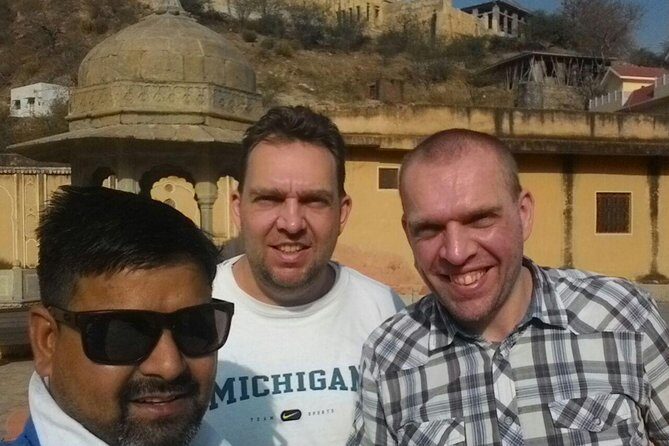
I like the simple control this format gives you: you can tailor what you spend time on, and you’re not stuck with a big group pace. I also like the human factor—drivers such as Rana / Rajpal Rana have been praised for safety, strong driving in chaotic traffic, and being patient (even during shopping stops).
One consideration: the itinerary is packed and several sites have entrance fees not included, so you’ll want to budget a bit extra on top of the tour price.
In This Review
- Key points before you go
- Price and what you’re actually paying for
- How the private format works (and why it matters in India)
- Day 1: Delhi morning start, Agra’s main sights, and a river-side mausoleum
- Stop 1: Kali Bari Temple (quick and free)
- Stop 2: Taj Mahal (the main event, and tickets are extra)
- Stop 3: Agra Fort (Akbar-era power in red sandstone)
- Stop 4: Tomb of Itimad-ud-Daulah (marble, calm, and on the river)
- Day 2: Jaipur palaces and forts—big views, short stops, smart pacing
- Stop 1: Amber Palace (royal levels and war-time pageantry)
- Stop 2: Jaigarh Fort (hilltop defense, reachable by a 1 km walk)
- Stop 3: Jal Mahal (a palace on Man Sagar Lake)
- Stop 4: Jain Mandir Sanganer (short stop, local feel)
- Stop 5: Hawa Mahal (the 953-window façade)
- Stop 6: City Palace Jaipur (royal collections and architecture)
- Stop 7: Nahargarh Fort (the ridge backdrop)
- Stop 8: Birla Mandir Temple (a calm religious stop)
- Day 3: Delhi’s mix of Mughal-era sites and modern ceremonial landmarks
- Stop 1: Red Fort (inside variety, not just walls)
- Stop 2: Jama Masjid (Old Delhi scale)
- Stop 3: Raj Ghat (Gandhi’s memorial by the Yamuna)
- Stop 4: Humayun’s Tomb (garden-mausoleum Mughal style)
- Stop 5: Rashtrapati Bhavan (free exterior time)
- Stop 6: India Gate (names, memorial glow)
- Stop 7: Birla Mandir Temple (Lakshmi Narayan)
- Stop 8: Qutub Minar (tower day, ticket extra)
- What you’ll likely experience with the driver (based on real feedback)
- The real trade-offs: packed days, short stops, and entrance fees
- Who this tour suits best
- Should you book this Private Delhi Agra Jaipur Golden Triangle Tour?
- FAQ
- Do I get hotel pickup and drop-off?
- Is the driver English-speaking?
- Is the tour private?
- Are entrance fees and meals included?
- What’s included in the price besides transportation?
- Is this tour suitable for people traveling alone or with service animals?
- Can I cancel for a full refund?
Key points before you go
- Private car + English-speaking driver makes navigation and explanations easier when you’re short on time
- Hotel pickup and drop-off saves you from messy logistics at the start and end of each day
- Highly praised safety and traffic skills from drivers like Rana and Rajpal Rana
- Flexible timing inside a set route, so you can spend more or less time at different stops
- Entrance fees not included, with some stops listed as free on the plan and others not
- Comfort perks may be included in the car (water and WiFi were mentioned in feedback)
Price and what you’re actually paying for
At about $181.34 per person for roughly 3 days, you’re paying for the structure: private door-to-door pickup, a vehicle, and an English-speaking driver with fees and taxes covered. What’s not covered is just as important. Entrance fees, food, and drinks are not included, and your hotel isn’t part of the package.
That can still be good value, depending on how you like to travel. If you’d otherwise spend time arranging drivers, transfers, and last-minute ticket logistics, this package removes the hassle. It also reduces the mental load on day one, when Agra and the Taj Mahal can feel like a lot before you even get your bearings.
You can also read our reviews of more private tours in New Delhi


How the private format works (and why it matters in India)
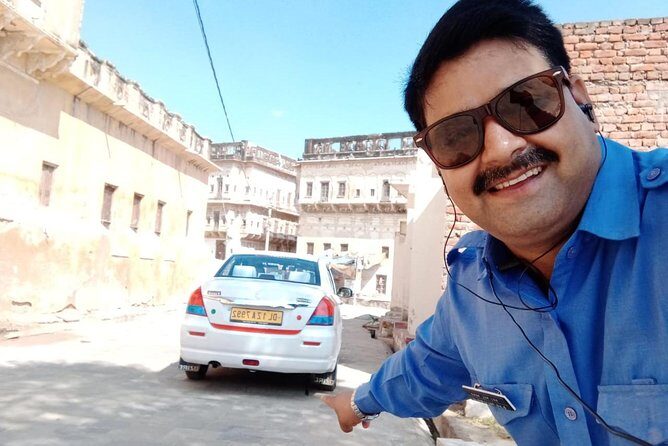
This is a private tour, so it’s only your group in the vehicle. That’s a big deal in the Golden Triangle, because the route is popular and the “best time” to visit each site can shift with crowds and heat. With a private driver, you’re not waiting for other people to finish photos or shop.
I also like that this tour is built around an English-speaking driver, not just a driver behind the wheel. In practice, that means more useful guidance about what you’re looking at and what to prioritize when you have limited time at each stop.
Finally, feedback on drivers like Rana / Rajpal Rana highlights punctuality, reliability, and a calm approach. When you’re moving between Delhi, Agra, and Jaipur, that kind of steady handling can save your whole trip from turning stressful.
Day 1: Delhi morning start, Agra’s main sights, and a river-side mausoleum
Your day begins early, with a pick-up around 6:00 am from the New Delhi city area hotel. That early start matters. It gives you more daylight for the sightseeing sweep, and it keeps the rest of the schedule from sliding too far later.
Stop 1: Kali Bari Temple (quick and free)
You’ll stop at Kali Bari Temple for about 10 minutes, and the plan lists admission free. This is a quick cultural warm-up—enough time to feel the place without turning the day into a detour.
Stop 2: Taj Mahal (the main event, and tickets are extra)
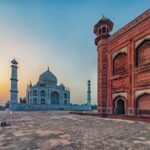
Next is the Taj Mahal, with about 2 hours on-site. The plan notes its purpose as a white marble mausoleum built by Shah Jahan in memory of Mumtaz Mahal, commissioned in 1632. You’ll also see that it’s not a one-tomb story: the complex also houses Shah Jahan’s tomb.
Practical note: entrance fees aren’t included, so you should plan for that cost. Also, at two hours, you’ll want to choose your “must-do” moments—grand views first, then deeper exploring—so you don’t burn time walking in circles.




Stop 3: Agra Fort (Akbar-era power in red sandstone)
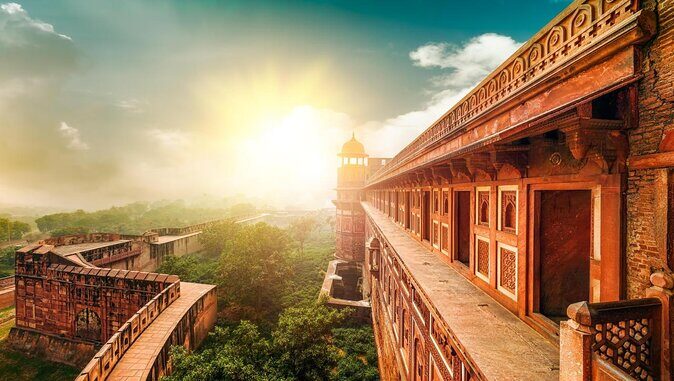
After the Taj Mahal, you go to Agra Fort, with about 1 hour. The fort is described as a massive red sandstone complex with a semicircular shape from above and a double battlement wall. It’s also tied to Emperor Akbar, which helps connect the dots from the Taj Mahal’s love story to the broader Mughal story of rule, defense, and ceremony.
Again, entrance fees aren’t included here. If you’re short on energy after the Taj Mahal, this stop is still worth it because it shows the military side of the empire, not only the romantic one.
Stop 4: Tomb of Itimad-ud-Daulah (marble, calm, and on the river)
Lunch comes next at a local restaurant, then you continue to the Tomb of Itimad-ud-Daulah for about 1 hour. The name means pillar of the state, linked to Nur Jahan’s father. The plan also calls it the first marble mausoleum in India, positioned by the river, which is the kind of detail you notice when you slow down a little.
Tickets are not included. But this stop often works well because it feels more peaceful than the Taj Mahal while still delivering serious Mughal architecture.
Day 2: Jaipur palaces and forts—big views, short stops, smart pacing
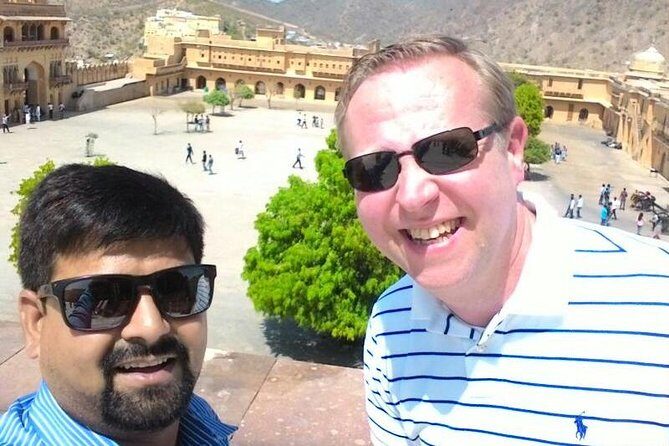
Day two shifts from Mughal landmarks to Rajput royal architecture. The tempo stays sightseeing-focused, with several short-to-medium visits rather than one long “deep dive” day.
Stop 1: Amber Palace (royal levels and war-time pageantry)
You start with Amber Palace for about 1 hour. The plan describes it as an opulent palace built from red sandstone and marble, laid out on four levels and surrounded by courtyards. It also notes that armies staged victory parades here, and royal women watched through latticed windows.
Entrance fees aren’t included. If you’re into photo angles, this is where morning light and stair-and-courtyard geometry can make your pictures look more “3D” than the flat monuments.
Stop 2: Jaigarh Fort (hilltop defense, reachable by a 1 km walk)
Next is Jaigarh Fort, built by Jai Singh II in 1726 to protect Amber. The plan says it’s reached by about a 1 km walk up the hill (from the nearby area along the Jaipur-Delhi highway).
That walk is the main consideration. If you have mobility limits, plan to adjust your pace or ask the driver about the most manageable timing.
Stop 3: Jal Mahal (a palace on Man Sagar Lake)
Then comes Jal Mahal, a palace in the middle of Man Sagar Lake. The plan keeps it simple: this is about the look of the water and the sense of how rulers treated their leisure spaces.
This stop can be a “pause button.” It’s not the most detailed monument time-wise, but it gives your eyes a break from forts and carvings.
Stop 4: Jain Mandir Sanganer (short stop, local feel)
You’ll visit Jain Mandir Sanganer for about 30 minutes. The plan describes it as one of the oldest and beautiful places in Sanganer, with architecture and stories that many people find interesting.
If you like quieter stops that feel more local than the big-ticket sights, this fits. If you want only famous landmarks, you might treat it as a short cultural intermission.
Stop 5: Hawa Mahal (the 953-window façade)
At Hawa Mahal – Palace of Wind, you have a very brief stop of about 1 minute in the plan. The building is described as a five-story structure built in 1799 by Maharaja Sawai Pratap Singh, decorated with 953 windows (jharokhas).
Because your time is so short, go for impact: view it from the outside, soak up the façade pattern, then move on. If you want a deeper look, this is exactly the kind of spot you might ask to extend when customizing.
Stop 6: City Palace Jaipur (royal collections and architecture)
Then you visit City Palace Jaipur for about 30 minutes. It’s presented as a collection of royal articles from raja-maharajas of the past. If you’re hoping to see textiles, artifacts, or display cases tied to Jaipur’s former rulers, this is the right stop—but plan for speed.
Stop 7: Nahargarh Fort (the ridge backdrop)
Next is Nahargarh Fort for about 1 hour. It sits on a rugged ridge of the Aravali Hills. The plan notes its original name was Sudarshangarh, later changed to Nahargarh.
Fort views work best when you can take your time. If the day is hot, ask your driver to pace the walking.
Stop 8: Birla Mandir Temple (a calm religious stop)
Finally, you end at Birla Mandir Temple for about 30 minutes. It’s described as a Hindu temple built in 1988 by the Birla group, positioned at the base of Moti Doongri Hill.
This is a good “cool down” stop after forts. Tickets are listed as not included, but the plan doesn’t specify a cost—so treat it as extra budget just in case.
Day 3: Delhi’s mix of Mughal-era sites and modern ceremonial landmarks
Day three brings you back to Delhi, with a blend of historic and symbolic stops. This is where your pacing matters most, since you have multiple sites close together on the city grid.
Stop 1: Red Fort (inside variety, not just walls)
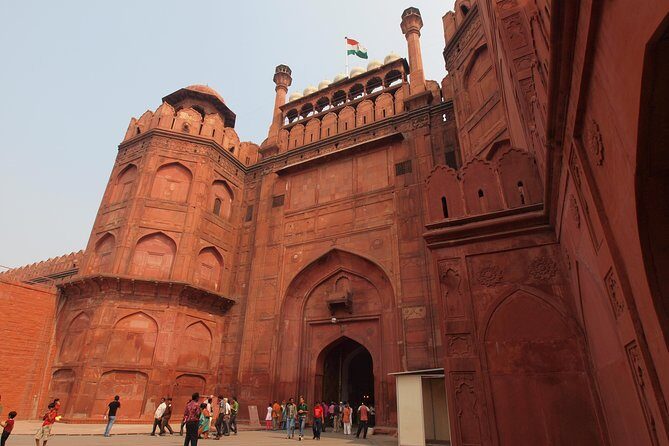
You visit the Red Fort for about 1 hour. The plan emphasizes the red sandstone and its role as a ceremonial royal site, and also notes that there are attractions inside like palaces, halls, and museums.
Entrance fees aren’t included. If you’re the type who likes to see how a complex is organized, the interior sections will feel more rewarding than just walking the perimeter.
Stop 2: Jama Masjid (Old Delhi scale)
Then it’s Jama Masjid, about 30 minutes. The plan calls it the largest mosque in India, able to hold 25,000 devotees, and dates its construction from 1644 to completion under Shah Jahan.
Tickets are not included. The key here is scale: even a short visit can feel big because of the open courtyard.
Stop 3: Raj Ghat (Gandhi’s memorial by the Yamuna)
Next: Raj Ghat for about 30 minutes. It’s described as a black marble platform on the Yamuna river marking Gandhi’s cremation spot. This isn’t about architecture tricks; it’s about place and meaning.
Entrance fees are listed as not included, but the experience here is mostly the atmosphere and quiet.
Stop 4: Humayun’s Tomb (garden-mausoleum Mughal style)
Then you visit Humayun’s Tomb for about 1 hour. The plan says it’s near Mathura Road and Lodhi Road, built in 1565 by Bega Begum after Humayun’s death. It highlights the chaharbagh garden plan with water channels and the mausoleum under a double dome.
Tickets aren’t included. This stop often balances the day because it’s both a monument and a garden layout.
Stop 5: Rashtrapati Bhavan (free exterior time)
You’ll stop at Rashtrapati Bhavan for about 30 minutes, and it’s listed as free on the plan. The plan describes it as one of the world’s largest residential head-of-state homes, mixing Mughal and European architectural styles.
Stop 6: India Gate (names, memorial glow)
Then India Gate for about 30 minutes, listed as free. The plan includes details about the inscription of 13,300 names and mentions the Amar Jawan Jyoti structure added in 1971.
This is a good final-group-photo stop. It’s also where the city’s ceremonial axis—Rajpath—is easy to understand.
Stop 7: Birla Mandir Temple (Lakshmi Narayan)
Next is Birla Mandir Temple (Lakshmi Narayan) for about 30 minutes, listed as free. It’s described as built by B.D. Birla and inaugurated by Mahatma Gandhi in 1939, with a note that Gandhi requested it not be restricted only to Hindus.
Stop 8: Qutub Minar (tower day, ticket extra)
Finally, Qutub Minar for about 30 minutes. The plan describes it as 73 meters tall, built by Qutub-ud-Din Aibak in 1193, with multiple storeys and balconies, mixing red sandstone and marble.
Tickets aren’t included. With only 30 minutes, focus on the main viewing points rather than trying to cover everything.
What you’ll likely experience with the driver (based on real feedback)
What makes this tour feel worth it is often not the monuments. It’s the driving and the way the day runs.
On similar Golden Triangle trips, drivers named Rana and Rajpal Rana have been praised for:
- Careful, safe driving even in chaotic traffic
- Punctuality and reliability when timing matters
- Good English and helpful suggestions for sites and places to eat
- Patience during shopping, including waiting until people are done
- Adding comfort in the car, with mentions of water and WiFi (not guaranteed for every vehicle, but it shows up)
If you care about stress-free logistics, this kind of driver-centered private tour is exactly why people pick the private route.
The real trade-offs: packed days, short stops, and entrance fees
This tour is efficient, not slow travel. That’s great if you want the major hits in limited time. It’s less great if you want to linger for long explanations at every stop.
A few places on the plan are extremely short (for example, Hawa Mahal is listed at about 1 minute, and City Palace at about 30 minutes). That can work for quick photos and a first look, but if you’re the type who likes to read every plaque, you’ll want to adjust.
Also, remember the money side: entrance fees are not included. Some stops are marked as free on the plan (like Rashtrapati Bhavan, India Gate, Birla Mandir, and Kali Bari Temple), which helps. Still, you should set aside budget for Taj Mahal, Agra Fort, Amber Palace, and other ticketed sites like Qutub Minar.
Who this tour suits best

This trip fits you if:
- You want a tight Golden Triangle overview in about 3 days
- You prefer private door-to-door transfers over public transport or self-driving
- You like having an English-speaking driver handle timing and routing
- You care about safety and calm logistics when moving between cities
It may not be ideal if:
- You hate early mornings or long days
- You want lots of quiet downtime
- You’re hoping for entrance fees and meals to be fully included in one price
Service animals are allowed, and the plan notes most people can participate, so it’s broadly accessible within normal mobility limits.
Should you book this Private Delhi Agra Jaipur Golden Triangle Tour?
If your goal is to see the big landmarks without wrestling with transport, I’d say yes. The private setup, hotel pickup/drop-off, and English-speaking driver are the backbone of the value. Add in the strong emphasis on safety and the fact that drivers like Rana and Rajpal Rana have a track record of being patient and helpful, and this becomes a practical way to check off Delhi, Agra, and Jaipur.
My “before you book” checklist is simple:
- Budget for entrance fees at ticketed monuments
- Plan for early starts and quick stops at some sights
- Think about what you want extended time on—especially if you care most about Taj Mahal, fort interiors, or one specific Jaipur palace
If that matches your style, this is a solid, efficient way to do the Golden Triangle.
FAQ
Do I get hotel pickup and drop-off?
Yes. The tour includes hotel pickup and drop-off as part of the experience.
Is the driver English-speaking?
Yes. The tour includes a private vehicle with an English-speaking driver.
Is the tour private?
Yes. It’s a private tour/activity, so only your group participates.
Are entrance fees and meals included?
No. Entrance fees, food, and drinks are not included. Hotel accommodation for the guest is also not included.
What’s included in the price besides transportation?
The tour lists all fees and taxes as included, along with the private vehicle and the hotel transfers.
Is this tour suitable for people traveling alone or with service animals?
The info states most travelers can participate, and service animals are allowed.
Can I cancel for a full refund?
Yes. Free cancellation is offered if you cancel up to 24 hours in advance for a full refund.
If you want, tell me your travel month and whether you prefer early starts or slower sightseeing. I’ll suggest a “time priority” plan for Taj Mahal vs forts vs Jaipur stops so your 3 days feel more like yours.