REVIEW · NEW DELHI
Private 5 Days Golden Triangle Tour ( Delhi – Agra – Jaipur )
Book on Viator →Operated by Markable Joy · Bookable on Viator
Five days, three icons, and zero logistics headaches. This private Golden Triangle route knits together Delhi, Agra, and Jaipur with an air-conditioned car, a guide who stays with you at key sights, and admission tickets handled for you. If you want the highlights without building a timetable from scratch, this is a solid, practical way to do it.
I especially like the structure: you get door-to-door transfers with a pickup window in Delhi (9 AM to 11 AM), so you start each day without hunting for rides. And I like that the tour covers major monuments with a private live guide at the sites, which makes the places feel way more meaningful than a quick photo stop.
One thing to consider: this is packed sightseeing in short blocks. Many stops are 30 to 60 minutes, so if you prefer slow wandering and extra time inside buildings, you’ll need to lean into the highlights and move when the schedule says move.
In This Review
- Key things I’d bet you’ll care about
- Why this Golden Triangle tour feels easier than DIY
- Day 1 in Delhi: Old Delhi bazaars, big worship sites, and Qutub Minar
- Day 2 to Agra: Fort and marble garden at a calmer pace
- Day 3 Taj Mahal sunrise: where the timing matters most
- Day 4 Jaipur classics: Amer Fort, Hawa Mahal, City Palace, and Jal Mahal
- Day 5 back in Delhi: a light finish (or Jaipur airport drop-off)
- What you’re really getting: private AC car, tickets, guide time
- Price and value: is $219 per person fair for this format?
- Practical tips so your five days feel smooth
- Should you book this Private 5 Days Golden Triangle Tour?
- FAQ
- What cities are included in the 5-day Golden Triangle tour?
- What pickup options are available in Delhi?
- Are monument admission tickets included?
- Do I get a private guide?
- What kind of transportation is provided?
- How many nights are included and is breakfast included?
- Are meals included in the tour price?
- Can I end the trip in Jaipur instead of returning to Delhi?
Key things I’d bet you’ll care about
- Private, not semi-private: it’s only your group, even though there can be group discounts on pricing.
- Admission tickets included at the listed monuments, so you’re not juggling lines or entry fees.
- Your own guide at the main sights for explanations as you go, not after the fact.
- Comfort-focused transfers in a private AC car with driver, plus water bottles and an umbrella.
- Two accommodation levels (mid-range or high-end) so you can match comfort to your budget.
Why this Golden Triangle tour feels easier than DIY
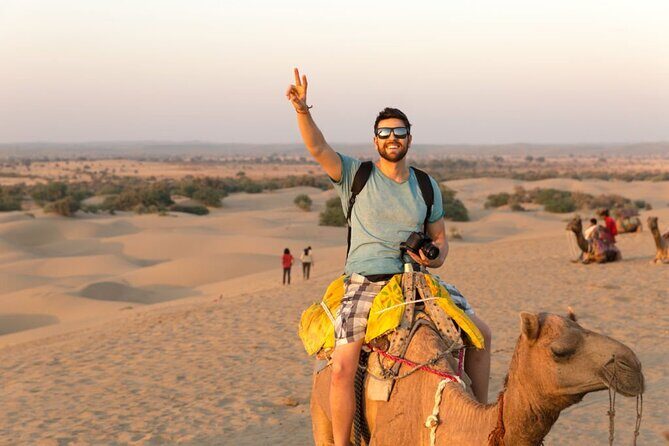
The Golden Triangle can be amazing, but the travel math adds up fast. You’re hopping between three cities—each with its own traffic, timing, and ticket lines—so the hardest part is often not the sightseeing. It’s managing the logistics so you actually enjoy the trip.
This format keeps the trip “motion-light” for you. You choose mid-range or high-end accommodation, you get picked up within a set morning window, and your transfers run between cities in a private AC car. Most importantly, the plan includes a guide at the monuments and includes admission tickets, which removes a big chunk of planning stress.
Think about what that changes day-to-day:
- You’re less likely to spend your limited time negotiating tickets, searching for the right entrance, or paying multiple small fees on the fly.
- You can focus on the sights that define Delhi, Agra, and Jaipur—rather than turning the day into a scavenger hunt.
- You get context at the right moments. A place like Humayun’s Tomb or Agra Fort makes more sense when you’re standing there, not later reading a guidebook.
Is it perfect? No tour with many “must-sees” can be. But if you want a clean, guided path through the classics—while still keeping things comfortable—this one is built for that.
You can also read our reviews of more private tours in New Delhi


Day 1 in Delhi: Old Delhi bazaars, big worship sites, and Qutub Minar
Delhi day one moves through a striking mix: old markets, major religious architecture, and classic historic monuments. You start with pickup from around Delhi, Noida, Gurugram, Ghaziabad, or Faridabad. Your pickup time choice is between 9 AM and 11 AM, which is helpful if you want a more civilized morning pace.
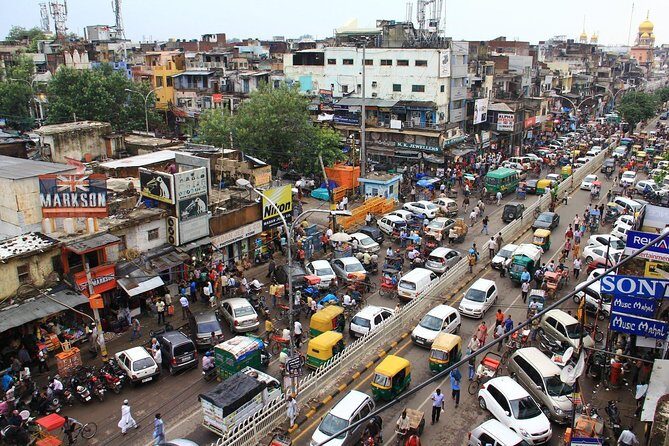
Old Delhi begins with a ride past the colorful, busy bazaars of Chandni Chowk, with a guide explaining the role these markets play for locals. You’ll ride in a tuk-tuk for about an hour. Practical tip: keep your phone ready, but remember this is an active neighborhood, not a set for photos.
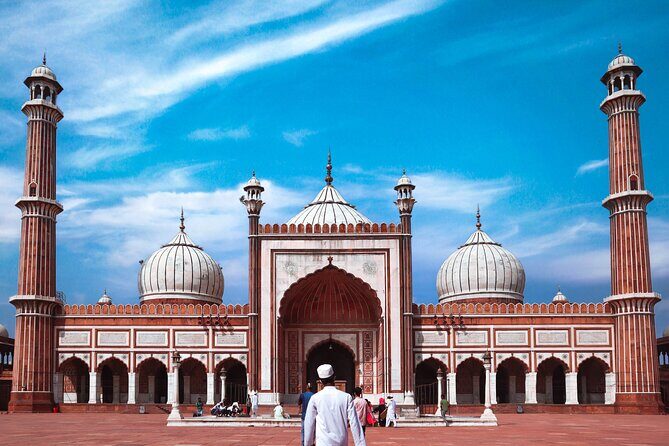
Next comes Jama Masjid, India’s largest mosque. It’s a red sandstone courtyard experience, built in 1656 with the help of 5000 workers. You’ll have about an hour here—enough time to look around and get a feel for the scale.
After that, you head to Gurudwara Bangla Sahib. The tour includes time for a short visit (about 30 minutes). It’s the kind of stop that adds spiritual and cultural balance after the big mosque.
The itinerary also includes the Tomb of the Unknown Soldier (the 1921 memorial with names of 13,300 Indian army servicemen carved on the wall related to the First World War). You’ll also stop in the area known for New Delhi’s planned architecture, described as a 330-acre architectural project connected to Sir Edwin Lutyens and Herbert Baker.
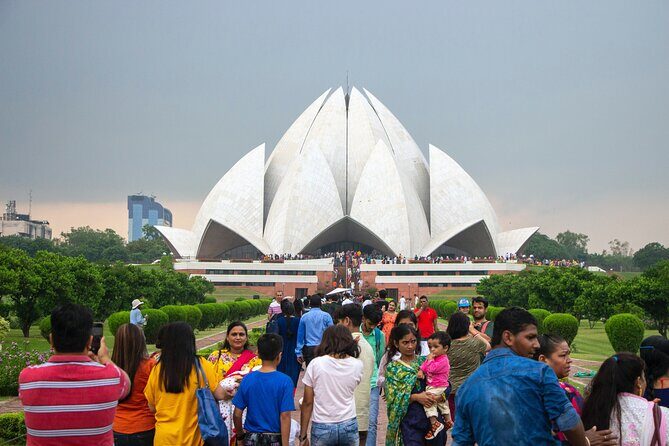
Later, the day touches two heavyweight sights: Swaminarayan Akshardham and Humayun’s Tomb, plus Qutub Minar. The schedule notes that you can either visit Akshardham or Humayun’s Tomb, depending on how the day runs—so don’t be shocked if you don’t get both. Qutub Minar is included with time to explore the UNESCO-listed Qutub complex (about 45 minutes).
End result: you get a wide-angle Delhi snapshot in one day, with a guide to translate what you’re seeing.
Day 2 to Agra: Fort and marble garden at a calmer pace
Day two starts with a morning drive to Agra. You get about a 3-hour transfer, then meet your guide for Agra after arriving. The plan includes hotel help for a hassle-free check-in—one of those “small” logistics that makes a huge difference once you’re tired from the first day.
Sightseeing then focuses on two Agra monuments with very different vibes:
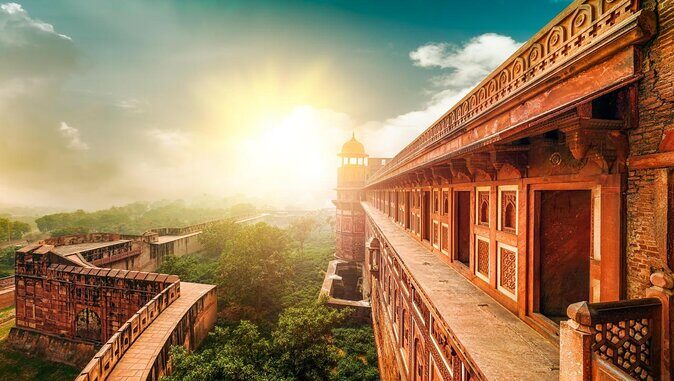
Agra Fort (about 1 hour, ticket included). This UNESCO World Heritage Site is described as a 17th-century structure and a blend of Indian and Islamic art and architecture. When you look at forts like this, you’re seeing power and protection in stone. It’s not just pretty; it’s strategy made visible.
Then you visit Itmad-ud-Daula (about 1 hour, ticket included). The plan frames it as a 17th-century pavilion with a blend of Indian and Islamic art and architecture, too. This stop often works well because it bridges the gap between “big fortress energy” and the refined elegance you’ll see at the Taj Mahal later.
Day two feels like the palate cleanser before the main event on day three. You’re not doing three heavy monuments plus a long commute all in one stretch. You get time to check in, settle, and set yourself up for an early-morning Taj day.
Day 3 Taj Mahal sunrise: where the timing matters most
If you do just one thing “on schedule” in this tour, make it the Taj Mahal sunrise. Day three builds around it: an early morning visit to the marble mausoleum with about 3 hours to explore at the best light. The guide is there to help you with photo spots, which is a real value if you want images that actually look like the iconic views.
You’ll enter the Taj Mahal experience while it’s still calm. That matters because the Taj is one of those places where the mood changes with the crowd level and the sun angle. Sunrise isn’t magic dust, but it does make the marble glow and the atmosphere feel more peaceful.
After the Taj, the tour includes Fatehpur Sikri on the way to Jaipur. You’ll have about an hour there. The plan describes it as a fortified ancient city about 40 km west of Agra and notes it was the short-lived Mughal capital between 1572 and 1585. It’s a compact visit, but the point here is context: you’re connecting Agra’s Mughal legacy to a larger imperial story.
Then comes the long-but-expected transfer: about 4 hours from Agra to Jaipur, plus hotel check-in and overnight in Jaipur.
If you tend to get exhausted easily, the pacing works best when you treat day three as a priority day. You’ll want sleep the night before, and you’ll want to eat something simple after the Taj, since you’re moving again soon.
Day 4 Jaipur classics: Amer Fort, Hawa Mahal, City Palace, and Jal Mahal
Jaipur day is the “royal architecture” day. You start after breakfast with pickup from the hotel and head to the main sites.
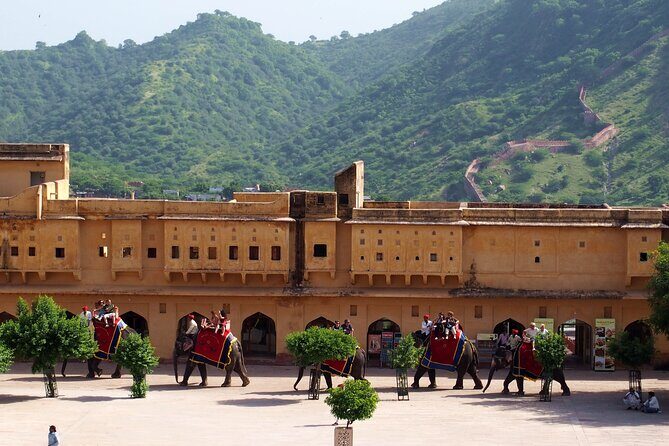
First stop: Amber Fort. You’ll have about 2 hours at Amer Fort, with the tour describing its artistic Hindu-style architecture. This is one of those places where your time goes faster than you expect because there’s so much to look at—courtyards, views, and details everywhere you turn.
Next is Hawa Mahal (Palace of Wind), about 1 hour. The tour highlights the 953 windows and the idea that it was built especially for royal ladies. Even if you only look from the outside and through key views, it helps to understand what the windows are for—so you’re not just seeing an ornate facade.
Then you’ll visit City Palace of Jaipur, with about 2 hours. The plan notes patterned gardens and architecture, and that it was originally the seat of the Maharaja, with part now used as a museum. This stop is a good break from forts and towers because it feels like you’re stepping into everyday royal life converted into a living museum space.
Finally, there’s Jal Mahal, described as a 17th-century architectural beauty in the middle of Man Sagar Lake, and included with about 30 minutes. This is a shorter stop, but it’s a nice moment of calm—especially after the more “active” sites earlier in the day. You don’t need to do much here; you just need to look.
You finish with a driver drop-back to your Jaipur hotel.
A few more New Delhi tours and experiences worth a look




Day 5 back in Delhi: a light finish (or Jaipur airport drop-off)
Day five is intentionally more relaxed. The plan keeps time for a final stretch in Delhi for about 4 hours, then you head back or choose drop-off at Jaipur airport if you prefer to fly from there.
That flexibility is useful. Many Golden Triangle trips end with a scramble—either you’re tired and still driving, or you lose the chance to align with your flight. Here, you get a chance to end the trip without adding more stress.
One practical mindset for the last day: pack early in the morning. Even on a lighter day, you’ll still want your bag ready so you’re not rushing when the driver time arrives.
What you’re really getting: private AC car, tickets, guide time
Here’s the value behind the listed inclusions, in plain terms:
- Private transfers and sightseeing by AC car with driver. This matters between Delhi–Agra and Agra–Jaipur, where traffic can be unpredictable.
- Private live tour guide for the monuments. You’re not stuck reading signs. Someone explains what you’re looking at while you’re there.
- All monument tickets included for the sights listed as included. That can save time and avoid the “wait, how much is it?” moments.
- Complimentary water bottles and an umbrella. Hot sun and sudden weather happen often enough that this is genuinely helpful.
- 4 nights stay with breakfast if you choose the mid-range or high-end accommodation option (3-star for mid-range, 5-star for high-end, based on the tour options given).
What’s not included is also important: meals aren’t part of the package. You’ll pay for lunch and dinner on your own.
Price and value: is $219 per person fair for this format?
At $219 per person for an approx. 5-day private Golden Triangle tour, the real question is what you’re paying for beyond sightseeing.
You’re paying for:
- Private, air-conditioned transport and driver over multiple long legs
- A guide who stays with you at the monuments
- Admission tickets included for the key sights
- Hotel nights in the chosen accommodation tier (plus breakfast)
In a DIY setup, you might cut costs by skipping a guide and booking only transport. But in India, the friction is usually what eats time: tickets, entrances, finding the right guide-level context, and dealing with constant questions about what to do next.
If you want a trip where the plan is handled for you and you can spend your energy actually looking at places, this price often feels reasonable. If you’re the type who loves flexibility and building your own route daily, you may not benefit as much from the included guide time.
Also, a note on reviews: one strong highlight was an Agra guide named Shain, praised for clear English, strong historical explanations, and for taking great photos during the visit. That’s the kind of service you’re effectively paying for—someone making your time easier and your memories better.
Practical tips so your five days feel smooth
This is a high-demand itinerary. Here’s how I’d make it work without burning out:
- Bring light layers: mornings can feel cooler, afternoons can heat up quickly.
- Plan your priorities for day one: the schedule points to choices between Swaminarayan Akshardham and Humayun’s Tomb, so decide in advance which feels more important to you.
- Treat the Taj morning like a “must nail”: if you want sunrise light and calmer pacing, be ready when it’s time to go.
- Wear comfortable shoes for forts and courtyard-heavy stops. Two hours at Amber Fort is no joke on tired feet.
- Use the guide for photos: the tour explicitly includes photo guidance at the Taj Mahal sunrise, and that’s where it really pays off.
Should you book this Private 5 Days Golden Triangle Tour?
I’d book it if you want the Golden Triangle highlights with less decision fatigue. This plan is built for you if you value private guidance at major monuments, included tickets, and comfortable transfers between three cities.
Skip it (or consider a different pacing) if you know you get restless when you only have 30 to 60 minutes at a stop. Also, because meals aren’t included, budget a bit of flexibility for lunch and dinner each day.
If you want a smart, structured path through Delhi, Agra, and Jaipur—with tickets and logistics handled and a guide to explain what you’re seeing—this is a good fit.
FAQ
What cities are included in the 5-day Golden Triangle tour?
The tour covers New Delhi, Agra, and Jaipur, traveling between the three as part of the Golden Triangle route.
What pickup options are available in Delhi?
You can request pickup from anywhere in Delhi, Noida, Gurugram, Ghaziabad, or Faridabad. You can choose any pickup time between 9 AM and 11 AM.
Are monument admission tickets included?
Yes. The tour includes admission tickets for the listed monuments, so you do not need to purchase them yourself for those stops.
Do I get a private guide?
Yes. It is a private tour/activity, and the plan includes a private live tour guide at the monuments.
What kind of transportation is provided?
All transfers and sightseeing are included by a private air-conditioned car and driver, including door-to-door ground transfers.
How many nights are included and is breakfast included?
Four nights of hotel stay with breakfast are included, based on the accommodation level you choose.
Are meals included in the tour price?
No. Meals are not included.
Can I end the trip in Jaipur instead of returning to Delhi?
Yes. On the last day, the plan keeps time in Delhi and also offers the option to drop you at Jaipur airport if you prefer flying from there.