REVIEW · NEW DELHI
Old Delhi Tour with Local Experience
Book on Viator →Operated by Delhi by Locals · Bookable on Viator
Markets move fast here. This Old Delhi tour works because it mixes metro and a rickshaw ride with guided stops at big names like Chandni Chowk and Gurudwara Sis Ganj Sahib. You get a short, focused loop that also points you toward the spice-market energy and the wedding-bazaar world that most people only notice from the sidewalk.
I love the way the guide turns everyday streets into a story—guided commentary keeps the time from feeling random. I also like that you’re not just walking and looking; you’ll pause for local tea, and bottled water is included so you can keep going instead of hunting for a drink.
One thing to consider: the tour is only about 3 hours, and it’s built around short stop-ins rather than long shopping time. If you’re hoping to browse for a long while, plan on saving personal shopping for another visit.
In This Review
- Key highlights you’ll actually feel during the tour
- Old Delhi in 3 hours: the real game plan
- Metro and rickshaw: the easiest way to “travel like local”
- Chandni Chowk: more than a famous street photo
- Nai Sarak food-market walk at 2584-2585: where you learn by looking
- Gurudwara Sis Ganj Sahib: community service you can actually witness
- Kinari Bazaar and the wedding market: color, textiles, and festival energy
- Gali Paranthe Wali: the paratha process in plain human terms
- Tea stop and bottled water: the small details that keep the tour enjoyable
- Price and value: why $30 can make sense here
- Who will love this tour (and who might want a different format)
- Guide quality is the secret sauce
- Should you book this Old Delhi metro-and-rickshaw tour?
- FAQ
- How long is the Old Delhi tour?
- What’s included in the ticket price?
- Where does the tour start and end?
- Is there an admission fee for the stops?
- How big are the groups?
- Can I cancel for free if my plans change?
Key highlights you’ll actually feel during the tour
- Metro + rickshaw combo that shows you Old Delhi the practical way
- Small-group feel with a cap of 10 participants (and up to 5 per booking)
- Tea stop plus bottled water included, so your energy stays up
- Faith and community in action at Gurudwara Sis Ganj Sahib
- Market walking that covers major sights and side streets
- Free admission at each listed stop, so your money stays for food and choices
Old Delhi in 3 hours: the real game plan
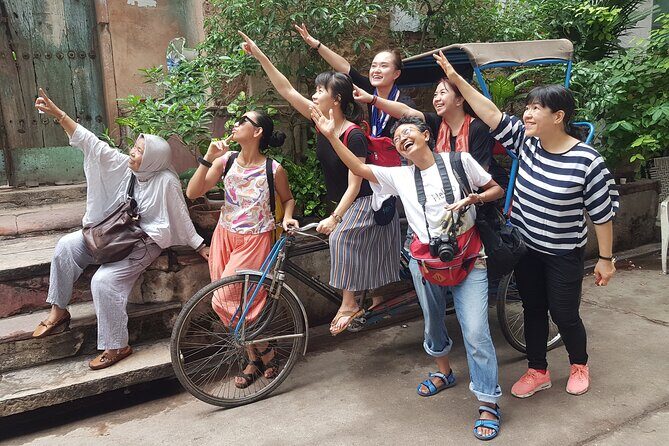
Old Delhi can feel like sensory overload if you arrive without a plan. This tour keeps things manageable with a tight route, clear stops, and a guide who points out what you’re seeing instead of letting you guess. The big advantage is that you can take in the landmark names and still get that “I wouldn’t have found this on my own” feeling from the surrounding lanes.
You’ll spend your time moving through classic Old Delhi zones: Chandni Chowk first, then a walk through the Nai Sarak market area, followed by Gurudwara Sis Ganj Sahib, Kinari Bazaar, and finally Gali Paranthe Wali for paratha know-how. Along the way, you’ll also get a guided look at the spice-market area referenced as Asia’s largest spice market.
The tour is designed for people who want a meaningful afternoon without needing to master routes, bargaining, or timing. And because it ends back at the meeting point, you’re not left figuring out your next step while tired and hungry.
You can also read our reviews of more tours and experiences in New Delhi.



Metro and rickshaw: the easiest way to “travel like local”
The transport mix is part of the value. You start with a metro ride, which is usually the least stressful way to cover distance in a city where roads can get complicated quickly. Then you hop into a rickshaw ride for the part where Old Delhi’s streets feel tighter and slower—perfect for getting a real sense of the neighborhood.
This is also a smart way to avoid the most common visitor problem: spending too much energy on logistics. You’re not trying to map every turn mid-walk. A guide leads the way, and the itinerary keeps you focused on what you came for.
If you’re the type who likes to experience a place through everyday movement—stations, platforms, street-level rhythms—this format is built for you. It also helps that the tour is near public transportation, so you’re not going out of your way just to get started.
Chandni Chowk: more than a famous street photo
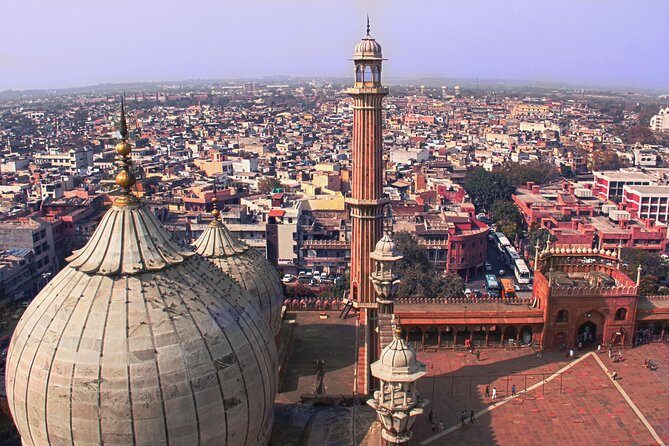
Chandni Chowk is the kind of place where you instantly understand why it’s famous. The tour gives you the stories behind the attraction, so you’re not just scanning for Instagram angles—you’re learning what makes the area tick.
Your time here is short, but that’s intentional. In a 3-hour tour, you want a first stop that sets the tone and gives you vocabulary for everything that comes later. Chandni Chowk works as that opening act because it’s a doorway into Old Delhi’s trading culture, crowded lanes, and long-standing market identity.
This stop is also a useful mental warm-up. Once you’ve seen it with guidance, the next markets don’t feel like random streets. They feel connected.
Nai Sarak food-market walk at 2584-2585: where you learn by looking

After Chandni Chowk, you step into the market area around 2584-2585, Nai Sarak. This is where the tour shifts from “famous landmark” mode into “learn what you’re seeing” mode. You’ll walk through to understand the richness in Indian food—meaning you’ll connect ingredients, stalls, and specialties to the larger food culture around them.
This stop is only about 10 minutes, so don’t expect a slow browsing session. Instead, treat it like a guided orientation: you’ll notice patterns, learn what to ask about (even if you don’t buy much), and get a better sense of where the spice-and-snack culture shows up in everyday commerce.
Also keep in mind that one of the tour’s promises is exposure to Asia’s largest spice market area. Even if you don’t pin down a single “spice market” sign in your mind, the point is that the market atmosphere and stall concentrations are part of the experience.
Gurudwara Sis Ganj Sahib: community service you can actually witness
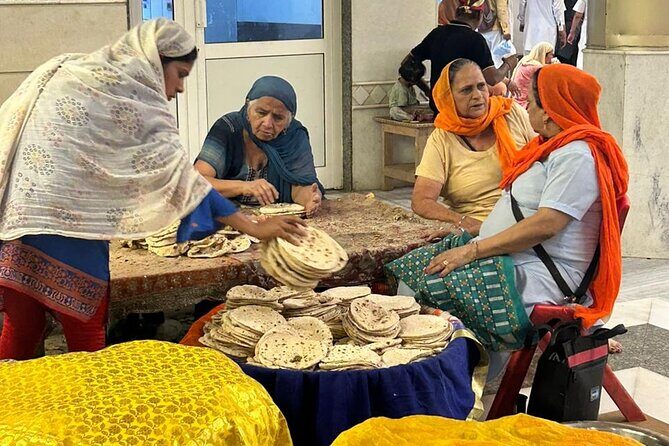
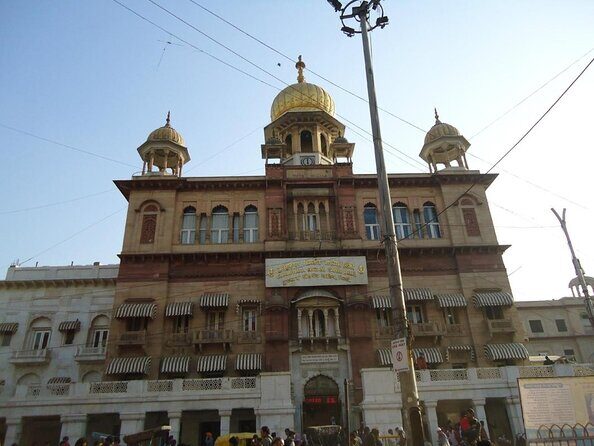
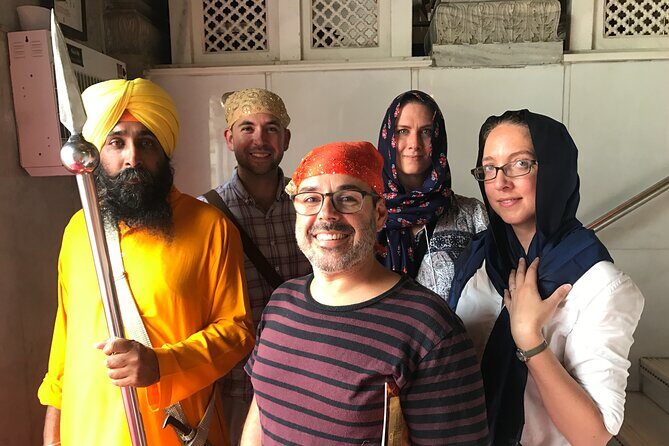
Gurudwara Sis Ganj Sahib is one of the most meaningful stops on this route. The tour explains Sikhism and highlights the community-service side of the faith—so you understand what you’re observing instead of treating it like scenery.
You also have a chance to participate in a community kitchen activity, if you’re willing and able. The tour notes you can try your hand at cooking in the community kitchen if you’re sporting enough. Even if you just watch, this is the kind of stop where the context matters more than the photos.
What makes this stop valuable is that it changes the pace. Markets can be fast and loud. A gurdwara visit slows your thinking down. You’ll leave with a different angle on Old Delhi—less about consumption, more about hospitality and service.





Kinari Bazaar and the wedding market: color, textiles, and festival energy
Next comes Kinari Bazaar, described as the colourful wedding market in Old Delhi. This is the stop where you start noticing patterns in how weddings are represented in the city: textiles, decoration, and the sheer variety of materials tied to big celebrations.
Your time here is brief, but it’s framed with a great observation: the market transforms with each festival. That means the scene isn’t one static look. It changes with the calendar, and your guide helps you spot why different times of year bring different visual styles.
Kinari Bazaar is ideal if you like shopping culture as a story, not just as a transaction. You’ll get to see how the city prepares for major life moments—right in the middle of everyday street life.
Gali Paranthe Wali: the paratha process in plain human terms
The final market stop is Gali Paranthe Wali. Instead of selling you an overeager food pitch, the tour focuses on learning the process of preparing paranthas—one of India’s most famous comfort foods.
You get only about 5 minutes here, so again, think of this as a quick educational snapshot. The goal isn’t a full meal tour; it’s understanding how the dish is built and why it’s so beloved. If you’re a food traveler, this kind of learning makes later meals taste better because you can connect what you’re eating to the steps behind it.
This finish also helps your pacing. You end with something sensory and local, after you’ve learned the bigger context of markets and community spaces. It’s a strong way to close a short afternoon.
Tea stop and bottled water: the small details that keep the tour enjoyable
I appreciate that this tour includes local tea and bottled water. Tea gives you a natural reset in the middle of market walking, and water keeps you from turning the rest of the route into a dehydration problem.
These inclusions matter at $30 because they remove extra micro-hassles. You’re not counting on finding the right drink spot while navigating busy streets. Instead, you get a planned pause where you can catch your breath and keep listening to the guide.
For a 3-hour tour, those two items do a lot of work. They make the experience feel smoother and more comfortable without adding cost.
Price and value: why $30 can make sense here
At $30 per person, this tour isn’t just cheap; it’s structured for value. You’re paying for a professional guide, guided stops at multiple major areas, plus transport elements (metro ride and rickshaw ride), and you’re also getting tea and bottled water.
The key detail is that the stops listed all have free admission tickets. That means your money goes toward direction, timing, and access to the right conversations, not toward entry fees piling up.
Also, the group size stays limited: a maximum of 10 travelers, and up to 5 people per booking. Smaller groups usually mean better question time and less waiting at each location. In a place like Old Delhi, that can make a real difference in how much you get out of 3 hours.
Finally, this tour is often booked about 47 days in advance on average. That suggests demand for a reliable short itinerary—especially for people on tighter schedules.
Who will love this tour (and who might want a different format)
This tour is a great fit if you want an Old Delhi highlights pass with real local context, not just photo stops. It’s also a good choice if you’re arriving with only one afternoon to spare. One of the best signs of fit is how people describe it as a perfect use of time when you want to see a lot without getting lost.
You’ll also like it if you enjoy:
- learning about Sikhism in a respectful, community-focused setting
- seeing wedding-market culture through Kinari Bazaar
- understanding street-food context without turning the trip into a long eating marathon
A possible mismatch: if you want extensive time for shopping, this isn’t designed as a shopping spree. Personal shopping isn’t part of what’s included, and the stop-ins are intentionally short.
Guide quality is the secret sauce
The guides are repeatedly described as kind, knowledgeable, and attentive, and that shows up in how the tour flows. Names like Pradeep and Salmon appear connected to this experience, and both are associated with a friendly, engaging approach.
In practice, that matters because Old Delhi is complex. When a guide gives you the stories behind Chandni Chowk, explains what you’re looking at in the markets, and frames Gurudwara Sis Ganj Sahib with meaning, you end up with a tour that feels guided rather than rushed.
Should you book this Old Delhi metro-and-rickshaw tour?
If you want a solid Old Delhi afternoon with transport built in, a guide leading the way, and small comfort extras like tea and bottled water, I’d say yes. It’s especially worth it when your schedule is tight and you don’t want to spend your energy figuring out routes.
Book it if you like short, focused itineraries where you walk to multiple landmarks and finish with food-learning context at Gali Paranthe Wali. It’s also a strong choice for first-timers who want the basics of Chandni Chowk, the wedding-market vibe at Kinari Bazaar, and a meaningful stop at Gurudwara Sis Ganj Sahib.
Pass or choose something else if you’re looking for long shopping time, a slow-food crawl, or a deep, hours-long exploration without fixed stops. For a quick but thoughtful Old Delhi loop, though, this one hits the sweet spot.
FAQ
How long is the Old Delhi tour?
It runs for about 3 hours.
What’s included in the ticket price?
You get a professional guide, metro ride, rickshaw ride, local tea, and a bottled water bottle.
Where does the tour start and end?
You meet at Inner Circle, Block A, Connaught Place, New Delhi, and the tour ends back at the meeting point.
Is there an admission fee for the stops?
The listed stops show free admission tickets.
How big are the groups?
The tour has a maximum of 10 travelers, with a maximum of 5 people per booking.
Can I cancel for free if my plans change?
Yes. You can cancel up to 24 hours in advance for a full refund. Canceling within 24 hours of the start time isn’t refunded.