REVIEW · MADURAI
Night Ceremony in Madurai Meenakshi Amman Temple
Book on Viator →Operated by TRIPGO INDIA · Bookable on Viator
Sacred music after dark in Madurai. A night ceremony at the Meenakshi Amman Temple turns one of India’s key active Hindu shrines into a living place, not just a landmark. You’re there in the Dravidian setting—Shiva and Meenakshi honored side by side—while the temple’s daily rhythm of prayers and music takes center stage.
I especially love the easy logistics: hotel pickup and drop, private air-conditioned transport, and bottled water during the tour. I also like having a local English or French speaking guide, so you’re not guessing what you’re seeing as the ceremony unfolds. Hearing how different shrines connect around the main complex can make the whole experience feel far more intentional.
One thing to plan around: entrance and camera fees aren’t included, and the experience needs good weather. If that matters to your schedule or budget, check what you want to pay for on-site before you go.
In This Review
- Key highlights worth your time
- Night ceremony at Meenakshi Amman: why this feels different than daytime
- The Dravidian layout you’ll walk through (Shiva, Meenakshi, and the ring of shrines)
- What happens during the night ceremony (music, prayers, and the temple’s daily rhythm)
- Kulasekara Pandya’s imprint: centuries-old details you can actually connect to
- Meeting your guide at night: hotel pickup and what to expect when you arrive
- Price and value: is $42.15 per person a fair deal?
- Practical tips for a smoother night temple visit
- Cameras and fees
- Comfort matters
- Weather is part of the deal
- Meet-up timing
- Who should book this night ceremony experience
- Should you book the Night Ceremony at Meenakshi Amman Temple?
- FAQ
- How long is the night ceremony experience?
- Where is this experience located?
- What’s included in the price?
- Are monument entrance fees and camera fees included?
- Does the tour include food or drinks?
- Is this experience private?
- Do I get a mobile ticket?
- Is the guide available in English or French?
- What happens if the weather is poor?
- FAQ
- When should I book to get the best chances?
- What is the cancellation policy?
Key highlights worth your time
- Hotel pickup and drop so you don’t waste night energy figuring out local transport
- Private AC vehicle for a calmer, more comfortable ride to the temple area
- Local English or French guide to translate the temple space while rituals are happening
- Focus on the core Meenakshi–Sundareswarar complex and its surrounding shrines
- Bottled water included so you stay comfortable during the 2–3 hour visit
- Mobile ticket for a smoother start at the meeting point
Night ceremony at Meenakshi Amman: why this feels different than daytime
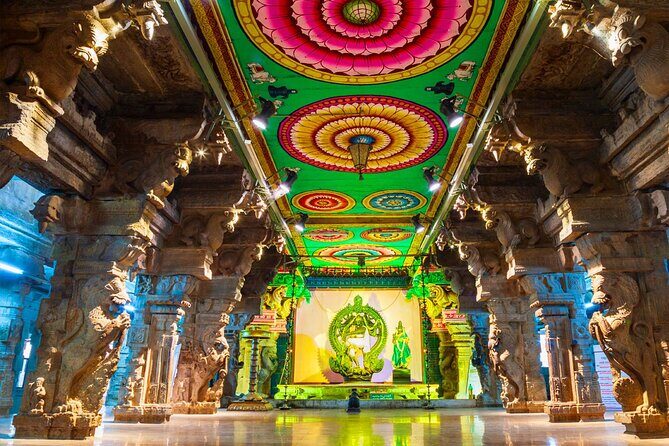
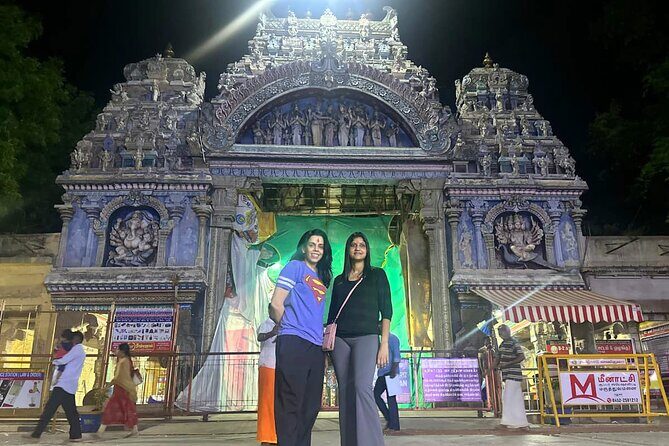
Madurai’s Meenakshi Amman Temple is important on paper. It’s also important in real life, because it’s active—meaning you’re not only looking at stone, you’re watching a working religious tradition. A night ceremony adds a different layer to that. The light changes, sound carries differently, and the temple courtyard feels more like a sacred space than a sightseeing stop.
What makes this particular experience practical is that it’s guided and timed for a short window: about 2 to 3 hours. You get enough time to understand what matters in the complex without turning your evening into a long, exhausting crawl.
This is also a smart choice if you’ve already done the temple in daylight. If you want to see the same sacred architecture through another lens, night helps. You’ll be looking at the same Dravidian forms, but with the atmosphere turned down in the “busy-photo” sense and up in the “ritual” sense.
And yes, having a guide matters here. Temple layouts in South India can feel like a maze if you don’t have a map in your head. A good guide helps you recognize what you’re standing near and why it’s there.
You can also read our reviews of more evening experiences in Madurai
The Dravidian layout you’ll walk through (Shiva, Meenakshi, and the ring of shrines)
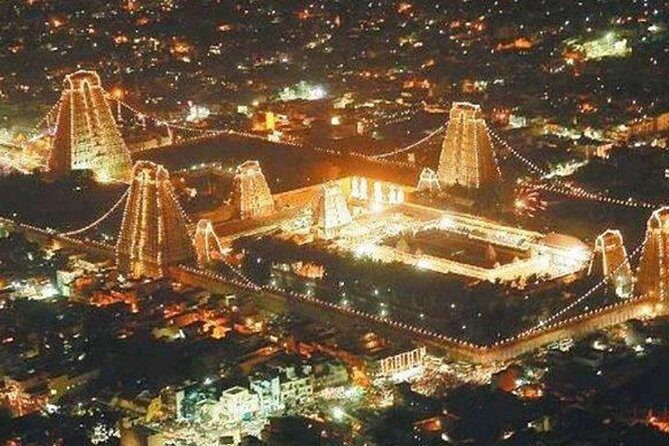
This temple complex is built around two central identities: Lord Shiva and his spouse Meenakshi. You’ll feel this in how the shrines relate to each other. Even in a short, guided visit, your guide can point out how the overall design works as a devotional circuit rather than a random collection of halls.
A helpful detail: the complex is set up with an encircling approach—so the architecture supports movement around the sacred center. That matters at night, because you’re usually trying to balance where you can see and where you can keep moving with the group. When the design naturally leads you around, the ceremony feels less like you’re interrupting it and more like you’re participating in the flow of what’s happening.
Around the main temple area, there are also shrines (koil) dedicated to specific deities and figures:
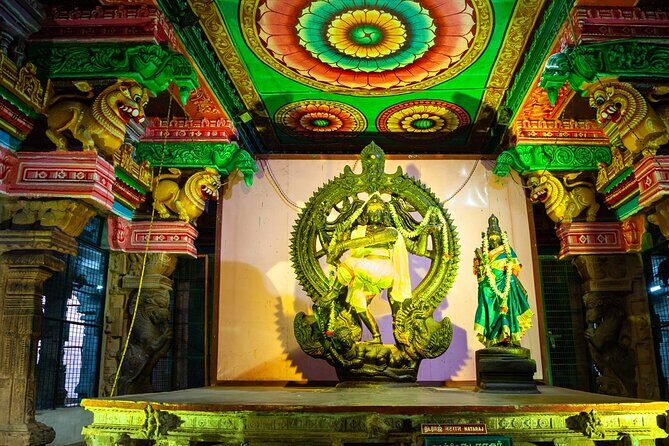
- Natarajar and Surya near the main temple
- Ayyanar in the east
- Vinayagar in the south
- Kariamalperumal in the west
- Kali in the north
Even if you don’t catch every detail of the ceremony itself, understanding that the complex is organized by these directions gives you a clearer mental picture. It also helps you notice how the guide connects one area to another while the ritual is underway.
What happens during the night ceremony (music, prayers, and the temple’s daily rhythm)
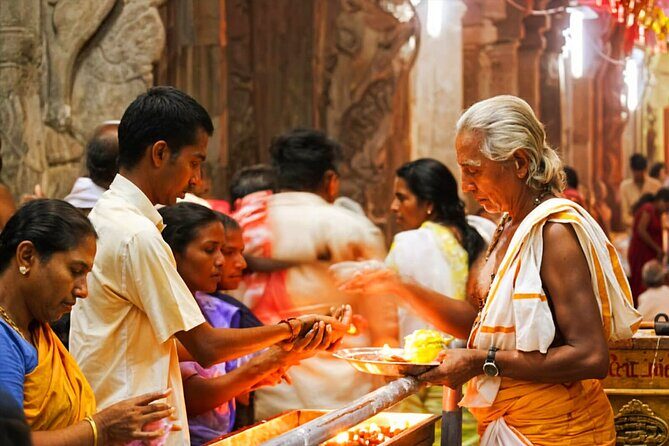
I like experiences where you can sense purpose, not just follow a checklist. Here, the ceremony is the reason you’re going. The temple’s traditions include the daily idea of waking the gods and goddess from spiritual rest with prayers and classical music. At night, you’re still seeing the temple’s lived rhythm—formal, repeatable, and devotional.
In practical terms, expect the evening to center on guided viewing and explanations while the ceremony happens around you. Your English or French speaking guide’s job is to help you read what you’re seeing: what the ritual context is, what you should pay attention to, and how the sacred space connects to the deities honored there.
One of the most valuable things you’ll get from a guide in a working temple is knowing what not to do. In places like this, small actions can be more important than people realize—standing in the wrong spot, pointing during prayers, or trying to photograph at the wrong moment can disrupt the calm. With a guide nearby, you’ll have a smoother, less stressful experience.
Also, don’t expect the ceremony to be designed for tourists. That’s not a flaw. It’s the point. You’re visiting an active temple, so the pace and priorities belong to the ritual first.
Kulasekara Pandya’s imprint: centuries-old details you can actually connect to
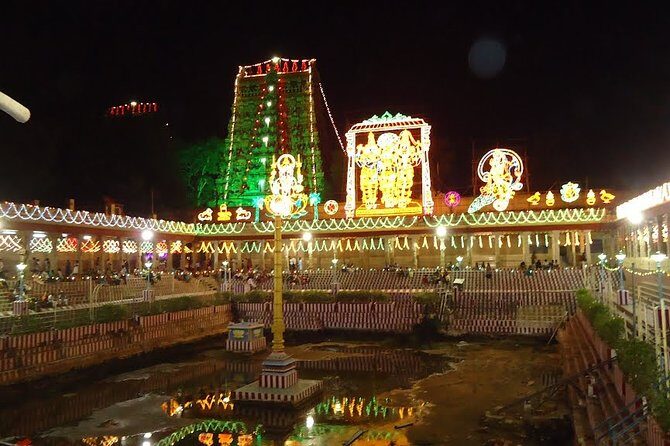
Even with a short 2–3 hour window, you’ll learn enough to tie the architecture to real names and dates. Parts of this temple trace to King Kulasekara Pandya, who reigned from 1190 to 1216 CE. He’s credited with building early surviving portions such as key structures at the entrance of the Sundareswarar shrine and the central portion of the Meenakshi shrine.
This isn’t just trivia. Knowing that the temple includes surviving sections from that era helps you look at the carvings and structures with more respect. You’re not seeing replicas designed for modern visitors—you’re seeing elements that have continued serving spiritual life long after their construction.
You’ll also hear about how Kulasekara Pandya contributed beyond the main halls. He’s associated with:
- Three-storeyed gopura entrance portions at the Sundareswarar shrine
- Shrines for named deities near the main temple complex
- A Mahamandapam (a major hall-like structure)
- His poem on Meenakshi called Ambikai Malai
Even if you don’t memorize every term, this gives you a framework. The temple isn’t only “pretty.” It’s part of a long chain of patronage, devotion, and artistic storytelling.
One more detail worth remembering: the gopura is described as being named for frescoes and reliefs that depict both secular and religious themes. That’s a great reminder that temple art in South India often carries more than one message at a time.
Meeting your guide at night: hotel pickup and what to expect when you arrive
This tour is designed to take the hard edge off your evening. You get hotel pick-up & drop, plus transport by a private air-conditioned vehicle. That matters in Madurai after dark, because it keeps you from dealing with the “where do we stand, which road, how long will it take” uncertainty.
The flow is simple:
- Your driver picks you up from your hotel.
- You meet your guide close to the temple.
- You spend about 2–3 hours with the group during the night ceremony period.
In the experience itself, having the guide speak English or French is a real advantage. You’re not just following movement—you’re learning what the movement means.
One guide name that stood out here is Venkatesh. The highlight wasn’t only that he explained things well—it was that he helped shift the entire feel of the visit. The temple can feel very different when you experience it in daylight versus during a ceremony. Good guidance helps you notice the change.



Price and value: is $42.15 per person a fair deal?
At $42.15 per person, this tour is priced like a focused evening add-on with real support, not a cheap bus-and-hope option. What you get for that price is the big value piece:
Included:
- Hotel pickup & drop
- Private air-conditioned vehicle
- Local English or French speaking guide
- Bottled water during the tour
Not included:
- Monument entrance fees
- Camera fees
- Food and drinks
Here’s how I’d think about value as a practical matter: you’re paying mainly for the guided night experience plus the comfort/logistics. If you’d otherwise have to hire a taxi, coordinate directions, and pay for interpretation on your own, the package can start to look reasonable.
If your plan includes lots of extra on-site charges (especially camera fees), your total day cost can rise. But that’s also why it’s smart to arrive knowing that these are separate line items. It helps you avoid the last-minute surprise that can sour an evening.
Also, the experience offers group discounts and is private in the sense that it’s for your group only. So you’re not stuck in a massive public crowd with no support.
Practical tips for a smoother night temple visit
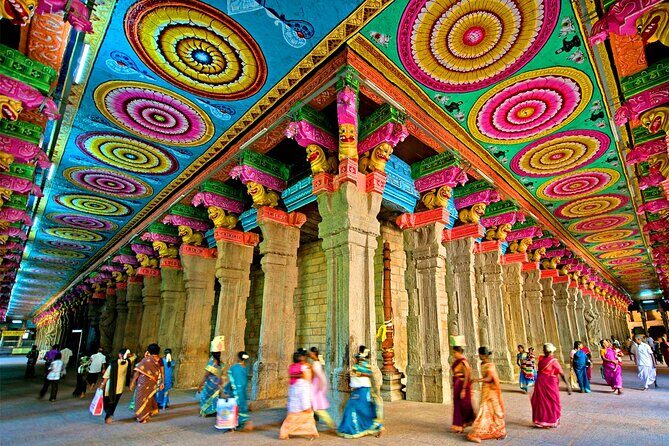
Night rituals can be calm, but the setting is still a temple—so act with respect and plan for basics.
Cameras and fees
Since camera fees are not included, assume you may need to pay on-site if photography is allowed during parts of the ceremony. It’s worth deciding beforehand whether you care enough to pay, or whether you’d rather focus on watching.
Comfort matters
Your tour time is short—2 to 3 hours—but you’ll still want to be comfortable. Wear practical shoes and keep your movement steady with the group. If you’re carrying a bag, keep it light so you can adjust easily.
Weather is part of the deal
Good weather is required. If weather conditions interfere, the experience will be offered on a different date or you can request a full refund. In other words, don’t plan your entire Madurai schedule around this one night without a backup idea.
Meet-up timing
Confirmation comes at booking time, and you’ll have a mobile ticket. Keep your phone charged enough to access it when needed.
Who should book this night ceremony experience
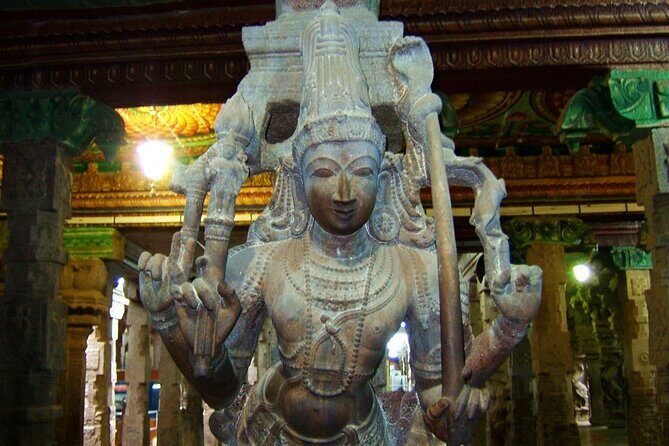
I’d book this if you want:
- A guided temple evening that makes sense fast
- A comfortable setup with pickup/drop and private AC transport
- Help understanding the key devotional layout of Shiva and Meenakshi and the surrounding shrine directions
It’s also a good fit if you like authentic, active religious spaces and you don’t need a long sightseeing day. The focus here is the ceremony atmosphere and the meaning behind what you see.
If you’re the kind of visitor who hates crowds, this can still work well because the tour is private to your group and guided. If you’re the kind of visitor who only wants the quickest photo spots, you may prefer something shorter or more flexible. But for a temple visit with context, this is the right length.
Should you book the Night Ceremony at Meenakshi Amman Temple?
Yes, if you want an organized evening that trades guesswork for guidance and comfort. The strongest reasons are the practical inclusions—hotel pickup/drop, private AC vehicle, bottled water, and a local English/French guide—and the fact that you’re experiencing a working temple ceremony rather than a passive viewing.
I’d hesitate only if camera/entrance fees are a major unknown for your budget, or if you’re traveling during a time when weather is unpredictable and you can’t shift plans easily. If either of those is true, you can still go, but I’d plan it like a flexible evening—not a fixed, “no changes allowed” commitment.
FAQ
How long is the night ceremony experience?
The experience runs about 2 to 3 hours.
Where is this experience located?
It’s in Madurai, India, centered on the Meenakshi Amman Temple.
What’s included in the price?
The package includes bottled water, hotel pick-up and drop, transport by private air-conditioned vehicle, and a local English or French speaking guide.
Are monument entrance fees and camera fees included?
No. Monument entrance fees and camera fees are not included.
Does the tour include food or drinks?
Food and drinks are not included.
Is this experience private?
Yes. It’s private in the sense that only your group participates.
Do I get a mobile ticket?
Yes. A mobile ticket is included.
Is the guide available in English or French?
Yes. The guide is available in English or French.
What happens if the weather is poor?
The experience requires good weather. If it’s canceled due to poor weather, you’ll be offered a different date or a full refund.
FAQ
When should I book to get the best chances?
On average, this is booked about 13 days in advance.
What is the cancellation policy?
Free cancellation is available. You can cancel up to 24 hours in advance for a full refund. If you cancel less than 24 hours before the start time, the amount you paid isn’t refunded.