REVIEW · NEW DELHI
Old And New Delhi Private Guided Tour With Entrances- 8 Hours
Book on Viator →Operated by VKS TOURS · Bookable on Viator
Delhi feels more manageable with help.
This private guided tour strings together Old and New Delhi’s biggest landmarks in one day, with a driver and guide handling the travel between stops. You’ll start with spiritual and political powerhouses, then move into the sights and smells of Old Delhi, including a classic tuk-tuk ride through the market area.
I especially like two things: first, the round-trip pickup option from your hotel (or airport/train station) saves you from the city’s timing headaches. Second, the day is built around major stops with smart ticket handling—some entries are free, and key admissions are included—so you spend more time looking and less time figuring out.
The one thing to plan around is pacing: several famous places get short visits, so if you want slow, photo-heavy wandering, you’ll likely want to build in extra time after the tour. Also, meals aren’t included, so I’d budget for snacks or lunch depending on your pickup time.
In This Review
- Key highlights you’ll feel on the ground
- Why this Old + New Delhi day works so well
- Pickup comfort and the route logic (starting as early as 6am)
- Stop-by-stop: Old Delhi starts with spirituality at Gurudwara Bangla Sahib
- Rashtrapati Bhavan and Parliament House: New Delhi’s power center, in bite-size form
- Red Fort and the Mughal scale problem (in the best way)
- Chandni Chowk by tuk-tuk: how Old Delhi goes from theory to sensory reality
- Khari Baoli, the spice market you’ll actually smell
- Jama Masjid: a major mosque stop with admission included
- Swaminarayan Akshardham: the most eye-catching stop on the day
- Lotus Temple: a calm, flower-like pause
- Qutub Minar: the tallest landmark and a timing check
- What’s actually included (and why it matters for value)
- Guides who make the day click (and examples you may meet)
- Your pace, your questions: how to use a private tour well
- Practicalities that will save you time
- Should you book this Old and New Delhi private guided tour?
- FAQ
- How long is the Old and New Delhi private guided tour?
- What does the tour include for transportation?
- Which stops have free admission on this tour?
- Are any entry tickets included?
- Is a tuk-tuk ride included?
- Is cancellation free?
Key highlights you’ll feel on the ground
- Old Delhi street time with a tuk-tuk ride that keeps you from walking every inch in the busiest lanes
- A/C comfort plus door-to-door pickup from Delhi NCR locations like Noida, Gurugram, and Ghaziabad
- A well-timed mix of icons from Gurudwara Bangla Sahib to Rashtrapati Bhavan, then Red Fort and Jama Masjid
- Iconic entrances included at Swaminarayan Akshardham and Qutub Minar, plus Jama Masjid admission
- Spice-market sensory stop at Khari Baoli, known as Asia’s largest spice market
Why this Old + New Delhi day works so well
Delhi is two different cities wearing the same name tag. One side is ceremonial, political, and monumental; the other is tight lanes, vendors, and daily life, where you can’t really “just drive past” without missing the point. What makes this tour practical is that it stitches those worlds together in one 8-hour block, with a guide keeping the story moving while a driver keeps the logistics from eating your time.
As I see it, the real value is not that you check off famous sites. It’s that someone else handles the route between them. Delhi can be unpredictable with traffic and distances, so having the day pre-planned means you’re less likely to lose the morning to transit math.
You can also read our reviews of more guided tours in New Delhi


Pickup comfort and the route logic (starting as early as 6am)
You can choose a pickup time starting from 6am, and the tour includes pickup and drop from anywhere in Delhi, Noida, Gurugram, Ghaziabad, and Faridabad. That matters because the early start gives you a better shot at a calmer day, especially once you’re heading into the Old Delhi areas where moving through crowds can take longer than you expect.
The vehicle is air-conditioned, which is a big deal for an all-day outing—especially if your day starts warm and stays warm. You also get bottled mineral water, so you’re not scrambling for something to drink between stops.
Finally, this is a private tour, meaning it’s only your group. That tends to make a difference when you’re balancing photos, questions, and short transitions.
Stop-by-stop: Old Delhi starts with spirituality at Gurudwara Bangla Sahib
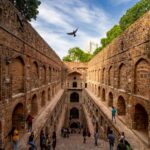
The day begins at Gurudwara Bangla Sahib, a Sikh gurdwara associated with the eighth Sikh Guru, who stayed here in 1664 and helped heal people suffering during a cholera epidemic. The holy pond (Sarovar) is part of why this place feels grounded and reflective even before you hit the louder streets of Old Delhi.
You’ll spend about 30 minutes here, and it’s also one of the stops with free admission. For me, the best part of starting with a gurdwara like this is the pace reset: before the political buildings and the market energy, you get a meaningful introduction to a major part of Delhi’s religious life.
Rashtrapati Bhavan and Parliament House: New Delhi’s power center, in bite-size form

Next up are New Delhi’s governing landmarks. Rashtrapati Bhavan (the President’s House) is introduced as the second-largest President house in the world, originally built as the residence for the Viceroy of India. Then comes Parliament House, home to India’s bicameral parliament—Lok Sabha and Rajya Sabha.
Both stops are listed with free admission and short visit windows (around 10 minutes each). This is a good fit if you’re the type of traveler who wants context without turning the day into a museum marathon. If you’re hoping for long, linger-and-learn time at government buildings, you may feel those minutes go quickly, but that’s the trade-off for seeing more of the city in one day.
Between these stops, you’ll also pass by the 1921 Tomb of the Unknown Soldier, where names of 13,300 Indian army servicemen carved into the wall memorialize those who died in the First World War. Even with a brief stop, this is one of those moments that adds gravity to the day.
Red Fort and the Mughal scale problem (in the best way)

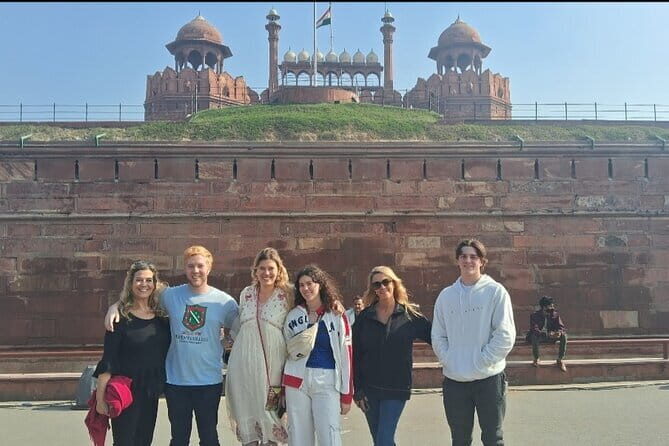
Red Fort is one of Delhi’s most iconic Mughal-era structures, built by Shah Jahan between 1639 and 1648 and serving as the main residence for Mughal emperors. The architecture is described as Indo-Islamic and Mughal in style, and just seeing it in person changes how you understand the city’s historic weight.
You’ll have about 15 minutes here, with free admission. Fifteen minutes is not a full deep-study visit, but it’s enough time to appreciate scale and snap the photos you’ll want later. If you’re someone who likes to read every inscription, you might find this stop a bit short—but for most people, it hits the sweet spot.
You can also read our reviews of more private tours in New Delhi






Chandni Chowk by tuk-tuk: how Old Delhi goes from theory to sensory reality

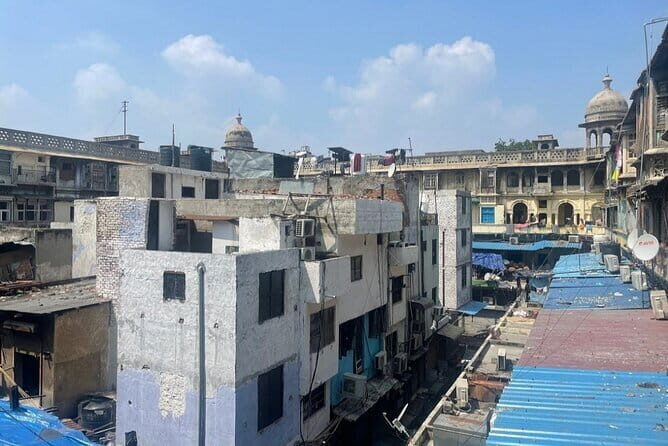
Then you shift into Old Delhi mode. You’ll sit back during a tuk-tuk ride past the colorful, busy bazaars of Chandni Chowk while your guide explains the role these markets play for locals. This part is one of the reasons I like this tour: it acknowledges that Old Delhi is active and sometimes exhausting, and it gives you a moving viewpoint without making you walk every block.
Expect about 30 minutes in this area, with free admission stops nearby. It’s not about shopping pressure—it’s about seeing how the city functions at street level.
If you’re traveling with limited time, Chandni Chowk plus a tuk-tuk ride is one of the most efficient ways to understand Old Delhi. You get the street energy, the layout, and the local rhythm, without burning your entire afternoon on transit between markets.
Khari Baoli, the spice market you’ll actually smell

Next is Khari Baoli, described as Asia’s largest spice market. This stop is built for your senses. You’ll spend around 30 minutes here, and the point is to see and learn about Indian spices and how they’re used.
Even if you don’t buy much, it’s a fun place to ask questions, because spices are one of those topics where a guide can connect what you’re seeing with everyday cooking and commerce. It’s also an easy stop to enjoy because it doesn’t require museum timing—you can look around, ask, and soak it in.
Jama Masjid: a major mosque stop with admission included

After the market energy, you’ll get to Jama Masjid, a major Muslim place of worship. You’ll explore for about 20 minutes, and the tour includes admission ticket here.
This is a good contrast to the tight bazaar feel. The architecture and scale can reset your eyes after the colors and movement around the spice and market area. It also keeps the day from becoming only street sightseeing—it adds a moment of spaciousness and significance.
Swaminarayan Akshardham: the most eye-catching stop on the day
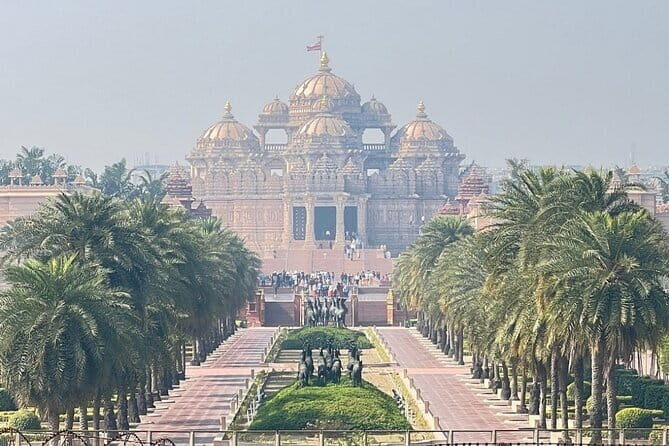
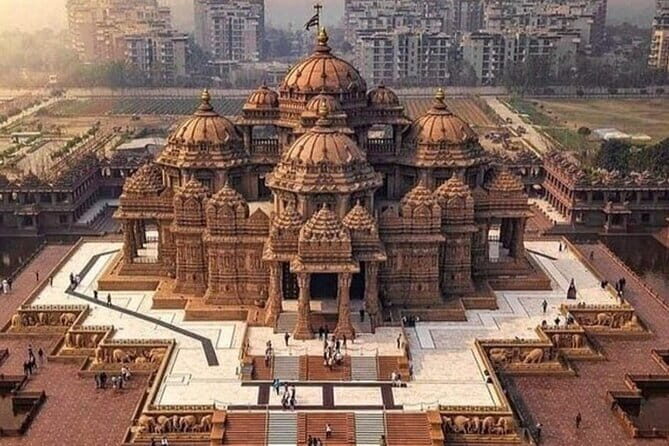
Then comes Swaminarayan Akshardham, described as the largest Hindu temple in the world and noted as one of the most beautiful places in Delhi worth seeing. You’ll spend about 1 hour here, and the admission ticket is included.
This is the kind of stop that tends to produce the strongest photos of the day because the sight is designed to be seen from many angles. It also gives you a break in the day from Old Delhi’s narrower streets, with a more planned-feeling environment.
If you’re visiting Delhi for the first time and you only have one day, this is the stop I’d protect most. Even if you’re not a temple person, the scale and design are hard to dismiss.
Lotus Temple: a calm, flower-like pause
Lotus Temple follows, a Bahai house of worship dedicated in December 1986. The recognizable flower-like shape makes it easy to spot, and you’ll have about 30 minutes here.
Admission is listed as free. I like this stop because it works as a breathing moment between bigger, ticketed experiences. After Swaminarayan Akshardham, Lotus Temple gives you a different kind of visual—clean lines and a peaceful atmosphere that’s very different from bazaars.
Qutub Minar: the tallest landmark and a timing check
The final major stop is Qutub Minar, described as the tallest minaret in Delhi. You’ll spend about 1 hour here, and admission ticket is included. There’s also a note that it’s optional if the site is open, which is worth keeping in mind.
Qutub Minar is one of those landmarks where even a modest visit feels meaningful because the tower dominates the skyline. If you’re hoping for the best views, plan to arrive with enough energy left to look up and take your time with photos. One hour is a solid window for walking the area and enjoying the scale without feeling rushed.
What’s actually included (and why it matters for value)
Here’s what you get included: an air-conditioned vehicle, pickup and drop, taxes/fees/GST, bottled mineral water, and a tuk-tuk ride in Old Delhi. There are also admission ticket inclusions at certain stops, plus the tour includes entry tickets if purchased.
That’s important for value. At $3.97 per person for an 8-hour private guided day covering multiple famous sights, the pricing is striking. In other words, you’re paying for convenience, organization, and a guide’s context—not just a ride.
One practical tip from how this tour is structured: not every stop is ticketed. Several major sights like Gurudwara Bangla Sahib, Rashtrapati Bhavan, Parliament House, Red Fort, Chandni Chowk, Khari Baoli, and Lotus Temple are listed as free admission, which helps you keep costs down. Then you have selected ticketed entrances included for Jama Masjid, Swaminarayan Akshardham, and Qutub Minar.
Guides who make the day click (and examples you may meet)
The quality of a Delhi day often comes down to the guide’s explanations. In this case, multiple guide names show up as standout performers: Vasu, Saru, Shivam, and Shopra. What they’re praised for is clear, fluent English and the ability to connect sites to the story behind them—architecture styles, how Delhi works, and practical directions like where to eat or how to navigate.
Even if you don’t remember every fact later, you’ll feel the payoff in how you understand what you’re seeing while you’re standing in front of it. Delhi is too big to “figure out on vibes.” A strong guide helps you get meaning fast.
Your pace, your questions: how to use a private tour well
Because it’s private, you can use the time intelligently. I’d come with a short list of what you want out of the day, like:
- one or two themes (Mughal Delhi, modern political Delhi, or religious Delhi)
- how many photos you want per stop
- whether you want extra time on markets like Khari Baoli or more time at Qutub Minar
A few of the site windows are short, so your best strategy is to ask your questions while you’re there. With this format, the guide can answer in real time, and you avoid the common travel problem where you ask everything after you’ve already moved on.
Practicalities that will save you time
If you’re deciding on pickup time, start earlier when possible. The tour starts at 6am for scheduling, and an early start gives you more comfortable breathing room between stops.
Wear shoes you can walk in. Even with vehicle transfers and tuk-tuk time, you still spend real chunks of the day moving around at major sites. And while this tour provides bottled mineral water, you should plan for snacks or lunch because meals aren’t included.
Also keep your expectations aligned with the durations. Many highlights get 10–30 minutes, and a couple of bigger stops get closer to an hour. If your travel style is slow, you’ll likely want to do additional visits on another day.
Should you book this Old and New Delhi private guided tour?
I’d book this tour if you want one well-organized day that mixes Old Delhi’s street-level atmosphere with New Delhi’s political and architectural landmarks—without spending your time routing taxis and arguing with traffic. The private guide aspect is especially worth it in a city where distances add up fast.
Skip it only if you’re the type who needs long, quiet time at each site. This tour is efficient by design, with short windows at many stops, and it’s better suited to travelers who want clarity and variety in a single day rather than deep, slow study.
If you do book, do this one thing: show up with a couple of priorities (markets vs. monuments, or Mughal vs. modern). The tour’s structure makes it easy to see a lot, but your priorities are what will make the day feel like your trip—not just a list of places.
FAQ
How long is the Old and New Delhi private guided tour?
It lasts about 8 hours.
What does the tour include for transportation?
You get an air-conditioned vehicle and round-trip pickup and drop from your Delhi/NCR location, with bottled mineral water included.
Which stops have free admission on this tour?
Gurudwara Bangla Sahib, Rashtrapati Bhavan, Parliament House, Red Fort, Chandni Chowk, Khari Baoli, and Lotus Temple are listed as free admission stops.
Are any entry tickets included?
Yes. Admission is included for Jama Masjid, Swaminarayan Akshardham, and Qutub Minar, and the tour also notes entry tickets if purchased.
Is a tuk-tuk ride included?
Yes. There is a tuk-tuk ride in Old Delhi.
Is cancellation free?
You can cancel for a full refund up to 24 hours in advance of the experience start time. If you cancel less than 24 hours before, the amount paid is not refunded.