REVIEW · MUMBAI
Mumbai Bicycle Tour
Book on Viator →Operated by Reality Tours & Travel Pvt Ltd · Bookable on Viator
Mumbai wakes up at 6:15 on two wheels. This early-morning Mumbai Bicycle Tour is built around cooler temps, quieter streets, and guided stops that show how the city runs before the big crowds arrive. You glide from Colaba toward landmark sights and everyday neighborhoods, with commentary that connects architecture, markets, and religious spots into one practical morning route.
I love how the ride stays calm and manageable: flat terrain, a relaxed pace, and frequent chances to get off and look around. I also love the stop mix—Crawford Market for the sights of fruit, veg, and meat; Panjrapole for the cow shelter; then the sea-front break at Marine Drive and the fish market energy at Sassoon Dock.
The one drawback to consider is road-feel. Mumbai traffic can look intense, and a few riders note that helmet fit isn’t always perfect, so you’ll want to speak up if yours feels off.
In This Review
- Key highlights to know before you go
- Why a dawn bike ride makes Mumbai feel doable
- Price and value: what $39.14 buys you in the real world
- Getting to Cusrow Baug and rolling out on time
- Gateway of India: the big postcard stop, minus the crowds
- CST and the morning commute: rail power in Victorian Gothic form
- Crawford Market: fruit, veg, meat, and India’s electricity milestone
- Panjrapole cow shelter: the hands-on stop that’s oddly moving
- Mumba Devi Temple and the name behind the city
- Marine Drive: the sea-front calm before the day swells
- Sassoon Dock: fish-market chaos you actually get to see
- Breakfast at Madras Cafe: how the tour should end
- Traffic, safety, and helmet fit: what to watch before you ride
- Who this Mumbai Bicycle Tour is best for
- Should you book this Mumbai Bicycle Tour?
- FAQ
- What time does the Mumbai Bicycle Tour start?
- Where is the meeting point for the tour?
- Where does the tour end?
- How long is the tour?
- What’s included in the tour price?
- Is hotel pickup and drop-off included?
- What is the minimum age to join?
- Is the cycling difficult?
- Is free cancellation available?
- What group size is used?
Key highlights to know before you go
- A 6:15am start that helps you beat both heat and crowds
- Tour coverage that mixes monuments and daily life in South Mumbai
- Crawford Market and CST for architecture and big-city momentum
- Feeding cows at Panjrapole for a hands-on, memorable stop
- Marine Drive plus Sassoon Dock for sea views and real market action
- Breakfast at the end that turns the ride into a full morning out
Why a dawn bike ride makes Mumbai feel doable
Mumbai at sunrise has a different rhythm. At 6:15am, the city is moving, but it’s not fully loud yet. That means you spend more of your time looking at places and less time stuck in standstill traffic.
A bike also changes what you notice. You pick up details you’d miss from a bus window—little shopfront signs, morning rituals outside temples, and the flow of commuters heading toward major rail. It’s the kind of “small effort, big payoff” sightseeing that actually works.
This tour is built for a relaxed ride. The terrain is described as flat, and the group pace is meant to feel comfortable for most people ages 7 and up. Still, you’re riding through a real city with real roads, so keep your expectations practical.
You can also read our reviews of more tours and experiences in Mumbai.
Price and value: what $39.14 buys you in the real world
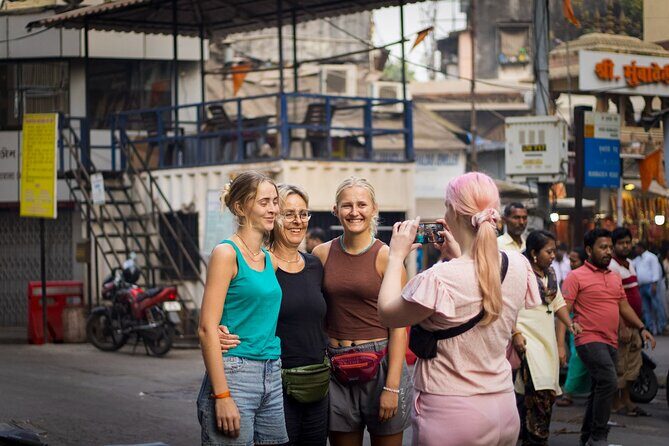
At $39.14 per person for about 3 hours 45 minutes, this is one of those tours that feels like good local transport plus guided sightseeing. You’re not just paying for a bike. You’re getting an English-speaking guide, a helmet, and breakfast included.
You also get a route where many stops are listed as free admissions. That matters because it reduces add-on costs on a morning when you’re already paying for the guided route. In other words, the price is mainly for organization, time with a guide, and the bike experience.
Group size maxes out at 25, which keeps things social without turning into a chaotic stampede. If you like meeting new people while still keeping control of your own pace, this sweet spot usually works well.
Getting to Cusrow Baug and rolling out on time
You meet at Cusrow Baug Colony, Apollo Bandar, Colaba, and the tour starts at 6:15am. There’s no hotel pickup, so plan to get yourself to the meeting spot on public transport or by short taxi/rick movement.
One practical tip: the meeting location is a restaurant area, and a few people found it a bit tricky to locate quickly. Before you leave your hotel, I’d look up the exact pin and walk it once on your phone while you’re still fully rested.
Once everyone’s gathered, you get outfitted with the bike and helmet. The tour runs with the idea that you’re ready to ride fast: short meet-up, quick adjustments, then off into the early street grid.
Gateway of India: the big postcard stop, minus the crowds
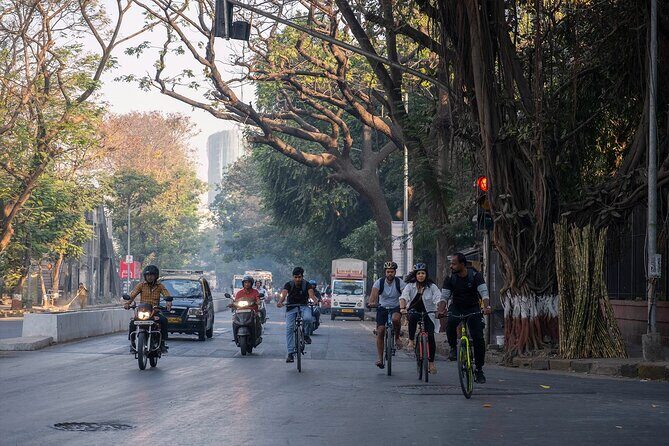
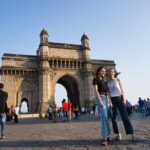
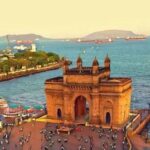
The first stop is the Gateway of India. This monument blends Hindu and Islamic architectural styles and sits on the waterfront of southern Mumbai. It has a long visitor story too: since 1924, it was the first major sight people would see arriving by boat.
In the morning, it’s a different experience. You’re there early enough that you can actually look at details without being swallowed by tour-group noise. Even if you’ve seen photos, being close enough to notice proportions and materials is a real upgrade.
It’s also a good warm-up moment. You’ll likely feel the scale of the area, then you’ll start transitioning from the waterfront into side streets.
CST and the morning commute: rail power in Victorian Gothic form
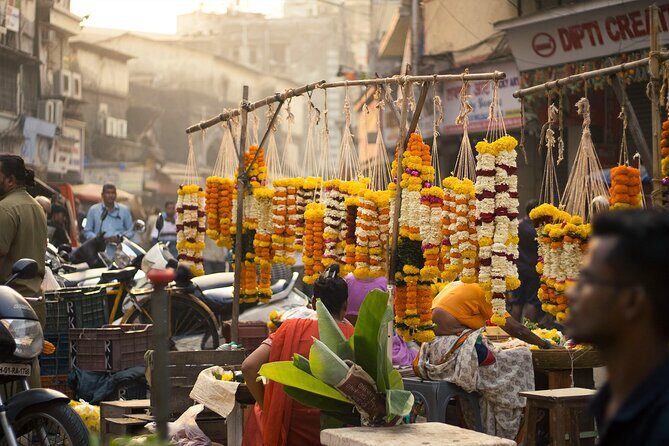
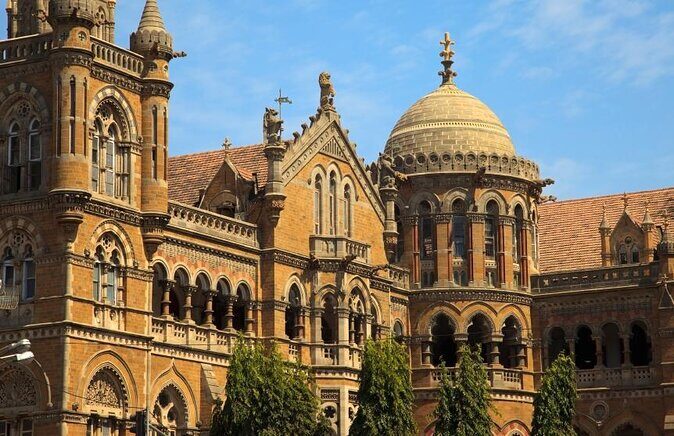
Next up is Chhatrapati Shivaji Terminus (CST), formerly Victoria Terminus. This is one of India’s most beautiful railway stations, and it’s also a UNESCO World Heritage site.
If you’ve ever watched the film Slumdog Millionaire, you might recognize CST’s Victorian Gothic look. The point of the stop isn’t just “pretty building.” It’s context: you see how the station fits the city’s daily machine, especially with commuters heading in during the early rush.
A quick reality note: CST is a big site with lots of movement around it. You’ll want to stay close to your guide in the busy areas, and treat it like a working transit zone rather than a museum.




Crawford Market: fruit, veg, meat, and India’s electricity milestone
Then you head to Crawford Market, one of the city’s largest wholesale markets for fruit, vegetables, and meat. This is the type of stop that makes the tour feel genuinely local because it’s not staged. People are buying, sellers are working, and the building hums with morning activity.
One standout detail: it was the first building in India to get electricity. That’s not the kind of fact you learn from a casual walk, and it changes how you view the architecture and infrastructure around markets.
The trade-off is sensory. Markets can bring strong smells and busy crowds indoors. If you’re sensitive to food odors, you’ll still be okay, but don’t expect it to feel like a polite indoor attraction.
Panjrapole cow shelter: the hands-on stop that’s oddly moving
After the market energy, you stop at Bombay Panjrapole, a cow shelter where more than 350 sacred cows and other animals are sheltered. The tour gives you a chance to feed the resident cows, turning the visit from “just look” into something you can participate in.
This is one of the more meaningful stops on the route because it’s practical and human at the same time. You see how care and belief connect in a daily setting, not just as a ceremony you watch from a distance.
Also, it helps break up the morning emotionally. After the loudness of markets and stations, Panjrapole feels calmer, even though it’s still part of an active system.
Mumba Devi Temple and the name behind the city
Next is Mumba Devi Temple. This is described as the historical Hindu temple that Mumbai was named after. The tour includes time to stop, dismount, and look inside.
This stop works well because it links the city’s identity to something older than the skyline. You’re not just getting facts about buildings; you’re getting the why behind the place.
As with any temple visit, dress and behavior matter. The tour timing is early and relatively relaxed, which usually makes it easier to observe without feeling rushed.
Marine Drive: the sea-front calm before the day swells
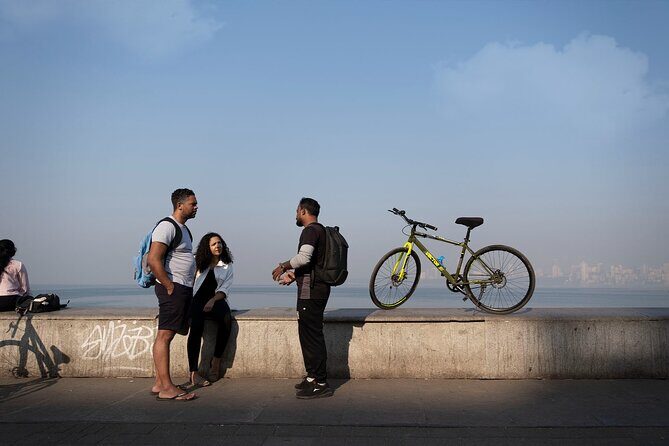
Now you ride along Marine Drive, a scenic 3 km promenade by the Arabian Sea. In the evening, it’s known for being packed with friends and couples, but in the morning it’s quieter and feels like you have the space for a few minutes.
This is a relief break in the best way. After markets and station areas, Marine Drive gives you open air and wide views. You can breathe, take photos, and still stay in motion.
If you’re thinking about whether a bike tour is worth it, this stretch is one of the reasons why. It’s the kind of view you’d rather feel rolling past than standing still for.
Sassoon Dock: fish-market chaos you actually get to see
The tour ends with a stop at Sassoon Dock, described as a vibrant fishing market area. You’ll see fishermen unloading fish and women and children cleaning shrimp, which gives the visit its real texture.
This is the point where Mumbai stops looking like a sightseeing itinerary and starts looking like a living economy. It’s fast, physical work, and it shows how the city feeds itself.
The consideration here is simple: fish markets have smells and close quarters. If you’re okay with that, it’s fascinating. If you’re not, you’ll still learn a lot, but keep your expectations set and your senses prepared.
Breakfast at Madras Cafe: how the tour should end
The tour finishes back near the meeting area at Madras CafeAziz Mansion on Colaba Causeway, where you enjoy a typical Indian breakfast with your guide and new friends.
This ending is smart. You’re not exhausted in a “who knows how long we’ll sit here” way, and you’re not starving either. You’ll also have time to compare what everyone noticed—some people focus on CST architecture, others remember the cow feeding, and others talk nonstop about the market moments.
Breakfast is included, so it also lowers the cost of your day. You can plan the rest of your Mumbai trip without needing to budget extra for a sit-down meal that morning.
Traffic, safety, and helmet fit: what to watch before you ride
Mumbai roads can feel chaotic from a bike seat, even when you’re moving at a relaxed pace. The good news is that the tour is run with safety in mind: guides help the group cross and navigate through busy spots.
I’d still do two things before you go. First, ask the guide to make sure your helmet fits properly before you roll. Several riders noted helmet sizing problems, which is the last thing you want in a city environment.
Second, treat this as active sightseeing, not a leisurely spin with zero surprises. You’ll be riding and stopping often, and some streets can be tight or busy.
If you’re nervous about traffic, this tour can actually be a confidence builder because you’re not doing it alone. You’re following a local guide who knows where the group can safely move.
Who this Mumbai Bicycle Tour is best for
This tour is a great fit if you want an early start, you like a mix of major landmarks and everyday scenes, and you prefer walking less while still seeing more up close.
It’s also a solid option if you’re short on time. In one morning, you cover the waterfront (Gateway of India), a major UNESCO site (CST), a big market (Crawford Market), a cow shelter (Panjrapole), temple time (Mumba Devi), a sea promenade (Marine Drive), and a working fish dock area (Sassoon Dock).
If you’re very sensitive to smells or you hate being near busy market areas, you might find the Crawford Market and Sassoon Dock stops a challenge. But the tour gives you context, so even a tough sensory moment can still be worth it.
Should you book this Mumbai Bicycle Tour?
Yes, if you want a practical early-morning way to see South Mumbai without waiting in traffic or missing the daily stuff that makes the city real. The value is strong because the price includes a guide, bike, helmet, and breakfast, and the route has a clear logic: landmarks first, then markets and local life, then a sea-front reset.
You should think twice if you’re uncomfortable with road conditions or you strongly prefer low-sensory activities. In that case, you might still enjoy it, but go in knowing that markets and docks can be intense.
FAQ
What time does the Mumbai Bicycle Tour start?
The start time is 6:15am.
Where is the meeting point for the tour?
You meet at Cusrow Baug Colony, Apollo Bandar, Colaba, Mumbai, Maharashtra, India.
Where does the tour end?
The tour ends at Madras CafeAziz Mansion, Shahid Bhagat Singh Rd, Railway Colony, Apollo Bandar, Colaba, Mumbai, India, where you’ll have breakfast.
How long is the tour?
It runs for about 3 hours 45 minutes.
What’s included in the tour price?
The tour includes a bicycle, helmet, an English-speaking guide, and breakfast.
Is hotel pickup and drop-off included?
No. Hotel pickup and drop-off is not included.
What is the minimum age to join?
The minimum age is 7 years.
Is the cycling difficult?
The tour is described as cycling at a relaxed pace over flat terrain.
Is free cancellation available?
Yes. You can cancel for a full refund up to 24 hours in advance of the experience start time.
What group size is used?
The tour has a maximum of 25 travelers.