REVIEW · MANALI
Multi-Day Trip Himalayan Cycling Expedition from Manali to Leh
Book on Viator →Operated by Unventured Expeditions Pvt Ltd · Bookable on Viator
High passes demand real effort.
This Manali to Leh Himalayan cycling expedition turns a long drive into a climb-by-climb bike route, with a guide, a support vehicle, and daily rides that range from manageable to genuinely tough. You’ll pedal through thin-air country and cross iconic passes like Rohtang La and Khardung La, with filtered water, snacks, and full meals handled for you.
Two things I really like: you get bike + helmet + gear support included, so you can focus on riding instead of logistics, and you’re not alone on the road thanks to a support vehicle running with the group. A practical drawback to plan for: you’ll be working at high altitude (many days climbing toward 4,000m+), so you need moderate fitness and a mindset for slow, careful effort, plus this trip is listed as non-refundable.
In This Review
- Key Highlights You’ll Feel on the Road
- Himalayan Cycling Expedition: Manali to Leh’s Real-Deal Mix of Effort and Views
- Price and Value: What $2,400 Buys You (and What You Still Pay For)
- Day 1 Transfer From Delhi to Manali: The Long Start That Sets the Pace
- Manali Bike Setup (Day 2): Inspect, Assemble, Then Get Your Legs Working
- Marhi to Rohtang La (Days 3–4): Snow Walls and a Classic High-Pass Reality Check
- Jispa, Zingzingbar, and the 4,000m Camps (Days 5–6): Where Rest Stops Feel Like Lifelines
- Himachal Into Jammu & Kashmir: Bara-lacha La and the Double-Pass Hard Day (Days 7–8)
- Moore Planes to Taglang La (Days 9–10): Big Stillness Then a High-Air Punch
- Ladakh Cycling Days and Khardung La (Days 11–12): Buddhist Towns and the 5,602m Landmark
- Three Days of Easier Momentum in Leh (Days 13–15): Recovery Without Going Stale
- Bikes, Meals, and Support: Why This Trip Feels Managed Instead of Just Hard
- Who Should Book, and Who Should Think Twice
- Should You Book This Manali to Leh Cycling Expedition?
- FAQ
- How far do I cycle each day on the Manali to Leh trip?
- What major high passes are included in the ride?
- Does the tour include meals and drinking water?
- Are bikes and helmets provided?
- Where do we stay during the trip?
- Is bottled water included?
- Is vegetarian food available, and how big is the group?
Key Highlights You’ll Feel on the Road
- Small group limit of 12: more personal attention when the terrain turns serious.
- Support vehicle throughout: it’s there for comfort and safety when legs or conditions get tough.
- Meals, snacks, and filtered water included: fewer decisions, more energy for the next climb.
- Iconic high passes by bike: Rohtang La (3,978m), Taglang-la (5,359m), Khardung La (5,602m).
- Camping and twin-share lodging: independent tents plus hotels or homestays, depending on the day.
Himalayan Cycling Expedition: Manali to Leh’s Real-Deal Mix of Effort and Views
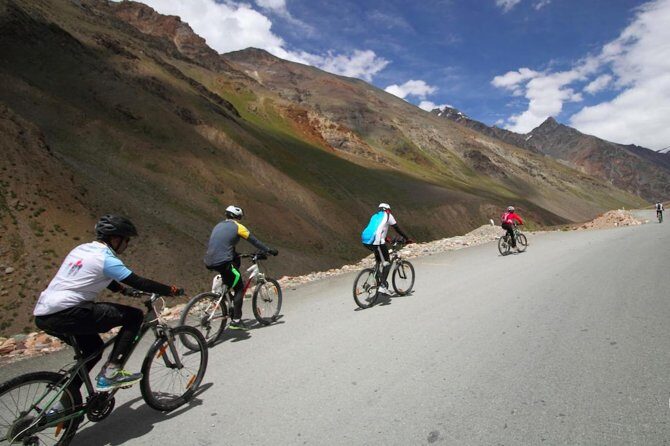
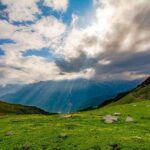
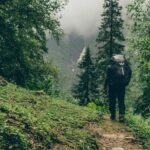
The Manali to Leh route has a reputation for a reason, but turning it into a bike journey changes how you experience it. Instead of watching the mountains go by from a bus window, you roll through sparse alpine vegetation, wide open stretches, and high-altitude passes at bike pace—slow enough to notice details, hard enough to respect the altitude.
This tour is set up for people who want adventure without total self-sufficiency. You ride daily, but you also get structure: a professional guide, meals already worked out, and a support vehicle that keeps the day from turning into pure survival mode. The result is a trip that feels like a challenge, not a chaotic DIY project.
The trade-off is simple: you’re committing to days that can range from easy-ish to extremely challenging, and the heights are not for casual cyclists. If you’re even a little unsure about your conditioning, treat that as a serious data point.
You can also read our reviews of more tours and experiences in Manali.
Price and Value: What $2,400 Buys You (and What You Still Pay For)
At $2,400 per person for roughly 15 days, this isn’t a cheap add-on vacation. But it’s also not priced like a basic bike rental with you doing everything else. You’re paying for the whole system: accommodation (tents plus hotels/homestays), a guided route, daily support, and daily food.
When you break down the included parts, the value gets clearer. You get bikes and helmets, all meals (breakfast/lunch/dinner), snacks and juices, and filtered drinking water. You also get a support vehicle with a driver for the whole journey—one of the biggest comforts you can have on an altitude-heavy cycling trip.
What you should budget separately: alcohol and aerated drinks (available to buy), laundry, personal expenses, camera charges, and anything caused by weather or road blocks such as landslides. Also, bottled water isn’t included by design, which is generally a good thing for the environment but means you’ll rely on the tour’s filtered water plan.
Day 1 Transfer From Delhi to Manali: The Long Start That Sets the Pace
You don’t roll into Manali from a local warm-up ride. You’re transferring from Delhi toward Manali, and it’s a long road day—listed as a 13–14 hour drive. That’s part of how the whole expedition works: you arrive ready to get your bearings, not after a quick morning hop.
The tour start time is 3:00 pm, and the day-one flow is built around getting you to Manali by that afternoon-to-evening window. Expect check-in and a reset, not an immediate big ride. It’s less about cycling fitness and more about getting your body used to the trip rhythm.
If you get motion-sick easily, this is the part to take seriously. Planning for comfort on a long bus ride can make the next day’s bike work feel much smoother.
Manali Bike Setup (Day 2): Inspect, Assemble, Then Get Your Legs Working
On arrival day, you check into a hotel and then assemble your cycles. That matters because the bikes aren’t just handed to you—they’re set up so you’re actually riding what the tour expects.
After breakfast, you can inspect and assemble, then take a short ride before heading back to rest. This is smart training in miniature: you get a quick test of fit and comfort, without burning your legs before the big altitude days arrive.
This day is also your best moment to mentally switch from vacation mode to expedition mode. You’re about to ride varying distances each day, including tough stretches and high passes, so getting comfortable with your bike on day two pays off.
Marhi to Rohtang La (Days 3–4): Snow Walls and a Classic High-Pass Reality Check
The cycling starts to climb along the road through sparse alpine vegetation, with big views back over the Manali valley below. On Day 3 you roll to Marhi, a small settlement at about 3,000m—a helpful altitude ramp rather than an instant jump to extremes.
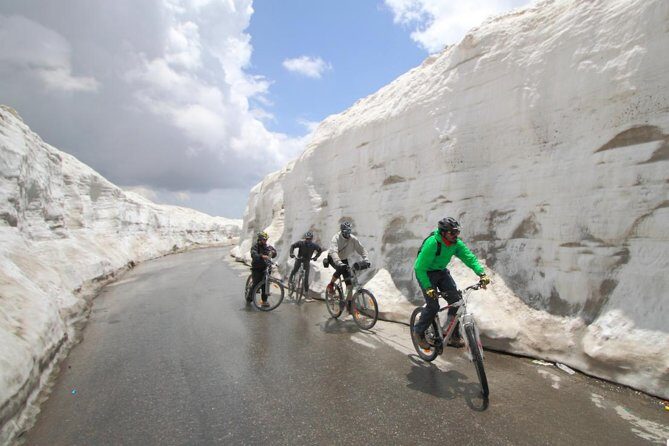
Then Day 4 is where the story turns cinematic and physical at the same time. You cross Rohtang Pass at 3,978m, and the ride includes the thrill of cycling through walls of snow. Snow-at-pass energy can make you feel like you’re in a postcard, but it’s still effort: colder air, steady climbing, and the need to ride smoothly.
Two practical thoughts for days like this:
First, keep your effort controlled. High altitude punishes big surges.
Second, watch how you breathe and pace—your body will tell you what it can handle.
If you’re prone to altitude headaches or dizziness, this is also the stretch where you’ll want to pay extra attention and stick to the guide’s rhythm.
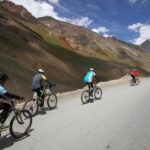
Jispa, Zingzingbar, and the 4,000m Camps (Days 5–6): Where Rest Stops Feel Like Lifelines
Day 5 brings you to Jispa at 3,200m, a village with only a few hundred households that’s known for hosting mountaineers and adventure tourists. The idea isn’t just scenery—it’s that you’re cycling into established mountain-route country where the expedition cadence is familiar.
Day 6 is shorter on paper (32 km), but the altitude game is still serious. You’re camping at over 4,000m near Zingzingbar, described as a basic road works camp area. “Basic” here is the key word: don’t expect comfort upgrades; expect functional shelter and time to recover.
This is one of the more important parts of the tour because camping at altitude changes your sleep and recovery. If you’re the type who needs a perfect pillow and heat, this might feel rough. If you can treat it as part of the adventure, it’s manageable.
Himachal Into Jammu & Kashmir: Bara-lacha La and the Double-Pass Hard Day (Days 7–8)
Day 7 is a cross-over moment as you move from Himachal Pradesh into Jammu & Kashmir. You’re cycling to the Bara-lacha la area at 4,870m, on the Manali to Leh highway—another famous high pass with a serious climb feel.
Then Day 8 stacks two high passes back-to-back: Nakee-la (4,950m) and Lachalung-la (5,060m). You’ll be cycling through double pass terrain and hitting one of the trickiest types of riding: long days where your effort doesn’t just come from distance, it comes from repeated altitude work.
If you want a single-day description of “extremely challenging along the journey,” this is where it lives. The distance is 64 km, but altitude can make it feel longer—especially if the air is thin and your legs are already carrying fatigue from earlier days.
The best approach is simple: keep your cadence steady, eat and drink when offered (don’t wait until you’re starving), and let the guide’s timing set your pace.
Moore Planes to Taglang La (Days 9–10): Big Stillness Then a High-Air Punch
Day 9 is a breather in tone: Moore Planes. You get the feeling of wide open emptiness—less climbing intensity described here and more of a “keep moving across the high country” day.
Day 10 brings a big signature pass: Taglang-la (5,359m). It’s listed as the second highest motorable mountain pass in India, which tells you this isn’t just a foot-trail altitude line. It’s a major route, and that usually means the cycling is tied to a well-defined road and strong pass-day focus.
At these heights, you’re not just riding terrain—you’re riding oxygen scarcity. That means you’ll benefit from a calm start and a patient finish, even if the road looks inviting.
Ladakh Cycling Days and Khardung La (Days 11–12): Buddhist Towns and the 5,602m Landmark
Day 11 shifts you into Ladakh’s human side. You roll through several small towns, with a Buddhist-influenced way of life described along the ride. This is where the expedition becomes more than a physical challenge. You get small glimpses of daily life and rhythm that make the geography feel real and lived-in.
Day 12 is the big one: Khardung La at 5,602m, and the day is listed at 90 km—the longest cycling distance on the main part of the route. Khardung La is also noted as opened to motor vehicles in 1988, which again reinforces that this is a known, high-traffic pass rather than a remote summit attempt.
This is the day to bring your best mental game. You’ll feel tired before you reach the pass, and that’s normal. The win comes from staying steady, following the guide’s pacing, and remembering that you don’t need to sprint to get the reward.
Three Days of Easier Momentum in Leh (Days 13–15): Recovery Without Going Stale
After the heavy pass days, the tour transitions into a more relaxed phase: you enjoy a leisurely drive across picturesque Leh for Days 13–15. That’s deliberate. Cycling all those high days is one thing; letting your body absorb it is another.
These extra days matter if you’re traveling from sea level or lower altitudes. Even if you feel okay after the last climb, you’ll often want time to stretch out, hydrate, and let your sleep catch up.
It’s also a nice change of pace: you’ve earned recovery by doing the hard work with your legs, and the final days let you enjoy the region without constantly grinding uphill.
Bikes, Meals, and Support: Why This Trip Feels Managed Instead of Just Hard
This is a bike expedition where the practical details are handled. You’ll have bikes and helmets provided, plus related gear. Food is built in every day, including breakfast, lunch, and dinner, along with snacks, juices, and coffee and/or tea.
The support vehicle is a major ingredient. It’s there throughout the journey, which changes the emotional tone of cycling at altitude. You can focus on riding, not on whether you’ll be stranded if conditions shift.
Filtered drinking water is included, and you’ll also find snacks and refreshments along the route. The tour specifically avoids bottled water, based on an environmental approach, so you’ll want to use the water system they provide instead of planning your own plastic habits.
Where you still need to be self-aware: alcohol isn’t included (you can buy it), laundry isn’t included, and you may need to cover personal camera expenses if you bring dedicated gear. Those are normal trip realities, but they do affect your budget.
Who Should Book, and Who Should Think Twice
This tour suits you if you:
- like long-distance cycling and can handle daily rides that vary from manageable to extremely challenging
- have moderate fitness and are comfortable cycling at elevation
- want the mountains without doing all the logistics yourself
It might not fit you as well if you:
- struggle with high-altitude effort and don’t have a plan for gradual pacing
- dislike camping at altitude, since lodging includes independent tents on some nights
- want a trip where you can cancel freely, because this experience is listed as non-refundable
Also, the minimum age is 15, and children must be accompanied by an adult. Vegetarian options are available, and the group maximum is 12, so you’re not stepping into a huge crowd.
Should You Book This Manali to Leh Cycling Expedition?
Book it if you want the full value of the Manali to Leh corridor: iconic passes you actually ride, structured meals, a support vehicle, and a small group format with a guide. At $2,400, you’re paying for time, logistics, and risk management—not just the bike.
Think twice if your biggest goal is comfort over challenge. This is an altitude-heavy cycling expedition with camping nights and long pass days, including Taglang-la and Khardung La. If you’re excited by effort and you can pace yourself, you’ll likely find this trip deeply satisfying.
If you want, tell me your biking experience level (and whether you’ve ridden at altitude before). I can help you sanity-check whether the daily distances and pass elevations feel realistic for your body and your goals.
FAQ
How far do I cycle each day on the Manali to Leh trip?
Daily distances vary and are listed as ranging roughly from 40 to 80 km, with some days easier and others extremely challenging. The route includes specific ride days such as 15 km, 36 km, 50 km, 58 km, 62 km, 64 km, 68 km, and 90 km.
What major high passes are included in the ride?
Key passes named include Rohtang Pass at 3,978m, Bara-lacha la at 4,870m, Nakee-la at 4,950m, Lachalung-la at 5,060m, Taglang-la at 5,359m, and Khardung La at 5,602m.
Does the tour include meals and drinking water?
Yes. Meals are included as per the itinerary (breakfast, lunch, and dinner), along with snacks, juices, refreshments, and coffee and/or tea. Filtered water for drinking is included as well.
Are bikes and helmets provided?
Yes. The tour provides the use of a bicycle and a helmet, along with related gear.
Where do we stay during the trip?
Accommodation is listed as independent tents and hotels/homestay on a twin sharing basis, depending on the day.
Is bottled water included?
No. Bottled water is listed as not included, and the tour states it avoids plastic. Filtered drinking water is provided.
Is vegetarian food available, and how big is the group?
Vegetarian option is available. The tour also lists a maximum of 12 travelers, with a minimum age of 15 years and adults required to accompany children.