REVIEW · JAISALMER
Jaisalmer Sightseeing Tour
Book on Viator →Operated by Jaisalmer Tourist Taxi · Bookable on Viator
Desert forts need a better plan than taxis. This Jaisalmer sightseeing day is built around an air-conditioned car and a smart, efficient route through major sights like the Golden Fort, plus haveli stops that explain why this desert city looks different from the rest of Rajasthan. I also like that you get bottled water to keep you comfortable, not just sold a generic “taxi + time.” One thing to factor in: monument entry fees (and any photography fees) are not included, and most stops are timed tight.
You’ll typically get pickup offered and a private setup for your group, so you’re not stuck waiting on strangers or negotiating rides mid-day. Expect attention to keep the day moving, but also keep your expectations realistic: the listed visit windows are about 40 minutes each, so you’ll enjoy them more if you’re ready to skim, look, and ask questions fast.
In This Review
- Key things I’d circle before you go
- Why this 8-hour Jaisalmer tour feels like value
- Jaisalmer Fort: the Living Golden Fort, not just a viewpoint
- Mandir Palace stop: museum time with royal architecture
- Burj Al Jaisalmer and Sam dunes: the water tank lesson
- Salim Singh-ki Haveli: 1815, when power lived in stone
- Patwaon-Ki-Haveli and merchant-life museums
- Where Gadisar Lake fits into the rhythm
- Budget reality: tickets and photography fees
- Timing: how 40-minute stops actually feel in the real world
- Pickup and driver communication: your best tips for a smooth day
- Who should book this Jaisalmer sightseeing tour?
- Should you book this private Jaisalmer sightseeing tour?
- FAQ
- How long is the Jaisalmer sightseeing tour?
- Is pickup included?
- Is this a private tour?
- What’s included in the price?
- Are monument entry fees included?
- Are driver tips included?
- Is a mobile ticket provided?
- What if the weather is bad?
Key things I’d circle before you go
- Living-in-the-fort vibe at Jaisalmer Fort: people still reside inside, so it feels less like a museum and more like a real place.
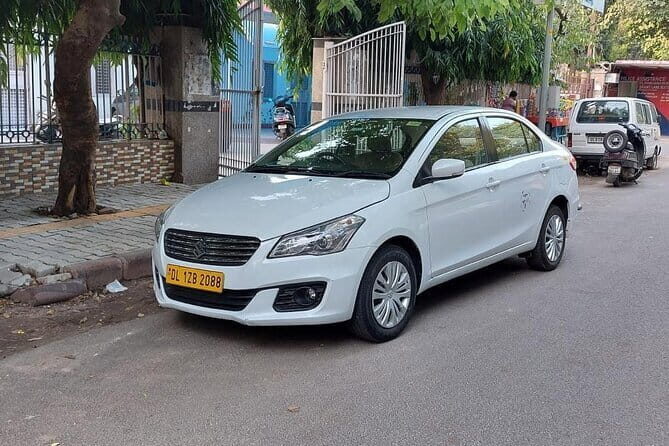
- Air-conditioned comfort for the hottest hours: you’re in an AC vehicle for the driving time, which really matters in the desert.
- Haveli architecture with names and dates: Salim Singh-ki Haveli (1815) and merchant homes make the city’s wealth and power easier to understand.
- A desert-camp stop with a serious water story: the Burj Al Jaisalmer area highlights a conservation tank from around 1400 AD.
- Mandir Palace as more than a photo stop: it’s part of the Mandir Palace Museum, so you’re not just passing through.
- Budget for tickets separately: admission to monuments costs extra, so plan that cash/rupees early.
Why this 8-hour Jaisalmer tour feels like value
For about $101, you’re buying three things that usually cost time and energy in India: predictable transport, a private rhythm, and a driver who knows how to string sights together without chaos. An 8-hour outing is long enough to see the main “greatest hits,” but short enough that you’re not exhausted by late-afternoon fatigue.
The tour includes an AC vehicle and bottled water, plus “all fees and taxes” for what the operator is charging you. The big catch is simple: monument entry fees are extra. If you show up thinking everything inside is covered, you’ll get surprised at the gate. If you go in expecting that, the day stays smooth.
This is also a private tour/activity, meaning it’s only your group. That matters because Jaisalmer’s best sights reward timing and questions—if you’re rushing or stuck behind a crowd, you lose the meaning. With your own group pace, you can spend a few extra minutes at the details that hook you.
You can also read our reviews of more tours and experiences in Jaisalmer.


Jaisalmer Fort: the Living Golden Fort, not just a viewpoint

Your day starts at the Jaisalmer Fort, often called the Golden Fort, and that name isn’t just marketing. It’s one of the very few “living forts” where people still reside within the fort. That changes how you experience it: you’re not only walking through history—you’re sharing space with a working community.
You’ll have about 40 minutes at this stop, and admission is not included. Forty minutes sounds short until you realize how dense a fort layout can be. Plan to do a focused loop: look for the main dramatic views, then work your way through the streets inside without treating it like a full-day hike.
The practical upside is that the fort gives you instant context for everything else on your list. You’ll start to understand why Jaisalmer could thrive in a desert—trade, protection, and the wealth that later showed up in the havelis.
Mandir Palace stop: museum time with royal architecture
Next comes Mandir Palace, which is part of the Mandir Palace Museum. Even if you’re not a museum person, it’s worth treating this as a “read the room” moment: you’re seeing how the palace side of Jaisalmer culture connects to the city’s wealth and leadership.
Like the fort, this stop is timed at about 40 minutes, and admission is not included. With a short visit window, I’d focus on what makes the setting feel different from other palaces: the details, the layout, and how the museum frames the period.
One consideration: if you like to linger, you may wish you had more than the allocated time. But as part of an overall day route, Mandir Palace works because it balances the fort’s street-life with the more curated “palace” perspective.
Burj Al Jaisalmer and Sam dunes: the water tank lesson
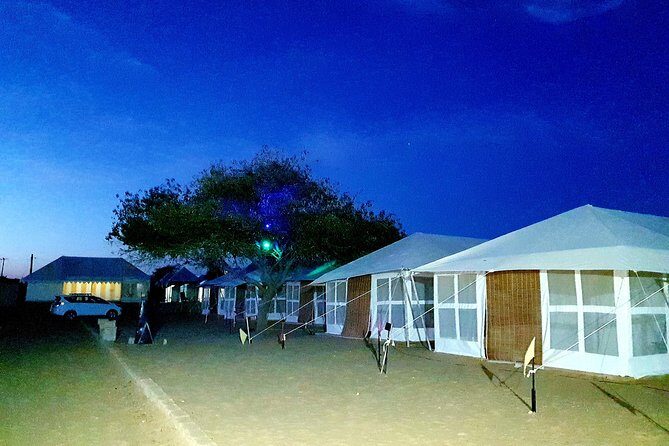
The tour then heads toward the Sam sand dunes area for a stop connected to Burj Al Jaisalmer—a luxury desert camp. This isn’t just a scenic pause. The highlight here is a water conservation tank, reportedly built around 1400 AD, which once acted as a reservoir controlling water supply for the arid city.
That’s one of the most interesting parts of a Jaisalmer visit that people often miss when they only chase photos. When you look at a desert landscape, your brain assumes water is scarce and that’s the end of the story. The tank explains a different reality: careful engineering and planning made life possible long before modern infrastructure.
Again, you get about 40 minutes, and admission is not included. If you want this stop to pay off, bring your curiosity. Ask yourself: where would water go, who managed it, and how does the city’s design reflect that survival logic?
Salim Singh-ki Haveli: 1815, when power lived in stone
At Salim Singh-ki Haveli, you’re looking at a building tied to government and influence. It was built in 1815 by Salim Singh, the prime minister of the kingdom when Jaisalmer was the capital. That date and role matter, because havelis weren’t just pretty houses. They were statements—about status, trade, and who had the money to commission craftsmanship.
You’ll have around 40 minutes, and admission isn’t included. A quick visit is fine here as long as you focus on the story your eyes can read: exterior design, entry sequence, and the way the haveli’s form suggests wealth and movement.
If you’re the type who loves architectural details, this stop will feel more rewarding than a “look from outside” photo moment. With limited time, I’d prioritize what you can see from different angles rather than trying to absorb everything at once.




Patwaon-Ki-Haveli and merchant-life museums
The route rounds out with Kothari’s Patwaon-Ki-Haveli, described as a heritage lifestyle museum showcasing the life of Jaisalmer’s rich merchants in a monumental historic mansion. This is the perfect counterweight to the fort and the palaces. Forts protect. Palaces govern. Havelis show what commerce made possible.
The tour also references Patwa Haveli as part of the overall sightseeing plan, and you’ll want to treat the haveli cluster as a theme. You’re not collecting random stops—you’re seeing how different layers of society built their identity through architecture.
This haveli stop is also timed at about 40 minutes, and admission isn’t included. The museum angle can be hit-or-miss depending on your interests. If you enjoy human-scale stories—who lived where, what wealth looked like day to day—you’ll likely get more out of this than you expected. If you want only open-air scenery, you may prefer to use your time for courtyard views and exterior details.
Where Gadisar Lake fits into the rhythm
The tour description also points to visiting Gadisar Lake as part of the day’s highlights. Even if you don’t spend a long, slow session here, a lake stop adds a needed break from stone and heat. It’s a small change of scenery that helps the haveli-and-fort theme land.
In practical terms, treat Gadisar Lake as a “reset.” Use it to take a breath, refill your eyes after detailed buildings, and check with your driver about the next timing. In a timed route, that kind of mental reset can make the whole day feel easier.
Budget reality: tickets and photography fees
Here’s the key money lesson. The tour price covers the AC vehicle, bottled water, and the operator’s included fees/taxes. Monument entry fees cost extra, and photography fees may also be extra.
So what should you do? Don’t panic. Just assume you’ll pay at least at major sights like the fort and museum-related stops. Keep some cash ready for tickets, and be mindful of signs at each monument about what’s included and what costs extra for cameras.
If you’re trying to keep the day affordable, you can also choose your “camera moments.” For example, spend your photo time where you’ll get the most context (views, facades, and interiors that match the story you’re learning). That way, even if photography fees apply, your spending aligns with your priorities.
Timing: how 40-minute stops actually feel in the real world
Each main stop is listed at about 40 minutes, with the whole tour lasting around 8 hours. That structure is ideal if you want breadth: fort, palace/museum, desert-camp water story, and haveli architecture in one day.
The downside is also built in: if you love slow travel—long reads, deep interior exploration, wandering without a schedule—this format can feel a little rushed. The way to make it work is to enter each stop with one goal. Fort: understand the living-fort layout. Mandir Palace: focus on the museum framing. Haveli: look for how wealth shows up in design. Desert tank: connect desert survival to human engineering.
Also, remember that the driving time and sun exposure matter. That’s why the AC car and bottled water are not small extras. They’re what keep a packed day enjoyable instead of stressful.
Pickup and driver communication: your best tips for a smooth day
Pickup is offered, and the tour notes you’ll receive a mobile ticket. That reduces the usual friction of meeting points—less guessing, more showing up and going.
Driver communication can be the wild card. In one case, a driver named Prakash helped with pickup but had limited English when it came to giving quick instructions inside the fort. In another case, a driver named Shiva was described as very helpful and made sightseeing feel interesting. The takeaway for you: don’t rely on a detailed spoken script. If something needs clarification, ask early. If the plan changes, confirm the next stop before you walk away.
A simple tactic: keep your expectations flexible. This kind of day works best when you treat it like a guided sprint—fast, clear, and focused—rather than a slow guided tour with long explanations.
Who should book this Jaisalmer sightseeing tour?
You’ll probably love this tour if you want:
- Major Jaisalmer sights in one day without taxi negotiations
- Comfortable transport, especially during hotter daylight hours
- A private-group experience that moves at your pace
- Haveli and fort culture explained through the city’s big landmarks
You might think twice if:
- You want long museum time or deep interior exploration at each site
- You strongly dislike paying admission fees on top of the tour price
- You’re hoping for an unhurried day with lots of stop-and-start wandering
If you’re a first-timer trying to get oriented, this format is efficient. If you already know the basics and want only one or two “deep” sights, you might be better off choosing fewer stops and spending longer at each.
Should you book this private Jaisalmer sightseeing tour?
Book it if you want an organized, comfortable day that covers the core landmarks—Jaisalmer Fort, Mandir Palace, haveli stops, and a desert-camp highlight tied to real survival tech. At about $101 with AC transport and bottled water, it’s a solid value if you’re okay budgeting extra for entry tickets.
Skip or modify your plan if you’re entry-fee sensitive or you hate time limits. The 40-minute stop rhythm means you’ll get good impressions fast, not a slow, detailed study of every room.
My practical advice: if this is your first Jaisalmer day, say yes. If it’s not, and you already love forts or havelis, consider whether you want a tighter, more focused route instead.
FAQ
How long is the Jaisalmer sightseeing tour?
The tour duration is approximately 8 hours.
Is pickup included?
Yes, pickup is offered.
Is this a private tour?
Yes. It’s a private tour/activity, meaning only your group participates.
What’s included in the price?
It includes bottled water, an air-conditioned vehicle, and all fees and taxes charged by the operator.
Are monument entry fees included?
No. Entry fees to the attractions cost extra.
Are driver tips included?
No. Driver tip is not included.
Is a mobile ticket provided?
Yes. The tour includes a mobile ticket.
What if the weather is bad?
The experience requires good weather. If it’s canceled due to poor weather, you’ll be offered a different date or a full refund.