REVIEW · JAISALMER
Jaisalmer Food Tour: Taste the Flavors of the Golden City!
Book on GetYourGuide →Operated by Jaisalmer tours · Bookable on GetYourGuide
The flavors of Jaisalmer move fast. In a 2-hour, on-foot Jaisalmer food tour from Gopa Chowk, you get a guided route through local eateries and you eat a planned mix of savory and sweet classics, starting with Fateh ki Kachori. It’s built for people who want real street food without guessing what to order.
I like that the tour isn’t just eat-and-go. The guides share cultural insights alongside tastings, which makes treats like Ghotuwa feel tied to everyday Rajasthan, not random snacks. You also get a sense of city life beyond the fort area, which helps you orient quickly.
One watch-out: it’s an on-foot route, and some dishes are spicy. Also, street food always carries some stomach risk, and one participant reported food poisoning, so go at your pace and tell the guide about any sensitivities.
In This Review
- Key highlights worth your time
- Jaisalmer food tour from Gopa Chowk: the smart 2-hour format
- Fateh ki Kachori to Ghotuwa: the best spicy-to-sweet shift
- Gol Gappa and Thaggu ke Samose: street snacks that tell you how locals eat
- Dal Pakwan and sev: the breakfast-style savory choices you can actually enjoy
- Kheer Chamcham and Ghewar: two desserts, two different moods
- Indian-Chinese street food and lassi: the flexible flavor curve
- What the guide actually adds: you’re not just eating, you’re learning how to order
- Price and logistics: what you’re paying for and what to plan for
- Who this Jaisalmer food tour fits best
- Should you book the Jaisalmer Food Tour?
- FAQ
- How long is the Jaisalmer Food Tour?
- Where does the tour start and end?
- Is the tour walking-based or does it include transportation?
- What foods are included in the tastings?
- What is the price per person?
- What languages are the guides?
- Does the tour offer a way to avoid waiting in line?
- Is the tour wheelchair accessible?
- Is free cancellation available, and how far in advance?
- Is reserve now and pay later available?
Key highlights worth your time
- Fateh ki Kachori as your kick-off bite, crispy outside with a spicy spiced filling
- Ghotuwa for a milk-and-cardamom sweet break from heat
- A mix of Rajasthan staples and street classics, including Gol Gappa, Thaggu ke Samose, and Dal Pakwan
- Dessert stops like Kheer Chamcham and Ghewar, not just one token sweet
- Indian-Chinese street food options you can compare to the desi version
Jaisalmer food tour from Gopa Chowk: the smart 2-hour format
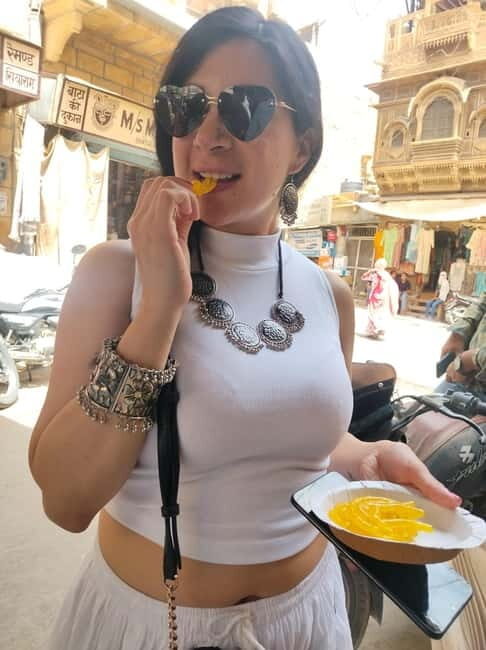
If you’re short on time in the Golden City, this tour is made for you. It lasts 2 hours, and it’s designed as a walkable loop that starts and ends at Gopa Chowk. That matters because Jaisalmer can feel like a lot when you’re figuring out streets, stalls, and what’s actually worth eating.
The other thing I like about the format is that it’s not just a list of foods. You’re guided to local eateries, and you’re tasting through a sequence of flavors: spicy savory first, then sweet relief, then more snacks and desserts. That pacing helps you enjoy more without getting overwhelmed.
At the price point, it also feels like solid value. For $13 per person, you’re sampling a broad lineup of named dishes across a couple of hours, with a live English/Hindi guide. In practical terms, it’s cheaper than trying to “wing it” for multiple full snacks and drinks on your own, especially when you factor in the guide’s help translating what to order and why it’s special.
You can also read our reviews of more tours and experiences in Jaisalmer.


Fateh ki Kachori to Ghotuwa: the best spicy-to-sweet shift
Most street food tours forget the “balance” part. This one doesn’t.
The tour starts with Fateh ki Kachori, a local favorite with a crispy exterior and a spicy, flavorful filling made with a special blend of spices. The best part of leading with this is that kachori is both comfort food and a strong introduction to how Jaisalmer cooks: crunchy texture first, then deep spice.
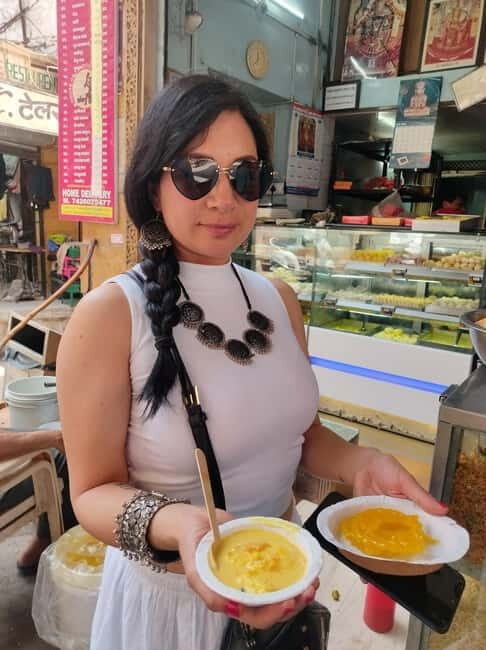
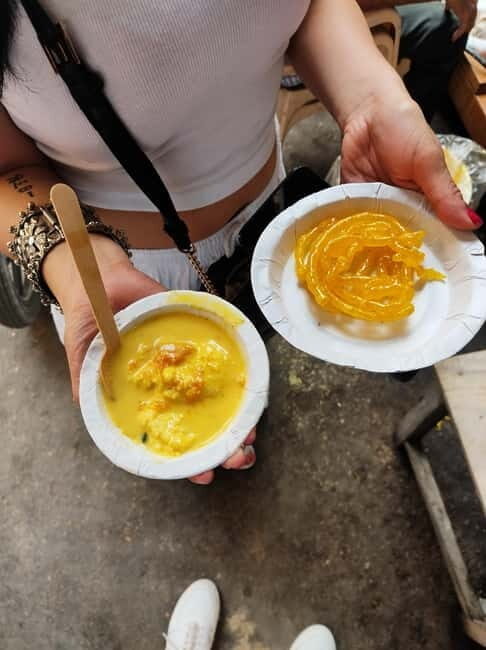
Then you move to Ghotuwa, a Rajasthani sweet made from milk and flavored with cardamom. If you’ve had enough heat from the savory bites, this is the reset button. Cardamom’s fragrance also makes the sweetness feel more grown-up than sugary desserts that taste the same everywhere.
You’ll notice something important here: the tour is deliberately teaching you contrast. Rajasthan street food can be spicy and bold, but sweets like Ghotuwa are part of the rhythm, not an afterthought. That contrast is exactly why guided tastings work better than random stall-hopping.
Gol Gappa and Thaggu ke Samose: street snacks that tell you how locals eat
Once you’ve got the savory-spicy foundation, the tour keeps it street-level with snacks that are easy to understand and hard to master on your own.
Gol Gappa is one stop you’ll recognize: crispy puris filled with tangy water and topped with spicy chutneys. The tang is the key. It cuts through the spice and changes the whole flavor profile from bite to bite, so even if you don’t love one mouthful, the next can feel totally different.
Next comes Thaggu ke Samose, known for generous fillings and a crispy golden exterior. Samose is common across India, but this one is presented as distinctly Jaisalmer-style in feel and portion. That’s the value of a guided tour: you’re not just eating “a samose,” you’re trying a version with a local reputation.
If you’re the type who likes to compare, this is a good tour. You get multiple crunchy, handheld snacks that you can contrast by texture and flavor. And if you’re new to Indian street food, these are relatively straightforward to enjoy because they come as familiar formats: puri + filling, samose + bite-sized portions.
Dal Pakwan and sev: the breakfast-style savory choices you can actually enjoy
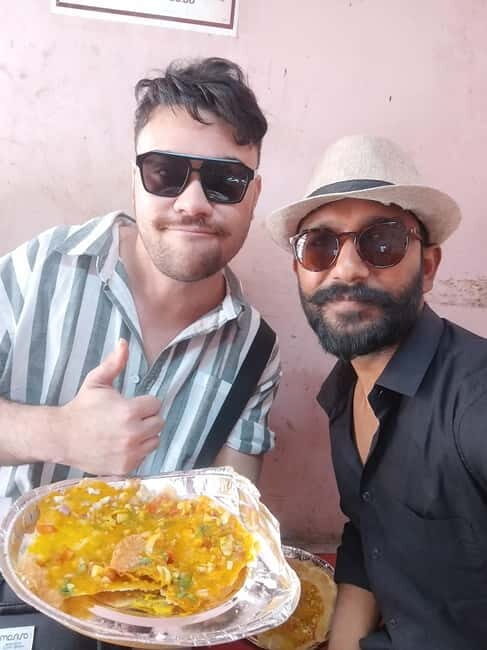
Not every food tour includes a more substantial savory dish. This one does, and it helps balance all the sweets.
Dal Pakwan is offered as a popular breakfast dish made from lentils and crispy fried bread. Even if you’re not eating breakfast timing-wise, this works as a more filling stop. Lentils add body, and the contrast with crisp bread keeps it from feeling heavy.
Then there’s sev, described as a crunchy snack made from chickpea flour and spices. Sev is one of those foods that seems simple until you realize the spice and texture are doing all the work. It’s also a quick, easy snack stop that helps you keep moving during the walk.
Together, these savory items keep you from getting only sweets and fried crunchy bites. You’ll still taste plenty of fried textures, but you’ll also taste lentils, spice layers, and the way street food can shift from snack-sized to meal-adjacent.
Kheer Chamcham and Ghewar: two desserts, two different moods
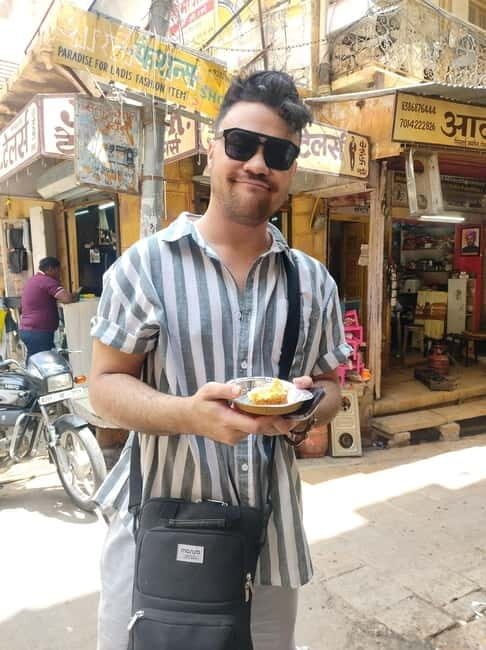
This tour takes dessert seriously. That’s a good thing, because many street food experiences stop at one sweet and call it done.
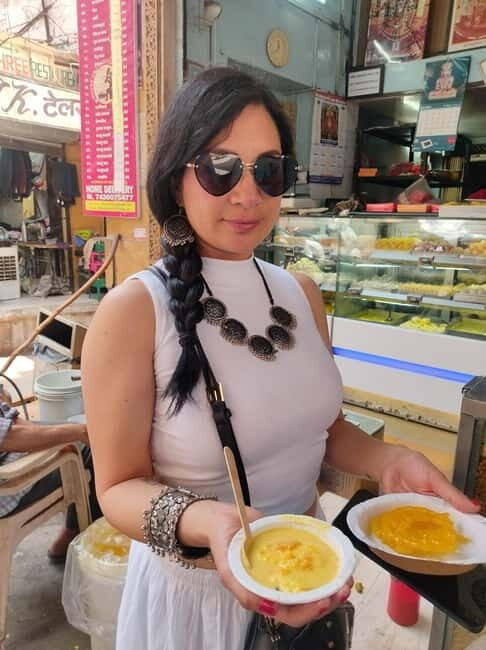
Kheer Chamcham Sweet is rich and creamy, described as melt-in-your-mouth with an indulgent flavor. If you’re in the mood for something smoother and heavier, this is your comfort dessert. It also changes the pace after crunchy savory snacks.
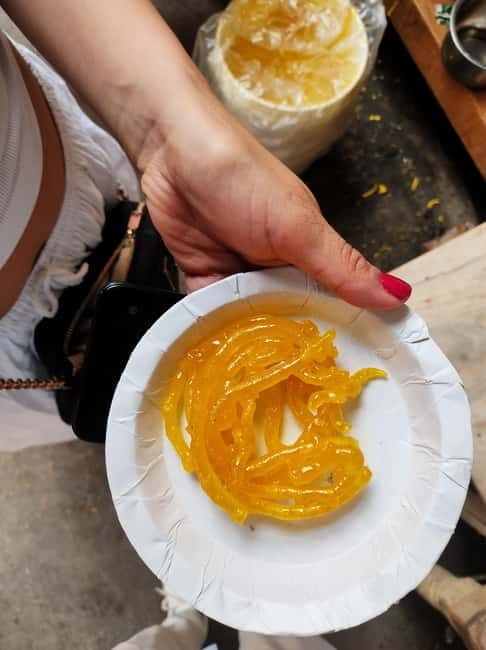
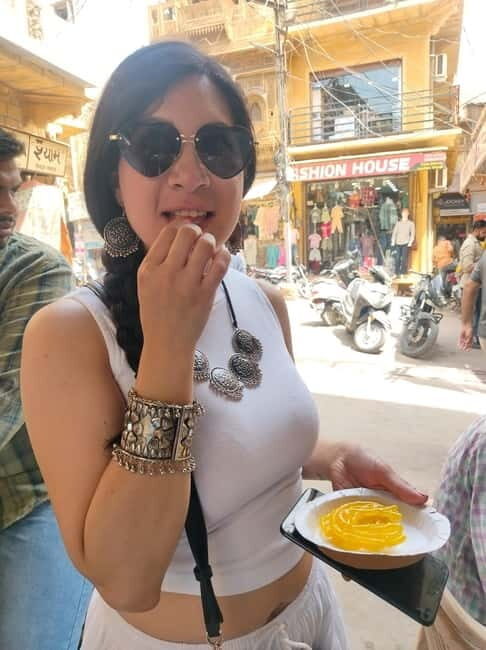
Then you get Ghewar, a classic Rajasthani sweet made from flour, sugar, and ghee with intricate latticework and syrup topping. Ghewar is visually impressive, and the lattice texture matters because it holds syrup. The result is a sweet that feels more layered than “cake plus frosting” style desserts.
If you’re trying to decide what kind of eater you are, pay attention here. Kheer Chamcham is about creamy indulgence, while Ghewar is about syrup-soaked texture and sweetness density. Getting both gives you a better sense of what Rajasthan sweets can do.



Indian-Chinese street food and lassi: the flexible flavor curve
A lot of visitors think Indian street food is just one style. This tour gives you a contrast lane with Indian-Chinese fusion items such as spicy noodles and crispy spring rolls.
You might also see stops like Chinese Bhel with Manchurian and paneer, which shows how local street food adapts. The point isn’t that it replaces Rajasthan classics. It’s that it sits alongside them in real city eating habits. That makes the overall experience feel more like what you’d actually find on the street.
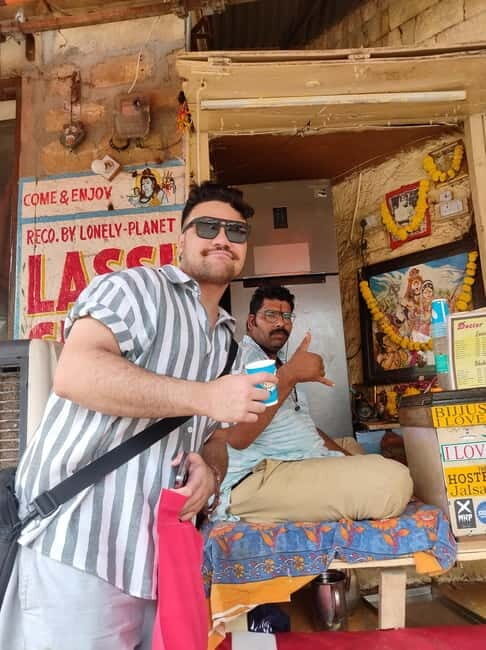
Then you may get Royal lassi, which is a smart companion to spicy foods. Lassi typically brings cooling dairy comfort, and in a tour setting it helps you reset your palate before the next sweet or crunchy snack.
A small but notable bonus from the experience details: you may encounter paan (betel leaf) as well. It’s not for everyone, but it’s a true cultural add-on that ends the tour with a distinctly Indian finish.
What the guide actually adds: you’re not just eating, you’re learning how to order
I especially appreciate the presence of a live guide who speaks English and Hindi. When you’re in a food area, the hardest part isn’t finding food. It’s knowing what’s worth ordering and what the dish is supposed to taste like.
With cultural insights and historical context built in, the guide helps you connect dots: why a sweet is flavored the way it is, why certain street snacks are treated as must-tries, and what role spices play in the local flavor style.
If you want to get the most out of the tour, ask simple questions as you go:
- what makes this version Jaisalmer-specific
- whether a dish is best eaten immediately or after mixing
- how spicy each stop tends to be
This isn’t about turning your tour into a lecture. It’s about getting your “ordering instinct” right for the rest of your trip.
Price and logistics: what you’re paying for and what to plan for
At $13 per person for 2 hours, the value comes from two things: the range of named tastings and the guided route. You’re not paying mainly for a walk around town. You’re paying for access to multiple local eateries, for a planned progression of foods, and for help figuring out what to try.
Logistics are straightforward:
- Start and end at Gopa Chowk
- You’ll be on foot (no pickup or drop-off)
- The tour includes a separate entrance to skip the line
- It’s wheelchair accessible
One practical consideration: because you’re walking and eating, comfortable footwear is a real must. Also, if you’re sensitive to spice or have a sensitive stomach, this is the kind of tour where you’ll want to slow down, try smaller tastes, and communicate needs early.
And yes, street food can sometimes go wrong anywhere. Since there was at least one report of food poisoning tied to this experience, I can’t pretend there’s zero risk. The best approach is to listen to your body and keep things paced.
Who this Jaisalmer food tour fits best
This tour is a great match if you:
- want a fast introduction to Jaisalmer’s street food culture
- like tasting both savory and sweets in the same outing
- appreciate local guidance so you’re not stuck translating menus while hungry
- want a route that helps you understand the city layout beyond the main fort zone
It’s also a good option for first-time visitors who feel intimidated by the sheer variety of stalls. When everything is fry, chutney, and spice, having a guide reduces decision fatigue.
If you’re very picky, you might find you need to be careful. The tour includes a range of spicy and fried items plus multiple desserts. It’s designed for people who want to taste broadly, not for those who prefer one type of food.
Should you book the Jaisalmer Food Tour?
Yes, if you want a concentrated, guided sampler of Jaisalmer street flavors. This is the kind of experience that helps you eat well early in your trip and learn what to seek out later on your own.
Book it especially if you’re aiming to try signature items like Fateh ki Kachori, Ghotuwa, Gol Gappa, and dessert classics like Kheer Chamcham and Ghewar within a tight timeline. For the money, the number of named tastings plus the guide makes sense.
Skip—or adjust your expectations—if you’re very sensitive to spice, have a sensitive stomach, or dislike foods like betel leaf (paan). If that’s you, go in with a plan: tell the guide your limits, take smaller bites, and let the tour be a guide to what works for you, not a test you have to pass.
FAQ
How long is the Jaisalmer Food Tour?
The tour lasts 2 hours.
Where does the tour start and end?
It starts and returns to Gopa Chowk.
Is the tour walking-based or does it include transportation?
The tour is on foot, and pick up and drop off are not included.
What foods are included in the tastings?
The tour includes tastings of the mentioned foods such as Fateh ki Kachori and Ghotuwa, plus other street food and sweets described in the experience details like Gol Gappa, Thaggu ke Samose, Ghewar, Dal Pakwan, sev, and Indian-Chinese fusion items.
What is the price per person?
The price is $13 per person.
What languages are the guides?
The live tour guide is available in English and Hindi.
Does the tour offer a way to avoid waiting in line?
Yes, it includes skip the line through a separate entrance.
Is the tour wheelchair accessible?
Yes, wheelchair accessible is listed for this activity.
Is free cancellation available, and how far in advance?
Free cancellation is available up to 24 hours in advance for a full refund.
Is reserve now and pay later available?
Yes, reserve now & pay later is available, letting you book a spot without paying today.