REVIEW · JAIPUR
Jaipur city tour
Book on Viator →Operated by Western India Nature Tours - Private Day Tours · Bookable on Viator
A short drive can change how you see Jaipur. This private city tour strings together the big sights and the in-between moments, from the Wind Palace photo stop to the UNESCO observatory at Jantar Mantar. I like that you get a mix of old Jaipur and royal landmarks without the usual hassle of figuring out transport.
Two things I’d highlight: first, you travel in comfort with an A/C car plus hotel/airport pickup and drop-off, which saves real time. Second, the tour includes a professional private guide, so you’re not just looking—you’re understanding what you’re seeing.
One consideration: monument entrances aren’t included, and some stops are designed as quick viewing windows (like Hawa Mahal and Jal Mahal), so you’ll want to plan for ticket time and photos on the outside.
In This Review
- Key points worth knowing before you go
- Why this Jaipur route works so well
- Price and what you really get for about $25
- Hawa Mahal: the quick photo stop that sets the tone
- Amber Fort: where the “big” part of Jaipur actually happens
- Jal Mahal: the water palace moment (and why the stop is brief)
- City Palace: royal life split between public and private areas
- Jantar Mantar: a UNESCO observatory where instruments still work
- Shopping time in Jaipur: what to buy and how to avoid wasting it
- Guide and driver attention: why the team matters here
- How long is the day, really?
- What kind of traveler this tour fits best
- A few smart tips to get more out of the day
- Should you book this Jaipur city tour?
- FAQ
- FAQ
- Are monument entrances included in the tour price?
- Does this tour include hotel pickup and drop-off?
- How long will I spend at Amber Fort and City Palace?
- Is there time for shopping in Jaipur?
- Is the tour private or shared?
- Is free cancellation available?
Key points worth knowing before you go
- A/C car + hotel pickup/drop-off means less chaos and more sight time
- A private guide helps you connect the dots across Jaipur’s royal, architectural, and scientific landmarks
- Fast, photo-friendly stops at places like Hawa Mahal and Jal Mahal keep the pace realistic
- Amber Fort gets real time (about 2 hours), not a rushed walk-by
- Shopping time is built in for textiles, jewelry, carpets, and handicrafts
Why this Jaipur route works so well
Jaipur can feel like a lot—big distances, busy streets, and sights that look great in photos but are even better once you understand the story behind them. This tour earns its value by doing the hard part for you: it moves you efficiently between the most important landmarks, then slows down where it matters.
You’ll start with a quick icon (Hawa Mahal), then pivot into the heavier-hitter experience (Amber Fort). After that, you hit two royal-culture stops (Jal Mahal and City Palace) and finish with one of India’s most unusual “wow” sights (Jantar Mantar). It’s a good mix of styles: pink palace architecture, fort-city power, and a functioning observatory.
And yes, you also get time for shopping—important in Jaipur, because the city’s crafts are a major part of the experience, not just a side quest.
You can also read our reviews of more city tours in Jaipur


Price and what you really get for about $25
At $25 per person, the headline price is tempting—but the smarter question is what’s included that would normally cost you extra.
Here’s what your money covers:
- All sightseeing and transfers by an A/C car
- A professional private guide
- Hotel pickup and drop-off
- Bottled water
- All government taxes
What’s not included:
- Tipping for driver and guide
- Monument entrances (tickets for the sights)
So the value equation is simple: if you’d otherwise pay for private transport, pay for a guide, and book a route yourself, this comes out competitive. If you’re the type who likes to roam on your own, it may feel like “too structured.” But for most visitors, the savings come from not wasting hours figuring out logistics.
Also, the tour is private for your group, and you can get group discounts. If you’re traveling with friends or family, it’s easier to justify the comfort and dedicated attention.
Hawa Mahal: the quick photo stop that sets the tone
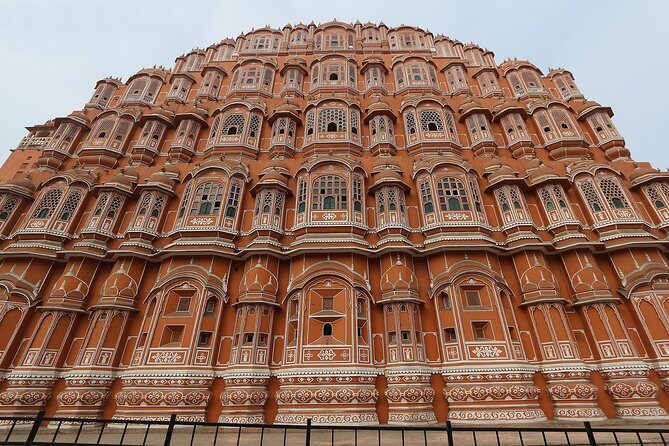
Hawa Mahal, the Palace of Wind, is one of those Jaipur landmarks you recognize instantly. You’ll spend about 10 minutes here, and the plan is very straightforward: you can take photos from outside.
That short time window is actually useful. You don’t need to treat it like a long visit, because the real payoff is the façade—tiered like a honeycomb, with those small-window openings that helped with ventilation in the days before modern air conditioning.
What I’d do with your mindset here: treat this as orientation. Once you’ve seen Hawa Mahal, the rest of Jaipur feels more connected. You start noticing patterns in the architecture and thinking about how royal life, climate, and design all shaped the city.
Consideration: because it’s an outside viewing stop, don’t plan on deep indoor exploration here. If you want a longer stay, you’ll need to pair this with independent time.
Amber Fort: where the “big” part of Jaipur actually happens
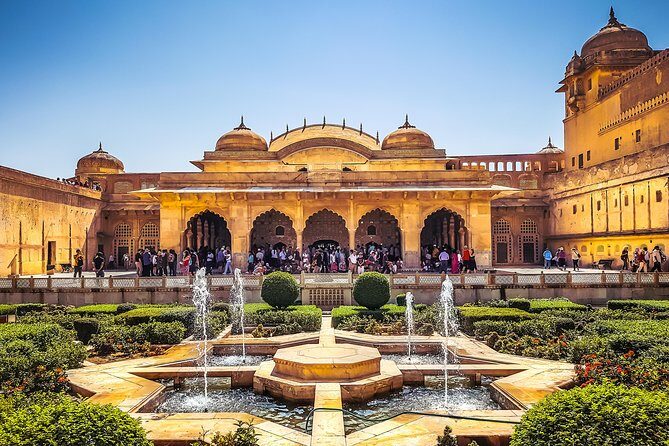
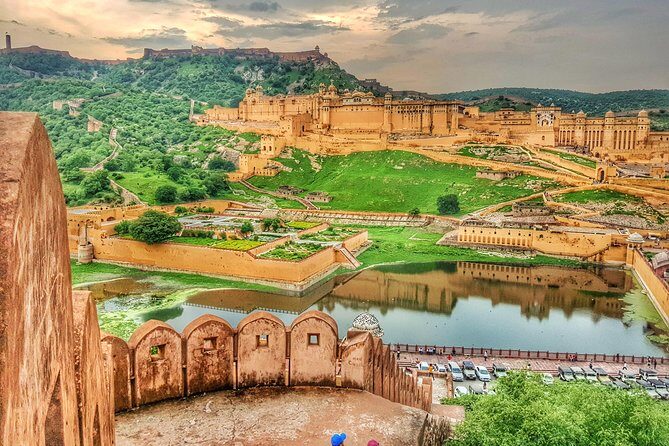
After the quick opener, the tour shifts gears to Amber Fort, with about 2 hours on site. This is where Jaipur stops being “pretty buildings” and starts being an experience of power, design, and place.
Amber Fort is known for its blend of Hindu and Muslim architecture, with marble and red sandstone doing a lot of the visual work. Even if you don’t go in expecting every architectural term, the mix of styles makes it easier to read the place: you feel like you’re looking at a crossroads of influences rather than one single tradition.
Two-hour timing is a good balance. You can:
- look around without sprinting,
- take photos at meaningful angles,
- and still have enough time for the guide to explain what you’re seeing.
One practical tip: wear something comfortable for walking. Fort areas tend to be uneven in spots, and you’ll be moving for views and photo angles. If you’re sensitive to heat, going earlier in the day helps, but the guide can also help you pace.
Jal Mahal: the water palace moment (and why the stop is brief)
Jal Mahal is often called the water palace, because it sits in the middle of Jaipur’s lake. You’ll have about 10 minutes here, and that timing suggests the goal is to see it as a scene—something you photograph and then move on.
Built in the 18th century by Maharaja Prithvi Singh, Jal Mahal is a strong example of how rulers used landscape and water as part of their design language. You’re not looking at a typical “walk-in and tour every room” attraction here. You’re looking at the idea: a palace shaped by its setting.
Why keep it short? Because it works best as a pause between bigger monuments. It gives your eyes a break and gives you a different Jaipur image—one that’s about reflection, scale, and atmosphere.
If you’re the kind of person who wants long scenic stops, you can always extend your time later independently. But as part of a day tour, the timing is efficient.





City Palace: royal life split between public and private areas
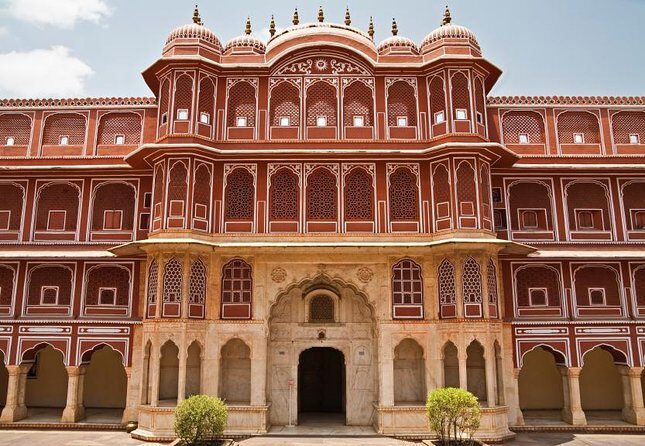
Next comes City Palace, and it’s more nuanced than it looks from the street. You’ll spend about 1 hour 30 minutes, which is plenty for a meaningful visit if you pace yourself.
Here’s the key idea: City Palace is where the present Prince of Jaipur is residing, and it’s divided into two parts. One area is open for general public, while the private part remains for the royal family. That split changes how you experience the palace—it’s not just a museum-like building. It’s an active residence, and that adds gravity.
I like this stop because it helps you understand Jaipur as a living system, not a set of old buildings. The guide can connect details to how royal power shaped the city layout and how the palace functions even today.
What to watch for: since you’re in a working residence area (at least in part), you’ll want to keep your movements respectful and follow any guidance on where you should go.
Jantar Mantar: a UNESCO observatory where instruments still work

Then you get to one of Jaipur’s most surprising stops: Jantar Mantar. You’ll have about 40 minutes, and it’s listed as a UNESCO site.
The standout detail is that it’s the only observatory in India where all the instruments are working. Built by Sawai Jai Singh II, it’s an active reminder that science and architecture had to be built together.
If you’ve ever looked at a sundial and wondered how someone could make it so precise, this is that moment taken seriously. The site’s instruments are designed for measurements tied to astronomy, and your guide can help you understand how they’re supposed to function.
Practical vibe: this is a “look, pause, look again” place. Don’t rush. Even with a 40-minute timebox, you’ll enjoy it more if you spend a bit of time at each instrument cluster rather than moving nonstop.
Shopping time in Jaipur: what to buy and how to avoid wasting it
The tour includes about 2 hours of shopping time. Admission here is free, and the focus is on Jaipur’s well-known crafts, including:
- textiles
- jewelry
- carpets
- handicrafts
- silk
This is where you’ll decide what Jaipur means to you at the personal level. A good day tour schedule gives shopping time, but it also keeps it from eating your entire day. Two hours is long enough to compare and choose, but short enough that you won’t end up overbuying just because you feel rushed.
My advice:
- go in with a rough idea (one or two categories),
- ask the guide for help with what’s worth looking for,
- and check quality before you commit.
Also, if you’re shopping for gifts, you’ll want to keep an eye on weight and how you’ll pack. Jaipur crafts can be beautiful, but some items take up space.
Guide and driver attention: why the team matters here
The difference between a decent tour and a good one is usually people, not the monuments. In feedback about this provider, the team is described as very aware of what’s happening and how the day should run, with smooth communication and careful handling of the route.
Names that show up in that context include Nari (agency contact) and driver Natu, who were praised for taking good care and keeping things organized. Another account highlights a driver named Gampat as doing an excellent job.
You don’t need to memorize these names, but the takeaway is practical: this tour is designed to feel guided and managed, not chaotic. That matters most when you’re moving between forts, palaces, and timed entry spaces.
How long is the day, really?
The duration range is listed as 1 to 8 hours (approx.), even though it reads like a full-day private sightseeing plan. What that means for you in practice is you can expect flexible pacing depending on what you choose to emphasize and how much time you spend at monuments versus shopping.
If you want a faster “highlights only” version, focus on the iconic photo stops and main attractions. If you want a more relaxed day, use the provided time blocks—especially the 2 hours at Amber Fort—and add a bit of extra pacing when it suits you.
What kind of traveler this tour fits best
This tour is a strong fit if you:
- want a private guide to interpret what you’re seeing,
- prefer an A/C car over figuring out transport on your own,
- like a route that covers major Jaipur highlights without turning into a sprint,
- and still want time for shopping.
It may not be your best match if you:
- hate structured schedules,
- want long lingering visits at every stop,
- or already have a guide and transport set up.
A few smart tips to get more out of the day
You’ll enjoy this tour more if you treat it like a guided storyline. Each stop gives you a different chapter:
- Hawa Mahal sets the visual identity,
- Amber Fort gives you scale and architecture,
- Jal Mahal provides a scenic contrast,
- City Palace connects royal life to the city,
- Jantar Mantar shows the scientific side of the same historical era,
- and shopping lets you leave with something tangible.
Also:
- Plan for monument ticket time since entrances aren’t included.
- Bring sunscreen and something light to cover up if needed, since Jaipur sun can be intense.
- If you’re shopping, decide in advance what you want so your 2 hours stays enjoyable.
Should you book this Jaipur city tour?
If you’re visiting Jaipur for the first time and you want a clean, efficient way to hit the essentials—Hawa Mahal, Amber Fort, City Palace, Jantar Mantar, plus a chance to shop—this is a solid choice. The private guide, A/C transport, and hotel pickup/drop-off are the big reasons it feels worth it, especially when you’re trying to make the most of a limited schedule.
Skip it only if you strongly prefer free-roaming all day or if you’re already set up with your own driver and guide.
FAQ
FAQ
Are monument entrances included in the tour price?
No. Monument entrances are not included, so you’ll need to pay for tickets at the sights you visit.
Does this tour include hotel pickup and drop-off?
Yes. Hotel/airport pickup and drop-off are included, and the tour includes transfers by an A/C car.
How long will I spend at Amber Fort and City Palace?
Amber Fort is allotted about 2 hours, and City Palace is allotted about 1 hour 30 minutes.
Is there time for shopping in Jaipur?
Yes. There is about 2 hours of shopping time, with a focus on items like textiles, jewelry, carpets, handicrafts, and silk.
Is the tour private or shared?
It’s private. Only your group participates.
Is free cancellation available?
Yes. You can cancel for a full refund if you cancel at least 24 hours in advance of the experience’s start time.