Jaipur in one full day is possible here, and it’s smart. You’ll cover the big photo moments plus the places that explain how Jaipur works, from the hilltop Amber Fort to the iconic Hawa Mahal. I like that this tour is built to cut down on back-and-forth planning by rolling several landmarks into one smooth route.
Two things I especially like: you get hotel pickup and drop-off, and the day includes an air-conditioned vehicle plus bottled water, so you’re not juggling comfort while you sightsee. One thing to keep in mind: monument fees are not included, and lunch is on your own, so your final spend may be a bit higher than the $40 headline price.
In This Review
- Why This Jaipur Day Tour Works So Well
- Key Highlights You’ll Actually Notice
- Amber Fort: The Hilltop Start You’ll Remember
- Hawa Mahal: The Beehive Facade With a Purpose
- Jal Mahal: The Water Palace View You Can Feel in a Snapshot
- Jaipur City and City Palace: Where the Royal Plan Shows Up
- The Real Value: Private Transport, Hotel Transfers, and a Tight Route
- What’s Not Included (And How to Plan Around It)
- Best Fit: Who Will Enjoy This Tour Most
- A Quick Reality Check on Time and Comfort
- Should You Book This Jaipur Full-Day Tour?
- FAQ
- How long is the Private Full-Day Tour of Jaipur?
- Is this a private tour or shared with strangers?
- What’s included in the $40 price?
- What isn’t included?
- Do I get a mobile ticket and hotel pickup/drop-off?
- Can I get a refund if I cancel?
Why This Jaipur Day Tour Works So Well
This is the kind of tour you choose when you want the highlights without turning your trip into a spreadsheet. Jaipur’s spread-out sights can chew up time, traffic, and energy. Here, the tour keeps you moving with private transportation and a guided route through the city’s most recognizable stops.
At about 8 hours, it’s long enough to feel like you did something real, but not so long that you’re exhausted before you see the best views. And because it’s a private tour, it’s only your group in the car, which helps you go at a pace that makes sense.
The route also balances drama and meaning. You’ll see famous facades and courtyards, but you’ll also get context for why these places look the way they do, including Jaipur’s royal design ideas and the role of astronomy and planning in the city.
Key Highlights You’ll Actually Notice
Amber Fort on the hill: A strong first stop with views and architecture that make the rest of the day click.
Hawa Mahal’s honeycomb facade: You’ll understand what you’re looking at, not just photograph a wall.
Jal Mahal by Man Sagar Lake: A quick, scenic pause with strong visual impact.
Jaipur’s royal planning: You’ll connect City Palace and the city’s founding ideas to what you see on the ground.
Hotel transfers and bottled water: Less friction, more time spent enjoying the sights.
You can also read our reviews of more guided tours in Jaipur


Amber Fort: The Hilltop Start You’ll Remember
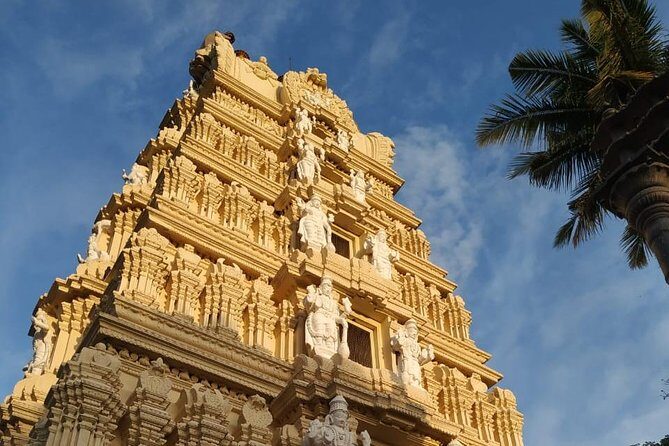
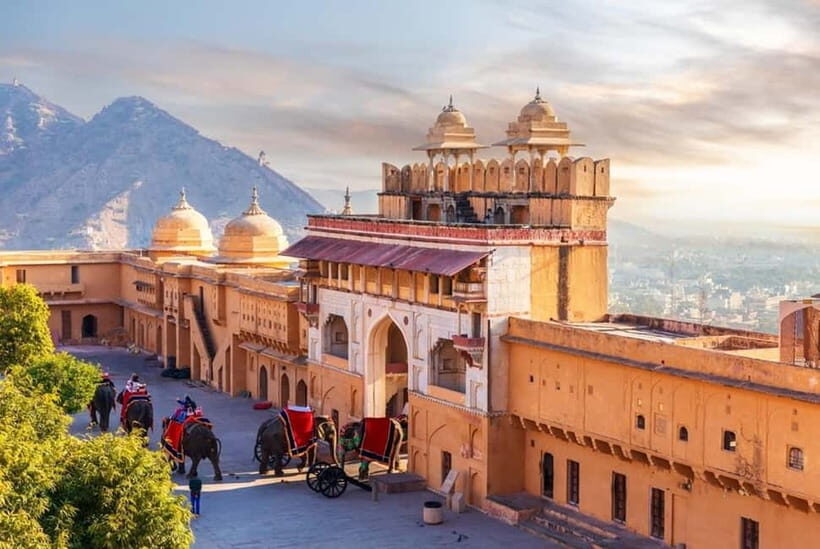
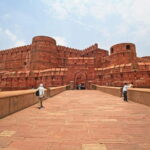
Most full-day Jaipur plans start with Amber for a reason: it’s big, dramatic, and it gives you the perfect visual scale for the city. You’ll visit the Amber Fort, sitting on rugged hills outside of town. It’s known for its blend of Hindu and Muslim architecture made in red sandstone, which shows up in the fort’s details, gateways, and courtyards.
What I like about starting here is how it changes your perspective. After you’ve seen the fort’s setting and the way the complex fits the hillside, the rest of Jaipur feels less like random landmarks and more like a planned royal landscape.
A practical note: because it’s on a hill and involves walking around the fort grounds, wear comfortable shoes. If you’re sensitive to stairs or uneven surfaces, plan to pace yourself and take breaks when your legs ask for them.
Why it’s worth the time: Amber Fort isn’t just a postcard. The design choices and the fort layout help you understand how power and daily life were tied together in the region.
Potential drawback: It can be tiring for people who dislike lots of walking in warm weather. If that sounds like you, bring water habits and expect to slow down.
Hawa Mahal: The Beehive Facade With a Purpose
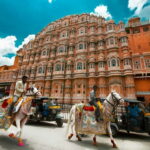
Then you move to the Hawa Mahal, the landmark that basically defines the word Jaipur for many people. This is the Palace of Winds, built by Sawai Pratap Singh. The idea wasn’t simply decoration. The palace’s tier upon tier of curved arches relates to how the royal household could observe street life below while keeping the palace’s own privacy.
Even if you’re only seeing the facade from different angles, this stop is better with context. When you understand the design goal behind the “beehive” look, the building becomes more than a photo background.
What I think you’ll appreciate most is the immediate change in feel from Amber to the city center. Amber is heavy, hilltop, and fortress-like. Hawa Mahal is lighter in concept, focused on visibility and air flow, and it connects you to the streets of old Jaipur.
Tip for enjoying it more: give yourself a moment to look at the repetition of the arches and windows. That repeating pattern is what makes the facade so recognizable, and it’s also what makes it easy to spot details you’d otherwise miss.
Possible drawback: This is a very famous stop. That usually means more crowd energy around you. Going in with a mindset of quick, focused viewing helps you get the payoff without frustration.
Jal Mahal: The Water Palace View You Can Feel in a Snapshot
Next is Jal Mahal, the water palace in the middle of Man Sagar Lake. It’s an “on-the-water” structure tied to Rajput culture, and it has been renovated and enlarged in the 18th century. That matters because you’re not just seeing an old structure. You’re seeing a building that has been maintained and adapted over time.
Jal Mahal works as a breather between the more architectural stops. Amber and Hawa Mahal can be intense visually. Jal Mahal gives you an open view and a different atmosphere, and it’s a strong spot for photos where the lake becomes part of the frame.
Because your tour is private and time-structured, you’ll likely get enough time for quick viewing and a few good angles rather than a long, wandering stop. If you love photography, the good news is that Jal Mahal’s location makes it rewarding even in shorter moments.
What to watch for: conditions around the lake can affect how crisp the view feels. If visibility is poor, manage expectations and use the time for observation of the building shape rather than chasing one perfect shot.
Jaipur City and City Palace: Where the Royal Plan Shows Up
After the standout landmarks, the tour brings you into Jaipur city, connected to Maharaja Jai Singh, a noted astronomer. This is where you start to understand that Jaipur wasn’t just built for looks. It was designed with ideas in mind, including the relationship between royal power, planning, and scientific thinking.
You’ll also visit the Maharaja’s City Palace, part of which is still the home of the erstwhile royal family. City Palace gives you a more grounded feel compared with Amber’s hilltop fort drama. It’s the royal seat in a city setting, so it helps connect the earlier stops to the everyday geography of Jaipur.
And one more thing you’ll likely appreciate here: old Jaipur streets and lanes feel different once you’ve seen the big symbolic buildings. The “Pink City” color theme shows up in the built environment around the older quarters, and it makes the whole experience feel more cohesive.
If you’re curious about Jaipur beyond the iconic facades, this is also where interest often shifts toward understanding how the city was organized. A related highlight you may encounter during city time is the Jantar Mantar complex of astronomical instruments, which comes up in the way many guides structure this kind of full-day route.
Possible drawback: City-area stops can involve some walking and navigating crowds. Wear shoes you trust and keep small breaks in mind if your day is starting early.
You can also read our reviews of more private tours in Jaipur






The Real Value: Private Transport, Hotel Transfers, and a Tight Route
At $40 for an about 8-hour private experience, the big value is not just the sightseeing list. It’s how the day is arranged to minimize wasted time.
Included logistics matter. You get an air-conditioned vehicle, private transportation, bottled water, parking fees, and fuel surcharge, plus hotel pickup and drop-off. That’s a lot of the annoying friction you usually end up paying extra for when you DIY Jaipur.
You also get a mobile ticket, which helps if you’re juggling multiple bookings. And since the tour offers group discounts, the price can get friendlier if you’re traveling with others.
There’s another subtle value: you’re doing this with a guide, which means you’re less dependent on piecing together what each site means on your own. In practice, guides help you spot what matters and skip the stuff that will just turn into “photo, move on, forget it.”
From past experiences with this tour style, I’ve seen praise tied to the people behind it. One set of comments highlighted a driver named Vikas for being on point and a guide described as very knowledgeable and friendly. Another mentioned a Spanish-guided experience arranged by Manish, with guide Aman in Jaipur. That kind of staff quality is what turns a checklist day into a day that feels guided, not just scheduled.
What’s Not Included (And How to Plan Around It)
Two items stand out as things you should plan for: Lunch and Monument Fee.
That means you may want to carry some snack money or plan where you’ll eat during breaks. Since you’re on a full day route with multiple stops, lunch can be easiest if you go in knowing you’ll find food close to the stops, not back at your hotel. Keep water habits in place too, even with bottled water included at least as part of the tour service.
Also budget for monument fees. The tour price is a great base, but the final total depends on what you choose to enter and what fees apply at the time of your visit.
Best Fit: Who Will Enjoy This Tour Most
This tour is a strong fit if:
- You’re on a first trip to Jaipur and want the top highlights in one day.
- You hate spending your limited sightseeing time figuring out transport.
- You prefer a route with built-in context rather than reading signs for everything.
- You’re traveling with a group where a private car still makes sense for the price.
It may not be ideal if you want a super slow pace or deep museum-style time at every location. This is more about efficient, well-chosen stops that hit the major visual and cultural anchors of Jaipur.
A Quick Reality Check on Time and Comfort
When a day is packed into about 8 hours, the key is managing energy. You’ll be in an air-conditioned vehicle for transfers, but you’ll still have to walk around forts and buildings, and some sights are more crowded than others.
Bring:
- comfortable shoes
- water habits
- a light layer if mornings or evenings feel cool
If you’re prone to heat fatigue, consider starting early and planning small rest pauses. A private guide can often adjust the rhythm a bit, but the day still follows a structured flow.
Should You Book This Jaipur Full-Day Tour?
Yes, I think you should consider booking it if your goal is high impact Jaipur without complicated planning. The combination of hotel pickup/drop-off, air-conditioned private transport, and a route that strings together Amber Fort, Hawa Mahal, Jal Mahal, and core city highlights is exactly the kind of value you want when time is tight.
Skip it only if you have your heart set on a slow, unstructured day, or if you strongly prefer doing monument entry and lunch on your own with no added guidance. Otherwise, this is a practical way to get oriented fast, see the buildings that define Jaipur, and finish the day feeling like you actually covered the city.
FAQ
How long is the Private Full-Day Tour of Jaipur?
It runs for about 8 hours.
Is this a private tour or shared with strangers?
This is private. Only your group participates.
What’s included in the $40 price?
Included items are an air-conditioned vehicle, private transportation, bottled water, parking fees, fuel surcharge, and hotel pickup drop-off.
What isn’t included?
Lunch and monument fees are not included.
Do I get a mobile ticket and hotel pickup/drop-off?
Yes. The tour offers hotel pickup and drop-off, and you receive a mobile ticket.
Can I get a refund if I cancel?
You can cancel for a full refund if you cancel up to 24 hours in advance of the experience start time. If you cancel less than 24 hours before, the amount paid is not refunded.