REVIEW · JAIPUR
Hands-on Embroidery Workshop
Book on Viator →Operated by Creatis · Bookable on Viator
One stitch can change how you see a blank piece. This Jaipur workshop is a relaxed, small-group way to learn embroidery fundamentals and then push into shiney embellishments like beads and mirrors in just two hours. I especially loved the calm, step-by-step guidance from Mohit and his very talented team, and the way you leave with plenty of goodies to keep practicing. One consideration: there’s no hotel pickup, so you’ll need your own way to the Creatis workshop area.
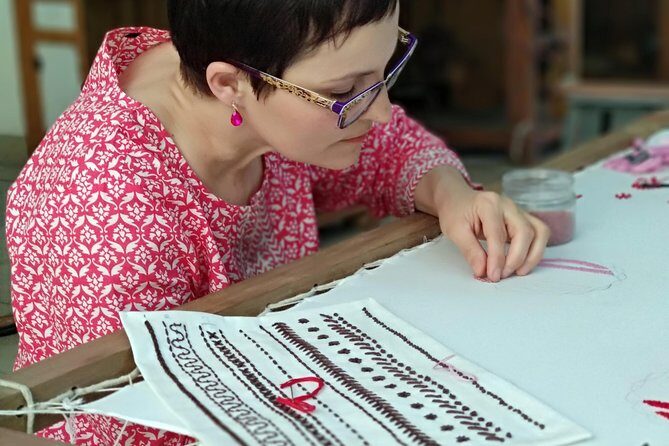
You’ll work on a project you can actually use, not just a practice square. Choose between a hooped sampler meant for display or a sew-on patch you can add to clothes or accessories, then learn how different stitch styles create lines, texture, and raised details.
The class is smart casual, geared to beginners (with real technique), and paced so you can stop and ask questions without feeling rushed. With a max group size of 15, you get the kind of attention that makes the stitches stick.
In This Review
- Key things I’d circle before you go
- Jaipur embroidery, hands-on: why this workshop works
- What you’ll make: hooped sampler or sew-on patch
- The 2-hour flow: tools, stitches, and building texture
- Embellishments with beads, mirrors, sequins, and coils
- Tools, materials, and the transfer step (the stuff that saves you)
- Price and value in real terms (not just a number)
- The guides and the workshop vibe: the difference between learning and watching
- Who should book this (and who might not)
- Planning your visit: finding Creatis in Jaipur
- Pairing it with another craft day: a smart use of your time
- Should you book this embroidery workshop?
- FAQ
- How long is the embroidery fundamentals and embellishment workshop?
- What does it cost, and is the price all-inclusive?
- Where is the workshop meeting point in Jaipur?
- Do I need to arrange my own transport since there’s no hotel pickup?
- What project can I choose during the class?
- Will I get tools and materials for the embroidery?
- What is the dress code and age limit?
- What is the group size?
- What is the cancellation policy?
Key things I’d circle before you go
- Small class size (max 15), which helps you get real coaching instead of just watching
- Two project paths: hoop for display or patch for your wardrobe
- Real training in structure—not only decoration, but joining and sturdiness
- Embellishments you can secure using practical attachment tips
- Raised, 3D-style effects with decorative techniques that lift off the fabric
- Take-home goodies, including an embroidery hoop and extra materials for continuing later
Jaipur embroidery, hands-on: why this workshop works
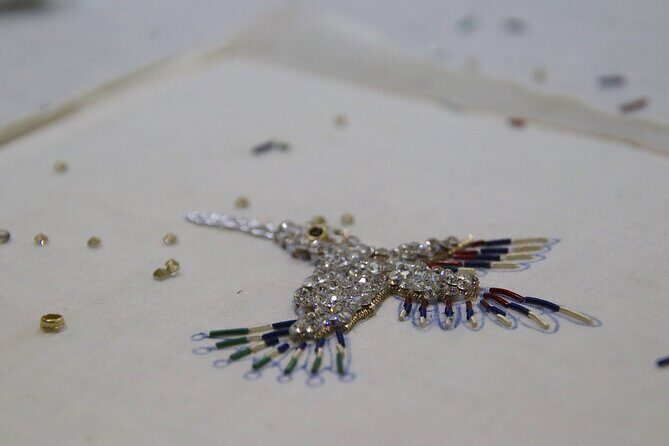
Jaipur is famous for textiles, but this isn’t a sit-and-listen craft lecture. The whole point is your hands, your thread, and your fabric, moving from plain to patterned while someone corrects your tension and encourages you to try again. In two hours, you don’t just learn what to do—you learn how it feels.
What makes it especially satisfying is the mix of basics and decoration. You start with the stitches that create clean edges and readable shapes, then you build into texture, accents, and even 3D effects. That order matters. If you jump straight to beads and sequins, it’s easy to get lost. Here, you get the foundation first.
Also, the vibe seems designed for comfort. People mention a great playlist and a relaxed atmosphere, and the team makes sure you’re comfortable and guided enough to enjoy it, not just survive it. The space is kept clean and the setup is open, so you aren’t stuck in a cramped room with everyone hovering over your work.
A few more Jaipur tours and experiences worth a look


What you’ll make: hooped sampler or sew-on patch
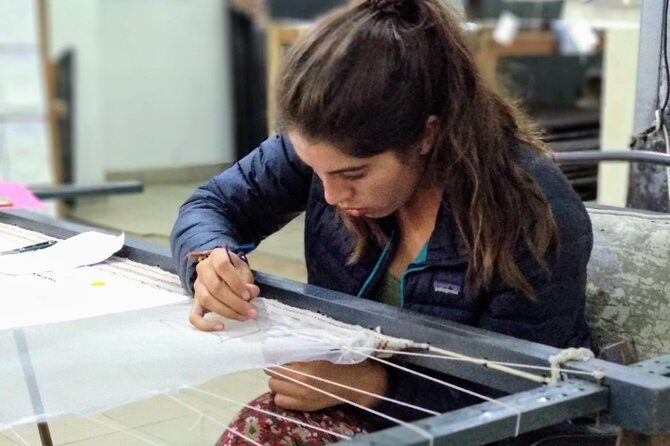
Before you start, you choose your project style, and that choice affects how you’ll think as you stitch.
A hooped sampler is built to be displayed. That means you’ll focus on stitches that look good in a finished, framed format: crisp outlines, borders, and structured shapes that read clearly even from a distance.
A sew-on patch is more like a practical craft you’ll actually attach later. Instead of treating the piece like wall art, you’ll think about how it can work on clothes or accessories. You’ll still practice decorative stitches, but you’ll also be thinking about durability—how the work holds together.
Either way, you’re turning a plain fabric surface into something with character. And that’s the real win: you leave with a piece that feels like yours, because you made it and you understand what you did.
The 2-hour flow: tools, stitches, and building texture
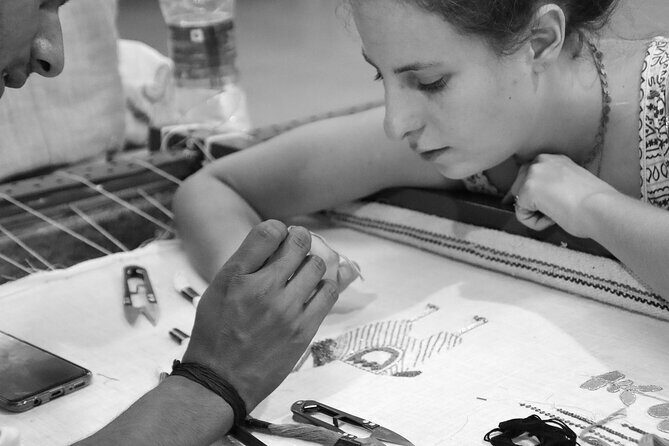
This workshop is about fundamentals, not shortcuts. The class starts with the kind of practical basics that most people skip when they try embroidery alone.
You’ll get familiar with the tools and materials, including how to prep your fabric and how designs get transferred. That transfer step is huge. If you’ve ever tried to copy a pattern freehand and ended up with uneven lines, you’ll appreciate learning the intended method up front.
Then the stitch training begins. The workshop focuses on a set of stitch families that work together like a toolkit:
- Borders and outlines: learn how to frame work with clean edges, flowing stems, and defined shapes
- Fill and texture: use stitches to cover areas and create surfaces that feel dimensional
- Details and accents: add those small finishing touches that make embroidery look complete
- Structural and joining stitches: learn how to hold pieces together with subtle strength
- 3D and decorative effects: experiment with raised forms that lift off the fabric
This is the part I like most for beginners. It’s not random stitching. Each category teaches you a purpose. Borders give clarity. Fills build coverage. Details bring personality. Structural stitches keep things from looking fragile. And 3D techniques show you what embroidery can do beyond flat lines.
The class also covers the idea that a handful of stitches can create a lot of visual variety. That’s a confidence booster. You start to see embroidery as design with repeatable moves, not a mysterious art that only experts can do.
Embellishments with beads, mirrors, sequins, and coils
Once your stitches are in place, you add sparkle. The workshop introduces embellishment techniques using beads, mirrors, sequins, and coils. The goal isn’t just decoration for decoration’s sake. It’s learning how to attach these elements securely so they don’t pop off the first time you wear or move the piece.
You’ll also get tips for long-lasting attachment. That matters more than people expect. Many beginners can technically sew a bead on, but they don’t think about how thread tension, stitch direction, and anchoring points affect durability. Here, you’re taught to attach with intention.
Mirrors and sequins add a different kind of texture. They catch light and create movement, even when the piece is still. Coils and beadwork can give dimension and rhythm, especially when you place them as accents instead of covering everything.
The best part is that you don’t have to be born with crafty hands. The workshop guides you on how to place and secure embellishments, so you can focus on the look you want rather than only managing the mechanics.
Tools, materials, and the transfer step (the stuff that saves you)
If you’re thinking, I can just buy thread and YouTube embroidery, you can. But this workshop saves you time and frustration with two things: materials and method.
You learn about the basic tools and materials used in traditional embroidery. That includes how to prepare your fabric and how to transfer designs in a way that supports clean stitching. Without that, your stitches can look uneven even when you’re using the right stitch.
And based on what people say about the experience, you’re not left figuring things out alone. The team provides the materials and you also receive extra take-home items that help you keep going after the workshop ends. One person specifically mentioned being stunned by the amount of goodies given to take home, including an embroidery hoop.
So you get the class, plus the follow-up. That’s what makes it good value, especially if you’re the type who starts projects and then loses the thread later.





Price and value in real terms (not just a number)
The cost is $25.50 per person for an approximately 2-hour workshop in Jaipur. What makes it feel fair is that the price includes all taxes and fees (GST included), so you aren’t hit with surprise add-ons at the end.
You should also factor in what you’re actually receiving: guided instruction, hands-on practice across multiple stitch categories, and access to the decorative elements and techniques (beads, mirrors, sequins, coils). If you try to self-teach, the cost often balloons because you buy the wrong thread, the wrong needle, the wrong fabric, and still don’t know the method.
The one cost-related catch is that there’s no hotel pickup. You’ll pay for transport to reach the meeting point, but that’s common with workshops in industrial or workshop-adjacent areas. The good news is it’s near public transportation, so you can likely manage the trip without a complicated plan.
Also, spots are often booked around a week or so ahead. That’s usually a sign the class is popular because it’s genuinely fun and well-run, not just because it’s on a website.
The guides and the workshop vibe: the difference between learning and watching
Learning embroidery is tricky because thread work punishes sloppy setup. If your guidance is off, you’ll struggle with tension, neatness, and placement.
Here, the team approach seems built for real learning. People mention Mohit, who helps manage the session, along with a highly skilled master. The consistent theme is comfort and guidance—staff checking in enough that you don’t feel stuck. There’s also mention of great playlist energy, and an overall relaxing feel.
That matters, because embroidery can either be calming or frustrating depending on pacing. A two-hour session is short. If instruction is vague, you’ll lose time. If instruction is overly strict, you’ll feel tense. This class seems to hit the sweet spot: clear steps with room to create your own look.
And the group size stays small (max 15), which is a practical detail. It keeps the workshop from turning into an assembly line and helps the instructors manage a range of beginners.
Who should book this (and who might not)
This workshop is a great fit if you:
- Want a beginner-friendly craft with real technique
- Like working with your hands and getting immediate results
- Want to take home an item you can display or attach
- Prefer a class that’s structured but still relaxed
It’s also ideal for people who learn best by doing. You’re not just observing; you’re stitching, adding texture, and practicing decorative accents.
You might think twice if:
- You need hotel pickup and don’t want to handle your own transport at all
- You dislike activities that involve sitting/leaning forward for about two hours (the workshop lists moderate physical fitness level, which usually means you should be comfortable staying in position and using fine motor skills)
But if you can handle the basics of sitting and focusing, you’ll likely enjoy it.
Planning your visit: finding Creatis in Jaipur
The meeting point is at CreatisA12, Sudarshanpura RIICO, behind Tata Motors Service Center, in the Industrial Area near Bais Godam, Jaipur, Rajasthan 302006. You’ll end back at the same meeting point.
That industrial-zone location is why hotel pickup isn’t offered. Don’t assume it’s downtown and walkable from every hotel. Plan your route with a taxi/auto or public transport options. The good part: it’s stated to be near public transportation, so you’re not completely dependent on private rides.
One more practical note: dress code is smart casual. Think comfortable clothes that won’t mind a little thread and craft mess.
Finally, bring your attention for a full two hours. This class works best when you treat it like a skill-building session, not a casual photo stop.
Pairing it with another craft day: a smart use of your time
One nice way to shape your day is to pair this embroidery workshop with a second craft activity—especially one that’s in the same general area or same provider setup. People have talked about doing embroidery in the morning and then block printing later the same day, and it makes sense.
Embroidery uses fine detail and repeatable stitch skills. Block printing uses a different kind of focus—pattern, pressure, and design layout. Switching between crafts helps your brain stay engaged, and you come away with two different kinds of handmade memories.
If you’re trying to build a full craft itinerary, this embroidery class is a strong anchor because it gives you a finished item plus skills you can practice afterward.
Should you book this embroidery workshop?
I think you should book it if you want a beginner-friendly class that still teaches real technique. The combination of stitch fundamentals, structural learning, and decorative embellishment makes it more useful than a typical craft demo. And the fact that you leave with take-home goodies—often including an embroidery hoop—adds real value, because you can continue at home.
It’s also a good choice for solo travelers and couples who enjoy hands-on activities and don’t want to spend the afternoon shopping. You’ll likely get more satisfaction from the process than from hunting for souvenirs.
Book it sooner if you see dates filling up. People seem to love the experience for the guidance, the relaxing pace, and the structured way stitches come together. If you want a Jaipur memory you can hold, wear, or display, this is a practical way to get one.
FAQ
How long is the embroidery fundamentals and embellishment workshop?
The session is about 2 hours.
What does it cost, and is the price all-inclusive?
It costs $25.50 per person. The price includes all taxes, fees, and handling charges, including GST.
Where is the workshop meeting point in Jaipur?
You meet at CreatisA12 Sudarshanpura RIICO, behind Tata Motors Service Center, Industrial Area, Sudarshanpura, Bais Godam, Jaipur, Rajasthan 302006, India.
Do I need to arrange my own transport since there’s no hotel pickup?
Yes. Hotel pickup is not included. The workshop is near public transportation, so you can plan to reach the meeting point on your own.
What project can I choose during the class?
You can choose between a hooped sampler (meant for display) or a sew-on patch (ready to embellish clothes or accessories).
Will I get tools and materials for the embroidery?
The class is designed to teach you with the needed embroidery tools and materials, and people note they receive materials to work with during the workshop and goodies to take home.
What is the dress code and age limit?
Dress code is smart casual. The minimum age is 18 years.
What is the group size?
The workshop has a maximum of 15 travelers, so it stays small.
What is the cancellation policy?
Free cancellation is available. You can cancel up to 24 hours in advance for a full refund, and cancellations within 24 hours of the start time are not refunded.