REVIEW · NEW DELHI
Golden Triangle tour with Historical Rajasthan
Book on Viator →Operated by S.A.M Tours & Travels · Bookable on Viator
Golden Triangle plus Rajasthan moves fast, in a good way. This 11-day package stitches together Delhi, Agra, Jaipur, and then keeps going to Udaipur, Ajmer, Pushkar, Jodhpur, and Bundi with a private A/C car and government-approved guides. You’re not just ticking landmarks; you’re seeing how these places feel on different days and at different times.
I love how the trip is structured for first-timers and return-visitors alike: Taj Mahal at dusk sets the tone, then Udaipur’s Lake Pichola boat ride gives you a totally different mood. Past guests also highlighted very organized help from coordinators and guides, including names like Mr. Bharat, Mr. Atul, and drivers such as Teekam and Sanjeev, which is a big deal when you’re moving city to city.
The only real caution is pacing. You’ll be on the road a lot, and the days are packed with sightseeing, so you’ll want to travel light, plan for early starts, and keep energy for fort days.
In This Review
- Key Things to Know Before You Go
- How This Route Turns the Classic Golden Triangle Into Real Rajasthan
- Starting in Delhi: Tombs, Qutub Minar, and Old Delhi’s Big Punch
- Agra: Taj Mahal at Dusk Plus the Mughal Power List
- Jaipur via Fatehpur Sikri: The Ghost City Detour That Actually Works
- Amber Fort and Jaipur’s Iconic Trio: Hawa Mahal, the Observatory, and Market Time
- Ajmer and Pushkar, Then Jodhpur: Temples, Sacred Water, and Big Fort Views
- Ranakpur to Udaipur: White Marble Jain Temples and a Proper Royal Reset
- Bundi: The Rajasthan Detour That Feels Like a Pause Button
- Price and Logistics: Where the Value Really Comes From
- Practical Tips to Survive the Pace Without Missing the Magic
- Should You Book This Golden Triangle and Rajasthan Package?
- FAQ
- What cities are included in this tour?
- What is included in the price?
- Are monument entrance fees included?
- Where does the tour start and how do I get to the hotel?
- Can I request a specific room type or preference?
- Is this tour private or shared?
- What transport will I use during the trip?
- Does the tour include guided sightseeing in each city?
- What is the cancellation and refund policy?
Key Things to Know Before You Go
- Private A/C vehicle for the full trip means fewer logistics headaches and smoother city-to-city transfers
- Govt.-approved tour guides at destinations help you get more meaning out of the sites
- Taj Mahal scheduled around dusk so the light and atmosphere land well for photos and first impressions
- Udaipur boat ride on Lake Pichola adds a slow, scenic break after fort-and-palace touring
- Udaipur to Bundi detour gives you a quieter, less predictable side of Rajasthan
- Entrance fees aren’t included, so budgeting ahead matters for smooth days
How This Route Turns the Classic Golden Triangle Into Real Rajasthan
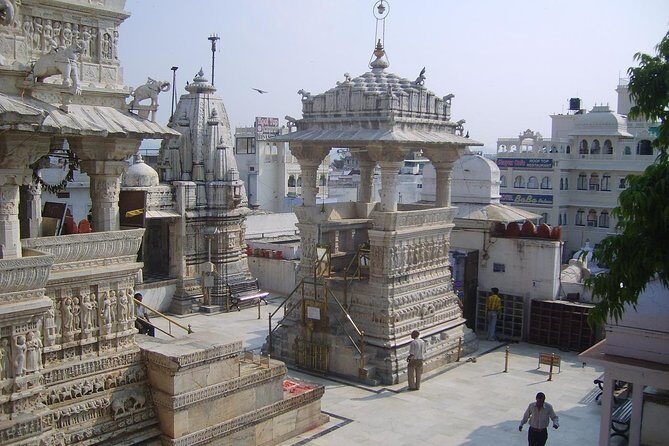
Most Golden Triangle tours stop after Jaipur. This one keeps you in Rajasthan long enough to feel the change in architecture, food rhythms, and even the pace of everyday life. You start in Delhi, then lock in the big three: Agra (Taj Mahal) and Jaipur (Amber and the iconic pink-city sights). After that, the trip widens: Ajmer and Pushkar for temple-and-town energy, Jodhpur and Mehrangarh for sheer scale, Udaipur for royal elegance and water views, and Bundi for the hilltop “hanging” palace vibe.
What makes this experience especially workable is the travel model. You’re on a private car with a driver for the whole journey, and you get tour guides approved by the Department of Tourism, Government of India at the destinations. That reduces the usual stress of matching up schedules, swapping drivers, and trying to figure out what’s important on your own.
Price-wise, you’re paying for a lot of “in-between” costs: hotel nights, guided touring, and the transport logistics that usually inflate last-minute travel. The big thing to remember is that the tour doesn’t include monument entrance fees, so the final cost can creep up depending on what you’re planning to see each day.
You can also read our reviews of more historical tours in New Delhi



Starting in Delhi: Tombs, Qutub Minar, and Old Delhi’s Big Punch
Your tour begins at IGI Airport Terminal 3 in Delhi, then you’re transferred to your pre-booked hotel for check-in and a reset. In the afternoon, you do a classic Delhi mix that’s not just for first-time visitors. You’ll visit Humayun’s Tomb and Qutub Minar, then drive along Rajpath, past India Gate, Parliament House, and the President’s Residence. Even from the car windows, you get a sense of how Delhi lays out power and monumentality.
Then comes Old Delhi, and it’s a different planet. You go to Raj Ghat (Gandhi’s cremation site), Jama Masjid (the massive mosque), and the Red Fort area. Walking here is where you’ll feel Delhi’s layers: Mughal-era grandeur meets modern street life. It’s also smart that this is scheduled early, because you’ll know what to look for the rest of the trip.
Practical note: dress comfortable. You’ll likely do some walking on uneven ground around forts and religious sites. Wear shoes you can trust.
Agra: Taj Mahal at Dusk Plus the Mughal Power List
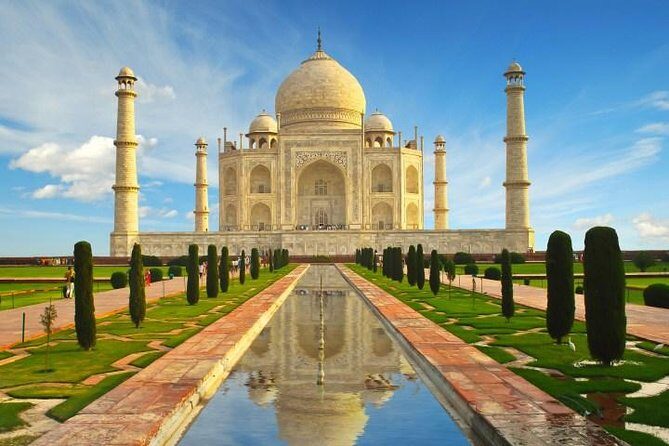
Agra is where the Golden Triangle turns emotional. You head to Agra after Old Delhi sightseeing, then you tour the Taj Mahal. This package specifically calls out the Taj at dusk, which matters. The color temperature shifts as the sun lowers, and the monument’s marble tends to look different in late light than in harsh daytime sun. It’s one of those experiences where timing changes the whole feeling.
After Taj, you return to the hotel for the night in Agra. The next morning brings Agra Fort, built by Akbar, with later Mughal contributions. This isn’t just walls and gates. The tour highlights key palace spaces inside the fort complex, including Akbari Mahal, Khas Mahal, Jahangiri Mahal, Diwan-e-Aam, and Diwan-e-Khas. Having a guide for this part helps a lot, because you’re walking through places where you can’t always “see the story” without context.
If you want photos: show up with patience. Taj and Agra Fort both benefit from slower looking. If you rush, you miss the details that make the Taj more than a postcard.
Jaipur via Fatehpur Sikri: The Ghost City Detour That Actually Works
On your way from Agra to Jaipur, you visit Fatehpur Sikri, which the itinerary frames as a “city of ghost.” That’s not just a cool nickname. Fatehpur Sikri was once the Mughal capital under Akbar, built with royal spaces and a huge mosque placed on a hillock. Then it was abandoned after roughly 13 years of use.
Why this stop is worth your time: it breaks the monotony of fortress-after-fortress. It also gives you a dramatic contrast to active city life. You see what monumental planning looks like when the human engine that created it later disappears.
Then you arrive in Jaipur and check into your hotel. This is a good buffer stop because Jaipur is where the touring schedule gets real.
Amber Fort and Jaipur’s Iconic Trio: Hawa Mahal, the Observatory, and Market Time
The Jaipur day is built around three experiences that feel different from one another.
First: Amber. You’ll do sightseeing at Amber, the old capital, and there’s an elephant ride listed from the foot of the hill up toward the fort gates. Be honest with yourself about whether you’re comfortable with animal-based rides. If you’d rather not, plan to decide in advance of the moment—don’t get pressured by the crowd energy.
Next comes Jaipur’s key sights: Maharaja’s Museum, Jai Singh’s Astronomical Observatory, and Hawa Mahal. Hawa Mahal is the one most people picture before they arrive: that honeycomb-like facade built to let royal women observe street activity. The observatory adds a different layer of “Jaipur thinking,” where science and architecture meet. The museum spot gives you a more collected look at royal-era artifacts and styles.
Then you get time in the markets for shopping. This matters because Jaipur isn’t just sightseeing; it’s also where you’ll want to buy practical souvenirs. The tour includes evening leisure, which is helpful if you want to slow down after a day of forts and stairs.



Ajmer and Pushkar, Then Jodhpur: Temples, Sacred Water, and Big Fort Views
After Jaipur, you head toward Pushkar with a stop in Ajmer. Ajmer’s highlight is Ajmer Sharif Dargah, the domed shrine of the Sufi saint Garib Nawaz. This is a spiritual stop, and it also gives you a feel for Rajasthan’s religious variety.
Then you arrive in Pushkar and check in. Pushkar is known for its pilgrimage atmosphere, and the following day is planned around that.
You visit Savitri Temple, the Brahma Temple (presented as the only Brahma temple for the deity), and the Holy Sarovar, where thousands of pilgrims take dips according to Hindu mythology. Whether you’re religious or not, this is where Pushkar feels like a living town rather than a museum.
From Pushkar you drive to Jodhpur. Evening includes a visit to the clock tower area and time for shopping, then you overnight in Jodhpur.
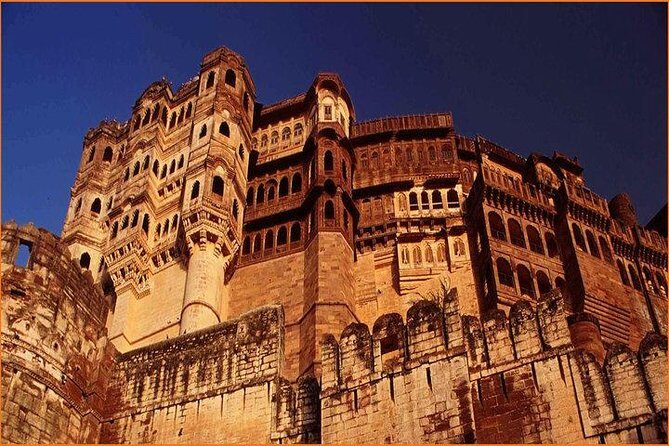
The next day is fort country: Mehrangarh Fort and Jaswant Thada. Mehrangarh’s scale is the kind of thing you feel before you even understand it. Jaswant Thada adds a cleaner, more reflective feel near the fort complex.
Ranakpur to Udaipur: White Marble Jain Temples and a Proper Royal Reset
The ride from Jodhpur to Udaipur includes Ranakpur Jain temples. This stop is built for people who like architecture details and quiet awe. The temples are described as white marble, with 29 halls spread over about 40,000 sq.ft., and 1,444 pillars. That number alone tells you this is not a small stop. Your guide will help you see why those design choices matter.
Then you continue to Udaipur, check in, and get leisure time in the evening. Udaipur is one of those cities where you’ll notice the shift even without trying: lake air, palace silhouettes, and street-level calm.
Your full Udaipur day includes:
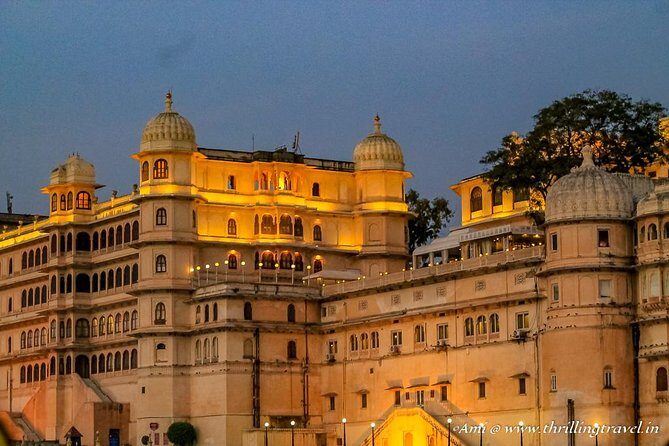
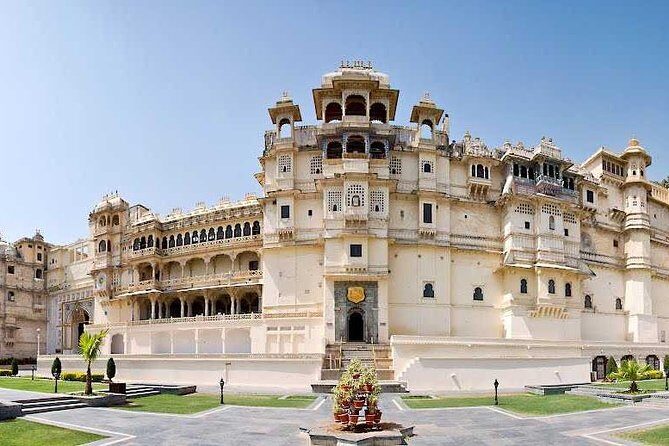
- Palace Museum, described as made of granite and marble with filigreed balconies and ornate windows
- Sahelion Ki Bari, a garden with fountains once used for royal ladies
- Jagdish Temple
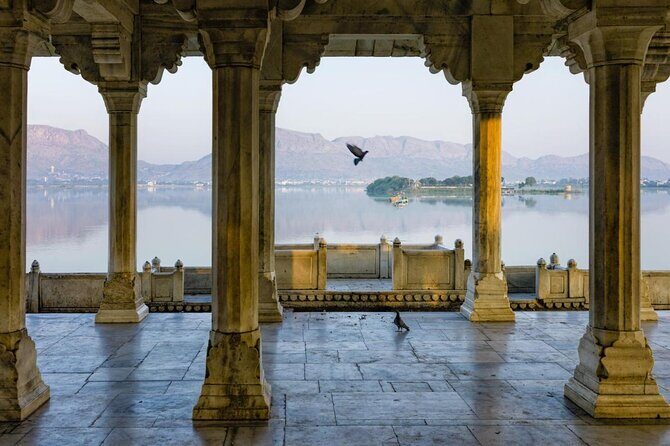
The best practical part comes in the afternoon: you take a boat ride on Lake Pichola. After forts and indoor rooms, this is a reset. It’s also a smart counterbalance to the “stone and sun” feeling in earlier days.
Bundi: The Rajasthan Detour That Feels Like a Pause Button
Bundi is the surprise that makes this tour more than a checklist. You drive to Bundi, check in, and visit Bundi Palace, described as a hilltop masterpiece built by Rao Raja Ratan Singh Hada between 1607 and 1631. The itinerary emphasizes how it looks from above like a hanging structure, built over the slope of the hill.
It also links Bundi Palace to literature, saying it fascinated Rudyard Kipling. Even if you don’t know Kipling’s work well, this gives you a clue that the palace isn’t just local pride. It’s the kind of place outsiders noticed because the form is unusual.
Evening is at leisure. That is important here. Bundi gives you space to breathe and wander without constantly needing to “win” the sightseeing schedule.
Later, you drive back to Jaipur, relax, and enjoy more shopping in the evening. This helps you keep Jaipur as your final big base before the return north.
Price and Logistics: Where the Value Really Comes From
At $1,200 per person for about 11 days / 10 nights, the deal has a lot of obvious value if you care about convenience. Here’s what your money covers:
- Three-star hotels on twin sharing basis for the nights listed
- In some places, heritage havelis (depending on availability)
- Private A/C vehicle for the entire tour
- Govt.-approved tour guides at destinations
- Toll tax, parking, interstate taxes, and fuel charges
- Breakfast for 10 days
What’s not included is equally important: monument entrance fees.
So is it worth it? For most people, it’s a good value if you want guided context and a single driver setup with minimal hassle. If you’re the kind of traveler who loves planning everything yourself and skipping guides, you may find a cheaper DIY route. But if you want to protect your time, reduce mental load, and get explanations for complex sites like Agra Fort and the observatory in Jaipur, this package structure makes sense.
One more practical detail that boosts value: the tour uses mobile tickets and promises a smooth confirmation flow. And the start/end is anchored at IGI Airport Terminal 3, so you’re not dealing with vague meeting-point scavenger hunts.
Practical Tips to Survive the Pace Without Missing the Magic
This tour is built for momentum. You’ll see a lot, and that can be great if you travel smart.
- Plan for early mornings. Forts and major monuments run best when you’re not chasing time.
- Bring comfortable walking shoes. Forts and temples mean stairs and uneven surfaces.
- Expect heat and sun exposure. Even with an A/C car, outdoor time adds up.
- Budget for entrance fees. Since they are not included, check your priorities for paid monuments.
- Pack light and organize your day bag. When you’re moving every couple of days, you’ll thank yourself.
- Ask for driver and guide details before you land. In past experiences with this operator, travelers praised getting car and contact information in advance, which makes the first day feel calmer.
Also, consider how you feel about the optional-feeling activities like the elephant ride at Amber. It’s included in the plan, so decide your comfort level early.
Should You Book This Golden Triangle and Rajasthan Package?
If you want a first-time-friendly, guide-led way to see Delhi, Agra, and Jaipur, then continue into the deeper Rajasthan stops like Udaipur and Bundi, this is a strong fit. It’s especially good value if you’d rather spend your energy on viewpoints and photos than on route planning.
I’d skip it only if you strongly dislike fast itineraries and long driving days, or if entrance fees would create a big mismatch with your budget. Otherwise, this route gives you the headline sights plus enough extra variety to feel like Rajasthan, not just a rerun of the most famous three stops.
FAQ
What cities are included in this tour?
You’ll cover Delhi and the Golden Triangle (Delhi–Agra–Jaipur), plus major Rajasthan highlights including Udaipur, Ajmer, Pushkar, Bundi, and Jodhpur. Fatehpur Sikri and Ranakpur are included as route stops.
What is included in the price?
The package includes three-star hotel nights on a twin sharing basis, a private A/C vehicle for the entire tour, government-approved tour guides at destinations, toll and parking costs, interstate taxes, fuel charges, and breakfast for 10 days.
Are monument entrance fees included?
No. Monument entrance fees are not included in the package price.
Where does the tour start and how do I get to the hotel?
The tour starts at IGI Airport Terminal-3, Delhi. After arrival, you’ll be transferred to your pre-booked hotel for check-in, then you’ll have an afternoon sightseeing session in Delhi.
Can I request a specific room type or preference?
Yes, you can share preferences at booking such as smoking or non-smoking, pool side, or garden facing if possible. Exact availability depends on the hotel.
Is this tour private or shared?
This is a private tour/activity. Only your group will participate.
What transport will I use during the trip?
You’ll travel in a private A/C vehicle with an experienced chauffeur for the entire itinerary. The vehicle is described as almost new.
Does the tour include guided sightseeing in each city?
Yes. The tour includes government-approved tour guides at the destinations for the sightseeing included in the plan.
What is the cancellation and refund policy?
You can cancel up to 6 days in advance for a full refund. If you cancel 2–6 days before the experience start time, the refund is 50%. If you cancel less than 2 days before the start time, the amount paid is not refunded. Cut-off times are based on local time.