REVIEW · PUSHKAR
Full Day Spiritual Tour of Ajmer & Pushkar-The Pushkar Route
Book on Viator →Operated by THE PUSHKAR ROUTE · Bookable on Viator
One day. Two cities. Tons of spiritual rhythm. This Ajmer-to-Pushkar route is a smart way to see major heritage sights without spending your whole trip on taxis and indecision. I like how the day moves from Ajmer’s lanes and major religious landmarks to Pushkar’s calmer temple lanes and lakeside atmosphere.
What I really like is the mix of faiths on one route. You’ll pass a Jain site famous for Rishabhdev, visit Ajmer’s Sufi shrine, then shift into Hindu temples (plus a Sikh gurudwara) before ending by Pushkar Lake for evening arti.
One drawback to plan for: it’s packed. You’re looking at about 6 hours and multiple stops, so if you prefer long, slow stays in one place, this may feel like a spiritual sprint.
In This Review
- Key Points You’ll Appreciate
- Ajmer to Pushkar in One Day: The Flow Matters
- Ajmer: Soni Ji Ki Nasiya, the Jain Temple That Blows Up Your Expectations
- Dargah Khwaja Kanoon Sahib: Ajmer’s Sufi Shrine and Soft Power
- Akbar’s Palace & Museum: Artifacts That Make the City Feel Real
- Ana Sagar Lake: A Breather in the Middle of a Big Day
- The Lunch Hour: Why the Break Is Part of the Experience
- Pushkar Start: Gurudwara Sahib and the Sikh Dimension
- Varaha Temple: Vishnu’s Sacred Marker in Pushkar
- Old Rangji Temple: A Smaller, Older Vishnu Stop by the Ghats
- Atmateshwar (Atamteshwar) Mahadev Mandir: An Underground Shiva Cave
- Brahma Temple: The One Temple in the Universe Dedicated to Brahma
- Pushkar Lake and Evening Arti: Where the Day Lands
- Value and Practical Notes: Is $50 Worth Your Time?
- Should You Book This Ajmer & Pushkar Spiritual Day Tour?
- FAQ
- How long is the Ajmer & Pushkar spiritual tour?
- What time does the tour start, and is pickup included?
- Is this tour private or shared with other people?
- Does the tour include admission tickets?
- What ticket format do I get?
- What should I know about weather and cancellation?
Key Points You’ll Appreciate
- 11 major heritage stops crammed into a single day across Ajmer and Pushkar
- Pickup + mobile ticket, so you start with less fuss
- Admission included at most stops, saving you time and cost
- Lunch break built into the schedule with time to rest
- Evening arti at Pushkar Lake as a peaceful ending
- Private group format, so your pace stays in your control
Ajmer to Pushkar in One Day: The Flow Matters
You start at 10:00 am, and the whole plan is designed to keep you moving while still giving you breathing room. The first stretch is focused on Ajmer, then there’s a built-in lunch pause before the day shifts to Pushkar and ends with the lakeside evening ritual.
The structure is simple and useful:
- First about 3 hours in Ajmer, hitting the big religious and cultural landmarks.
- Then roughly 1 hour for lunch, which is more than just a break. It’s your mental reset between two very different vibes.
- Then about 1 hour in Pushkar for key temples and sacred sites.
- Finish with evening arti at Pushkar Lake, when the atmosphere changes from sightseeing mode to something more reflective.
I love schedules like this because they prevent the common problem in Rajasthan trips: you see one temple and then the day eats itself up with travel and bargaining. Here, you already know where you’re going next.
You can also read our reviews of more tours and experiences in Pushkar.

Ajmer: Soni Ji Ki Nasiya, the Jain Temple That Blows Up Your Expectations
The day kicks off at Soni Ji Ki Nasiya (also tied to Soni Ji Ki Haveli and the Soni Temple). This is a 19th-century Jain temple, dedicated to Lord Rishabhdev, who is known as the first of the Tirthankaras. The temple is associated with Agni-dev worship as well, so it’s not just architecture—it’s doctrine and devotion.
One detail that really sticks with you: the temple is described as using more than 1000 kg of gold. Even if you don’t process that number immediately, it’s the kind of fact that helps you understand why people treat this place like something special.
Why this stop is worth your time
- Jain temple design often rewards close attention. You’ll get a chance to look without rushing into the next thing.
- It sets the tone for Ajmer as a crossroads city, not a single-faith story.
Possible drawback
- If you’re sensitive to crowds, temples can feel busy. The tour keeps you there about 45 minutes, which is usually enough time to see, read, and absorb without feeling trapped.
Dargah Khwaja Kanoon Sahib: Ajmer’s Sufi Shrine and Soft Power
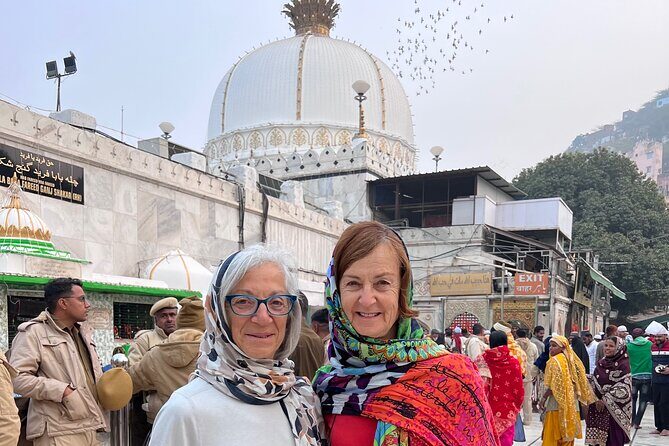
From Jain marble-and-faith, you shift to a different spiritual language: the Dargah Khwaja Moinuddin Chishti (often called Ajmer Sharif). This shrine is the tomb of the Sufi saint Kh waja Moinuddin Chishti, who came to Ajmer from Persia in the late 11th century.
This stop is usually where the day gets emotionally louder, even if you’re not sure what to listen for. The dargah is sacred for Muslims, and it’s a place where devotion has a social side too—people come with stories, not just questions.
What you’ll likely notice
- Different rituals, different etiquette, and a very clear sense that this is still lived religion.
- The architecture and atmosphere do a lot of the explaining for you, even if you don’t read every label.
Timing
You’re typically there about 45 minutes, which is just long enough to see the setting and understand why the dargah matters.
Akbar’s Palace & Museum: Artifacts That Make the City Feel Real
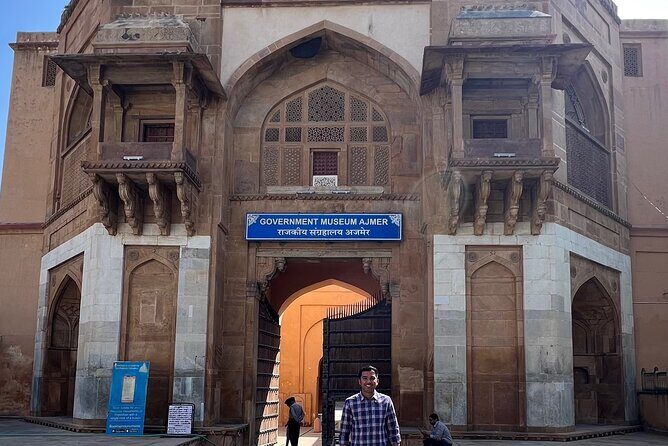
Next up is Akbar’s Palace & Museum in Ajmer, tied to the old 16th-century Akbari Fort grounds. This is the Government Museum of Ajmer, and it’s packed with historical items: artifacts, sculptures, miniature paintings, and other exhibits.
I like this kind of stop because it gives context. Ajmer’s spiritual sites are powerful—but without some “why this place mattered” background, your brain works overtime trying to connect dots. The museum helps you connect those dots faster.
Value angle
Admission is included here, and you spend about 45 minutes. That’s a good time window for a museum in a busy day like this—long enough to catch the main themes, not so long that you lose the plot.
Small consideration
If museums aren’t your thing, you might want to mentally treat this like a short orientation lesson rather than a slow art session.
Ana Sagar Lake: A Breather in the Middle of a Big Day
You then get to Ana Sagar Lake, created by King Arnoraja (Anaji Chauhan), grandfather of Prithviraj Chauhan. The tour also notes that later rulers shaped the gardens nearby—Jahangir built the Daulat Bagh garden alongside the lake, and Shah Jahan also constructed something in the area (the details here are partially described, so you’ll focus more on the overall royal-lake connection).
A stop at Ana Sagar Lake is important because it gives your brain a visual rest. Religious sites are intense: your attention is always “on.” Here you can reset your posture and look at open space.
Timing
About 30 minutes, so it’s a quick scenic pause, not a long picnic.





The Lunch Hour: Why the Break Is Part of the Experience
The schedule includes about 1 hour for lunch. This is one of those “you don’t notice how much you need it” moments—until you feel the fatigue creeping in and suddenly you’re grateful for air-conditioning, shade, or just sitting down.
There’s also a practical reason this lunch stop matters: it keeps the second half of your day (Pushkar temples + the lake ritual) from turning into a checklist you complete while tired. You can actually look at what you’re seeing.
From what’s described, the lunch is arranged with a view, which helps. A view turns lunch into a pause that feels like part of the trip, not a forced stop.
Pushkar Start: Gurudwara Sahib and the Sikh Dimension
When the day turns to Pushkar, you begin with Gurudwara Sahib. This stop adds a Sikh layer to the story. The tour description says that out of 10, two of the most famous and great teachers have been here, which gives you a sense of the site’s religious importance for the Sikh community.
Even if you don’t know all the names beforehand, you’ll understand the point: this route isn’t trying to push one “official” lens. It’s showing you how Pushkar can be sacred across traditions.
Timing
About 30 minutes, and it’s typically enough time to understand the space and move on with respect.
Varaha Temple: Vishnu’s Sacred Marker in Pushkar
Next is Varaha Temple, dedicated to Lord Vishnu. This matters because Varaha is an important Vishnu form, and the temple is described as one of the eight Swayambhu Kshetra of Vishnu—temples considered sacred in a special way.
The tour also notes it was built in the 12th century by King Anaji Chouha. That’s not just a date. It helps you picture Pushkar as a place where sacred architecture has been cared for across centuries.
What to expect
- A shorter visit (about 30 minutes), so you’ll focus on structure, setting, and key devotional elements.
- This stop pairs well with the next one because both are Vishnu-related and located near the town center area.
Old Rangji Temple: A Smaller, Older Vishnu Stop by the Ghats
Then comes Old Rangji Temple, near Varaha Ghat in the middle of Pushkar. It’s described as around 200 years old and dedicated to Lord Vishnu.
The reason this stop works is it shifts you from the big “destination temple” feel into something more town-like. You’re not only seeing sacred buildings—you’re seeing how temples sit inside daily life.
Timing
About 30 minutes. You’ll see enough to appreciate why this temple is still part of how the town worships.
Atmateshwar (Atamteshwar) Mahadev Mandir: An Underground Shiva Cave
Now you go under the surface, literally: Atmateshwar Mahadev Mandir is described as an underground cave temple dedicated to Lord Shiva. It’s said to date to the 12th century AD and is known for Hemadpanti architectural carvings.
Underground temples have a different effect. Your senses slow down. Light changes. Sound changes. Even if you don’t know the carvings by name, you can feel the intention: this is a place designed for focus.
Why it’s a highlight
- The cave setting is unusual compared with the more open temples.
- Hemadpanti carvings are a specific architectural style, so you’ll get a clearer “what to look for” than in places with generic ornamentation.
Timing
About 30 minutes.
Brahma Temple: The One Temple in the Universe Dedicated to Brahma
Then the tour hits the big “only one” claim: the Brahma Temple, described as the only temple in the whole universe dedicated to Lord Brahma. The structure dates to the 14th century, with parts later renovated.
You’ll also see materials called out: black and white marble stones. That contrast can make the temple feel sharply defined, especially in the daytime light.
Why you’ll probably remember it
Not every day trip includes a dedicated Brahma stop. This one gives you a rare angle on Hindu worship, where the focus isn’t just Vishnu or Shiva.
Timing
About 30 minutes.
Pushkar Lake and Evening Arti: Where the Day Lands
Your final phase is Pushkar Lake, surrounded by 52 ghats, each with cultural and religious importance for bathing, ceremonies, and meditation. The tour description also notes that these ghats were constructed by kings and emperors across India, which is a helpful way to understand how Pushkar became a magnet for pilgrimage.
Then you end with evening arti at Pushkar Lake. This is where the whole day changes tone. Morning Ajmer is about landmarks. Evening Pushkar becomes about atmosphere.
What makes the lake special
- The ghats create a sense of continuity. Even when you’re just watching, you’re watching a tradition.
- The arti gives a focal point to all those temple visits. It’s the emotional payoff of the itinerary.
Timing
About 45 minutes at Pushkar Lake, plus the evening ritual as the finish.
Value and Practical Notes: Is $50 Worth Your Time?
At $50 per person for about 6 hours, this tour can be good value—especially if you count what’s included. Many of the religious stops list admission tickets included, and you’re also getting pickup offered plus a mobile ticket. Add a private group format (only your group participates), and you’re paying for the fact that someone is managing routing and timing so you can concentrate on the sights.
It also helps that the day is organized around real geographic logic:
- Ajmer first, Pushkar second.
- Then the emotional finale at the lake.
One practical note: it’s commonly booked around 9 days in advance, so if your dates are firm, don’t wait until the last minute.
Who this tour suits best:
- You want a faith-and-heritage tour without building a complex day yourself.
- You enjoy learning in a conversation-friendly way.
- You like a mix of major temples and cultural stops.
If you hate crowds, insist on slow pacing, or want to linger for long photo sessions at only one or two sites, you may feel rushed.
Should You Book This Ajmer & Pushkar Spiritual Day Tour?
I’d book it if you want the best “spiritual snapshot” of Ajmer and Pushkar in one day—especially because the route connects different faith spaces instead of treating religion like a single-theme museum. The ending at Pushkar Lake is the right kind of calm, and the built-in lunch hour prevents the second half from feeling like you’re sprinting while tired.
I’d skip it if you prefer deep, unhurried time at one area. This is designed for movement and variety, not for slow wandering.
If your goal is to see the highlights, understand why the places matter, and end with a meaningful ritual, this is a strong pick.
FAQ
How long is the Ajmer & Pushkar spiritual tour?
It lasts about 6 hours (approx.).
What time does the tour start, and is pickup included?
The start time is 10:00 am, and pickup is offered.
Is this tour private or shared with other people?
It’s private, meaning only your group participates.
Does the tour include admission tickets?
Admission tickets are included for several stops (listed as included), and Pushkar Lake is free.
What ticket format do I get?
You’ll have a mobile ticket.
What should I know about weather and cancellation?
The experience requires good weather. If it’s canceled due to poor weather, you’ll be offered a different date or a full refund. Cancellation is free up to 24 hours before the start time for a full refund.