An ancient temple lesson in three stops. From Badami’s cave temples to Pattadakal’s UNESCO site, this full-day private tour strings together major Chalukya-era monuments across the Malaprabha river valley. It’s the kind of route where your eyes start to connect the dates, the styles, and the religious ideas behind the stonework.
I particularly love how the architecture focus turns sightseeing into something you can actually understand. With guides like Kotresh and Chandragund Katigeri, the details click fast, from rock-cut caves to free-standing temple styles. And the Badami red-sandstone caves come with that memorable side effect: you end up with dramatic Agastya Lake views from up on the hills.
One watch-out: it’s a long day (about 11.5 hours starting at 8:00 am), and Badami involves stairs and a bit of trekking around the caves. Wear good shoes, and don’t plan to keep the pace leisurely if you’re sensitive to long walking.
In This Review
- Key highlights you’ll notice right away
- Chalukya temples in one long day
- Getting from Hampi: timing, comfort, and your pace
- Badami cave temples: red sandstone, pillars, and Agastya Lake views
- Aihole’s temple field: stone shrines from the 5th century onward
- Pattadakal: UNESCO Visara style and the Virupaksha temple
- Food, breaks, and how to keep the day enjoyable
- Price and what $155 per person really buys
- How to match this tour to your travel style
- Should you book this private Chalukya day trip from Hampi?
- FAQ
- What time does the tour start?
- How long is the full-day private tour?
- How much does the tour cost per person?
- Is this tour private?
- Are admission tickets included?
- Is free cancellation available?
Key highlights you’ll notice right away
- Chalukya temple evolution, in sequence: you see how styles shift across the 6th to 8th centuries.
- Badami’s red sandstone caves: pillars, cut-rock halls, and those lake-and-hills views.
- Aihole’s temple clusters: more than a hundred stone temples from the 5th century onward.
- Pattadakal’s UNESCO focus: Virupaksha (built by Queen Lokamahadevi in 745) and Visara-style architecture.
- Real guide names, not generic narration: Kotresh, Chandragund Katigeri, and Ramesh show up in people’s experiences.
- Private tour means fewer compromises: only your group, with pickup offered from the Hampi area.
Chalukya temples in one long day
This is a “big picture” tour that still works at a human pace—because you get a focused look at three major monument zones instead of scattering yourself across a dozen smaller stops. Badami, Aihole, and Pattadakal sit close enough to string together, yet different enough that you can actually compare the architecture styles and religious art choices.
The spine of the story is the Chalukyas. Their work helped shape temple architecture in India, including both rock-cut shrines and free-standing temples. That matters for you because it means the monuments aren’t just old—they’re part of a design conversation. When you see cave halls, then move to open temple compounds, then land at Pattadakal’s UNESCO site, you’re watching the architecture “answer itself” across centuries.
You can also read our reviews of more private tours in Hampi

Getting from Hampi: timing, comfort, and your pace
The tour starts at 8:00 am and runs about 11 hours 30 minutes. That’s a full day, but the benefit is simple: you’re not guessing when to leave each site or how to line up admissions and transport. Pickup is offered, so you’re not stuck coordinating your own moving parts first thing in the morning.
A practical note from how people describe the day: if your group is efficient and you keep your stops tight, you can cover the highlights faster than the full schedule suggests. But for most people, the value is in the pauses—turning stone details into something you recognize later.
What I’d plan around:
- Bring comfortable, supportive footwear for uneven ground and cave stairs at Badami.
- Bring water and a light layer. The morning can be pleasantly cool, and the afternoon can get warm.
- If you’re the kind of person who reads every carving, build in extra time. A private guide makes that easier, because you can slow down without derailing the day.
Badami cave temples: red sandstone, pillars, and Agastya Lake views
Badami is built into a ravine at the foot of red sandstone hills, and the setting alone does a lot of the work for you. The cave temples are carved from red sandstone, and you’ll notice that the space feels engineered—almost like the rock was shaped for people to gather and look.
This stop is listed as about 2 hours, with admission ticket free. That’s a nice head start, because it gives you time to linger without feeling like you must “earn” the entry fee first.
Inside Badami, the most rewarding thing is the mix of architecture and art. You’ll move through a hall with numerous pillars, and you’ll also see huge red-stone sculptures that feel made for close viewing. One of the best practical payoffs here is the viewing reward: people describe trekking up for breathtaking sights of Agastya Lake beside the hills. Even if you don’t treat it like a hike, you should expect some climbing.
My advice for Badami:
- Don’t just look at the main cave front. Step slightly aside and look for how the pillars and carvings guide your eye.
- If you’re tired, focus on understanding the main hall and then pick one or two carvings to study. It’s more satisfying than trying to see everything quickly.
Aihole’s temple field: stone shrines from the 5th century onward
Aihole is where your “this is how temples evolved” brain really gets to work. This is a site with more than a hundred stone temples, with origins from the 5th century onward. That sounds overwhelming until you realize what your guide can do: help you sort what you’re looking at and connect it to the broader Chalukya story.
Your stop here is about 1 hour 30 minutes, and admission ticket is included. Translation: you can spend your energy on interpretation rather than logistics.
There’s also a cultural layer that adds flavor. Aihole carries a legend tied to Lord Parashurama, who, after killing the Kshatrayas, washed his axe there. Even if you know only a little Hindu mythology, that kind of story gives you context for why people have long seen this area as sacred.
What I like about Aihole on a private tour is that it’s not just about ticking off temples. You end up thinking about why so many shrines cluster here—how worship, patronage, and architectural experimentation could thrive in the same zone over time.
Small practical tip: Aihole involves lots of stone details, so keep your eyes moving. If you only stare at one façade too long, you miss how the patterns repeat and how they change.
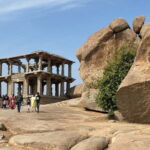
Pattadakal: UNESCO Visara style and the Virupaksha temple
Pattadakal is the moment where the day feels like it “clicks” into a bigger landmark. This site is UNESCO World Heritage, and it’s especially tied to the Visara style of architecture.
Your visit is about 1 hour 30 minutes, and admission ticket is free. That’s great value because Pattadakal is the kind of place where you’ll want your full attention. Once you’re there, you’ll likely start comparing what you saw at Badami and Aihole—because the styles and proportions are different, even though the era is related.
The standout name here is Virupaksha, described as the grandest temple at the site. It was built in the 8th century by Queen Lokamahadevi in 745. Even without technical vocabulary, you can usually feel what makes it significant: the temple feels staged for long gazes, not quick photo stops.
Also, this is a stop where a good guide makes a real difference. People mention how Kotresh’s explanations felt like a kind of architecture course, and that’s exactly what you want in Pattadakal. If the guide points out how the temple plan and details reflect the Visara approach, the whole place becomes easier to read.
My practical advice: at Pattadakal, spend a few minutes getting your bearings first. Then choose one temple and look for how the design balances structure, carving, and overall rhythm. Once you do that, the surrounding buildings stop feeling like random ruins.
Food, breaks, and how to keep the day enjoyable
This tour is structured enough that you won’t have to juggle meals, but you still want to plan for energy. One of the strongest positives in people’s experiences is good local lunch included. That’s a big deal on a long day. It means you can eat without wasting time searching for food, and it keeps the tour moving smoothly.
Still, factor in the rhythm:
- Morning usually brings the best energy for caves and temples.
- Afternoon is when you’ll feel the length of the day most, especially if you’ve spent extra time at Badami.
- If your group is small and the guide has flexibility, you may get short pauses—use them.
If you’re the type who gets cranky when you’re hungry, don’t skip snacks. The tour length is long enough that a small buffer keeps you in a good mood for Pattadakal.
Price and what $155 per person really buys
At $155 per person, this isn’t a budget day trip—but it can still feel like good value, mainly because it’s private and structured for interpretation. You’re paying for time, transport coordination, and a guide who can explain what you’re seeing.
Here’s what supports the price:
- Private tour means only your group participates.
- Pickup offered, which reduces friction and makes an early start easier.
- Mobile ticket makes entry smoother.
- Admissions are handled in parts: Badami and Pattadakal are admission ticket free, and Aihole’s admission ticket is included.
Then add the human part. The operator’s mission is explicitly tied to local livelihoods—using local guides and supporting local businesses so your travel dollars stay in the region. That’s not just a feel-good sentence. It matters because it influences who you’re spending time with and whether the money circulates locally.
When this price makes the most sense:
- If you’re traveling as a couple or small group and want a calmer pace than a big group bus tour.
- If you care about architecture and want someone to help you connect what you see across the three sites.
- If you only have one full day and don’t want to spend your limited time figuring out route planning.
How to match this tour to your travel style
This tour fits best if you like:
- architecture and temple design (not just photos)
- a clear storyline from site to site
- a guide-led day where you can ask questions and move at a comfortable pace
You might want to rethink if:
- you hate long days (about 11.5 hours)
- you’re not comfortable with stairs and walking at cave sites like Badami
On the flip side, if you’re curious and flexible, this route can surprise you. The cave temples and the open-air temples give you two different ways to experience sacred space, and Pattadakal adds that UNESCO anchor that helps the day feel meaningful, not random.
Should you book this private Chalukya day trip from Hampi?
If you want one day that pulls together Badami, Aihole, and Pattadakal with an architecture-focused guide, I’d book it. The strongest reason is simple: these sites are easier to enjoy when someone helps you read the stonework instead of treating it like a photo checklist.
Book it especially if:
- you want a private setup (only your group)
- you like guides who explain details, not just recite dates
- you value having admissions covered for key stops
Hold off if:
- you’re short on stamina for cave steps and long walking
- you prefer very slow travel and you don’t want an early start
If you do book, my last practical tip is this: set expectations for one big theme—Chalukya temple architecture—and let the three stops build that theme for you. When you do, the day feels coherent, not like three separate sights you rushed through.
FAQ
What time does the tour start?
The tour starts at 8:00 am.
How long is the full-day private tour?
It runs for about 11 hours 30 minutes (approx.).
How much does the tour cost per person?
The price is listed as $155.00 per person.
Is this tour private?
Yes. It’s a private tour/activity, and only your group participates.
Are admission tickets included?
Badami and Pattadakal are listed as admission ticket free, and Aihole’s admission ticket is included.
Is free cancellation available?
Yes, you can cancel for a full refund up to 24 hours in advance of the experience’s start time.