REVIEW · HAMPI
1 day private tour of Hampi world heritage site in car with professional guide
Book on Viator →Operated by 5 Senses Walks · Bookable on Viator
Hampi in one day is a sprint. The fun part is how fast a good guide can turn ruins into a lived-in 16th-century city, starting at the Vijaya Vittala Temple complex and working through the royal heart. I like that this is a true private setup in a car with AC and included admission tickets at each major stop. One thing to watch: with a roughly 9-hour day, you’ll want good walking shoes and realistic expectations about how much you can linger.
You’ll start at 8:00 am and move between the big-name highlights plus some heavier-hitting sculpture moments, like the giant Ganesha and the monumental Ugra Narasimha. In at least some guide pairings, the explanations came from people like Akhil or Kumar, and you can feel the difference when someone connects temple layout to the Vijayanagara story. The day works best when you treat it like a guided route, not a free-roam temple marathon.
At $125 per person for a private 1-day car tour, the value comes from time saved, tickets handled, and a guide doing the interpretation for you. You’ll also get a mobile ticket, and there’s free cancellation up to 24 hours in advance if your plans shift.
In This Review
- Key highlights to expect
- Hampi’s 16th-century power story, compressed into 9 hours
- Car + professional guide: why private matters in Hampi
- Timing and the 8:00 am start: planning your day like a pro
- Vijaya Vittala Temple: start with the stone chariot and the scale
- King’s Balance: the legend behind a stone frame
- Virupaksha Temple: the oldest temple feel and a tall 11-storey tower
- Sasivekalu Ganesha and Ugra Narasimha: single-block giants up close
- Sasivekalu Ganesha Temple
- Ugra Narasimha statue
- Royal Enclosures: Queen’s Bath, durbar halls, and the feel of power
- Zanana Enclosure and Lotus Mahal: royal women’s spaces and refined design
- Hazara Rama Temple and the Underground Shiva Temple
- Lunch break reality: keeping the day human
- Boat ride possibility: viewing temples from the water
- Price and value: what $125 per person buys you
- Who should book this one-day private Hampi tour
- Should you book? My practical take
- FAQ
- What is the duration of the private Hampi world heritage tour?
- What time does the tour start?
- How much does the tour cost per person?
- Is this a private tour?
- Does the tour include pickup and a car with a professional guide?
- Are admission tickets included?
- Is a mobile ticket provided?
- Is there free cancellation?
- What key Hampi sites are covered in the day?
Key highlights to expect
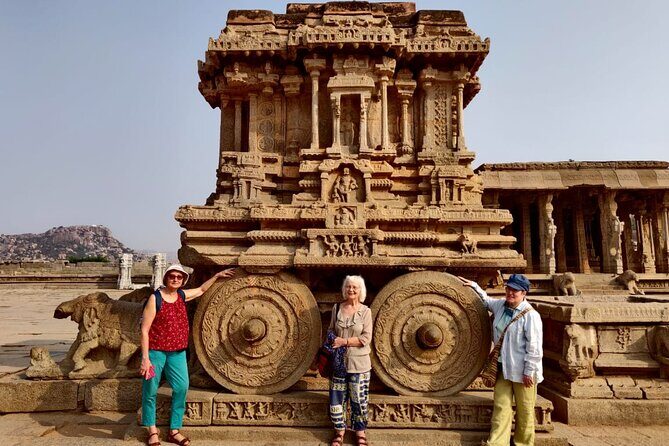
- Vijaya Vittala Temple with the famous stone chariot setting the tone right away
- King’s Balance and its legend told in context on the ground
- Virupaksha Temple with an 11-storey tower you can actually measure with your eyes
- Single-block giants like Sasivekalu Ganesha and the towering Ugra Narasimha
- Royal Enclosures route that includes Queen’s Bath and the Lotus Mahal area
- All the big stops chained together so you don’t waste a day figuring out logistics
Hampi’s 16th-century power story, compressed into 9 hours

Hampi is often described like an open-air museum, and that’s fair. But the best way to experience it is not as a checklist. It’s as a network: temples, markets, water systems, royal spaces, and then the stone monuments that still hold meaning even after centuries of ruin.
This tour is built around momentum. You won’t have hours at a single site to read every inscription, but you will get a guided path that makes the pieces click. That’s the real payoff. When a guide points out why certain buildings sit where they do, you stop seeing random stone piles and start seeing a whole civic plan.
The tradeoff is pace. After a few stops, the day can feel like you’re constantly switching between wide vistas and close-up carvings. If you prefer long pauses and slow photography, plan for that with water breaks and smart shoe choices.
You can also read our reviews of more guided tours in Hampi
Car + professional guide: why private matters in Hampi

Hampi’s ruins cover a lot of ground, and transit is where days get lost. A private car with pickup keeps you from spending your time bouncing between spots or waiting on shared transport. You also get the kind of flow where the driver can keep you on route while the guide manages the stop timing.
The car experience is practical too. In one full-day experience, the car was described as comfortable with AC, which is exactly what you want when the morning starts early and the sun climbs.
The guide side is what turns stone into context. On tours like this, you get the legends and the “why” behind the architecture—things you’d likely miss if you wandered alone with a map. And if you happen to connect with a guide like Akhil or Kumar, you get an engaging explanation style, not just directions.
If you’re traveling with family or friends who don’t want to negotiate transport, private is the easy win. It’s also ideal if you want the itinerary adjusted to your interests, as this format is built around only your group.
Timing and the 8:00 am start: planning your day like a pro

The tour starts at 8:00 am, which is smart. You’re beating the heat and grabbing the most active light for exterior temple views. A 9-hour day also means you’ll be returning to a more practical timeline than a multi-day exploration—useful if you’re short on days.
Here’s how to make it feel comfortable:
- Wear shoes you can walk in for long stretches on uneven stone paths.
- Carry water and snacks even if you hope to find lunch during the day.
- Keep your expectations flexible. One day really does move fast.
One caution from real-world pacing: even though this route hits many major sites, it can still feel like it’s over quickly. If Hampi is your main trip, you might enjoy having a second day for extra wandering and slower temple time. If your schedule is tight, this one-day private route is still one of the most efficient ways to see the big structures.
Vijaya Vittala Temple: start with the stone chariot and the scale
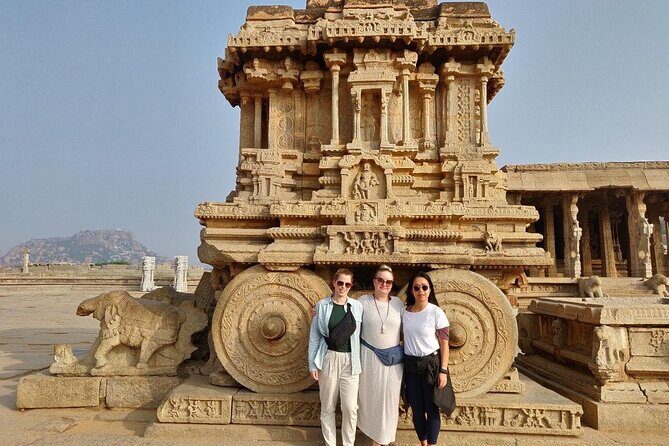
You begin at the Vijaya Vittala Temple, often considered the most grand masterpiece around. This stop isn’t just about a single photo spot. The complex sits on a polyhedron foundation, and it’s the kind of detail that makes the whole site feel engineered—not random.
The headline feature here is the stone chariot in front of the temple. It’s the sort of object that looks simple in pictures and then looks unbelievably solid in person. This is where the guide’s role matters: they can explain how the chariot fits into the temple layout and why it’s one of the iconic symbols people come to see.
You’ll have about 30 minutes here. That’s enough time to understand the main structure, walk around the key view points, and take your best photos. If you’re the type who needs time to read every plaque, you’ll want to accept that this tour is about seeing and learning the main story, not exhausting it.
King’s Balance: the legend behind a stone frame
Next up is King’s Balance, a huge stone frame east of the Purandara Mantapa area. This is one of those places where the physical structure is striking, but the meaning lands through the story.
The basic legend is about how the kings of Vijayanagara used it for weighing, and that’s the kind of detail that turns a chunk of stone into something social and political. Without context, it can feel like a “random ruin.” With context, it feels like a snapshot of administration—proof that power isn’t only in temples, it’s also in systems.
Plan for about 15 minutes. It’s a short stop, so keep your time focused: one good circle around the structure, quick photos, and listen for the story bits your guide shares.
You can also read our reviews of more private tours in Hampi
Virupaksha Temple: the oldest temple feel and a tall 11-storey tower
Then you move to the Virupaksha Temple, often described as the oldest temple in Hampi. It has a tall tower with 11 storeys, rising around 165 ft. That height matters because it changes how you experience the site. You’re not just looking at carvings—you’re scanning upward, trying to place the temple within the city’s skyline.
This stop is about 30 minutes, which works well. You can take in the tower proportions, see key parts of the temple complex, and get enough time to understand why it remained important over time.
One practical point: because it’s an active-looking temple area compared to some fully ruined zones, you’ll likely be navigating more foot traffic. Keep your pace steady, and let the guide lead you through the layout so you don’t waste time backtracking.
Sasivekalu Ganesha and Ugra Narasimha: single-block giants up close
After Virupaksha, the day pivots from temple architecture to big sculpture moments.
Sasivekalu Ganesha Temple
You’ll visit Sasivekalu Ganesha, a huge statue carved from a single block of rock. It’s described as about 8 feet tall. This is the kind of craftsmanship that catches you off guard: you expect the idea of a statue, but the scale of a single-carved form feels different when you’re standing next to it.
This stop is short, around 15 minutes. The best approach is simple: look from multiple angles, check how the rock shape frames the deity, then move on.
Ugra Narasimha statue
Not far away, you’ll see Ugra Narasimha, described as around 22 feet high and carved during the time of Krishnadevaraya. There’s also a serpent with an open hood noted at the back.
This is one of those “how did they do that” stops. The scale, the carving presence, and the setting make it memorable even if you only spend 15 minutes. It’s also a good place to take a breath, because your neck will be tilted up for a while.
Royal Enclosures: Queen’s Bath, durbar halls, and the feel of power
This is where Hampi stops being just temples and starts feeling like a ruling machine.
You’ll spend about an hour in the Royal Enclosures, with the route beginning at Queen’s Bath. Think of this as the ceremonial and administrative core—durbar halls, platform areas, tanks, underground chambers, and temples. The idea is that the royal space wasn’t only for worship. It was where authority, routine, and ceremony met.
Queen’s Bath is one of the most compelling places in the enclosures because water immediately makes the architecture feel alive. Even in ruin, you can understand its role: preparation, ritual, and the daily logic of a court.
This part of the day is also a visual workout. You’ll move between different structures with different functions, so give yourself permission to pause and let the guide interpret what you’re seeing. That’s how you avoid feeling like you’re just walking through stone rooms.
Zanana Enclosure and Lotus Mahal: royal women’s spaces and refined design
Next is the Zanana Enclosure, described as the place for the royal women. Here, the highlight mentioned is the Lotus Mahal, a palace-like building described as two-storeyed and surrounded by a rectangular wall.
Even if you only get around 20 minutes here, this stop is worth it because it shifts the story. It’s not only about war and kings. It’s about court life and the design language used for different roles within royal society.
Lotus Mahal is easy to photograph once you find the right view line. Let your guide point out the structure’s layout first, then you can shoot photos with purpose instead of luck.
Hazara Rama Temple and the Underground Shiva Temple
You’ll also visit Hazara Rama Temple, described as the only temple in the Royal Enclosure. It’s dedicated to Lord Ram.
Then, before the day ends, you’ll wrap up with the underground Shiva temple plus an excavated water tank and administrative enclosure. Underground temple spaces tend to change your sense of scale. Standing above ground you feel the broad city sweep; underground you feel the intimate engineering of water and worship.
These are shorter stops—about 20 minutes each for the later set of sites. That works because by then you’ve already built your mental map of Hampi’s power centers. You’re not starting from zero; you’re tying up loose ends.
Lunch break reality: keeping the day human
A full-day route can turn into a battle with time if you don’t plan food. In one of the experiences tied to this tour style, lunch happened at the Mango tree, then touring continued.
Even if your lunch stop differs, the key idea is to treat lunch like part of your itinerary, not a random detour. If you’re sensitive to heat or hunger, eat early, drink water, and don’t save everything for the last hour.
Also, if you’re the type who gets tired fast, consider using the underground temple and later short stops as your chance to slow down—no sprinting required. You can still appreciate the place while moving at a steady pace.
Boat ride possibility: viewing temples from the water
One highlight shared in an example of a full-day experience with this tour setup was a short boat ride to see ancient temples from the water.
The exact inclusion can vary by conditions and planning, so don’t lock your expectations only on that. But if your guide suggests it, it’s a smart way to change the viewpoint. You’ll get angles that you simply can’t recreate from land, and it breaks up the day nicely.
If you’re a photo person, this is where you’ll likely come home with the most different-looking images.
Price and value: what $125 per person buys you
Let’s talk money without the fluff. $125 per person is not a “bargain ticket” price. It’s a private-day price. So the value has to come from three places: time saved, guide interpretation, and access to tickets without hassle.
This tour includes admission tickets at each stop listed in the route, which helps you avoid surprise costs mid-day. You also get a mobile ticket, which is convenient when you’re moving quickly through multiple sites.
And you’re paying for the big things:
- someone else handles the flow of stops,
- you don’t waste time figuring out where to go next,
- and you get context so you can enjoy the sites instead of just moving between them.
If you’re traveling solo, private cost can feel steep. If you’re traveling with a friend or family group, the per-person cost often feels more reasonable for what you get. Group discounts are offered, too, so it’s worth checking whether booking with others improves the deal.
Who should book this one-day private Hampi tour
This is a strong match if you:
- have limited time and want a focused route through major Hampi sites,
- prefer a professional guide to explain the significance of what you’re seeing,
- value comfort with pickup and an AC car,
- want to reduce logistics stress so you can spend your energy on temples and ruins.
It’s also a good choice if you’re coming from Bangalore and planning a long drive. In one example, the drive was long but the roads were described as good. Starting early helps, and a guide-led schedule helps even more.
Where this tour may feel less ideal is if you’re the type who wants to wander slowly for hours. If Hampi is a once-in-a-lifetime stop, you might crave a second day to see more at a softer pace. But if you only have one day, this route gives you a lot of the story in a single sweep.
Should you book? My practical take
Book it if you want a well-structured, private day that hits the major Hampi highlights with guided interpretation. The strong guide-led structure is the reason this works: you’ll see the famous temples and sculptures, but you’ll also understand how they connect.
Skip or reconsider if:
- you hate walking on uneven ground and need lots of rest time,
- you’re coming for super deep exploration and want to spend hours at just one or two sites,
- or you’re looking for a slow, flexible day with long breaks between stops.
One more note: free cancellation is available up to 24 hours ahead, so if you’re still shaping your plan, you can keep some flexibility.
FAQ
What is the duration of the private Hampi world heritage tour?
The tour lasts about 9 hours.
What time does the tour start?
The start time is 8:00 am.
How much does the tour cost per person?
The price is $125.00 per person.
Is this a private tour?
Yes. It’s a private tour/activity, so only your group participates.
Does the tour include pickup and a car with a professional guide?
Pickup is offered, and the tour is in a car with a professional guide.
Are admission tickets included?
Admission tickets are included for the listed stops.
Is a mobile ticket provided?
Yes, the tour includes a mobile ticket.
Is there free cancellation?
Yes. You can cancel up to 24 hours in advance for a full refund.
What key Hampi sites are covered in the day?
You visit places including Vijaya Vittala Temple, King’s Balance, Virupaksha Temple, Sasivekalu Ganesha Temple, Statue of Ugra Narsimha, Royal Enclosures (including Queen’s Bath), Zanana Enclosure (including Lotus Mahal), Hazara Rama Temple, and an Underground Shiva Temple.