REVIEW · NEW DELHI
From New Delhi : 5 Days Golden Triangle Tour
Book on Viator →Operated by Limra Holiday · Bookable on Viator
This trip is built around smart timing. You get a private Golden Triangle route with guides who handle the flow, from Delhi landmarks to a planned Agra rhythm that includes sunset viewpoints and a sunrise Taj Mahal visit.
I love two things here: personal local guides (so you’re not herded with a crowd) and private round-trip car transport (so the long distances feel manageable). You’ll also get the kind of service that, in the feedback, people describe as punctual, careful, and reassuring when traffic gets chaotic.
The main drawback to plan for is ticket extras on several monuments and closure-based timing shifts. Taj Mahal is closed on Fridays, and Lotus Temple plus Akshardham in Delhi are closed on Mondays, so your exact order can move around.
In This Review
- Key Highlights You’ll Actually Feel
- Golden Triangle in 5 Days: What the Private Pace Actually Means
- Delhi Day One: India Gate, Jama Masjid, Chandni Chowk, and the Big Modern Stops
- Agra Two Ways: Sunset View Point and Sunrise Taj Mahal
- Fatehpur Sikri to Jaipur: The Pink City Gets More Than One Landmark
- Where the Value Comes From: Price, Guides, and What’s Not Included
- Practical Tips for Timing, Tickets, and Getting the Most Out of Each Day
- Should You Book This 5 Days Golden Triangle Tour?
- FAQ
- Is this tour private or shared?
- What cities does the Golden Triangle route include?
- Is pickup and drop-off included?
- Does the price include hotel accommodation and breakfast?
- Are admission tickets included for every monument?
- Are there any days when key monuments are closed?
- Can the itinerary be changed after booking?
- Does the tour include lunch or dinner?
- Is there free cancellation?
Key Highlights You’ll Actually Feel
- Private group pace that lets you slow down for photos and explanations instead of rushing.
- Sunrise Taj Mahal as a centerpiece plan, with extra viewing time built in on the Agra days.
- Full-day Delhi overview that connects memorials, Mughal-era sites, and modern spiritual complexes.
- Agra Fort + Fatehpur Sikri combo for more than just one monument day.
- Car comfort details like air-conditioning and bottled water during drives, plus small care touches mentioned in reviews.
- Easy end to your trip with a drop at Delhi/Gurugram/Noida airport or an onward drop in Jaipur.
Golden Triangle in 5 Days: What the Private Pace Actually Means
A 5-day Golden Triangle tour can either feel like a sprint or like a guided route with breathing room. This one leans toward the second option by keeping the group small and the logistics in-house: private local guides in each city, plus a dedicated driver in an air-conditioned vehicle.
You don’t have to negotiate meeting points, ticket lines, or transfers between cities. The value is that the plan already connects the big sights in a practical order: Delhi first, then Agra (including Taj timing), then Jaipur with the classic Pink City monuments and viewpoints.
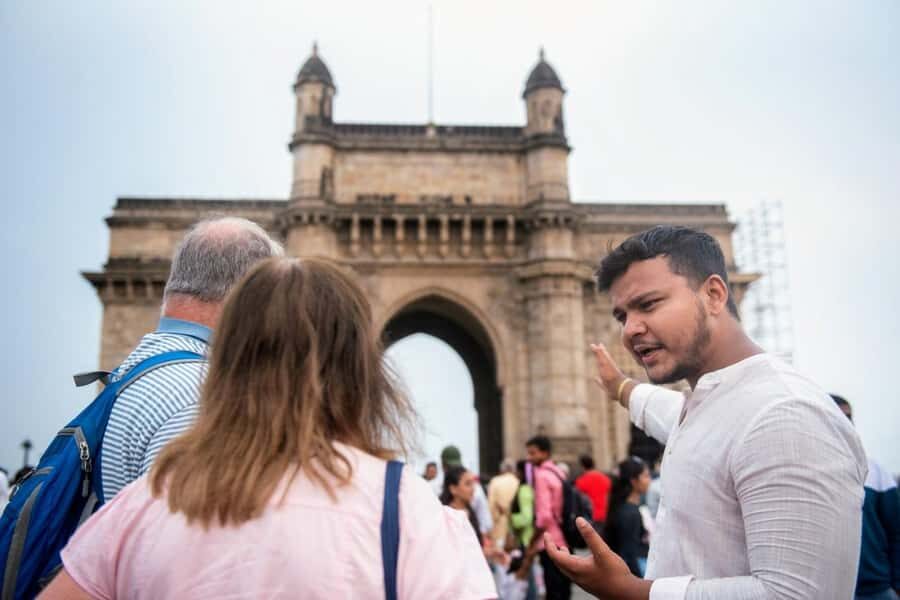
If you like understanding what you’re seeing, a personal guide matters more than you might expect. People in the feedback repeatedly point to guides staying helpful and organized, with clear explanations and even language support (Spanish is mentioned in the reviews). That changes how you experience places like Jama Masjid or Jantar Mantar, because you’re not just taking photos—you’re getting context.
A few more New Delhi tours and experiences worth a look



Delhi Day One: India Gate, Jama Masjid, Chandni Chowk, and the Big Modern Stops
Delhi’s Day 1 has a smart mix: monuments with meaning, Mughal architecture, old-city streets, and major modern religious sites. It’s a lot in one day, but the stop choices are varied enough that you don’t feel trapped in a single theme.
India Gate (free) is your opening landmark. It’s more than a photo spot; it’s a memorial tied to Indian soldiers from World War I, designed by Edwin Lutyens. Starting here gives you a quick baseline for how Delhi honors sacrifice before you move into old-city history.
Next is Raj Ghat (free), dedicated to Mahatma Gandhi. You get a calmer, reflective stop that shifts the mood from wide-open monument lawns to a memorial space with gravity.
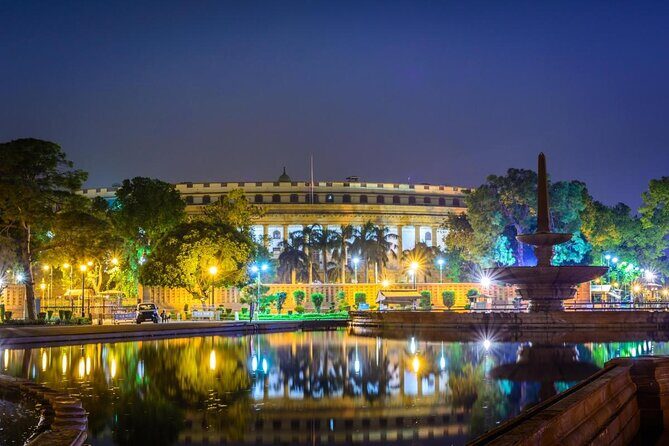
You also pass Sansad Bhavan, the Parliament House (free). Even with a short stop, it signals that Delhi is not only about forts and temples—it’s also about how modern governance and daily life intersect.
Then comes Jama Masjid. This is one of the big Mughal landmarks in Delhi, built under Shah Jahan (1650–1656). The listing notes the admission ticket is not included, so you should budget for that add-on if you’re planning ahead. Expect it to be a major visual experience, and plan time for the scale and the approach.
From there you move into Chandni Chowk, the old, famous market area near Old Delhi Railway Station. You’ll likely get a feel for Delhi street life here. This is also where the day naturally turns from “monument viewing” into “walking and browsing,” even if you only spend about half an hour.
Later you reach two big modern spiritual sites. Swaminarayan Akshardham (free) is a large Hindu temple and campus near Noida. The design is meant to showcase traditional and modern elements of Indian culture and spirituality. Lotus Temple (free) follows, famous for its lotus-like marble petals and its open doors concept. These two stops give you a contrast to the older Mughal and memorial areas.
The day ends with major historic monuments: Qutub Minar (admission not included) and Humayun’s Tomb (admission not included). Both are UNESCO-listed heritage sites, and they’re strong picks if you want the Mughal and pre-Mughal architectural story to be visible in stone.
Practical note: Lotus Temple and Akshardham are closed on Mondays. So if your Day 1 lands on Monday, the itinerary may be reshuffled. The good part is that the tour provider flags this in advance, so you won’t feel blindsided.
Agra Two Ways: Sunset View Point and Sunrise Taj Mahal
Agra is where the Golden Triangle delivers its main payoff. But timing is everything with the Taj Mahal, and this plan uses that fact.
Day 2 includes the drive from Delhi and arrives in Agra for hotel check-in. The route uses the Yamuna Expressway (about 4 hours noted), which helps you cut through travel fatigue.
Then you get Taj Mahal View Point at sunset across the river, specifically described as away from the densest crowding. The purpose of this stop is simple: you’ll often get better light and more breathing space than if you’re forced into the heaviest foot traffic. The admission isn’t included, so check that when you budget.
After that, Itmad-ud-Daula’s Tomb (often called Baby Taj Mahal) brings you a different texture of Agra beauty. It’s described as a major architectural wonder and an inspiration often linked to the Taj. This is a great “warm-up” monument because it lets you appreciate fine details before you hit the big one.
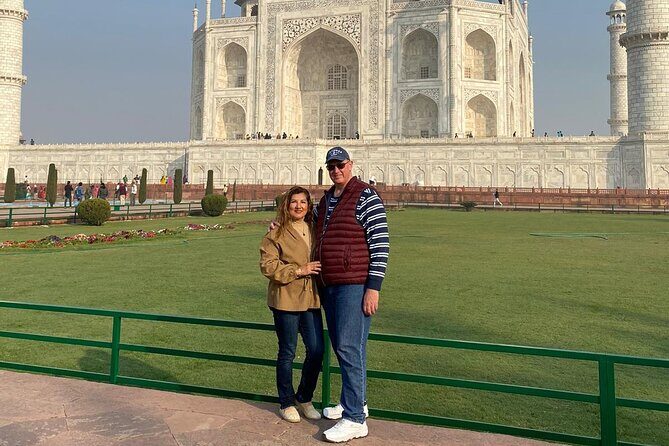
Day 3 is the centerpiece: Taj Mahal at sunrise for about two hours. The listing explains the story behind it—built by Shah Jahan in memory of Mumtaz Mahal, with construction starting in 1631 and reaching the full monument form in 1653. You can feel the logic of doing sunrise first: the light is usually more forgiving, and the visit is often less chaotic than late-day timing.
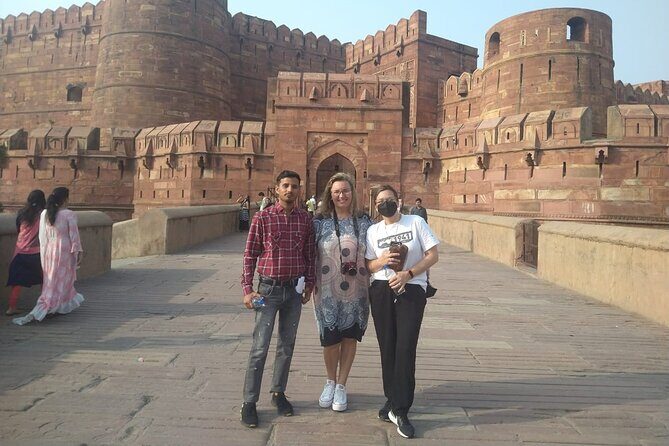
Then you add Agra Fort, a UNESCO site and a Mughal walled city. It was the main residence of Mughal emperors until the capital shifted to Delhi. This stop helps you see the Taj as part of a larger power base, not as a one-off spectacle.
If you want a true Mughal architecture day, the plan adds Fatehpur Sikri next (free admission listed). It’s about 40 km from Agra and known for Akbar-era building and planning. Since the time window is about an hour, you’ll want your guide to point out what you’re looking at quickly—this is where personal guiding helps.
Fatehpur Sikri to Jaipur: The Pink City Gets More Than One Landmark
Once Fatehpur Sikri ends, the drive takes you to Jaipur, the Pink City. After arrival, you check in at your hotel. The day isn’t packed with too many stops, which matters because you’re transitioning between states, pace, and atmosphere.
Jaipur is a city where the best experience often comes from seeing multiple monument types in one walkable cluster. This tour’s Day 4 does that by pairing scenic water features with royal architecture and then finishing with a scientific landmark.
You start with Panna Meena ka Kund, a very old stepwell mentioned as around 1000 years old. Stepwells are one of those things that look simple until a guide explains their purpose in water storage and ceremony. It’s short at about 15 minutes, but it’s a distinctive way to go beyond only palace-and-fort viewing.
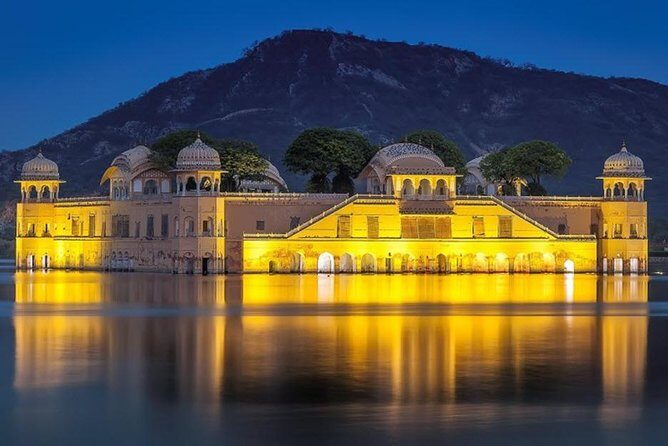
Then you see Jal Mahal, the palace in the middle of Man Sagar Lake. The stop is brief (also about 15 minutes), but it’s a popular shot spot for a reason: the palace appears surrounded by water from certain angles, giving you a different look at Jaipur’s grandeur.
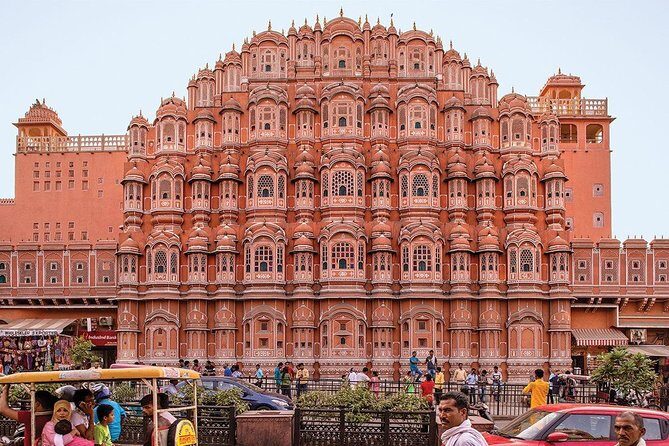
Next is Hawa Mahal—the Palace of Wind—made from red and pink sandstone, stretching toward the women’s chambers. The admission ticket is not included. Even with a short stop, it’s a landmark that instantly communicates why Jaipur looks the way it does.
You continue into the bigger administrative and royal focus with City Palace of Jaipur (admission not included). This is the former royal residence and headquarters area. The listing says construction started soon after Jaipur’s founding under Maharaja Sawai Jai Singh II in 1727, which makes it a good anchor point for understanding how the city grew into a power center.
Finish with Jantar Mantar, the collection of astronomical instruments built by Sawai Jai Singh and completed in 1734. It includes the world’s largest stone sundial and is UNESCO-listed. If you’ve ever looked at the sky and wondered how people measured time before modern devices, this is one of Jaipur’s best “stop you’ll remember” moments. Again, admission isn’t included.
Where the Value Comes From: Price, Guides, and What’s Not Included
The headline price is $102 per person for the 5-day plan. That sounds almost too simple for a private Delhi–Agra–Jaipur route, and the reason it can be good value is the structure: private local guides, an air-conditioned vehicle with a driver, and round-trip transport from New Delhi.
The tour also includes bottled mineral water in the car and notes that all fees and taxes are covered. Where value becomes a little trickier is the list of monument admissions: several of the major sites are marked as not included (like Taj Mahal, Qutub Minar, Humayun’s Tomb, Agra Fort, Hawa Mahal, City Palace, and Jantar Mantar).
So what you’re really paying for is logistics + guiding + transportation, while admission costs for some monuments are extra. If you’re the kind of traveler who hates surprise payments, I’d budget a little extra for entry tickets for those listed sites.
Food is also on you. Lunch and dinner are not included, and tips to the driver and guide are not included. Breakfast is included only if you pick the option that includes hotels.






Practical Tips for Timing, Tickets, and Getting the Most Out of Each Day
This tour includes timing rules you should know before you finalize your travel days.
- Taj Mahal stays closed on Fridays. If your itinerary lines up with a Friday Taj, the plan accounts for it. The information provided says that if you start on Wednesday, you’ll visit Taj on Thursday during sunset instead, due to the closure.
- Lotus Temple and Akshardham in Delhi are closed on Mondays. If your Day 1 is Monday, those two will be unavailable, and the schedule will need to adjust.
Your best strategy is to arrive with flexibility on days, but firmness on priorities. If the Taj Mahal and Jantar Mantar are your must-dos, don’t over-plan your other activities around those fixed closure days.
Also, keep the “private” part in mind when you think about pacing. Your route is built as a private tour for just your group, so you don’t need to follow a large group tempo. That makes a big difference when a guide can slow down for questions or help you pick the best angles for photos.
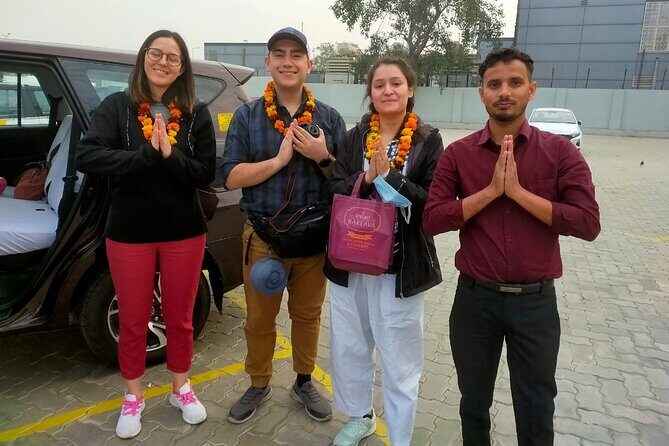
From the reviews, one recurring theme is the quality of coordination and safety. People specifically praise punctual pickup, a careful driver, and ongoing contact that makes you feel taken care of. Names like Sartaj Khan, and drivers like Shiv and Dev, show up in the feedback as examples of the kind of support the operator tries to deliver.
Small comfort details matter too. In one review, the car setup is described with daily conveniences like snacks and cold drinks, and people also emphasize that cars are clean. When you’re doing long transfer days, those small touches help.
Finally, if you want a personalized tweak, the operator says you can change, add, or remove monuments after booking. That’s useful if you want more time at one site, or if you prefer swapping out a short stop for a longer one.
Should You Book This 5 Days Golden Triangle Tour?
Book it if you want a private, guide-led Golden Triangle that takes care of transport and city-by-city explanations, and you’re okay paying separate monument entry fees for several top sights. At $102 per person, the value is strongest when you care about organization more than DIY routing.
Skip it or shop around if you’re the type who wants every single ticket included in one price, because multiple key monuments list admission as not included. Also, if you travel on a Monday or Friday, expect schedule reshuffling around closure rules for Lotus Temple/Akshardham and the Taj Mahal.
This is a solid match for first-time India visitors who want the big names—India Gate, Jama Masjid, Taj Mahal, Agra Fort, Fatehpur Sikri, and Jaipur’s Hawa Mahal and Jantar Mantar—without the stress of coordinating everything yourself.
FAQ
Is this tour private or shared?
This is a private tour/activity. Only your group will participate.
What cities does the Golden Triangle route include?
It covers New Delhi, Agra, and Jaipur.
Is pickup and drop-off included?
Yes. Hotel or airport pickup and drop-off are included.
Does the price include hotel accommodation and breakfast?
Four nights of accommodation and daily hotel breakfast are included only if you book the option that includes hotels. If you don’t select that option, those benefits may not apply.
Are admission tickets included for every monument?
No. Some major sites are listed as not included for admission tickets, while others are free.
Are there any days when key monuments are closed?
Yes. Taj Mahal is closed every Friday. Lotus Temple and Akshardham in Delhi are closed every Monday.
Can the itinerary be changed after booking?
You can request to change, add, or remove monuments after booking.
Does the tour include lunch or dinner?
No. Lunch and dinner are not included, so you’ll plan meals at restaurants or hotels.
Is there free cancellation?
Yes. You can cancel up to 24 hours in advance for a full refund.