REVIEW · NEW DELHI
Food Walk With Chef Rajeev
Book on Viator →Operated by Food Tour In Delhi · Bookable on Viator
Old Delhi tastes better with a camera guide. I like that this tour is built for street-food stops while still teaching you how to frame shots through crowds and traffic, and I also like that lunch and snacks are included so the photography doesn’t turn into a hangry sprint. The one catch: the route isn’t recommended if you have serious mobility problems, since you’ll be walking in busy market areas.
This is also a practical choice when you’re short on time. The tour runs about 4 to 5 hours, starts at 10:00 am, keeps groups small (max 12), and includes timely pickup and drop-off from central Delhi. And yes, the guide is the real difference-maker: an educated, friendly leader helps you turn “I see something cool” into “I got a great photo.”
In This Review
- Key highlights to know before you go
- Price and what you actually get for $43
- Timing, meeting point, and the flow through Old Delhi
- Stop 1: Chawri Bazar street-food scenes (and practice time)
- Stop 2: Chandni Chowk photo lanes and big-market energy
- Stop 3: Khari Baoli spice market—smell, color, and close-up shots
- Lunch and snacks: how food support helps your photos
- The photography coaching you can use beyond this tour
- What I’d pack (and what to expect physically)
- Who this tour is best for
- Should you book Food Walk With Chef Rajeev?
- FAQ
- How long is the Food Walk With Chef Rajeev in New Delhi?
- What time does the tour start, and where is the meeting point?
- Is lunch included?
- Does the price include entrance fees and transfers?
- What is the maximum group size?
- Is there a mobile ticket?
Key highlights to know before you go
- Photo coaching in real street conditions: you’ll learn how to take effective photos while you’re surrounded by people and movement
- Stops planned around food + visuals: Chawri Bazar, Chandni Chowk, and Khari Baoli each give you different subjects
- Lunch and snacks included: you’re not paying for food twice during a short window
- Transfers and entrance fees included: central-Delhi transfers plus entry for some stops keep the budget simple
- Small group size (max 12): it’s easier to get guidance and keep up without feeling rushed
- Mobile ticket: you won’t need to print anything
Price and what you actually get for $43
At $43 for roughly 4 to 5 hours, this tour stacks value in a way that matters in Delhi. You’re not just buying access to markets—you’re paying for organized routing, included entrance fees for select stops, and transfers from central Delhi. On top of that, lunch and snacks are included, which is a big deal because food stops can add up fast when you’re trying to keep your day efficient.
The photo angle is also part of the price justification. A guided walk through Old Delhi can be done on your own, but learning how to handle busy scenes—where to stand, when to shoot, and how to keep a frame clean—is the kind of help that saves time and improves results.
You can also read our reviews of more walking tours in New Delhi

Timing, meeting point, and the flow through Old Delhi
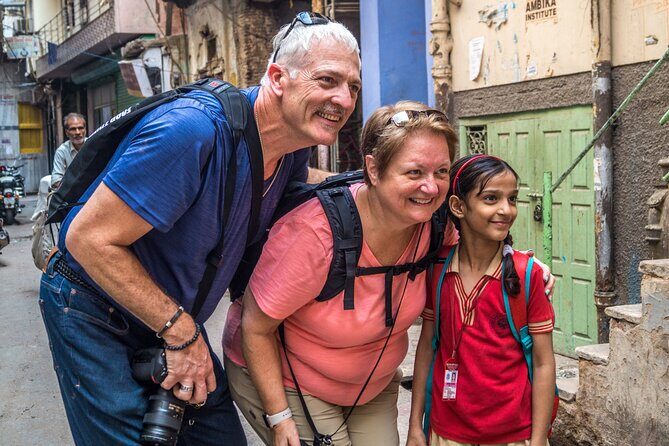
The experience starts at 10:00 am and ends back at the meeting point. The listed start point is I/1/0, Patel Gali Rd, Hippy Wada, Chandni Chowk, Delhi 110006, India, and it’s near public transportation, which is handy if you want flexibility before or after.
Transfers from central Delhi are included, and at least one past participant specifically noted pickup and drop-off being timely. That matters because Old Delhi logistics can get messy with traffic and crowds. When transportation is handled, you can focus on the experience rather than constantly checking your phone or trying to negotiate in the moment.
Group size is capped at 12 travelers, so you’re not fighting for space every time the group pauses to eat or reposition for photos. Still, this is market walking. Think shoes you can handle on uneven, crowded streets.
Stop 1: Chawri Bazar street-food scenes (and practice time)
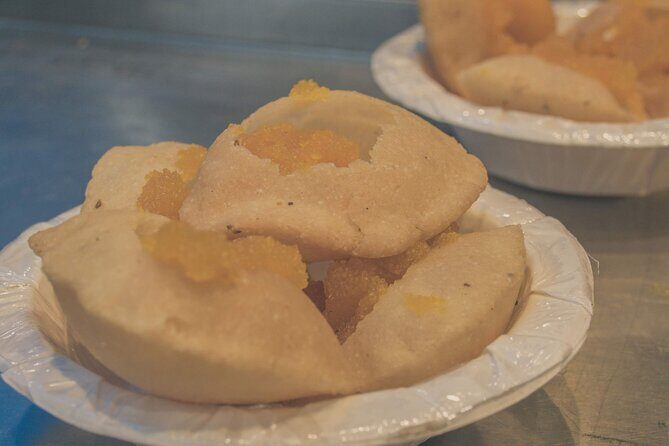
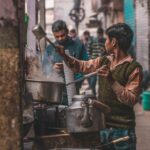
Chawri Bazar is where the tour really gets its momentum. You spend about 2 hours here, and it’s described as a street-food area with long-running shops—great for both eating and photography. Expect the kind of sights that don’t sit still: counters, cookware, faces, and quick exchanges at stalls.
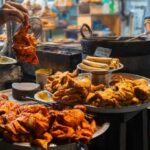
Food-wise, you’re in the zone for classic Old Delhi flavors like spicy chaat and fruit kulfis. These are “easy to photograph” foods because colors and textures pop on camera—reds and greens in sauces, and the chilled dessert look that creates contrast with warm street lighting.
Photo-wise, this is smart as a first stop. When you arrive, you’ll likely be eager to shoot everything. Starting here gives your guide a chance to steer that energy into something more intentional: framing food and people without turning your photos into a blur of motion and clutter.
One practical consideration: in a street-food area, you’ll want to keep a steady rhythm. The food is part of the photos, but you don’t want to block other people while you compose. The best strategy is to listen, shift when the group shifts, and shoot with purpose rather than hovering.
Stop 2: Chandni Chowk photo lanes and big-market energy
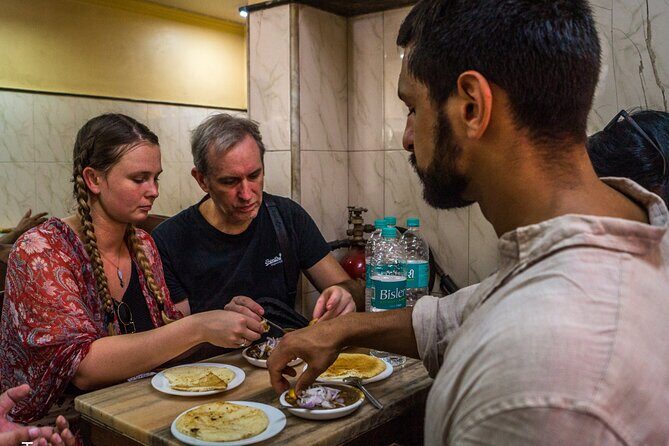
Next comes Chandni Chowk, right in the heart of Old Delhi. This stop runs about 1 hour 30 minutes and has admission ticket free, so you get more time on streets and less time waiting around for entry.
Chandni Chowk is known for the kind of food smells that seem to guide you down the lane. The description calls out staples like chole bhature, jalebi, and chaat. Even if you’re not trying every item, the mix gives you tons of visual variety: fried textures, glossy syrup, and heaps of sauces that photograph well.
This is also where the photo lessons are most useful. Old Delhi markets can be crowded, and traffic can mean quick changes in light and angles. A pro guide helps you figure out how to capture a moment without needing a perfect, empty street. If you’ve ever tried to photograph a market and ended up with “I got the crowd, but not the story,” this stop is built to fix that.
The watch-out is simple: you’ll be walking through busy lanes. If you’re easily overwhelmed by noise and movement, this is the moment to slow down, take a breath, and focus on just one or two shots before moving on.
Stop 3: Khari Baoli spice market—smell, color, and close-up shots
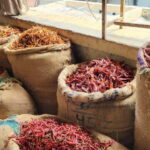
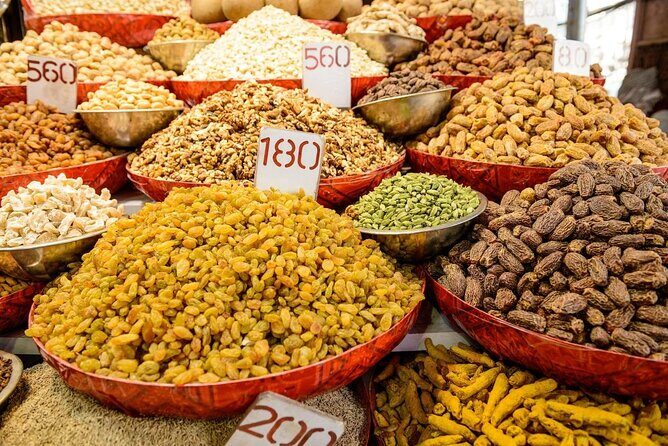
The final stop is Khari Baoli, about 40 minutes, and it’s known as Asia’s largest spice market. This is where the tour shifts from “food energy” to “sensory photo energy.” Spices and dried goods create natural color gradients, and the market vibe gives you plenty of close-up photo opportunities.
Khari Baoli is described as an aromatic mix of exotic spices, dried fruits, grains, teas, herbs, and more. Even if you’re not a spice expert, you’ll see lots of distinct textures—powders, flakes, seeds, and bundled items. That variety is excellent for photos because the market is visually organized by color and packaging, even if the street around it is chaotic.
This stop also helps your photography because it’s easier to control your shot composition here than in a busy food lane. You can step back, look for a strong layer of foreground texture, and then shoot in a way that includes people without letting them dominate the frame.
The potential drawback is time. At 40 minutes, you’ll want to arrive ready to shoot immediately. Don’t get stuck only at the first stand you see. Take a minute to scan for the best color and layout, then start photographing with confidence.
You can also read our reviews of more food & drink experiences in New Delhi

Lunch and snacks: how food support helps your photos
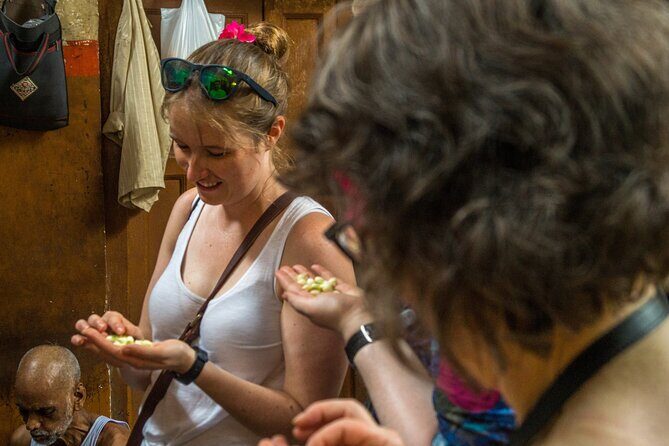
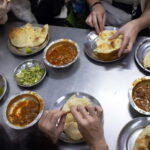
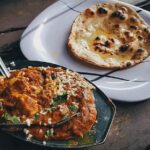
One of the most practical parts of the tour is that lunch and snacks are provided. That sounds obvious, but it changes how you experience the walk. When you’re not rationing money or hunting for food every time you get hungry, you’re free to stay present—both for eating and for shooting.
Food timing matters in a short day like this. If you’re busy taking photos while also trying to decide what to eat, you lose focus. Having snacks and lunch built in keeps your pacing smoother and helps you avoid the common problem of leaving with great photos of streets but fewer satisfying bites.
Also, because the food is tied to the photo stops, your camera naturally points at subjects you care about. The best travel photos often come from moments you’re actually enjoying, not just scenes you’re rushing past.
The photography coaching you can use beyond this tour
The tour is explicitly photography-oriented, and the idea is simple: Delhi has endless photo subjects, but lining up a great shot amid crowds and traffic is hard. That’s exactly what your professional guide is there to help with.
You can expect guidance on how to take effective photos in a way that fits real street conditions. That usually means learning how to:
- Choose a frame that makes sense even when the street behind you is busy
- Work around changing light and movement
- Keep your photos sharp enough that the subject reads clearly
- Capture food and people without losing the context of the market
I like that the coaching is happening during the route. You’re not stuck in a classroom. Every time you move to a new stall or lane, you get a fresh subject and fresh challenges—then you can apply what you just learned immediately.
If you’re an absolute beginner, this kind of guidance saves you from guessing. If you already know the basics, it still helps because you’ll learn what to do differently when a market scene is fast-moving and crowded.
What I’d pack (and what to expect physically)
You’re walking through markets—food lanes and a spice bazaar—so plan for a city-day that involves steady movement. Comfortable shoes matter. Also, since you’ll likely spend time photographing and then eating, bring a camera setup you can carry without fuss.
The tour is not recommended for travelers with serious mobility problems, so be honest with yourself about what “market walking” means for your body. If you can handle uneven sidewalks and crowded pathways, you’ll probably be fine.
Finally, because the group is small, you’ll want to stay close when the guide calls for repositioning. In tight lanes, a few steps can make the difference between a usable shot and a blocked view.
Who this tour is best for
This works especially well for people who:
- Want Old Delhi food without spending hours planning where to go
- Like photography but struggle with busy street scenes
- Have limited time and want a route that hits major culinary and visual areas
- Prefer a guided experience with clear pacing and included meals
It may not be the right fit if you hate crowds, need lots of quiet breaks, or can’t do extended walking. The core value here is that the guide helps you handle the “busy” part of Delhi, not avoid it.
Should you book Food Walk With Chef Rajeev?
If you want a smart way to combine Old Delhi street food with practical photo coaching, I think this is a strong booking. The $43 price makes more sense because it bundles transfers from central Delhi, entrance fees for some stops, and lunch/snacks—so you’re not juggling a bunch of separate expenses mid-day.
Book it if:
- You’re excited by food markets and want photos that tell a story
- You want a short, well-managed route that still feels authentic
- You’ll actually use the camera guidance instead of just sightseeing
Skip it if:
- Mobility limits make market walking tough for you
- You’d rather photograph slowly on your own and you don’t care about structured photo tips
- You’re hoping for a mostly restful sit-and-watch kind of outing
If you like guided street experiences that help you get both the taste and the photo, this one is worth it.
FAQ
How long is the Food Walk With Chef Rajeev in New Delhi?
The tour lasts about 4 to 5 hours.
What time does the tour start, and where is the meeting point?
It starts at 10:00 am. The meeting point is I/1/0, Patel Gali Rd, Hippy Wada, Chandni Chowk, Delhi 110006, India.
Is lunch included?
Yes. Lunch and snacks are provided during the tour.
Does the price include entrance fees and transfers?
Entrance fees and transfers from central Delhi are included. Also, the tour includes admission ticket entry at Chawri Bazar and Khari Baoli, while Chandni Chowk is listed as admission ticket free.
What is the maximum group size?
The tour has a maximum of 12 travelers.
Is there a mobile ticket?
Yes, the tour uses a mobile ticket.