REVIEW · NEW DELHI
Delhi: Monkey Safari guided walking tour
Book on GetYourGuide →Operated by Streets Tour India · Bookable on GetYourGuide
Monkeys, temples, and a very Delhi morning. This Monkey Safari turns the usual Delhi sightseeing routine into something hands-on: you get close enough to watch how monkeys move, communicate, and live side by side with the city, and you also learn why they matter in Hindu life through Hanuman-linked stories and temple stops. I love the photo chances along this urban-wildlife route, and I love having an experienced guide like Santan explaining what you’re seeing as you go. The main drawback is simple: it’s a walking tour, so it may not work well if you have low fitness or need lots of mobility breaks.
I also like that you start with a clear meeting point and a tight group. The tour is limited to just 3 people, run in English, and when Santan is your guide, he keeps things friendly and organized without rushing.
Expect an early, efficient morning. In 2.5 hours, you’ll move between R K Ashram metro, temple areas, monkey zones, and a Connaught Place sunrise photo stop before heading back.
In This Review
- Key things to know before you go
- How the Delhi Monkey Safari walk really flows
- R K Ashram metro meeting point: quick start, minimal confusion
- Temple stops that explain why monkeys show up in daily life
- Seeing Rhesus Macaques and Langurs in real Delhi green space
- Connaught Place at sunrise: photos with a city-wildlife twist
- Close-up monkey moments, with safety and respect in mind
- The chai stop: a calm break that keeps the morning enjoyable
- Price and value: why $27 can work for a morning like this
- Who should book this Monkey Safari, and who should skip it
- Should you book the Delhi Monkey Safari?
- FAQ
- How long is the Delhi Monkey Safari guided walking tour?
- Where do we meet the guide?
- Is the tour in English?
- What is the group size?
- What should I bring?
- Is alcohol allowed?
- Is there a chance for monkeys close-up during the tour?
- Is it refundable if I cancel?
Key things to know before you go
- Meet outside R K Ashram Metro gate no 2 (look for the AXIS Bank ATM on your right)
- Small-group pace with a live English guide and a limit of 3 participants
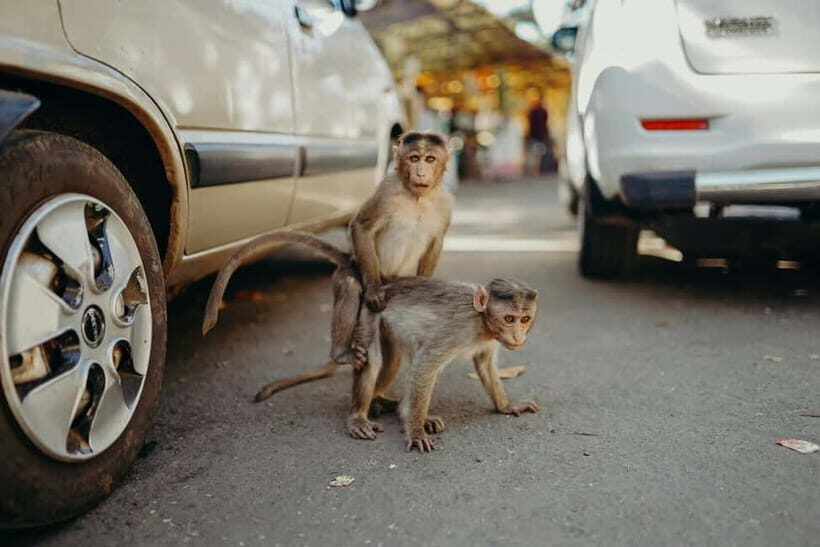
- Spot Rhesus Macaques and Langurs while learning how social monkeys operate
- Temple context for Hindu mythology around monkeys, including Hanuman connections
- A planned chai break that can include masala tea made right on the street
- Bring closed-toe shoes; bare feet and alcohol/drugs are not allowed
How the Delhi Monkey Safari walk really flows

This is a short morning outing built for movement and observation, not for sitting around. You’ll cover a mix of city-edge streets and green-space walking, timed so you’re most likely to catch monkeys when they’re active. The guide’s job is to keep you oriented and teach you what to look for, so you’re not just hoping a monkey appears.
Because it’s designed as a walking tour, you’ll feel the city around you: temple colors, street sounds, and that unusual Delhi mix of humans and wildlife sharing the same urban fabric. The best part is that the tour doesn’t treat monkeys like a zoo show. Instead, you’re learning what “normal” monkey behavior looks like in a real neighborhood setting—so watching becomes easier and more meaningful.
You can also read our reviews of more walking tours in New Delhi



R K Ashram metro meeting point: quick start, minimal confusion

The meeting point is outside gate no 2 at R K Ashram metro station. If you arrive by metro, you’ll see an AXIS Bank ATM on your right—that’s your easiest visual cue.
This matters because the tour is early and short. If you’re already stressed about finding a starting gate, you lose the best part of the morning: calm watching time and good light for photos. Showing up a bit early makes everything feel smooth.
Temple stops that explain why monkeys show up in daily life

One of the big reasons this tour works is that it gives you context before you’re standing inches from monkey attention. You’ll visit temple areas linked to monkeys in Hindu culture—especially stories and associations around Hanuman—and you’ll also see at least one other religious stop along the way (some mornings include a Buddhist temple visit before the monkey segment).
The temple time isn’t just sightseeing. Your guide uses it to frame how monkeys are seen culturally, what the symbolism means, and why you’ll encounter them in places that humans treat as sacred. This makes the monkey viewing feel less random and more like part of the local story.
A few practical details help here:
- Temple areas can mean crowds and foot traffic, so your guide keeps you together.
- Expect extra visual interest: ornamented spaces, photo-friendly angles, and small moments where the meaning becomes clearer as you look around.
Seeing Rhesus Macaques and Langurs in real Delhi green space
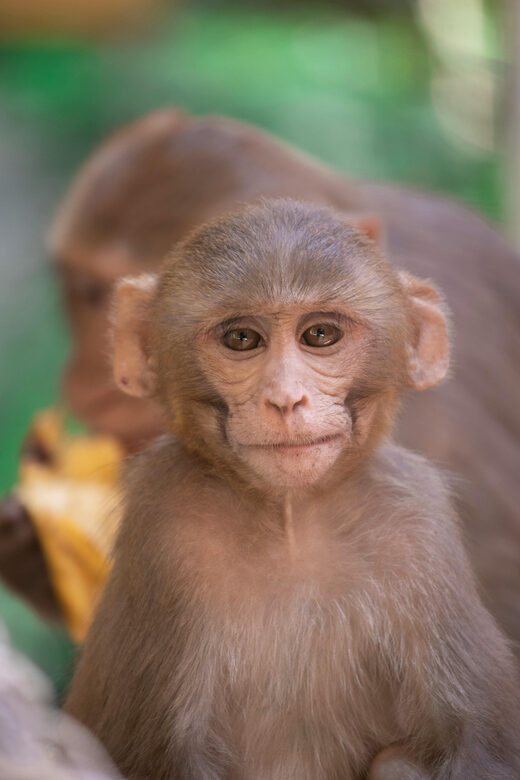
This is the core of the experience: you go to monkey areas where you can watch Rhesus Macaques and Langurs. The guide helps you notice the differences between species and, more importantly, the social behavior that makes monkey encounters fascinating.
What to pay attention to:
- How monkeys move as a group. Watch who leads, who pauses, and how attention spreads.
- Communication cues. The tour is set up so you learn that monkeys aren’t just “randomly climbing.” There are signals and rhythms.
- Foraging and play. Even if you don’t get a huge crowd scene, you can still see normal activity—searching, grabbing, grooming, and social interaction.
And yes, you may get a chance to offer bananas during the walk. That’s mentioned in the experience feedback you shared, and it’s one of the reasons people remember the tour. If you do get that moment, treat it as a guided, respectful interaction—follow your naturalist’s instructions and don’t try to freestyle. Monkeys are quick, and things can change fast.
Connaught Place at sunrise: photos with a city-wildlife twist
A standout timing choice is the Connaught Place sunrise photo stop. Connaught Place is one of those Delhi hubs where street life, architecture, and morning light combine well for photos. It’s also a good “contrast checkpoint” after you’ve been looking at monkeys in green-space edges.
Your guide builds in viewpoints along the way, so you’re not just standing in one spot. The goal is for you to walk out of the morning with images that show both sides of Delhi at once: the human city setting and the wildlife presence that many visitors don’t expect to notice up close.
If you care about photography, this is where a little prep helps. Wear shoes you can pivot in, keep your phone accessible, and don’t block others. Sunrise light is forgiving, but people often cluster for shots—your guide will help you find workable angles.
You can also read our reviews of more guided tours in New Delhi






Close-up monkey moments, with safety and respect in mind
Getting close to monkeys sounds thrilling—and it is—but the real win is learning how to do it without stress. Your guide helps you interpret what the monkeys are doing and what signals mean. That way, you’re not just reacting to sudden movement.
A few important rules are explicit:
- No alcohol and no drugs
- No bare feet
- Stick with the group and follow your guide’s guidance around food and distance.
The tour’s focus on conservation and coexistence comes through here. It’s not “take the biggest risk for the best photo.” It’s more like: observe, understand, and share space safely.
Also, bring comfortable closed-toe shoes. You’ll be walking and moving through areas where a quick step forward or sideways is normal. Open shoes aren’t worth the risk.
The chai stop: a calm break that keeps the morning enjoyable
This tour includes a chai break, and it’s not treated like filler time. It’s a chance to reset your energy after watching, walking, and absorbing temple and wildlife context.
In feedback you provided, the chai experience is often described as very good, sometimes served as masala tea in clay cups. People also noted a street vendor called The Chai Politician. If you’re a foodie who enjoys simple, local stops, this is a nice payoff.
You might also get a chance to try a typical street dish during the morning. Spiciness varies, so if you’re heat-sensitive, let your guide know early.
Price and value: why $27 can work for a morning like this
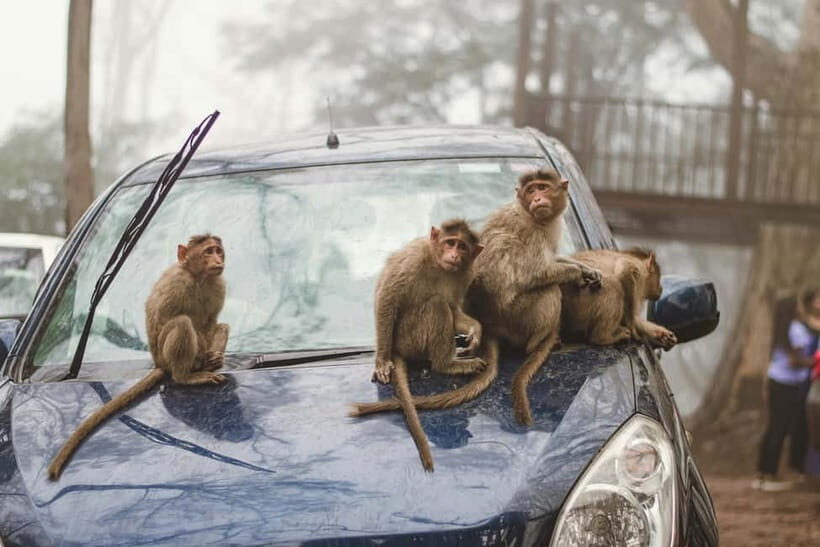
At around $27 per person for a 2.5-hour guided walking tour, the value comes from a few things working together:
- Transportation included. You’re not just meeting and wandering alone.
- A local wildlife guide. That education piece matters here because it changes how you see the monkeys.
- Small group size (up to 3). That tends to mean more attention and less waiting around.
- Water bottle included. Small, but helpful on a morning walk.
If you tried to recreate this on your own, you’d likely spend time figuring out where to go, what to look for, and how to handle safety around wildlife. Paying for guidance is what turns the tour into a real experience instead of a guessing game.
Who should book this Monkey Safari, and who should skip it
This is best for you if:
- You like wildlife that’s alive and active, not staged.
- You enjoy cultural context, not only photos.
- You’re okay with a short morning walk and want an efficient route.
It may not be a great fit if:
- You have low fitness or mobility limits.
- You’re traveling with very young kids. The tour data lists that it’s not suitable for children under 2, under 3, under 4, and under 5 (and it also mentions babies under 1).
- You’re over 95 years old.
- You need a more relaxed pace with minimal walking.
If any of those apply, it’s still possible you’ll find the monkey area interesting on your own, but this specific format is built for moving.
Also note the restrictions: alcohol and drugs are not allowed, and bare feet aren’t. If you’re hoping for a party-like outing, this isn’t it.
Should you book the Delhi Monkey Safari?
Book it if you want a morning in Delhi that actually connects wildlife viewing with culture, guided by a real naturalist-style approach. The combination of monkey behavior observation, temple context (including Hanuman connections), and a practical sunrise photo stop at Connaught Place is the recipe here.
Skip it if you know you can’t handle walking, if your age or fitness limits make short-distance walking hard, or if you’re uncomfortable around close wildlife presence—even with a guide. In the right mindset, this is a smart-value way to see Delhi’s urban-wildlife interface up close and leave with photos that feel like a story, not just a snapshot.
FAQ
How long is the Delhi Monkey Safari guided walking tour?
The tour lasts about 2.5 hours.
Where do we meet the guide?
You meet the guide outside gate no 2 at R K Ashram metro station. If you arrive by metro, there is an AXIS Bank ATM on your right.
Is the tour in English?
Yes, the live tour guide is listed as English.
What is the group size?
It’s a small group limited to 3 participants.
What should I bring?
Bring comfortable closed-toe shoes and plan for comfortable walking.
Is alcohol allowed?
No. Alcohol and drugs are not allowed, and alcoholic drinks in the vehicle are also not allowed.
Is there a chance for monkeys close-up during the tour?
The experience is designed for up-close monkey viewing in their natural environment, with guidance from the wildlife guide.
Is it refundable if I cancel?
Free cancellation is offered up to 24 hours in advance for a full refund.