REVIEW · NEW DELHI
Delhi: Half-Day Private Guided City Sightseeing Tour
Book on GetYourGuide →Operated by ITS Holidays · Bookable on GetYourGuide
Delhi can be a blur. This tour keeps it readable and relaxed, with a private air-conditioned car and a dedicated chauffeur doing the navigation. You get a clean hit list of landmark stops that make sense together, from Agrasen Ki Baoli to Lodhi Garden, without wasting your morning stuck in logistics.
I also love the pacing. It’s long enough to feel like you got somewhere, yet short enough that you’re not cooked by traffic by lunch, and the stop-by-stop guidance helps you notice details you’d otherwise miss. One more thing I really like: hotel pickup and drop-off, so you can start smoothly from Delhi, Gurugram, or Noida without the usual meeting-point scramble.
One possible drawback: this is a half-day with real walking at heritage sites. If you have limited mobility, you’ll want to check carefully, since the tour notes say it’s wheelchair accessible but also not suitable for people with mobility impairments—and the comfort level depends on how you handle uneven areas and steps.
In This Review
- Key things I’d zero in on
- How a four-hour private loop keeps Delhi from feeling chaotic
- Agrasen Ki Baoli: the stepwell stop you’ll remember
- India Gate, Rashtrapati Bhavan, and Parliament: landmarks that explain the city
- Humayun’s Tomb UNESCO visit: Persian gardens and Mughal ambition
- Lodhi Garden: a calmer reset with birds, butterflies, and monuments
- Price and value check for about $2.75 per person
- Guides that make a short day feel personal
- Who this Delhi sampler fits best (and who should be cautious)
- Timing, rules, and day-of practicalities you should know
- Should you book this tour?
- FAQ
- How long is the Delhi half-day tour?
- What time does the tour start?
- Where can you be picked up and dropped off?
- Is this tour private?
- What languages are available for the guide?
- Is a tour guide included?
- What’s included in the price?
- Are entrance fees included?
- Is there a skip-the-ticket-line option?
- What should I bring, and what’s not allowed?
Key things I’d zero in on

- Private transportation with a chauffeur means you don’t fight Delhi directions for four hours.
- Agrasen Ki Baoli is a standout stepwell visit, with 108 steps and intricate stone details.
- Humayun’s Tomb is UNESCO and it’s timed well inside a half-day loop.
- Pass-by views of Rashtrapati Bhavan and Parliament House add context to Delhi’s power center.
- Lodhi Garden brings a calmer pace, with lots of trees and even bird-and-butterfly life.
- Small group size (up to 10) helps keep the tour flexible and not overly crowded.
How a four-hour private loop keeps Delhi from feeling chaotic

A half-day can work really well in Delhi if you structure it around “major meaning.” That’s what this tour does. You start at 9:00 AM (or at your preferred time), then spend about four hours moving through key areas with a private AC car and a chauffeur who’s also your traffic-coping plan.
The pickup setup matters. You can get picked up from Delhi, Gurugram, or Noida (with listed options including Faridabad too), and you end back at your drop-off location. That alone cuts stress, especially if you’re staying outside the center. You’ll also get a water bottle, which sounds minor until the day is rolling and you’re suddenly rationing sips.
Another underrated point is the guide format. This is a small-group tour, capped at 10 participants, and it’s run with a live guide available in English, Spanish, Russian, French, and Hindi. Guides on these short tours often focus on the “why,” not just the “what,” and that’s exactly what helps in a city where landmarks are tightly packed but not always obvious.
You can also read our reviews of more guided tours in New Delhi



Agrasen Ki Baoli: the stepwell stop you’ll remember

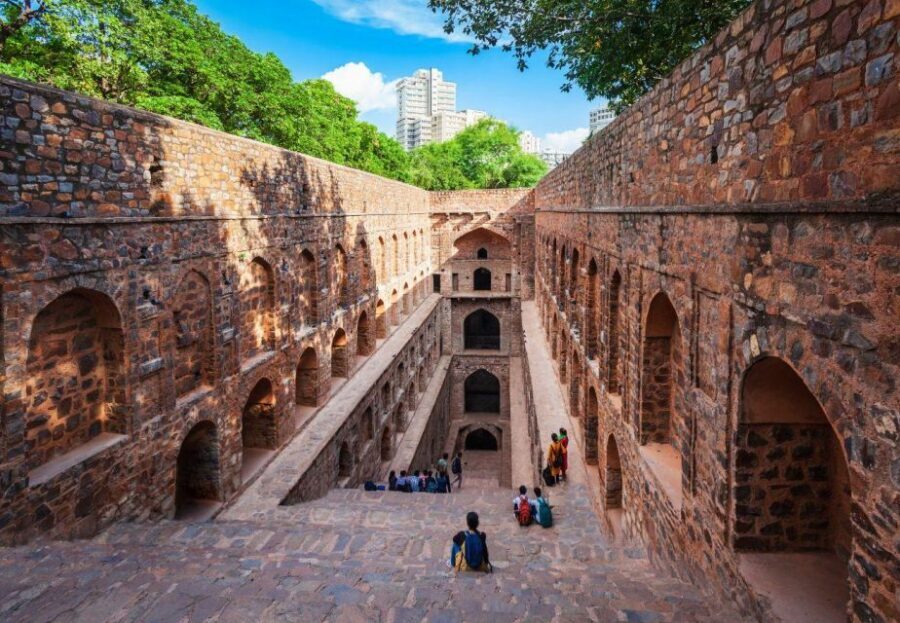
Most Delhi itineraries rush past the small, strange wonders. Agrasen Ki Baoli is different. This ancient stepwell is about 60 meters long and 15 meters wide, and it’s known for its 108 steps decorated with stone details. When you stand near it, you get that wow feeling because it’s both human-scale and grand in a quiet way.
What I’d pay attention to here:
- The vertical rhythm of the steps as you look down and up—this is a structure you feel with your eyes.
- The arched walls and alcoves, which give the place depth even when you’re not taking photos.
- The stone craftsmanship in the details, especially if you slow down for a few minutes.
It’s also a practical stop for timing. You don’t need hours here to get the “aha.” You do need comfortable shoes, because stepwell areas can involve uneven surfaces and stairs. If you’re the kind of traveler who likes one or two memorable stops rather than ten checkboxes, Agrasen Ki Baoli is your anchor.
India Gate, Rashtrapati Bhavan, and Parliament: landmarks that explain the city

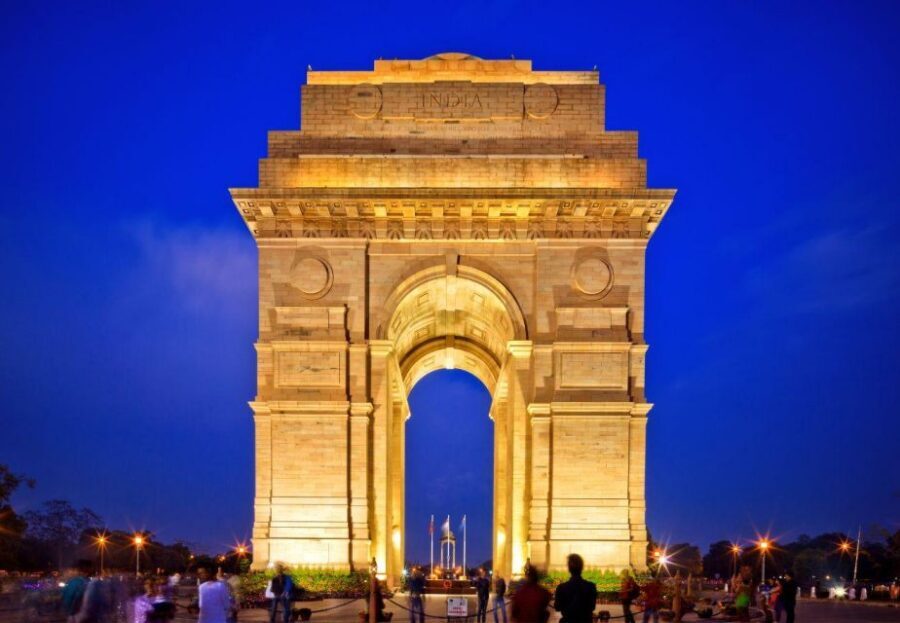
After the stepwell, you shift into the “power and memory” zone of Delhi. India Gate is the loud headline: a 140-foot high gateway that’s often compared to the Arc-de-Triomphe style. It was built as a War Memorial honoring 70,000 soldiers of the British Indian Army who died in the First World War.
Here’s the value of seeing it on a guided route. The monument itself is easy to spot, but the meaning lands better when you know what it’s commemorating. A good guide will also point out how this kind of memorial architecture shapes public space—how people use monuments like this for dates, gatherings, and daily reference points.
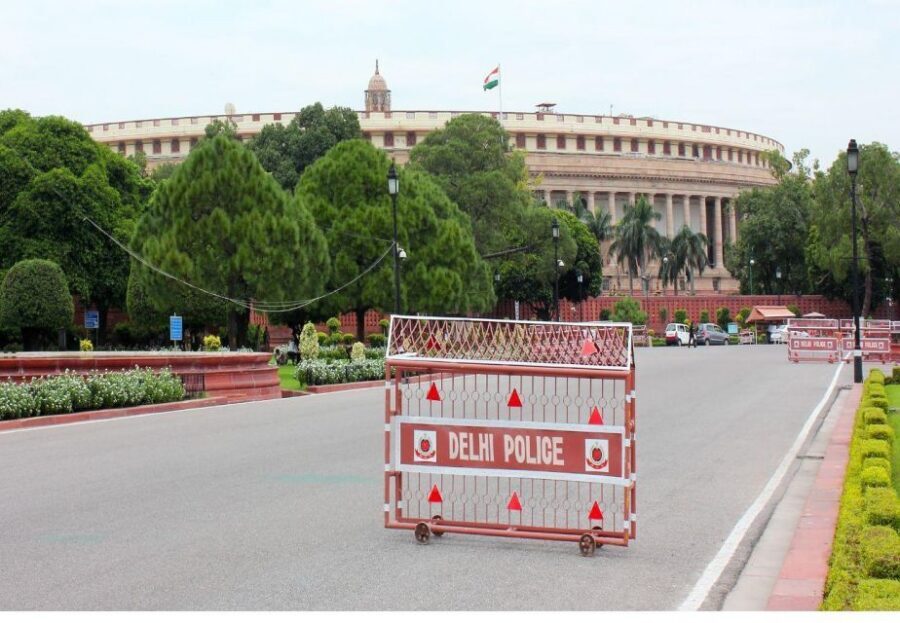
From there, you’ll drive by major government buildings. You’ll pass Rashtrapati Bhavan, the former Viceroy’s House, and it’s described as breathtaking in scale and architecture. Nearby, you also get a view of Parliament House, designed by British architects Edwin Lutyens and Herbert Baker. It’s the home of the Lok Sabha and Rajya Sabha, plus a library hall.
A quick reality check: in a four-hour format, you usually don’t get long, inside-the-building sightseeing. What you do get is context. When you’ve seen the route, you start understanding how Delhi organizes its “showpiece” spaces—monuments, official residences, and the seat of government—into one legible geography.
Humayun’s Tomb UNESCO visit: Persian gardens and Mughal ambition
If Delhi has a single “time travel” stop in this short window, it’s Humayun’s Tomb. This UNESCO World Heritage site is a garden-tomb commissioned in 1562 CE by Humayun’s wife, Hamida Banu Begum. The design is credited to the Persian architect Mirak Mirza Ghiyath.
What makes it especially worth your limited time is that it’s not just a tomb. It’s described as the first garden-tomb of its kind on the Indian subcontinent, and that idea helps you understand the architecture. You’re looking at the shift toward a “built landscape” concept—where the garden layout and the monument placement work together.
You’ll also hear the location framed in history. It sits in Nizamuddin East, near the Dina-panah citadel that Humayun established in 1533. That matters because it ties the site to a broader Mughal-era story instead of presenting it as a standalone postcard.
Practical tip: treat this stop like the one where you slow down. Even without spending forever inside, you can still get the main visual idea by walking at a calm pace, looking for sightlines, and paying attention to how the garden layout guides where you stand. If you’re visiting in comfortable shoes, you’ll feel like you actually got something out of your hour here.
Lodhi Garden: a calmer reset with birds, butterflies, and monuments
After the formal architecture of the government and the tomb complex, Lodhi Garden offers a different kind of Delhi. It’s often the best match for a half-day because it’s both scenic and practical: you can breathe, walk, and take in smaller details without feeling rushed.
Lodhi Garden was originally named after the British Resident’s wife, Lady Willingdon, and it was created in 1936 after clearing two villages. Today it’s used by Delhi’s elite, joggers, and couples. That mix makes it feel like a real public park rather than just a timed sightseeing stop.
What I’d expect to appreciate during your visit:
- Tree cover: it’s listed as having over 100 tree species.
- Wildlife feeling: more than 50 bird and butterfly species.
- History in the corners: several 15th-century Mughal monuments inside the garden.
This is where a good guide earns their fee. A guide can help you spot the “Mughal remnants” and explain how the garden setting changes how you experience the monuments. Without that, you might just see trees and walk paths and miss why it’s famous.
And yes, it’s a nice change of tempo. By the end of your tour, that matters. You finish feeling like you toured Delhi instead of just surviving it.
You can also read our reviews of more city tours in New Delhi






Price and value check for about $2.75 per person
Let’s talk money honestly. The listed price is about $2.75 per person for a four-hour private guided city tour with hotel pickup and drop-off and a private AC car. Even if you don’t analyze it deeply, that number signals strong value compared with what many visitors expect for four hours of private transport and a guide.
What you’re actually getting included is the big stuff:
- Private AC car and a dedicated chauffeur
- Tour guide
- Pickup and drop-off
- Water bottle
- Toll tax and parking
What’s not included is also important:
- Entrance fees
- Food and drinks
So the real value question is simple: do you want transport + guidance bundled together, and are you okay handling meals and entry tickets on your own? If yes, the pricing can feel like a deal, especially if you’re traveling with someone who hates navigating and negotiating transport in Delhi.
If you do plan to pay entrance fees at each site, just budget a bit extra. For many travelers, the guidance and saved time still outweigh those add-ons.
Guides that make a short day feel personal
This is where the small group format and the guide style show up. The tour experience is set up for flexibility, and the guide’s tone matters a lot on a half-day tour.
In past trips, guides like Mr Gagan, also known as Sky, have been described as cool but warm, with explanations that include local tips and a calm pace. Another guide, Sanjeev, has been praised for teaching the history behind each stop with real passion. There’s also the driver side: Mr Sonu was noted for waiting without complaining and for comfortable, safe driving.
You don’t need a showy personality when you only have four hours. You need clarity, pacing, and comfort. This setup is designed for that.
Who this Delhi sampler fits best (and who should be cautious)
This tour works best when you:
- Want a fast, structured overview of Delhi’s major landmarks
- Prefer private transport so you can keep moving without dealing with navigation
- Like guided context—why a monument exists, what a tomb’s layout means, and how parks connect to daily life
It’s also a solid fit for first-timers because the stops are geographically sensible: stepwell to gateway to official architecture to a UNESCO Mughal tomb to a park reset.
Who should be cautious:
- The tour notes say it’s not suitable for pregnant women and for people under 120 cm (3 ft 9 in).
- The notes also mention wheelchair accessibility, but then state it’s not suitable for people with mobility impairments. If mobility is a concern, I’d treat that as a clear prompt to check with the operator before booking.
For most people, the main physical requirement is straightforward: comfortable shoes and a willingness to walk and climb stairs where needed.
Timing, rules, and day-of practicalities you should know
You can start at 9:00 AM or at a preferred time, and you’ll get pickup in Delhi, Gurugram, or Noida (and listed options include Faridabad). Drop-off is also built in to those same areas, which keeps you from having to line up another ride at the end.
There are also day-of rules to keep things smooth:
- Bring an ID card or passport
- You should be in comfortable shoes
- Drones are not allowed
- Alcohol and drugs are not allowed
- Chewing gum is not allowed
These rules are common across many heritage-focused tours, but it’s still smart to remember them so you don’t get surprised at a site.
Should you book this tour?
I’d book this half-day private tour if you want Delhi without the “where do we go next” headache. The mix is strong: a memorable stepwell (Agrasen Ki Baoli), landmark meaning (India Gate), Mughal-era UNESCO weight (Humayun’s Tomb), and a breathable park finale (Lodhi Garden). The fact that it includes private AC transport, pickup/drop-off, and a live guide makes it a good choice for short stays or anyone who gets annoyed by planning.
I’d hesitate only if your schedule needs more time at one place, or if mobility is a concern and the step-and-uneven-ground realities could be an issue. If that’s you, ask the operator how they handle movement through the stops.
FAQ
How long is the Delhi half-day tour?
It runs for 4 hours.
What time does the tour start?
A starting time of 9:00 AM is listed, but you can also choose your preferred time.
Where can you be picked up and dropped off?
Pickup and drop-off are offered in Delhi, Gurugram, and Noida (with additional options that include Faridabad).
Is this tour private?
This is a small group tour limited to up to 10 participants, and it includes private transportation with a chauffeur.
What languages are available for the guide?
The live guide is available in English, Spanish, Russian, French, and Hindi.
Is a tour guide included?
Yes. The tour includes a live tour guide.
What’s included in the price?
Included items are private AC car, tour guide, pickup and drop-off, water bottle, and toll tax & parking.
Are entrance fees included?
No. Entrance fees are not included.
Is there a skip-the-ticket-line option?
Yes. Skip the ticket line is listed as included.
What should I bring, and what’s not allowed?
Bring a passport or ID card and wear comfortable shoes. Drones, alcohol and drugs, and chewing gum are not allowed.