REVIEW · CHENNAI
Chennai Walk of Divinity
Book on Viator →Operated by Yo Tours · Bookable on Viator
Spiritual Chennai, but you walk inward. This tour is built for a meaning-first experience, linking religion, spirituality, and even everyday “science-y” thinking through a guided story trail. You won’t just clock sights; you’ll read the life inside the places as you move from temple to temple.
What I like most is the focus on purpose, not photo stops, and the chance to take hidden lanes that you’d miss on your own. If you’re lucky enough to get Mr Nanda, you get clear, honest explanations of what each space is for, even if you don’t follow Hinduism yourself. One thing to consider: there’s no hotel pickup, and a mix-up around the start point has happened before, so confirm the exact meeting spot and have it saved.
In This Review
- Key things to know before you go
- A two-hour walk built for meaning, not checklists
- Marundeeswarar Temple: Shiva as the God of Medicines
- Pamban Swami Temple: Serenity among sand, trees, and birds
- Arupadai Veedu Murugan Temple: One of six Abodes of Murugan
- Ashtalakshmi Temple: Lakshmi and her eight primary forms
- Annai Vailankanni Shrine: a Gothic Catholic pilgrimage stop in Chennai
- Why the guide’s conversations matter (and why your attitude matters too)
- Price and group size: is $12.60 good value?
- Tips so the day doesn’t get derailed
- Who should book, and who might skip it
- Should you book the Chennai Walk of Divinity?
- FAQ
- How long is the Chennai Walk of Divinity?
- Where does the tour start and where does it end?
- What places are visited on the walk?
- What is included in the price?
- Is a water bottle included?
- Do I get hotel pickup or drop-off?
- How many people are in the group?
- Is it a mobile ticket experience?
- What is the cancellation policy?
Key things to know before you go
- A short, high-impact 2 hours makes this easy to fit into a day of Chennai exploring.
- Five major sacred stops give you a balanced view of Hindu temples plus the Annai Vailankanni Catholic shrine.
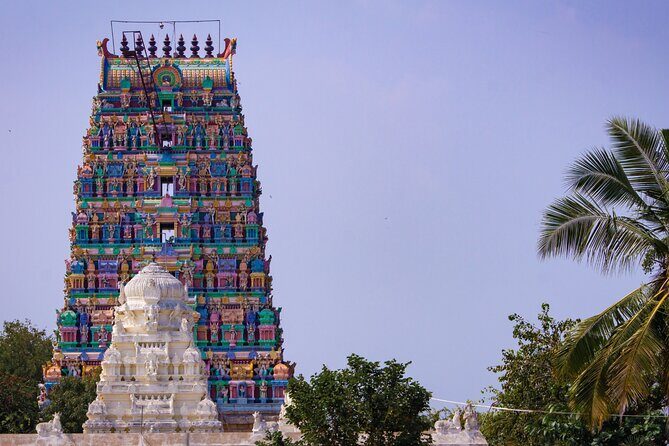
- Dravidian architecture meets thematic worship, like Shiva as the God of Medicines.
- Hidden lanes and small side places help you feel the neighborhood, not just the main gates.
- Up to 15 people keeps it conversational, not crowded.
- English & Hindi storytelling helps you understand what you’re seeing without needing a religious background.
A two-hour walk built for meaning, not checklists
This is one of those Chennai experiences that flips the usual travel script. Most guided tours feel outward—streets, skylines, markets, big landmarks. This one aims inward. The guide talks you through what people believe, why they practice, and how they connect the spiritual with the real world.
You’ll also notice the pacing. Two hours is long enough to cover several key sites, but short enough that you won’t feel dragged across town. That matters in Chennai, where heat, walking distances, and shifting plans can turn “just a quick tour” into a long day.
What makes it feel different is the way the guide holds the thread together. The tour’s idea is to connect spirituality, religion, and science-like logic so it makes sense in your head, even if you don’t share the same faith. If you like learning how people think, not just what they worship, you’ll get a lot from the conversations.
You can also read our reviews of more walking tours in Chennai


Marundeeswarar Temple: Shiva as the God of Medicines
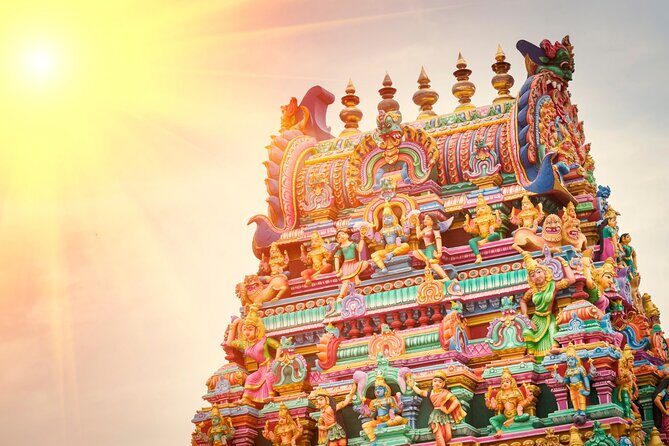
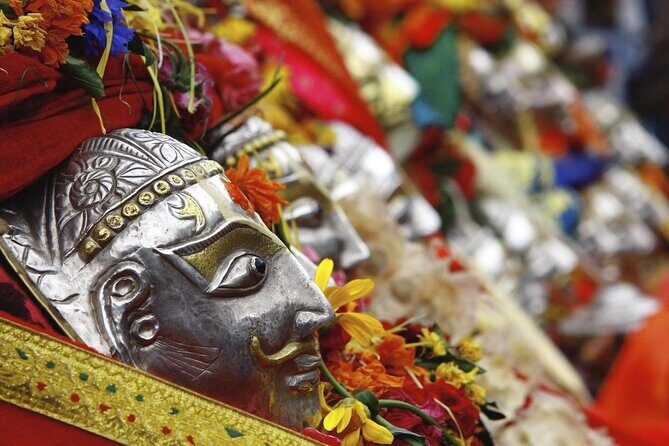
Your first stop is Marundeeswarar Temple, dedicated to Shiva in the form of Aushadeeswarar, known as the God of Medicines. That theme is a practical clue for how to look at the space.
In many temples, you can walk through and just register decoration. Here, the dedication nudges you to notice the idea of curative worship—how people come seeking healing, comfort, and relief. The temple’s Dravidian architecture also gives you that classic South Indian visual rhythm: stone forms, structured layouts, and a sense of order that supports ritual life.
What’s special for your experience is the “why” behind the visit. You’re not only seeing Shiva; you’re seeing Shiva with a job description—medicine, healing, and recovery in the minds of worshippers. Even if you’re not religious, that’s an absorbing window into how communities use sacred places for wellbeing.
Pamban Swami Temple: Serenity among sand, trees, and birds
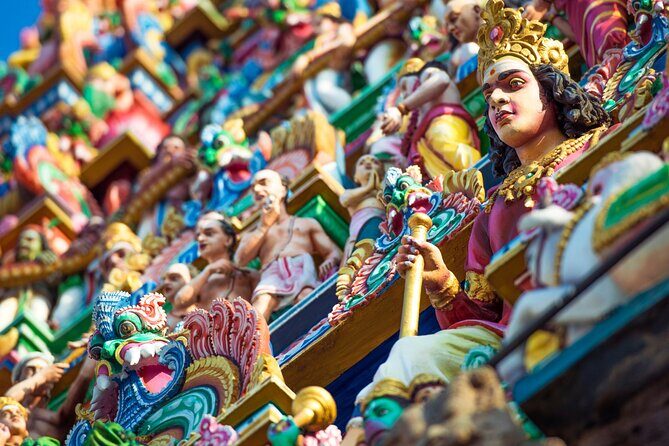
Next is Pamban Swami Temple, dedicated to the religious scholar Pamban Swamigal. This stop isn’t only about the building. It’s described as sitting among acres of sandy land, with trees and birds, creating a calm, quiet-feeling setting.
For you, that matters because it changes the “temple rhythm.” One moment you’re in a more structured temple environment; the next, you’re in a space where nature seems to shape the mood. The natural surroundings help the spiritual atmosphere feel less like a performance and more like a slow, settled presence.
Also, this is where the guide’s storytelling really earns its place. A quiet environment gives you space to listen, not just look. If you pay attention, you start to notice how religious learning and daily life blend in Tamil devotion.
Possible drawback to keep in mind: because this portion leans more on atmosphere than spectacle, it can feel quieter. If you’re expecting nonstop sights and constant action, this stop may feel more reflective than “touristy.”
Arupadai Veedu Murugan Temple: One of six Abodes of Murugan
Arupadai Veedu Murugan Temple is dedicated to Murugan, the son of Shiva. This site connects to one of the six Abodes of Murugan temples in Tamil Nadu, which gives the visit a “part of a larger pilgrimage” feeling.
That connection changes how you experience the temple. Instead of treating it like a standalone attraction, you’re seeing it as a chapter in a bigger religious map—something people revisit across time and devotion. The guide can help you understand what Murugan represents culturally and why these abodes matter.
If you like religious geography—how places relate to each other—this stop is a highlight. You’ll likely leave with a better sense of why people travel, not only to see a temple, but to complete a spiritual circuit.
Ashtalakshmi Temple: Lakshmi and her eight primary forms
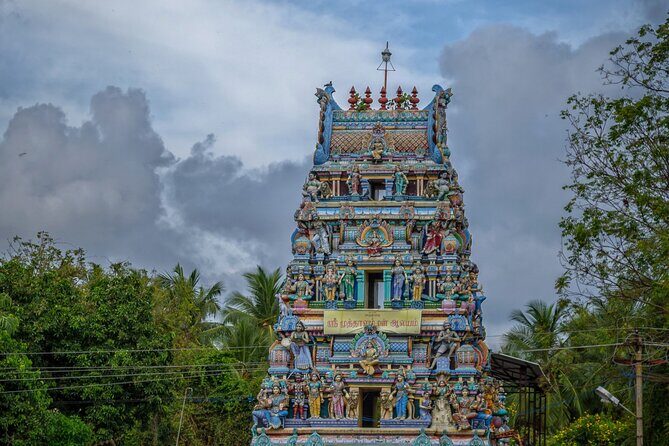
After Murugan, you’ll go to Ashtalakshmi Temple, dedicated to the goddess Lakshmi and her eight primary forms. This is a great stop if you enjoy symbolism.
Lakshmi is often associated with prosperity, wellbeing, and household blessings, and the idea of eight forms gives the theology more detail than a single “category” of devotion. You can think of it like this: the temple isn’t only about one name; it’s about multiple ways people understand and seek Lakshmi’s help.
With the guide’s explanation, you’ll be able to connect the dots between what you see and what it means to worshippers. Without that context, a visitor might just notice shrines and carvings. With it, you start to understand why certain areas feel important and what the space is trying to communicate.




Annai Vailankanni Shrine: a Gothic Catholic pilgrimage stop in Chennai
The tour ends at Annai Vailankanni Shrine, a Catholic pilgrimage destination described as Gothic-style, plus a small museum. This is a key moment because it shifts from Hindu temples into a Catholic devotional space.
That change is part of the tour’s value. It’s not a “compare faiths like a debate.” It’s more like showing you how sacred landscapes shape life across communities in Chennai. The Gothic style also gives you a totally different visual language—arches, structure, and the feel of a shrine built for reverence.
The small museum can add helpful context if you’re the type who likes background before you walk into a sacred space. Even if you keep your expectations modest, the museum helps connect the shrine to a wider pilgrimage story.
Why the guide’s conversations matter (and why your attitude matters too)
This is not a “read the plaque, move on” kind of tour. It’s built around a guide who tells stories and explains significance in a way you can follow.
I especially like that the guide is set up to speak English & Hindi, so you’re not relying on luck with your language skills. And the conversations can be surprisingly useful if you’re genuinely curious. Even for people who aren’t Hindu, the tone described here is respectful and honest, which makes it easier to stay open.
The tour’s concept—connecting spirituality, religion, and logic—also helps you avoid the common problem of worship sites turning into confusing scenery. If you’re willing to listen, you’ll start to understand the “rules of meaning” that shape what you see.
Price and group size: is $12.60 good value?
At $12.60 per person for about 2 hours, this is priced like an experience that wants to be accessible. For me, the value comes from two things: the guided interpretation and the fact that you’re covering multiple major sacred destinations in one stretch.
With a maximum of 15 travelers, the group stays small enough for questions and real conversation. Larger groups can turn temple explanations into a blur. Here, it’s more likely you’ll get clarity on what you’re looking at, instead of just walking behind someone’s fast pace.
You’ll also get a mobile ticket and group discounts, which is a practical win if you’re booking with friends. If you’re going solo, the fixed group size still keeps it from feeling like you’re paying for a vague “maybe we’ll see things” experience.
One more value note: the tour includes access to hidden lanes and places. That’s not just for fun. It’s how you get a sense of local life around the temples, not only the front-facing entrances.
Tips so the day doesn’t get derailed
A few practical things will make this go smoothly:
- Bring your own water bottle. Water isn’t included, and you’ll want it for walking comfort.
- Wear shoes with grip. Temples and lanes can mean uneven ground.
- Have your start address saved: Lalitha Nagar, Thiruvanmiyur, Chennai, Tamil Nadu 600041. Hotel pickup isn’t part of this.
- If you’re tight on vacation time, double-check the meeting point before you head out. There has been a case where the starting point was changed and the trip lost precious time, so don’t gamble with vague directions.
- Use public transport if that’s your plan. The tour is described as near public transportation, which is helpful for keeping your day flexible.
If you do those things, you’ll maximize the reason to book: a calm, guided, meaning-driven walk that feels like a local way of seeing.
Who should book, and who might skip it
Book it if you want:
- a guided understanding of major Chennai sacred spaces, not just photos
- respectful storytelling that explains symbolism and purpose
- a short walk that fits into a busy day
Consider skipping it if:
- you’re looking for a “see everything fast” tour with constant external sightseeing
- you hate walking segments and prefer taxis between big sights
- you need hotel pickup and turn-by-turn planning with no wiggle room
This experience rewards a curious mindset. If you bring patience and a willingness to listen, you’ll likely feel more connected to what’s happening in each place.
Should you book the Chennai Walk of Divinity?
I’d book it if your goal is understanding, not just checking off temples. The combination of multiple faith spaces, themed explanations, and small-group conversation makes this feel like a thoughtful way to learn Chennai’s spiritual geography without spending all day in transit.
However, if your schedule is extremely strict, do the boring prep work: confirm the exact meeting spot ahead of time and keep your own navigation ready. With that in place, this is a strong value at $12.60 for a focused 2-hour walk led by a guide who can explain what you’re seeing in English & Hindi.
FAQ
How long is the Chennai Walk of Divinity?
It’s about 2 hours.
Where does the tour start and where does it end?
It starts at Lalitha Nagar, Thiruvanmiyur, Chennai, Tamil Nadu 600041 and ends at Annai Vailankanni Shrine on Annai Velankanni Road, Odaimanagar, Besant Nagar, Chennai, Tamil Nadu 600090.
What places are visited on the walk?
You’ll visit Marundeeswarar Temple, Pamban Swami Temple, Arupadai Veedu Murugan Temple, Ashtalakshmi Temple, and Annai Vailankanni Shrine.
What is included in the price?
The tour includes a highly trained friendly storyteller/guide (English & Hindi), local tips and recommendations, and access to hidden lanes and places, plus conversations and stories.
Is a water bottle included?
No. Water bottle is not included.
Do I get hotel pickup or drop-off?
No. Hotel pickup and drop-off are not included.
How many people are in the group?
The group has a maximum of 15 travelers.
Is it a mobile ticket experience?
Yes, the tour uses a mobile ticket.
What is the cancellation policy?
Free cancellation is available. You can cancel up to 24 hours in advance for a full refund; cancellations within 24 hours aren’t refunded. If it’s canceled because the minimum number of travelers isn’t met, you’ll be offered a different date/experience or a full refund.