REVIEW · CHENNAI
Chennai: George Town Origins Guided Walking Tour
Book on GetYourGuide →Operated by 5 Senses Tours · Bookable on GetYourGuide
Chennai’s colonial roots are under your feet. This George Town walking tour connects the British East India Company era to the street-level reality of markets today, and you’ll move through key landmarks like Fort St George and St Mary’s Church in a tight 3–3.5 hour loop. I especially love how the walk links big political power to everyday trade, and I also like the small group size, which makes questions easy and un-rushed.
One possible drawback: the museum stop won’t run on Fridays since it’s closed that day.
Key highlights worth your attention
- Fort St George start point: you begin right at the first English fortress built by the East India Company in 1644
- St Mary’s Church: a stop at the oldest Anglican Church in India
- Madras High Court: Gothic architecture with a 1862 origin tied to a Queen Victoria decree
- Dare House / Parrys connection: an iconic art deco building linked to Parrys and the business world of early Chennai
- China Bazaar Road markets: utensils, cosmetics, and clothes, with the kind of street energy you can actually smell and hear
- Armenian refugee trade + Armenian Church: a rare layer of local history tied to silk, spices, and gems
In This Review
- Fort St George to the First Chapter of Chennai’s Big Story
- Inside the Fort Museum (and St Mary’s Church) for the Timeline You Can Remember
- Madras High Court and Queen Victoria’s 1862 Decree
- Dare House and the Parrys Legacy in an Art Deco Shell
- China Bazaar Road: Utensils, Cosmetics, Clothes, and Real Street Sound
- Armenian Refugee Trade, Silk and Spices, and a Rare Church Stop
- The Tour Experience: Small Group, English Guide, and a Route That Moves
- Dress Code and Practical Comfort for a Chennai Walking Day
- Price and Value: What You Get for $49
- Who This Tour Fits Best
- Should You Book the George Town Origins Walking Tour?
- FAQ
- FAQ
- Where does the George Town Origins Guided Walking Tour start?
- How long is the tour?
- How much does the tour cost?
- What’s included in the ticket price?
- Is food included?
- Is the tour offered in English?
- Is the Fort St George museum open every day?
- What dress code rules should I follow?
Fort St George to the First Chapter of Chennai’s Big Story
If you want to understand Chennai fast, start at Fort St George. This tour meets you at the entrance, and it’s a smart choice because you get the anchor point right away: the English fortress was built in 1644 by the East India Company. Even if you only have a short stay in the city, this puts a clear date stamp on the era when outside traders and empires began shaping what “Chennai” would become.
I like that the tour doesn’t treat the fort as a dead monument. Instead, it frames it as a starting mechanism—how British power expanded, how it eventually turned into rule, and how India later won independence. It’s the kind of timeline you can keep in your head while you’re walking, so the city’s later architecture and institutions feel less random.
This is also where you’ll get the practical orientation. You’ll learn what you’re seeing as you go: which walls and buildings signal control, which ones signal commerce, and which ones signal community.
One small timing note: the tour includes entrance, and the museum is part of the early flow. If you’re on a day when it’s open, you’ll be glad you arrived ready to start without lingering too long outside.
Inside the Fort Museum (and St Mary’s Church) for the Timeline You Can Remember
After you meet at Fort St George, the next stop pulls you into the museum portion of the fort area—except on Fridays, when it’s closed. That’s worth planning around because it changes how “full” the historical storytelling feels. If you’re scheduling around your trip, try not to book for a Friday morning if you strongly want the museum component.
When the museum is open, it’s a great way to reset your brain before you hit streets and buildings. You’ll get context for the British East India Company period and the broader arc of power—then it’s easier to see why later civic buildings matter. You’re not just walking past pretty structures; you’re walking past symbols of authority and administration.
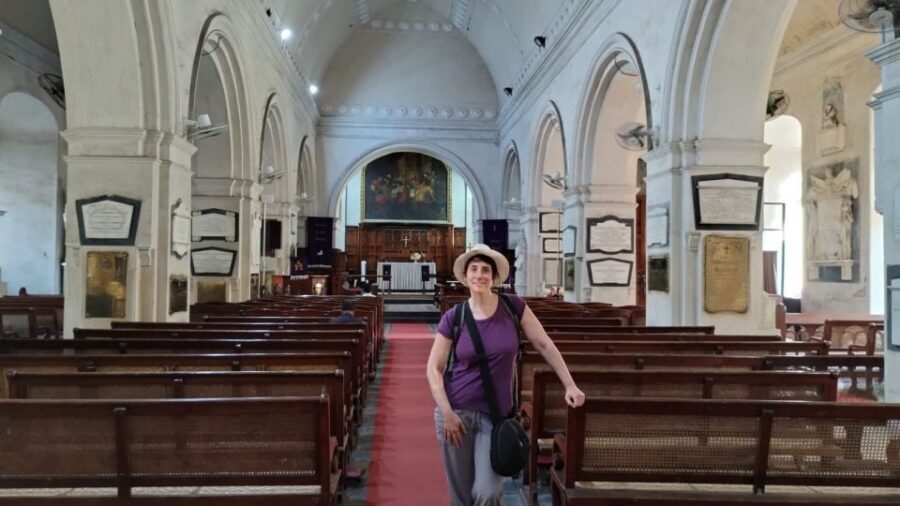
Then comes St Mary’s Church. This church is especially meaningful because it’s described here as the oldest Anglican Church in India. Even if church architecture isn’t usually your thing, it’s a helpful contrast point: the fort represents the political-military phase, while the church helps explain the social and religious footprint that often traveled alongside trade and governance.
In plain terms, this portion of the tour helps you stop treating the city like a collection of stops and start treating it like a story with cause-and-effect.
You can also read our reviews of more walking tours in Chennai

Madras High Court and Queen Victoria’s 1862 Decree
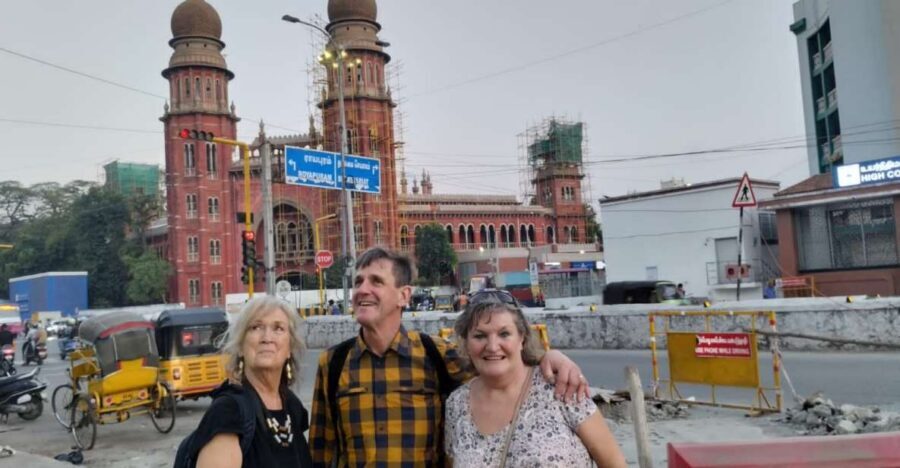
From the fort area, you’ll walk to the Madras High Court. This is one of the tour’s “slow down for a moment” buildings. The high court was set up in 1862 by a decree from Queen Victoria, and the architecture is called out for a reason: it’s a strong specimen of Gothic architecture.
Why it matters for your understanding: courts are where empires and governments turn power into procedure. The law becomes physical—built in stone, rules reinforced by buildings, not just ink. So when you stand there, you’re not only looking at style. You’re seeing a transfer of systems, meant to look permanent.
Also, the high court area is a natural hinge point. After this stop, the tour shifts from official structures into the commercial lanes of George Town—where you feel the momentum of trade in a more direct way.
If you like history that shows up in daily life, this is a key moment. You’ll start noticing how institutions and markets grow alongside each other, not in separate worlds.
Dare House and the Parrys Legacy in an Art Deco Shell
Next up is Dare House, an iconic art deco building with a heavy commercial backstory. The tour links it to Parrys Company, which was named after Thomas Parry—a Welsh figure described as one of the early free merchants of Chennai.
And the building name itself is part of the story: it’s named after John Dare, Parry’s business partner. That detail helps the whole stop click, because it turns the building from an Instagram object into a clue about who held economic influence and how partnerships shaped the city.
This is where I appreciate the tour’s balance. Some walking tours in big cities only focus on one layer—either politics or markets. Here you get both, and Dare House sits right in the middle: it belongs to business history, but its style and prominence also reflect status.
If you’re the type who likes to connect architecture to people rather than just eras, you’ll likely enjoy this one.
China Bazaar Road: Utensils, Cosmetics, Clothes, and Real Street Sound
After the higher-stakes government buildings, the tour heads toward Netaji Subhash Chandra Bose Road, also known as China Bazaar road. This is where George Town turns into a working bazaar rather than a sightseeing zone.
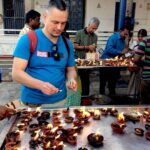
The tour focuses on the market specialties you can actually shop for: utensils, cosmetics, and clothes. Even if you’re not buying anything, you’ll still get a sense of what the street is built to support—daily commerce, repeat customers, and a steady flow of goods.
This section is also where you’ll notice the pace of the district. It feels like the city’s older trading patterns are still in motion, just with modern noise layered on top. You’ll hear and see commerce as an everyday rhythm.
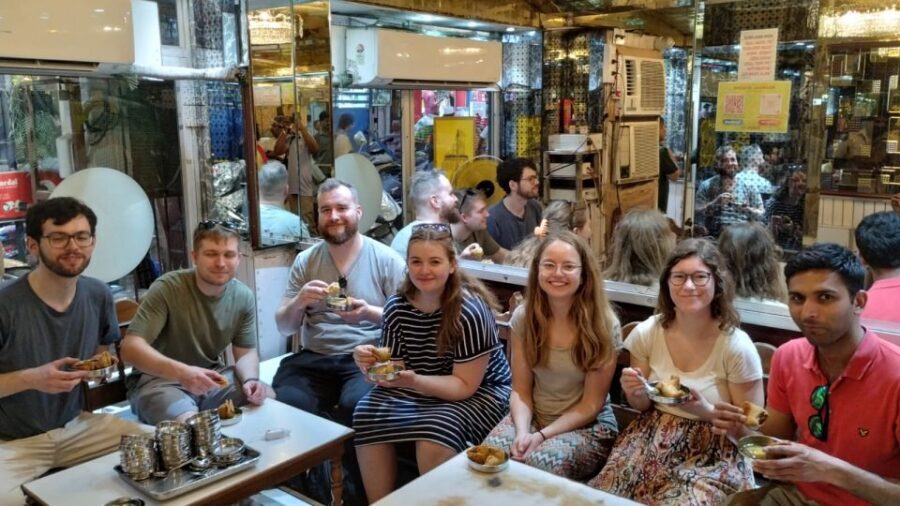
The tour also sets you up for food in a practical way. Food itself isn’t listed as included, but there is time to taste a local snack. Since food isn’t part of the ticket cost, it’s smart to carry some cash or have a way to pay if you want to try what’s offered.
If you’re picky about what you eat, it helps that you’re not forced into a single fixed meal. You can treat it like a street-food sampling moment and choose what fits your comfort level.
Armenian Refugee Trade, Silk and Spices, and a Rare Church Stop
One of the most distinctive parts of the George Town story is the Armenian layer. The tour walks past a street tied to Armenian refugees who set up trade around 300 years ago, working with goods like silk, spices, and gems.
This matters because it shows Chennai as more than a straight line from local life to British rule. It reveals how different migrant communities helped shape trading networks—how the city absorbed expertise, languages, and commercial connections.
Then you’ll visit the Armenian Church, described as unique and worth stepping into for an immersive sense of place. This is a quieter stop compared with the market streets, and that contrast is genuinely useful. You get a chance to slow down and see how faith and community architecture carry identity across generations.
Guides on this tour can also make this section feel personal and specific. In past runs, I’ve seen how names like Satish and Hareesh are highlighted for clear explanations and for answering questions without making you feel rushed. If your guide is in that style, you’ll likely come away with names, dates, and street-to-history connections you can remember later.
You can also read our reviews of more guided tours in Chennai





The Tour Experience: Small Group, English Guide, and a Route That Moves
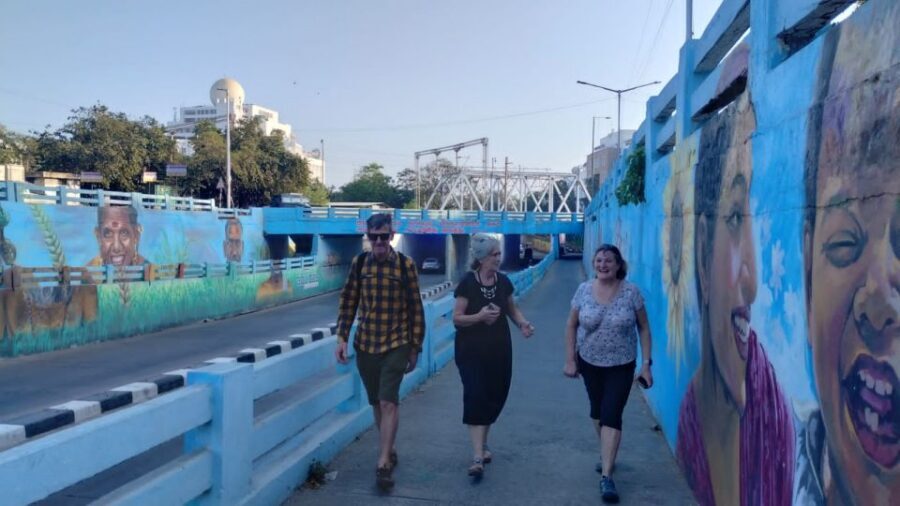
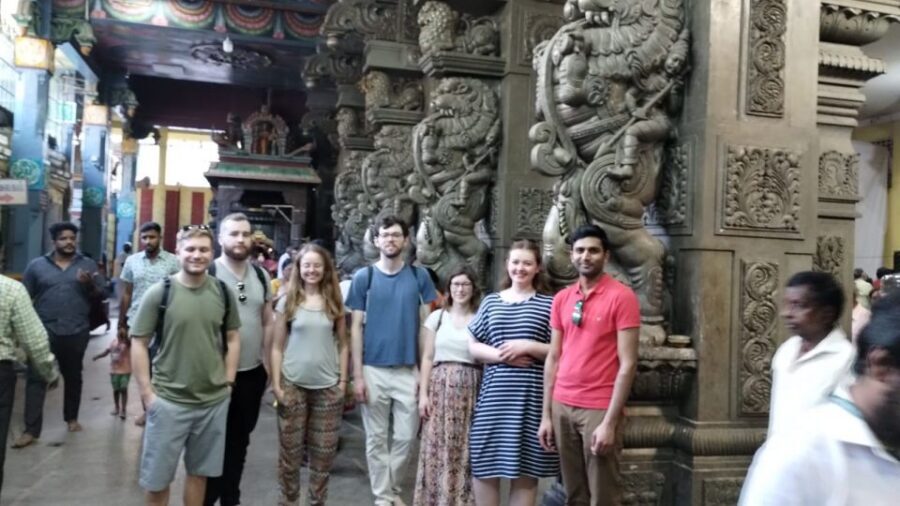
This tour runs about 3 to 3.5 hours, and it’s built for a small group—limited to 10 participants. That matters more than it sounds. With this size, you’re not just following; you can ask questions, and the guide can adjust when people pause for photos or want extra context.
It’s also led in English by a live guide. That’s a big deal for a history-and-markets day like this. You’re walking through institutions, churches, and commercial lanes, and it helps to have someone connecting the dots as you move.
If you opt for pickup, it’s offered at the hotel lobby, but the default meeting point is the entrance of Fort St George. Either way, the route is designed to start with the fort area and then flow outward to the high court zone, the Parrys/Dare House stop, and into the China Bazaar road markets—ending in the George Town trading atmosphere.
Pacing tip: the tour includes a museum stop (except Fridays). If you’re trying to get the most out of the day, arrive on time. The museum phase is usually the easiest place to get distracted, and you’ll want to see it before you’re walking in full market mode.
Dress Code and Practical Comfort for a Chennai Walking Day

The tour comes with a clear dress code: shorts, short skirts, and sleeveless shirts aren’t allowed. This isn’t about being fussy; it’s about getting into church and official spaces without hassle.
So plan to wear something light and breathable but still covered enough to comply. Also bring comfortable walking shoes. You’ll be on your feet for a few hours, moving between fort, court, streets, and bazaar lanes.
If you’re traveling in hotter weather, I’d treat this as a morning or early-slot plan where possible. Not because the city is unwalkable, but because you’ll get more out of it when you’re not fighting heat exhaustion.
Price and Value: What You Get for $49
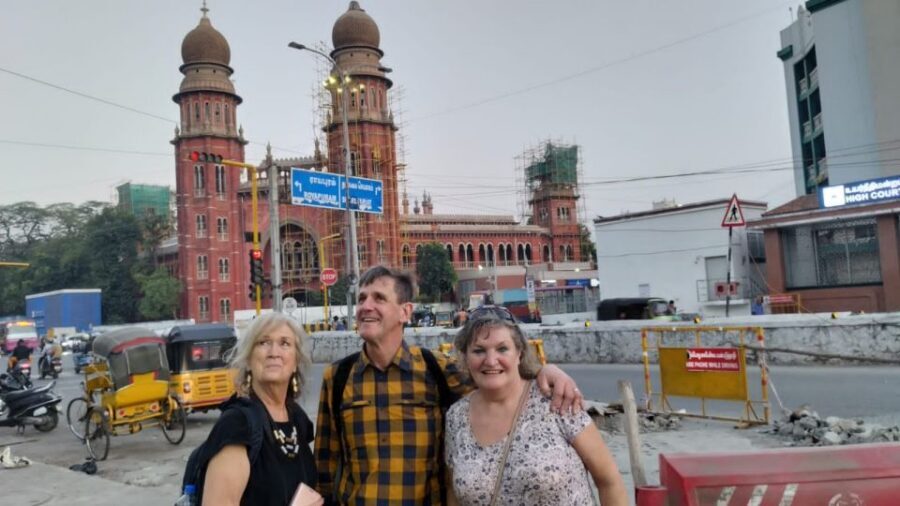
At $49 per person for 3–3.5 hours, this tour is priced like a focused cultural walk rather than a long sightseeing day. The value comes from three buckets:
- A live English guide who connects the political timeline to the built environment
- Entrance included, so you’re not piecing together separate tickets for the fort museum component and related access
- A small group (up to 10), which usually means you spend less time waiting and more time listening
Food is not included, but you can expect time for tasting a local snack. That means you should budget separately if you want to try drinks and street food.
Also consider the “time saved” value. George Town can be overwhelming if you’re trying to piece together why Fort St George matters while also finding your way through markets. This tour handles the order, so you don’t waste hours guessing what to prioritize.
If you want one guided experience that gives you both history and street texture, $49 here feels fair.
Who This Tour Fits Best
This is a good fit if you:
- Want a history-first walk that still ends in the market world
- Like seeing how trade districts grow out of earlier trading posts and empires
- Prefer small-group guiding with time for questions
- Want a rare Armenian community layer in a Chennai itinerary, not just the main British narrative
It’s also a strong choice for first-timers to Chennai who want to get oriented fast. You’ll finish the walk with clearer mental map lines: fort → institutions → commercial streets → Armenian heritage and church stop.
If your travel style is very fast and you hate walking, you might find 3–3.5 hours too much. But for most people who can handle a few kilometers of city walking, it’s an efficient way to spend a morning.
Should You Book the George Town Origins Walking Tour?
Yes, with a couple of planning thoughts.
Book it if you want history tied to real streets: Fort St George, St Mary’s Church, Madras High Court, Dare House, China Bazaar road, and the Armenian Church. The structure helps you understand Chennai instead of just sightseeing it.
Think twice about your day if you’re traveling on a Friday, because the museum is closed. If you can move your schedule, you’ll likely enjoy a fuller arc when that museum portion is available.
And if you’re concerned about dress code, plan ahead so you’re not scrambling before church and official buildings.
If you want an honest sense of how Chennai’s trade past became today’s city streets, this is one of the most direct ways to get there.
FAQ
FAQ
Where does the George Town Origins Guided Walking Tour start?
The guide waits at the entrance of Fort St George.
How long is the tour?
It lasts about 3 to 3.5 hours.
How much does the tour cost?
The price is $49 per person.
What’s included in the ticket price?
The tour includes a guide and entrance.
Is food included?
No. Food is not included.
Is the tour offered in English?
Yes, the tour has a live guide in English.
Is the Fort St George museum open every day?
No. The museum is closed on Fridays.
What dress code rules should I follow?
Shorts, short skirts, and sleeveless shirts are not allowed.