REVIEW · BODH GAYA
BODHGAYA FULL DAY TOUR
Book on GetYourGuide →Operated by TOP TRAVEL AND TOURS P LTD. · Bookable on GetYourGuide
A sacred day in Bodh Gaya can feel like walking into a prayer. I like that this tour hits the key sites in one smooth loop, with private AC transport so you’re not wrestling tuk-tuks between temples. I also like the mix: the Mahabodhi Temple and Bodhi Tree for enlightenment, then a chain of monasteries where each country’s Buddhism shows up in its own architecture and rituals. One possible drawback: monument entrance fees aren’t included, so budget a little extra depending on what you’re charged at each stop.
You’ll also notice how much calmer the day feels when the guide keeps the pace humane. In the best-case scenario, you’ll get a guide like Abhishek (Bikki) or Arvind, and a driver like Deepak or Abhay—both praised for making sure you see what matters without getting rushed or shoved into random shops. Still, it’s a long day at temple pace, so bring water, plan for crowds, and expect limited flexibility once you’re on the road.
In This Review
- Key Things I’d Watch For
- Bodh Gaya’s Big Idea: Enlightenment, Reframed by Country Styles
- Your First Anchor: Mahabodhi Temple and the Bodhi Tree
- Practical note
- The Courtyard Stories: Monks Chanting, Mucalinda Lake, and Small Moments
- The 80-Foot Great Buddha Statue: When Peace Becomes Sculpture
- Photo tip
- Metta Buddharam: Loving-Kindness in a Newer Statue Format
- Thai Monastery and the Golden Calm of Meditation Gardens
- Indosan Nippon Japanese Temple: Japanese-Style Woodwork and Cultural Fusion
- Tibetan Karma Temple (Gaden Phelgayling Namgyal Datsang) and Royal Bhutan Monastery
- Lunch Timing: A Real Break After Monastery Time
- Sujata Stupa and Sujata Kuti: Before Enlightenment, There’s a Human Story
- Bodh Gaya Archaeological Museum: Relics and Scriptures, Not Just Buildings
- Sleeping Buddha: Mahaparinirvana and Final Liberation
- Price and Logistics: What $59 Buys You in One Long Day
- Guides and Drivers: Why Names Matter on a Day Like This
- Who Should Book This Tour (and Who Might Skip)
- Should You Book This Bodh Gaya Full Day Tour?
- FAQ
- How long is the Bodh Gaya full day tour?
- Is pickup and drop-off included, and where does it happen?
- Is the tour private?
- Do I need to pay entrance fees for monuments?
- What’s included in the tour?
- Are alcohol or drugs allowed?
- Is the tour wheelchair accessible?
- Can the tour be customized?
- Which vehicle will I ride in?
Key Things I’d Watch For
- Mahabodhi Temple timing: You get time to pause at the Bodhi Tree, not just snap photos and move on.
- Big-stone realism at the 80-foot Great Buddha Statue, including the setting and the dhyana mudra posture.
- Multiple monastery styles: Thai gold, Japanese woodwork, Tibetan murals and prayer wheels, Bhutanese storytelling carvings.
- Meaningful stops beyond the main temple like the Sujata Stupa and Sujata Kuti, tied to the pre-enlightenment story.
- A museum break at the Bodh Gaya Archaeological Museum to see relics, sculptures, and scriptures in context.
Bodh Gaya’s Big Idea: Enlightenment, Reframed by Country Styles
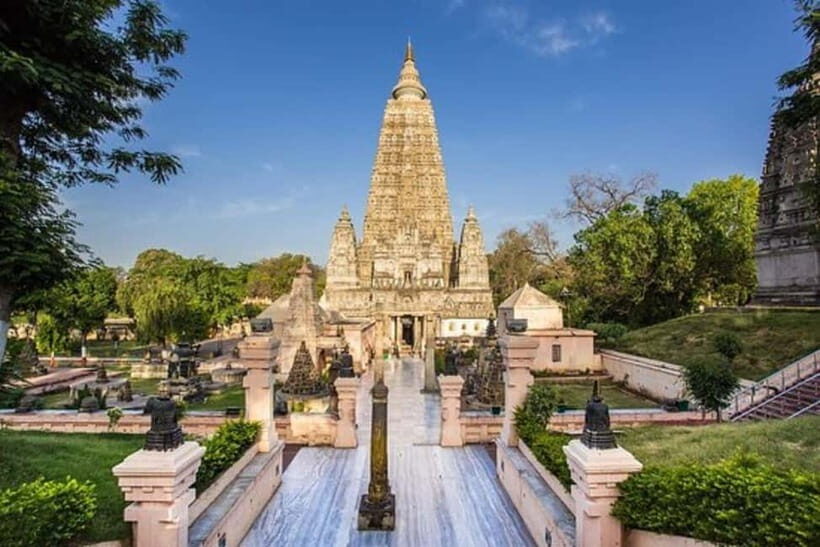
Bodh Gaya is the spiritual center where Gautama Buddha attained enlightenment under the Bodhi Tree. The point of a day like this isn’t just checking boxes—it’s seeing how that one moment echoes across temples worldwide.
What you’ll notice as the hours pass is how architecture becomes a language. The main temple complex focuses on the core story and the places connected to it. Then the Thai, Japanese, Tibetan, and Bhutanese monasteries shift the mood: you’re still in the same sacred geography, but the style of devotion changes—golden idols, meditation gardens, carved facades, prayer wheels, colorful murals. For many people, that contrast is the whole magic.
A few more Bodh Gaya tours and experiences worth a look
Your First Anchor: Mahabodhi Temple and the Bodhi Tree
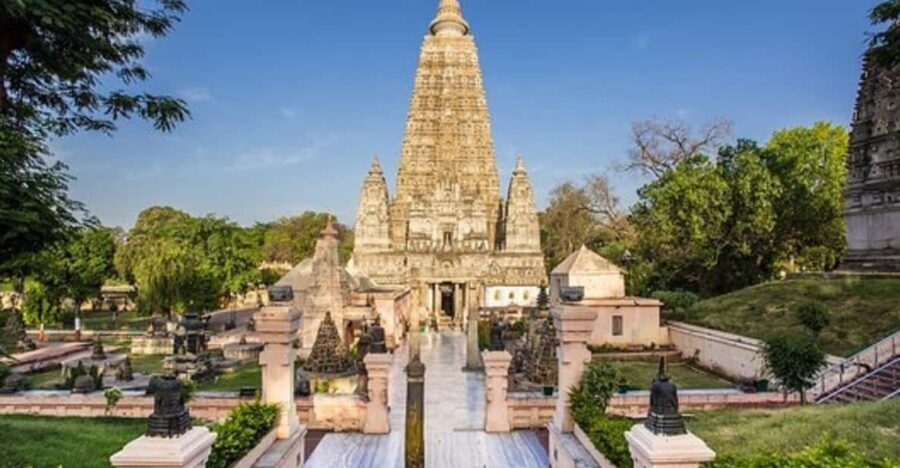
This tour starts with a hotel pickup in Bodh Gaya, then you’re brought to the Mahabodhi Temple & Bodhi Tree—a UNESCO World Heritage Site dating to the 5th–6th century CE.
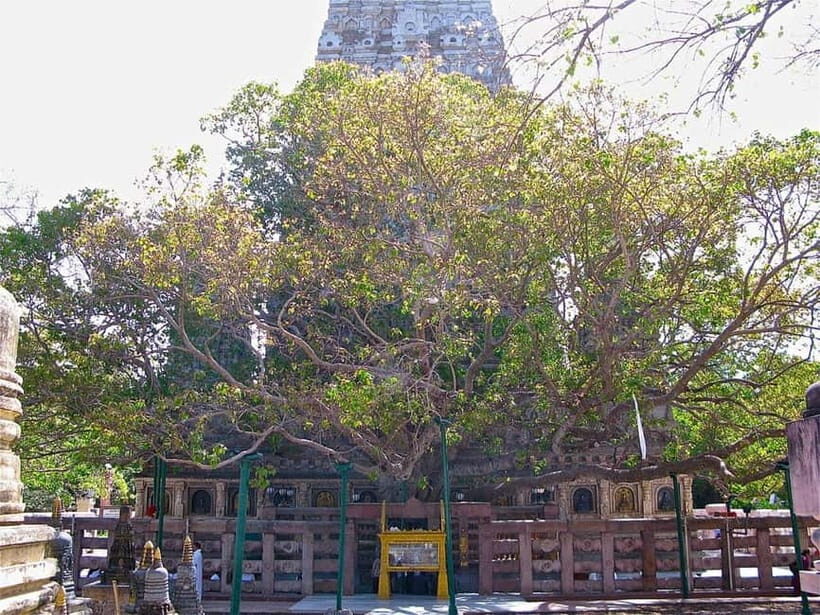
The Mahabodhi Temple is revered for its ancient architecture and spiritual significance, and the real payoff is that you’re not just looking from outside. You’ll have a guided visit plus time to slow down. The Bodhi Tree is the emotional center of Bodh Gaya. This is where you can sit with the idea of meditation and focus before you move on to the louder sights later in the day.
Inside the story framework, you’ll also hear about the Vajrasana (Diamond Throne)—the place where Buddha sat in deep meditation. It’s one of those stops where the meaning lands even if you’re not an expert in texts. Even if you’re visiting for the first time, you’ll get a clear sense of why people come here quietly, like they’re stepping into someone else’s memory.
Practical note
The temple area can be crowded, and you’ll likely feel the heat. Going early helps, but you’ll still want to keep water handy—this tour provides 1 liter of mineral water per person.
The Courtyard Stories: Monks Chanting, Mucalinda Lake, and Small Moments
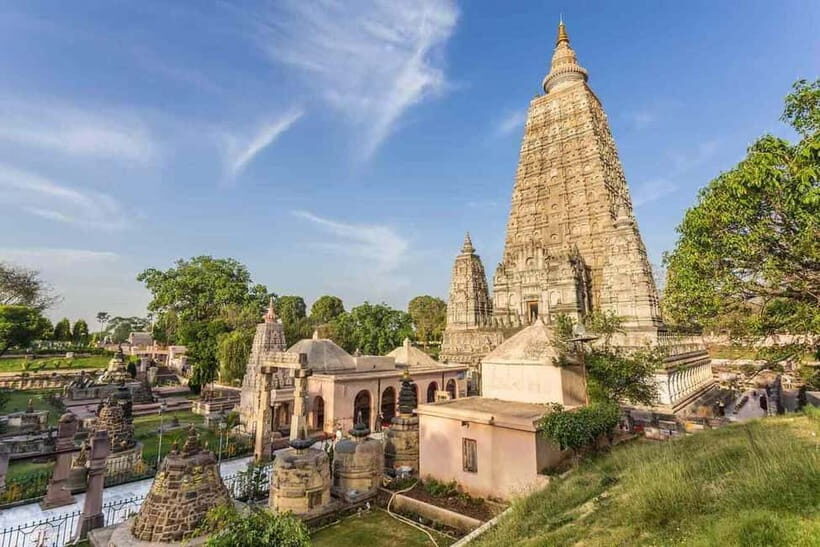
One of the reasons this day works is that it doesn’t stop at statues. You’ll witness monks chanting prayers as you move through the complex. The effect is simple: it changes the soundscape from sightseeing to something closer to ritual. That matters, because Bodh Gaya can otherwise turn into a checklist.
You’ll also visit Mucalinda Lake, connected to a protective legend: a snake is believed to have guarded Buddha from storms. It’s a story-stop, but it also helps explain why the site includes features beyond the main temple walls. Bodh Gaya isn’t only about one building—it’s about the whole environment tied to the enlightenment narrative.
If you’re the type who gets distracted by too many stops, this part is a good palate cleanser. Take a breath here, then go big on the statues later.
The 80-Foot Great Buddha Statue: When Peace Becomes Sculpture
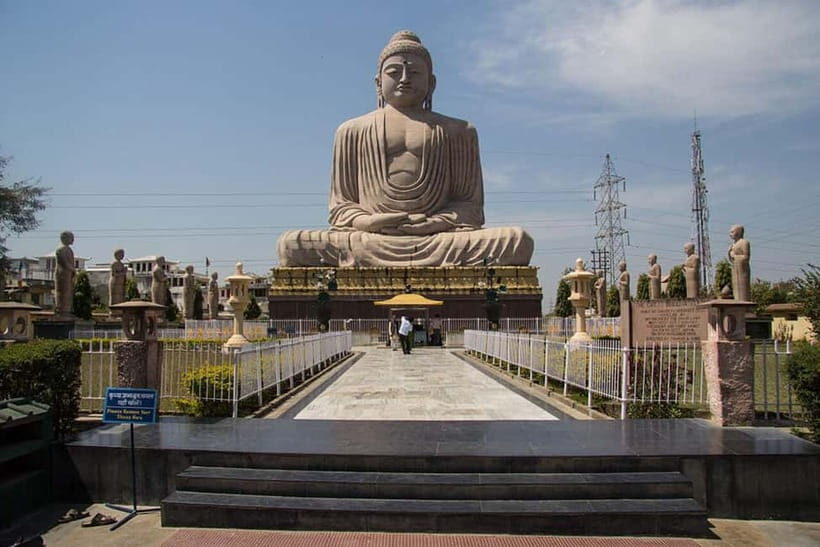
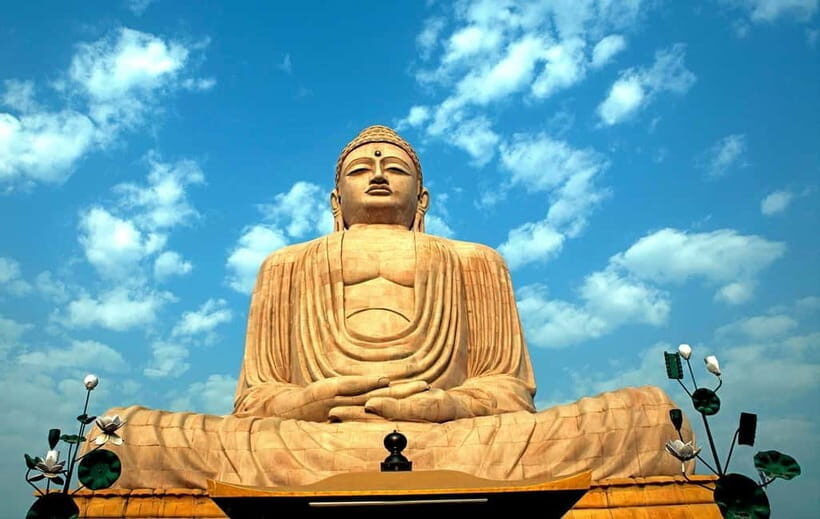
Next comes the Great Buddha Statue, an impressive 80-foot tall figure made of sandstone and red granite. The guide will help you look for details that many people miss when they’re rushing: the serene posture of Buddha in dhyana mudra, the meditative hand pose, and the smaller disciple statues around it.
This stop is more than a photo break. A statue like this compresses the whole theme of the day—wisdom and peace—into something you can see from a distance and still read up close. It’s also one of the clearest examples of how Bodh Gaya welcomes global Buddhist influences while keeping the core message consistent.
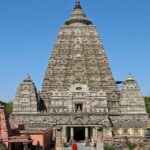
Photo tip
If you like photography, plan to spend a little extra time here. The pose and the scale give you options: wide shots that show the full statue, and closer angles where the disciples frame the main figure.
Metta Buddharam: Loving-Kindness in a Newer Statue Format
You’ll also visit the Metta Buddha Statue, described as newly built and focused on loving-kindness and compassion. The atmosphere is meant for meditation and calm, and the design is built for both reflection and photography.
This is a good contrast to the Great Buddha Statue. Where the big figure communicates timeless wisdom through scale, Metta Buddharam leans into the emotional practice side—kindness as something you can literally stand near and think about.
Thai Monastery and the Golden Calm of Meditation Gardens
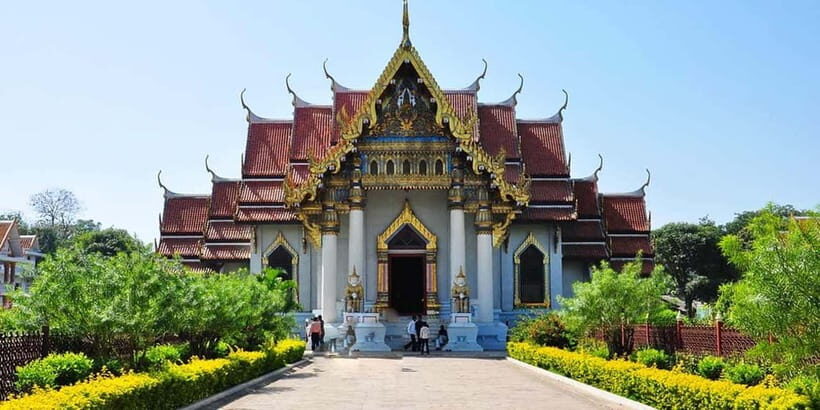
After the main temple area, the tour shifts into a “world Buddhism” mode with the Thai Monastery. Expect golden Thai-style architecture, a serene meditation garden feel, and a golden Buddha idol.
The value here is not only what you see, but how you see it. Thai temple design often feels more airy and luminous, and that can change your mood during the day. It’s also a useful reminder that Bodh Gaya isn’t one-size-fits-all devotion. It’s one sacred place with many languages of faith.
Indosan Nippon Japanese Temple: Japanese-Style Woodwork and Cultural Fusion
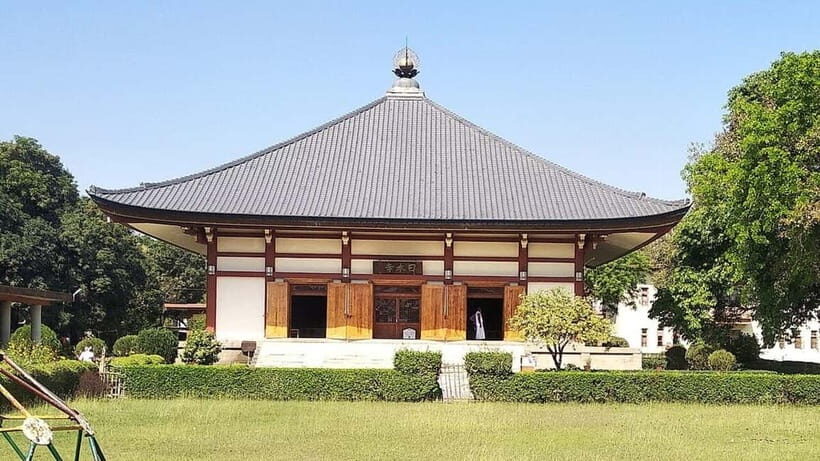
Then you’ll visit the Indosan Nippon Japanese Temple, known for a harmonious blend of Japanese and Indonesian influences and built in Japanese architectural style. You’ll likely spot intricate wooden carvings, which make this stop feel different from the stone-heavy sights.
If you’re someone who likes craft details—edges, patterns, surfaces—this is your kind of stop. It’s also a great moment to slow down and let the guide explain what you’re looking at, because carvings can feel like decoration unless you understand the intent behind them.
Tibetan Karma Temple (Gaden Phelgayling Namgyal Datsang) and Royal Bhutan Monastery
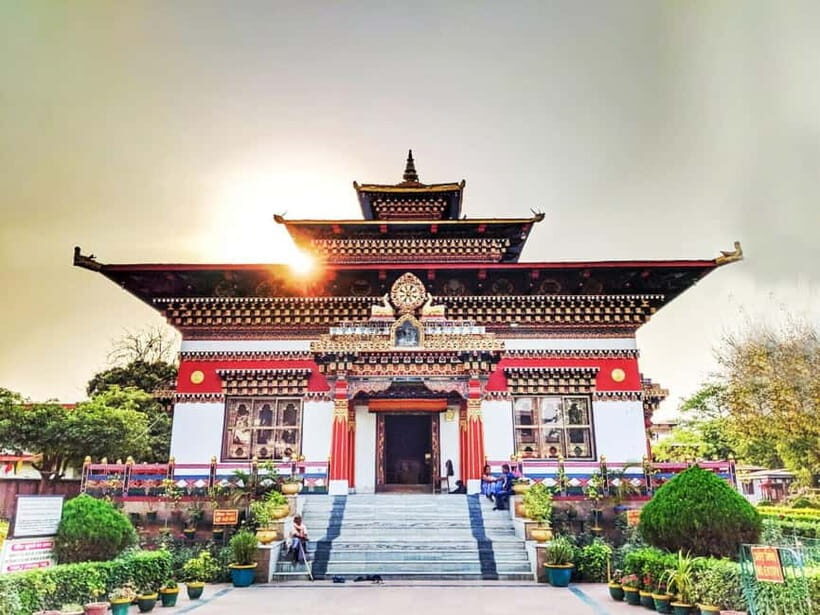
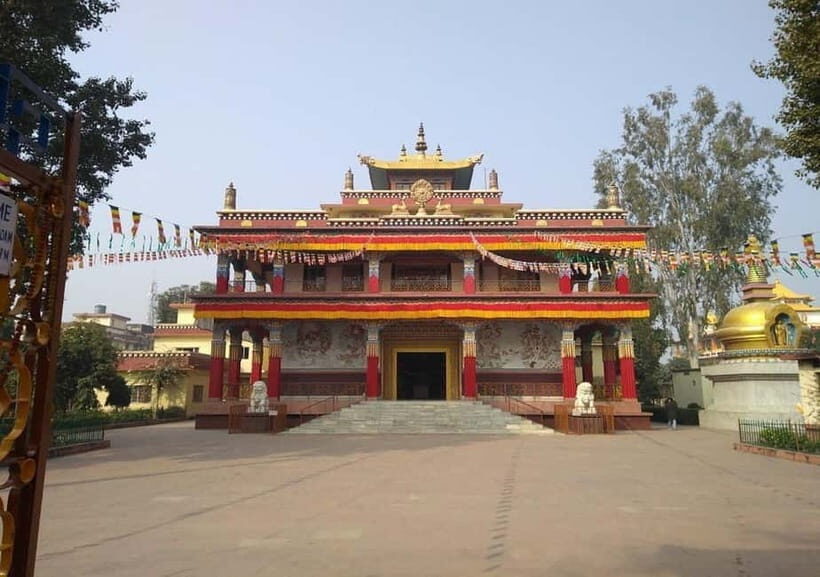
The tour moves into Tibetan and Bhutanese traditions with stops including the Tibetan Karma Temple (gaden phelgayling namgyal datsang) and the Royal Bhutan Monastery.
At the Tibetan site, you’ll see elements like prayer wheels and colorful murals. Bhutanese devotion comes through via monastery design and carvings that depict Buddha’s life, created by Bhutanese monks. One of the most interesting descriptions here is that the Royal Bhutan Monastery shows the life of Gautam Buddha in clay carvings—an art style that can feel intimate, even when it’s on temple scale.
This pair of stops is where the day gets especially meaningful if you like storytelling. You’re not only seeing what Buddha is, you’re seeing scenes from his life—faith as narrative.
Lunch Timing: A Real Break After Monastery Time
After visiting the Tibetan and Bhutanese monasteries, you’ll have lunch at a good restaurant. The exact menu or whether meals are fully included isn’t spelled out in the tour details you’re given, so I’d treat lunch as something to budget for just to stay safe.
Still, this timing works. By the time you sit down, your brain has collected plenty of symbols. Lunch becomes a reset before you go back into more sacred stops.
Sujata Stupa and Sujata Kuti: Before Enlightenment, There’s a Human Story
One of the best parts of this tour plan is that it includes the Sujata Stupa and Sujata Kuti. These are tied to an important pre-enlightenment event: Sujata, a woman who offered kheer (rice pudding) to Buddha before his enlightenment.
Sujata Stupa is where the story gets anchored in a sacred location. Then you’ll explore Sujata Kuti, the village where she lived. This turn matters because it reminds you enlightenment didn’t happen in a vacuum. It came through a chain of human choices—generosity, care, timing.
If you’re the type who wants meaning beyond the obvious landmarks, this stop often becomes a favorite because it’s less famous than the Bodhi Tree but emotionally closer.
Bodh Gaya Archaeological Museum: Relics and Scriptures, Not Just Buildings
Next, you’ll visit the Bodh Gaya Archaeological Museum. This is where the tour becomes educational in a grounded way.
You can see ancient Buddhist relics, sculptures, and scriptures, plus artifacts from periods like the Mauryan and Gupta eras. The museum also includes statues of Buddha and bodhisattvas. It’s a useful counterbalance to the outdoor temple stops because it gives you a “how did we get here” feeling.
Even if you don’t read much about Indian Buddhist art, a museum visit helps you notice differences in style and time. It makes the day feel less like sightseeing and more like understanding the layers on this sacred ground.
Sleeping Buddha: Mahaparinirvana and Final Liberation
Later, you’ll see the Sleeping Buddha statue, which symbolizes Buddha’s Mahaparinirvana—final liberation. This stop is described as a peaceful expression of enlightenment beyond life and death.
It’s a strong closing point because it shifts your focus from enlightenment-as-achievement to enlightenment-as-continuing. The body is resting; the meaning isn’t.
It also helps end the day on a quieter note before you’re returned to your pickup location.
Price and Logistics: What $59 Buys You in One Long Day
At $59 per person for an 8-hour private tour, the value mainly comes from three things: the private AC vehicle, an English-speaking guide, and the ability to cover a lot of sacred sites without negotiating transport.
This is the kind of deal that works best when you want efficiency and context. If you tried to do this on your own, you’d spend time figuring out routes, finding guides for multiple sites, and dealing with the stop-and-go friction of crowded temple areas.
What’s not included matters. Monument entrance fees (if any) are paid directly, and lunch costs aren’t clearly listed as included. The tour also includes parking and tolls, plus taxes, and you get 1 liter of mineral water per person.
Vehicle type changes by group size:
- 1–2 people: 4-seater sedan
- 3–4 people: 5-seater Innova
- 5–8 people: 9-seater Tempo Traveler
So the day feels private, not cramped.
Guides and Drivers: Why Names Matter on a Day Like This
The reviews highlight a theme I agree with: a good Bodh Gaya guide doesn’t just know facts. They help you pace yourself and keep your eyes open.
Abhishek, often called Bikki, is praised for being extraordinary and for taking care with what you want to see—plus helping with eating and shopping in a way that feels respectful. Another guide, Arvind, is praised for professionalism, knowledge, and patience, and for not rushing you between stops. Drivers named Deepak and Abhay also get credit for safe handling and smooth movement around town.
If you can choose or request a guide, and you see those names mentioned by the provider, it’s worth requesting. On an 8-hour temple run, the guide can make the difference between tired and grounded.
Who Should Book This Tour (and Who Might Skip)
This tour is a strong fit if you want:
- a high-impact day with many core Bodh Gaya sites
- a guide to connect symbols like the Bodhi Tree, Vajrasana, and Mucalinda Lake
- monastery variety: Thai, Japanese, Tibetan, Bhutanese
- a stop at the archaeological museum so the day isn’t only outdoors
It may not be the best match if:
- you need wheelchair access (the tour is not wheelchair accessible)
- you’re pregnant (the tour states it isn’t suitable for pregnant women)
- you’re hoping for a relaxed, slow walk with long breaks—this is an 8-hour schedule built for coverage
Also, note the general rule: alcohol and drugs aren’t allowed.
Should You Book This Bodh Gaya Full Day Tour?
If your goal is to see the main sacred sites and understand the bigger picture through monasteries and a museum, I think this is a smart booking. The private AC vehicle reduces stress, and the guided stops help you look past surface-level sightseeing.
I’d book it if you’re ready for a full day and you want your time to count. I’d hesitate only if you’re sensitive to long temple pacing, need frequent rest breaks, or you strongly want a self-paced itinerary with no set loop.
If you do book, do this: wear comfortable shoes, keep some cash for any direct entrance fees, and ask your guide to explain what to look for at the temples and carvings. That’s where the day turns from sightseeing into understanding.
FAQ
How long is the Bodh Gaya full day tour?
The tour duration is 8 hours.
Is pickup and drop-off included, and where does it happen?
Yes. Pickup and drop are included for Bodh Gaya city hotels only.
Is the tour private?
Yes, it’s listed as a private group tour.
Do I need to pay entrance fees for monuments?
Entrance fee of monuments (if any) is on direct basis, meaning it’s not included in the tour price.
What’s included in the tour?
The tour includes a private air-conditioned vehicle, English-speaking guide, 1 liter mineral water bottle per person, parking and tolls, and all applicable taxes.
Are alcohol or drugs allowed?
No. Alcohol and drugs are not allowed.
Is the tour wheelchair accessible?
No. The tour is not wheelchair accessible.
Can the tour be customized?
Yes. The tour can be customized as per customer requirement or location.
Which vehicle will I ride in?
It depends on group size: 4-seater sedan for 1–2 people, 5-seater Innova for 3–4 people, and 9-seater Tempo Traveler for 5–8 people.