REVIEW · BODH GAYA
Guided Virtual Tour of Bodhgaya
Book on Viator →Operated by TravelBaits · Bookable on Viator
Bodh Gaya without leaving your couch. This guided virtual tour strings together the biggest Buddhist sights in Bodh Gaya with a real-time, expert-led path through key spaces. You also get admission tickets built into the visit stops, which makes the whole experience feel less like random sightseeing and more like a structured walkthrough.
I also like the photo-friendly style and tight pacing. You’ll get inside views of multiple monasteries and sacred places, and each stop is long enough to understand what you’re looking at. The one drawback to note is that it’s about 1 hour total, so each site moves fast—great for highlights, but you’ll need extra curiosity time if you’re hungry for deep architectural detail.
In This Review
- Key things that make this tour worth your attention
- How the 1-hour virtual format keeps Bodh Gaya focused
- Mahabodhi Temple: your guide’s path to enlightenment
- Thai Monastery: structure and history inside the quiet walls
- Burmese Vihara Monastery: the nearby monasteries map out a wider tradition
- Indosan Nippon Japanese Temple and the Great Buddha Statue
- Sujata Kuti: the story before enlightenment
- Dungeshwari Cave Temples: inside views plus Buddhist significance
- Price and value: what $26.67 per group really means
- Logistics you should keep straight before you book
- Tips to get more detail, especially from photos
- Who this virtual Bodh Gaya tour suits best
- Should you book this guided virtual tour of Bodh Gaya?
- FAQ
- What is the duration of the Guided Virtual Tour of Bodhgaya?
- Which stops are included in the virtual experience?
- Is the tour private?
- How much does the tour cost?
- Is a mobile ticket provided?
- Are admission tickets included for the stops?
- What is the cancellation policy?
Key things that make this tour worth your attention
- Seven major Bodh Gaya stops in about an hour: a fast, organized route that covers the core sites.
- Admission tickets included at every stop: you aren’t guessing about what’s covered or why the guide is steering you somewhere.
- Inside views, not just exteriors: you’ll see key interiors like the Thai Monastery and the Dungeshwari Caves.
- A private group experience for up to five: only your group joins, which keeps questions on-topic.
- Stories tied to the sights: the tour doesn’t treat temples like scenery; it links places to Buddha-related accounts.
- Photo detail tip: if your guide uses images on-screen, have your zoom ready so you can catch carvings and layout.
How the 1-hour virtual format keeps Bodh Gaya focused
This is built for people who want the meaning of Bodh Gaya, not just a scroll through landmarks. The tour runs for about 1 hour, with roughly 10 minutes at each of seven stops. That time budget matters: it creates momentum, and you won’t feel lost when the guide shifts from one sacred site to the next.
Because it’s virtual, the best part is control. You can watch calmly, pause if you need to re-read a point your guide makes, and keep notes while the sites are still fresh in your mind. The experience is also clearly designed for difficult periods, since it’s meant for a COVID-19 crisis situation when travel plans were harder.
Also, you get a mobile ticket and the tour offers pickup. The tour is virtual, so I’d treat pickup as part of the overall package details you’ll see in your booking confirmation, and follow whatever the provider sends you for your exact session.
You can also read our reviews of more guided tours in Bodh Gaya
Mahabodhi Temple: your guide’s path to enlightenment
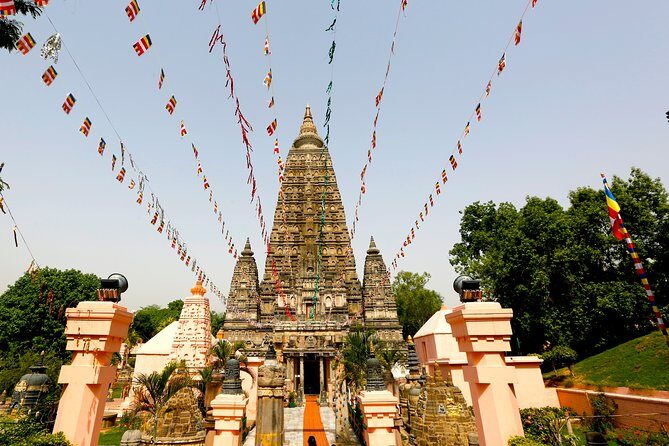
The tour starts at the Mahabodhi Temple, and that choice sets the tone. You’ll navigate through different sections of the temple and learn the enlightenment path of Lord Buddha from the expert guiding you through the visit.
What’s valuable here is the way the guide connects space to story. Instead of treating the temple as a single photo-op, you learn how the journey of enlightenment is reflected in what you’re seeing and the order you’re seeing it in. That makes it easier to keep your attention as visuals change.
A practical consideration: at around 10 minutes, you’ll likely capture the core ideas and main sections, but you won’t have unlimited time for every carved corner or small visual detail. If you’re the kind of person who reads every plaque in a museum, plan to do a little self-study afterward.
Still, this is the ideal first stop. By the time the tour moves to the monasteries nearby, you’ll already have the main “why” in your head.
Thai Monastery: structure and history inside the quiet walls
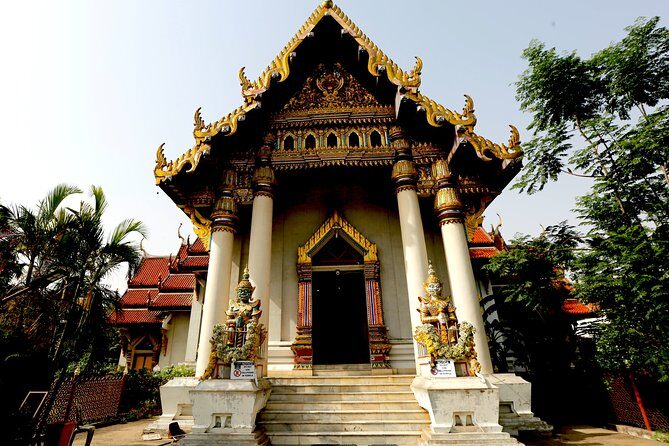
Next up is the Thai Monastery. You’ll get an inside view and hear about its structure and history. This stop works especially well because Thai monasteries in Bodh Gaya aren’t just architectural decoration—they’re part of the broader Buddhist landscape in the area.
Inside views tend to be where virtual tours shine. You can focus on layout, how rooms connect, and how the space is used. That makes the “structure” part feel real instead of abstract. Since you’re guided, you’re less likely to stare at your screen and wonder what you’re supposed to notice.
One small reality check: interiors in virtual formats can depend on video clarity. If you want maximum detail, keep your device at a good brightness level and sit a little closer than you normally would. It’s not about fancy gear—it’s just how screen viewing works.
Burmese Vihara Monastery: the nearby monasteries map out a wider tradition
At the Burmese Vihara Monastery, your accredited guide walks you through the monasteries near Mahabodhi Temple. The focus here is geographical and interpretive: you’re seeing how different communities and traditions created distinct places of practice around the same spiritual center.
Because it’s “nearby,” this stop helps you build context fast. You start recognizing that Bodh Gaya isn’t one temple—it’s a cluster of sacred sites shaped by different countries and Buddhist traditions. That turns your mental picture from a list of buildings into a real map.
Timing matters again. With 10 minutes, you’ll get the key story beats rather than a room-by-room deep catalog. If you feel yourself wanting more, jot down questions during the tour—private group format usually makes it easier to ask.
Indosan Nippon Japanese Temple and the Great Buddha Statue
Then the tour shifts to Indosan Nippon Japanese Temple, where you learn about its history as the guide walks you through nearby monasteries. This is the moment where Bodh Gaya starts to feel like an international dialogue. You’re not just learning about one tradition; you’re seeing how Japanese Buddhist presence takes shape in a specific Bodh Gaya setting.
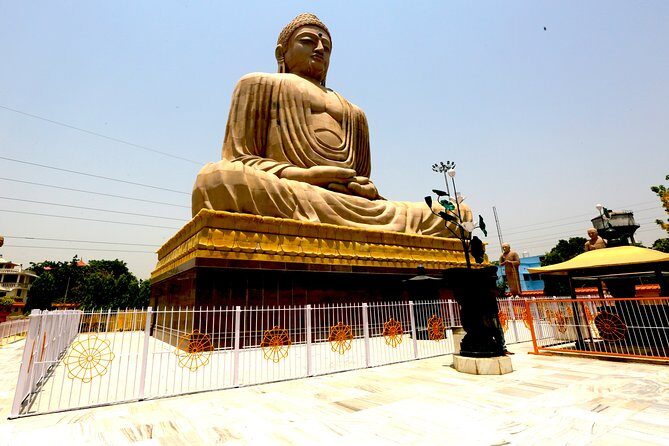
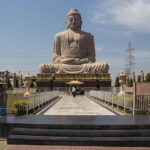
A short step later, you reach the Great Buddha Statue. You’ll walk through the area and get explanations you can use to understand what this place is about and why people come to see it.
Here’s why I think this pairing works: the Japanese temple gives you cultural and historical framing, while the Great Buddha statue gives you scale. One helps you interpret the symbolism; the other helps you feel the weight of the site.
If you’re watching for visual detail, keep an eye on how the guide points out key features on-screen. One of the strongest pieces of practical feedback from people who enjoyed this experience was to do close-ups and zoom in on pictures so you can see more of the architectural details. You can apply that instinct even without knowing how the guide will present visuals: be ready to zoom on your device and go slower with your eyes when the guide shows important carvings or layouts.
Sujata Kuti: the story before enlightenment
At Sujata Kuti, the tour turns toward narrative again. You’ll learn the story leading into Lord Buddha’s enlightenment from the expert guide.
This stop is valuable because it gives you a timeline. Temples and monasteries can feel like separate chapters if you only watch the visuals. Sujata Kuti helps glue the storyline together—why the journey matters and what happens before the central moment.
In a virtual format, story stops are also easier to absorb. You’re not trying to navigate stairs or crowds; you’re listening while your guide gives shape to the significance of the place. At about 10 minutes, you’ll get the core account and the meaning behind it, which is exactly what most people want from a highlights tour.
Dungeshwari Cave Temples: inside views plus Buddhist significance
Finally, you’ll go to the Dungeshwari Cave Temples. This stop includes an inside view of the caves and a guided explanation of the caves’ significance in Buddhism.
Caves are inherently “about layers”—layers of meaning, layers of spiritual practice, layers of physical history. In-person, you might spend time looking at walls and shadows. In virtual form, the guide’s job becomes even more important: helping you understand what you should look for and why the caves matter.
Keep expectations realistic here: with only 10 minutes, you’ll likely get the major points rather than a scholarly walkthrough. But it’s a strong closer. Ending with caves makes sense because it’s a different kind of sacred space from the monasteries and statues—less polished, more elemental, and often more focused on spiritual significance.
Price and value: what $26.67 per group really means
The price is $26.67 per group, up to five people, and the tour lasts about 1 hour. That matters because it’s priced as a group experience rather than per person.
If you’re traveling solo, it still may feel like a “fair price for guided value,” because you’re paying for an expert to stitch multiple sites into one understandable route. If you’re traveling with a couple or a small group, the cost can feel much lighter per person.
It also helps that admission is included at each stop. Even when a virtual tour can’t replace the feeling of physically being there, including admission tickets signals that the tour is built around real access and planned coverage—not a vague chat that points at photos.
The tour is also private: you and your group only. For a guided experience, privacy is practical. It’s easier to ask questions, and you don’t have to compete with other voices.
Logistics you should keep straight before you book
This tour runs with hours listed as 9:00 AM to 6:00 PM, Monday through Sunday, and it’s listed across a long date range (from 05/19/2020 through 06/05/2026). Confirmation is received at booking time, so you should get your session details soon after you reserve.
Most importantly, there’s a minimum traveler requirement. If the minimum isn’t met, you’ll be offered another date/experience or receive a full refund. That’s one of those small details that can change your plan, so it’s smart to book with some flexibility.
And yes, cancellation is free up to 24 hours in advance for a full refund. If you’re the type who schedules around work shifts or time zones, that buffer is worth having.
Tips to get more detail, especially from photos
Virtual tours live or die on what you can see. Here are practical ways to get the most out of this one:
- Use zoom on screen when the guide shows architecture or carvings. People loved the photos but still recommend zooming in to see details clearly.
- Have a notepad ready for key names and story points, especially around the enlightenment path and the Sujata Kuti account.
- Watch for the order of stops. The pacing isn’t random—it builds a spiritual and cultural picture in a sensible sequence.
- If anything looks unclear, ask. Since it’s private for your group, your questions land more cleanly than in a big public session.
Also, because the tour is about 10 minutes per stop, you’ll get better results if you treat it like a guided sampler. After the session, use what you learned as a checklist for any deeper reading or follow-up exploration.
Who this virtual Bodh Gaya tour suits best
This tour fits well if you want:
- A guided overview of the major Buddhist highlights of Bodh Gaya without the time and complexity of physical travel.
- A structured route that connects stories to places, not just names attached to visuals.
- A private group setup (up to five) so you can ask questions and keep the session focused.
It’s also a good fit for people who like temples and sacred spaces but want an efficient, organized experience that doesn’t require you to plan multiple visits.
If you’re chasing “sit in one spot for an hour and study every detail,” this is probably not your only stop. The tour is designed for highlights, not marathon-level exploration. But for most people, that’s exactly the sweet spot.
Should you book this guided virtual tour of Bodh Gaya?
I’d book it if you want a guided, story-driven snapshot of Bodh Gaya’s key sites—especially if you value a private session, admission coverage at the stops, and a route that moves in a logical spiritual order.
I’d skip it (or pair it with extra research) if you know you need long, slow time at one location to truly enjoy architectural detail. The 1-hour format is a feature, not a flaw, but it does mean you’ll likely want more afterward if you’re a hardcore temple scholar.
FAQ
What is the duration of the Guided Virtual Tour of Bodhgaya?
The tour lasts about 1 hour.
Which stops are included in the virtual experience?
The tour includes Mahabodhi Temple, Thai Monastery, Burmese Vihara Monastery, Indosan Nippon Japanese Temple, the Great Buddha Statue, Sujata Kuti, and Dungeshwari Cave Temples.
Is the tour private?
Yes. It is a private tour/activity, and only your group will participate.
How much does the tour cost?
The price is $26.67 per group, up to 5 people.
Is a mobile ticket provided?
Yes, a mobile ticket is included.
Are admission tickets included for the stops?
Admission tickets are included for each stop listed in the itinerary.
What is the cancellation policy?
You can cancel for a full refund up to 24 hours in advance. If you cancel less than 24 hours before the start time, the amount paid is not refunded.